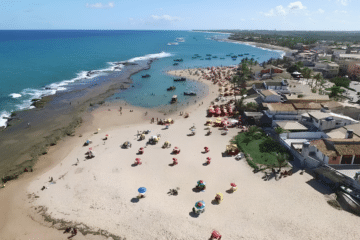
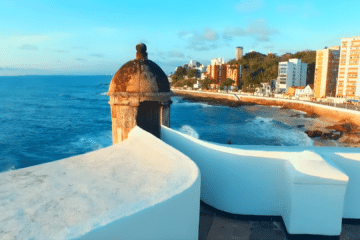
Aracati: Discover the charms of Canoa Quebrada Beach
Aracati is widely known for its natural beauty, with Canoa Quebrada Beach as its most iconic attraction.
This municipality, known as “Terra dos Bons Ventos” — from the Tupi-Guarani language, referring to the region’s constant winds — is situated in the state of Ceará, Brazil, approximately 150 km from the state capital, Fortaleza. Founded on 11 April 1747, it is one of the oldest towns in the state.

Coastline and Heritage
Its coastline is world-famous, particularly for the iconic Canoa Quebrada Beach.
As well as its stunning beaches, Aracati also boasts a complex of buildings listed by IPHAN in 2000, which harks back to the time when the natural harbour welcomed traders from Portugal and other Brazilian states in search of the region’s famous charque (salted and dried beef).

Historical fact: in 1824, during the Confederation of Ecuador — the same separatist movement that also played a significant role in Icó —, rebel troops led by Tristão Gonçalves de Alencar Araripe occupied the then village of Aracati for about a week.
Canoa Quebrada
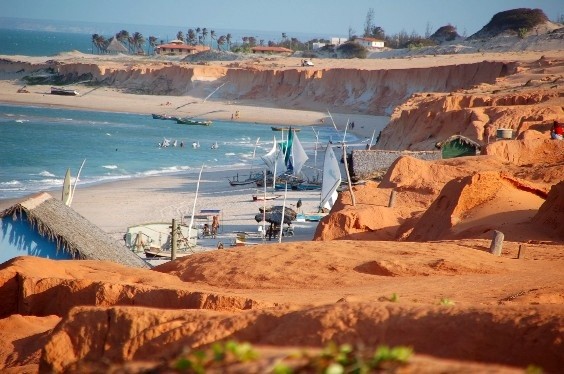
The dunes and cliffs provide a spectacular backdrop. Evenings throughout Ceará are lively, with a variety of restaurants offering a range of international specialities, as well as bars and nightclubs.
Until the 1960s, what is now Canoa Quebrada Beach was an isolated fishing village called Esteves, which was difficult to reach by land. The turning point came when a team of French filmmakers associated with the Nouvelle Vague movement arrived in the village and revealed the landscape to the world — which, in the following decade, attracted hippies from various European countries, many of whom married local residents.

Even today, it is still possible to find descendants of Swiss, French and other Europeans in the village who settled there back then.
Since then, the region has retained its beauty whilst making significant progress in terms of tourism infrastructure.
The rafts, which were previously used for small-scale fishing, now also serve the town’s various restaurants and bars.
Nature and Beauty
Another highlight is the Jaguaribe River, which flows alongside the town, creating an enchanting setting of natural beauty. The symbol of Canoa Quebrada Beach – a moon and a star carved into the cliffs – attracts many visitors.

Nightlife and Infrastructure
The nightlife is vibrant, offering plenty of options for those looking for a good time, with lots of bars and restaurants. Aracati has good facilities, including hotels, guesthouses and restaurants serving traditional local dishes.
For adventure lovers, going for a hike along the cliffs at Canoa Quebrada is a brilliant option.
The town of Aracati is the perfect place to relax, recharge your batteries and enjoy a lovely weekend.
Carnival and Festivals
Aracati is also nationally renowned for its carnival, one of the largest in Ceará — attracting an average of around 350,000 revellers each year —, featuring the traditional street carnival with its blocos and the beach carnival, as well as the Trio Elétrico.
Video about Aracati and Canoa Quebrada

Praia de Canoa Quebrada e Praia de Majorlandia03:10
Canoa Quebrada CE05:32

Canoa Quebrada - Drone00:59
Aracati no Ceará - Guia Turístico07:00
1. Aracati Historic Centre
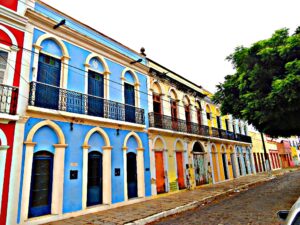
The Historic Centre is one of the jewels of Ceará’s cultural heritage, offering a rich historical and architectural experience. Among the main attractions are the Matriz Church and the Church of Nossa Senhora do Rosário dos Pretos, the Central Market and the Jaguaribano Museum, which was the former residence of the Baron of Aracati.
- Parish Church of Our Lady of the Rosary: built between the 18th century and the second half of the 19th century, the church is rich in artistic details, including statues and a communion table made of rosewood.
- Aracati Town Hall and Prison: built in the second half of the 18th century, it served as a town hall and prison for both men and women. It is an important historical landmark.
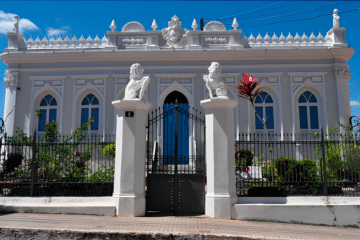
- The Baron of Aracati’s Townhouse (now the Jaguaribano Museum): this 19th-century townhouse, which was once the Baron’s residence, now houses a museum featuring a variety of works of art and a rich history.


The Historic Centre is the setting for cultural events, such as religious festivals and music and dance festivals, offering visitors the chance to experience the local culture in an authentic way.

2. Natural Attractions
- The Jaguaribe River: offers boat trips and fishing, as well as stunning views.
- Cliffs: known for their vibrant colours, they offer picturesque views and great photo opportunities.
3. Ecotourism
- Nature trails: for ecotourism enthusiasts, there are trails and nature reserves where you can explore the region’s rich flora and fauna.
- Environmental conservation: efforts are being made to preserve the area’s natural beauty and biodiversity.
4. Beaches
Aracati is blessed with some of the most beautiful beaches in Brazil. As well as the famous Canoa Quebrada, the region boasts other enchanting beaches:
- Canoa Quebrada Beach: known for its colourful cliffs and vibrant nightlife.
- Majorlândia Beach: offers a more peaceful and relaxing atmosphere.
- Quixaba Beach: a small fishing village with stunning scenery.
- Lagoa do Mato Beach: known for its dunes and natural lagoons.
- Retirinho Beach: ideal for those seeking peace and quiet.
- Fontainha Beach: a picturesque beach with a rustic atmosphere.


Popular Activities on the Beaches of Aracati
- Buggy tours: very popular on almost all beaches, buggy tours through the dunes offer panoramic views and a taste of adventure.
- Kitesurfing and windsurfing: just as in Cumbuco, the east coast of Ceará is swept by trade winds between June and January, with gusts generally ranging from 18 to 30 knots — ideal conditions both for those who already practise these sports and for those wishing to take their first lesson in Canoa Quebrada or on the neighbouring beaches.
- Walking: the cliffs and dunes offer stunning trails for walking and exploring.
- Cuisine: try fresh seafood and traditional dishes from Ceará at restaurants and beach stalls.
Where to Stay in Aracati and Canoa Quebrada
Where you choose to stay makes a big difference to the sort of experience you’ll have:
- Near Broadway (Canoa Quebrada): this is where most of the boutique guesthouses, bars and nightlife are concentrated — ideal for those who want to be within walking distance of everything and enjoy the village’s lively nights.
- Areas further away from Canoa Quebrada (towards Majorlândia or Quixaba): simpler, quieter guesthouses – the best option for those looking for a restful break who don’t mind needing a car or buggy to get to and from the nightlife.
- Aracati’s historic centre: accommodation best suited to those who wish to explore the heritage sites listed by IPHAN at a leisurely pace, situated around 15 km from the beaches.
- Resorts: the region also offers more fully-equipped resort options, aimed at those seeking comfort and a complete leisure experience without leaving the premises.
When to Visit Aracati
- Dry season (July to December): the best time to visit the beach, with less rain and more sunny days.
- Windy season (June to January): the same period that’s ideal for kitesurfing — it practically coincides with the dry season, so anyone looking for sunshine and strong winds at the same time will find that the dates overlap nicely.
- Carnival: with around 350,000 revellers each year, it is the most popular event on the local calendar. Anyone planning to travel during this period needs to book accommodation well in advance — months in advance, not weeks — as the city fills up quickly.
How to get to Aracati
- By car: leaving Fortaleza, the most common route is via the CE-040 or BR-116 to Boqueirão do Cesário, then on to the BR-304 — a distance of around 150 km and a journey time of approximately 2 hours.
- By bus: there are regular services from Fortaleza to Aracati, making this an economical option for those travelling with little luggage.
- By plane: Aracati is home to Dragão do Mar Regional Airport, which handles regional flights (for example, operated by Azul Conecta), connecting the town directly to the capital and other destinations — a quick option for those who want to get straight to the cliffs of Canoa Quebrada.
A Quick Guide for Tourists
- Best time to visit: the dry and windy season, from July to December (see details in the ‘When to Go’ section above).
- Transport: car, regular bus service or direct flight via Dragão do Mar Airport (see ‘How to get there’ above).
- Accommodation: from resorts to budget guesthouses — see the ‘Where to Stay’ section to choose the right area to suit your travel preferences.
Frequently Asked Questions about Aracati
Why is Aracati known as the ‘Land of the Good Winds’?
The name comes from the Tupi-Guarani language and refers to the region’s constant winds — the very same winds that today attract kitesurfers and windsurfers to the surrounding beaches.
When was the historic centre of Aracati listed?
In 2000, by IPHAN (the National Institute of Historic and Artistic Heritage), as a national heritage site.
Has Canoa Quebrada always been a tourist destination?
No. Until the 1960s, it was an isolated fishing village called Esteves. Its discovery by French filmmakers of the Nouvelle Vague, followed by the arrival of European hippies in the following decade, transformed the village into the tourist destination it is today.
How long does it take to get from Fortaleza to Aracati?
About 2 hours by car, covering a distance of approximately 150 km via the CE-040/BR-116 and then the BR-304.
Is it possible to fly directly to Aracati?
Yes, Dragão do Mar Regional Airport handles regional flights connecting the town to Fortaleza and other destinations, offering a quicker alternative to travelling by road.
See also
- Discover the tourist attractions of Canoa Quebrada in Ceará
- Cliff Route: Discover Paradise in Ceará
- Fortim: Attractions at Pontal de Maceió Beach and the River Jaguaribe
- Icapuí, Ceará: The perfect destination for those seeking the ‘Land of the Lobster’
- The Best Beaches in Fortaleza and Ceará: A Complete Guide with 22 Options
- The East Coast of Ceará and its Charming Beaches and Cliffs

Publicações Relacionadas
Tourism in the Cariri region of Ceará: A complete 3-day itinerary through the Araripe Geopark
Ceará: Brazil’s Must-See Tourist Destinations
The Baturité Massif: A Complete Guide to Tourism in Ceará
Fortaleza: A Guide to Ceará's Vibrant Capital
Juazeiro do Norte: Things to Do and a Guide to Religious Tourism
Religious Tourism in Cariri (CE): Padre Cícero and Pilgrimages
Guaramiranga: The Complete Guide to the ‘Switzerland of Ceará’ (Itineraries and Tips)
Route of Emotions: An Adventure through North-East Brazil
Icapuí, Ceará: The perfect destination for those seeking the ‘Land of the Lobster’
The Best Beaches in Fortaleza and Ceará: A Complete Guide with 22 Options
Cumbuco Beach (Ceará): The Definitive Guide to Kitesurfing and Leisure
Kitesurfing in Tatajuba — Spots, Access and Season
Cariri in Ceará: A Comprehensive Guide to Tourism and Culture
Aquiraz, Ceará: Guide to Porto das Dunas and Beach Park
Fortim and the Jaguaribe River, Ceará: A Complete Travel Guide
Where to Stay in Fortaleza: Neighbourhoods and Beaches (2026)
The Cliffs Route in Ceará: A Complete Travel Guide
The Costa dos Ventos Route, Ceará: A Complete Guide to 9 Towns
Tatajuba, Ceará: things to do, how to get there and top attractions
The East Coast of Ceará: A Complete Guide to Beaches and Cliffs
Quixadá, Ceará: Monoliths, the Cedro Dam and the Sertão
Canoa Quebrada, Ceará: A Guide to Cliffs and Beaches
Serra da Ibiapaba: A Complete Guide to Attractions and Tips
Beaches on the West Coast of Ceará: A Complete Guide
Beach Park – Complete guide: attractions, tickets and tips for Porto das Duna
Ceará: The Best of Ecotourism and Extreme Sports in Brazil
Caetanos de Cima is one of the most beautiful beaches in Ceará
The Mountains of Ceará: A Guide to Mountain Towns for Tourists
Ubajara National Park: A Complete Visitor’s Guide
Icó, Ceará: History, Architecture and Tourist Attractions
Jericoacoara, Ceará: Complete Guide and 5-Day Itinerary
What to Do in Fortaleza in 3 Days: A Complete Itinerary
Salgado River Canyon in Lavras da Mangabeira, Ceará
Things to Do in Paracuru, Ceará: Beaches and Sports
This post is also on:
 Português
  English
  Deutsch
  Español
  Français