Discover Fortaleza: Natural beauties and cultural riches of Ceará
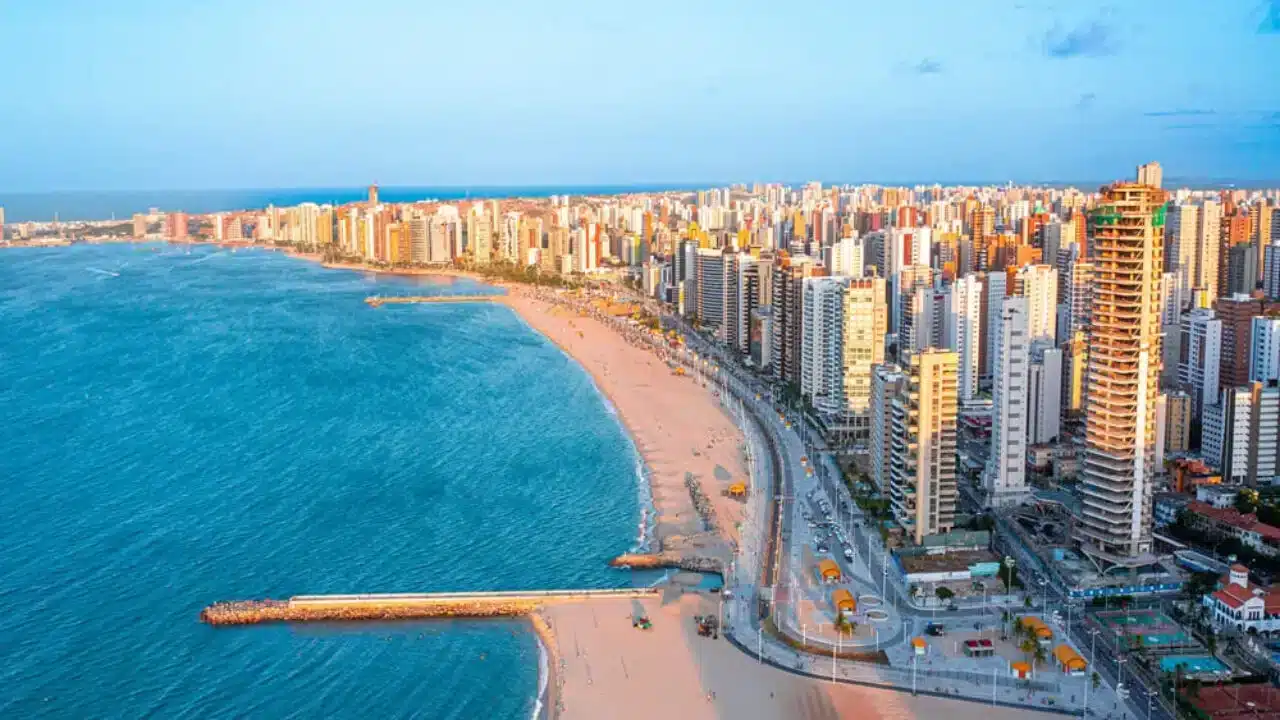
Fortaleza is Brazil’s fifth largest city and stretches along a stretch of straight, parallel streets to the green coast.
Capital of Ceará
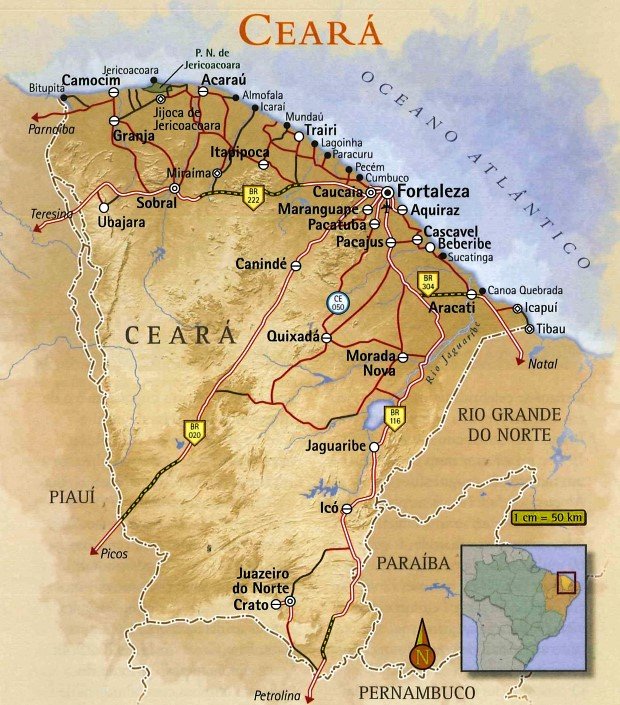
The city is the capital of Ceará, bathed by the waters of the Atlantic Ocean, with a tropical climate characterised by high temperatures.
Known as the land of the sun, wind, rafts and endless beaches, Fortaleza is home to around 2.7 million inhabitants and is Brazil’s largest humour factory, which explains the number of smiling people on the seafront and in the municipal market.
Origin of the name
The name “Fortaleza” comes from the construction of the Fort of Nossa Senhora da Assunção, built by the Portuguese in 1726.
The word “fortress” refers to a defensive military structure, hence the city’s name, in honour of the fortress.
The fortress was built to protect the region from invasions, especially from the Dutch, who occupied parts of Brazil at the time.
Over time, the city grew up around the fort and became known as“Fortaleza de Nossa Senhora da Assunção“, which was eventually shortened to just “Fortaleza”.
The name therefore reflects not only the presence of the fortress, but also the city’s history of resistance and protection in the early years of colonisation.
Culture and Literature
The capital of Ceará is the birthplace of literary greats such as José de Alencar, who reinvented Brazil with his wild and sertanejo characters.
Fortaleza is also famous for its beautiful beaches with clear waters and all year round sunshine. The city also boasts a lively nightlife, a cultural centre that values northeastern art, award-winning restaurants, top hotels and a friendly population.
Ceará Cuisine
Ceará’s cuisine impresses with its simplicity; one of the most popular dishes is baião-de-dois, which is basically made with rice, green beans or string beans, and can include ingredients such as dried meat, cheeses and spices.
Rapadura and cachaça, both made from sugar cane, are very popular in the region, as is tapioca, which can be filled in sweet or savoury versions.
Tasty tropical fruits such as cashew, papaya, guava and passion fruit fruit are used to make famous sweets and ice creams.
Handicrafts and regional products
The variety of handicraft products also highlights the richness of the city, including hammocks, bags, swimwear and leather shoes, all made by hand.
Food products have a strong presence, with lobsters, cashew nuts and cajuína available to tourists. With so many attractions, it’s impossible not to take a trip that captures every detail of Fortaleza.
Urban beaches and history
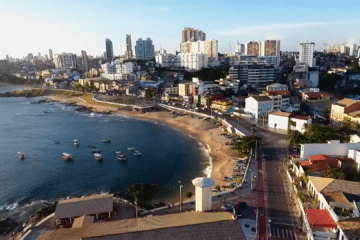
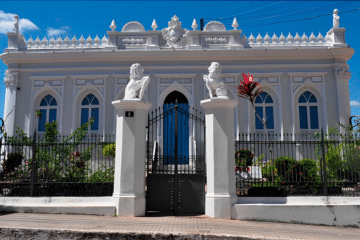
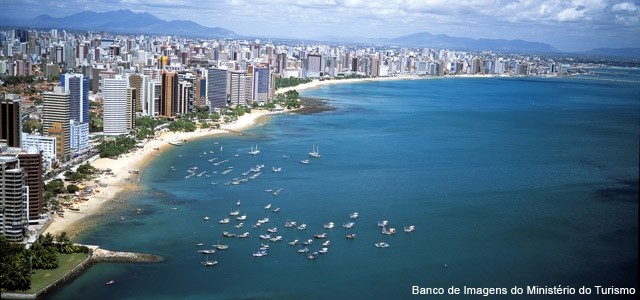
The urban beaches of Iracema, Meireles and Mucuripe are linked by the modern and busy Beira-Mar Avenue, which stretches all the way to the centre, where you can still see some preserved 19th century mansions.
Little remains of the city’s history, which dates back to the 17th century, when Dutch invaders built the Fort de Schoonenborch on the banks of the Pajeú river, which was later taken over by the Portuguese and renamed the Fortress of Our Lady of the Assumption.
This building has survived and now houses the Tenth Military Region.
Heritage and attractions
Although its architectural heritage is small, Fortaleza is not lacking in attractions: in addition to the beautiful beach scenery, there are modern spaces dedicated to art and culture, shopping centres with regional handicrafts and a rich cuisine that mixes elements of the coast with those of the backcountry.
Nightlife and events
Famous for its lively nightlife, Fortaleza becomes especially lively in July, when Fortal, its off-season carnival, an event of axé and popular Brazilian music, takes place, attracting many tourists.
Discover other tourist attractions of Ceará
Discover the best beaches of Ceará
Videos about the tourist attractions of Fortaleza CE

Fortaleza é intitulada de “terra do sol”, do vento, das jangadas e das praias infinitas03:18

Drone sobre Fortaleza16:09

Pontos Turisticos de Fortaleza e Ceará27:39

Theatro José de Alencar no Ceará00:59

Praia de Iracema em Fortaleza05:49

Centro Dragão do Mar de Arte e Cultura em Fortaleza00:59

Marco Zero de Fortaleza00:59

Parque do Cocó em Fortaleza no Ceará00:59

Arena Castelão no Ceará00:58

Porto do Mucuripe em Fortaleza CE00:50

Praia do Mucuripe no Ceará00:58

Praia Mansa em Fortaleza no Ceará01:02

Praia da Baleia no Ceará00:59

Praia de Iracema no Ceará00:59

Praia do Futuro no Ceará00:59

Praia de Caça e Pesca em Fortaleza no Ceará00:58

Centro das Tapioqueiras no Ceará00:59

Centro de Turismo do Ceará04:13
Pontos Turísticos de Fortaleza no Ceará
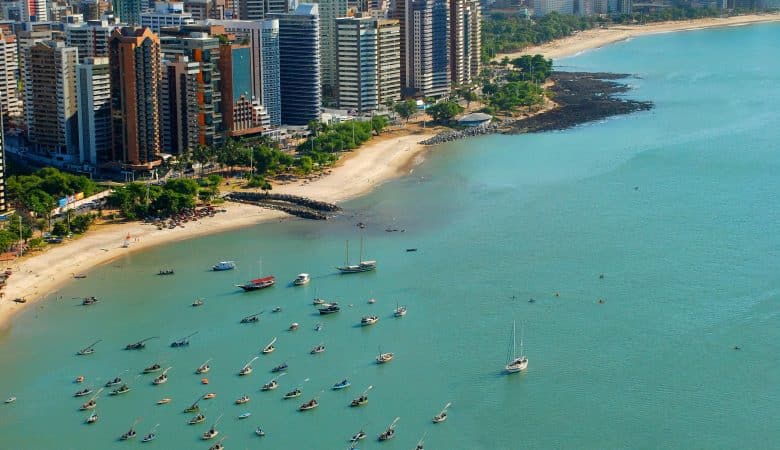
Praia do Mucuripe em Fortaleza - Drone11:14
Fortaleza CE Tourist Attractions
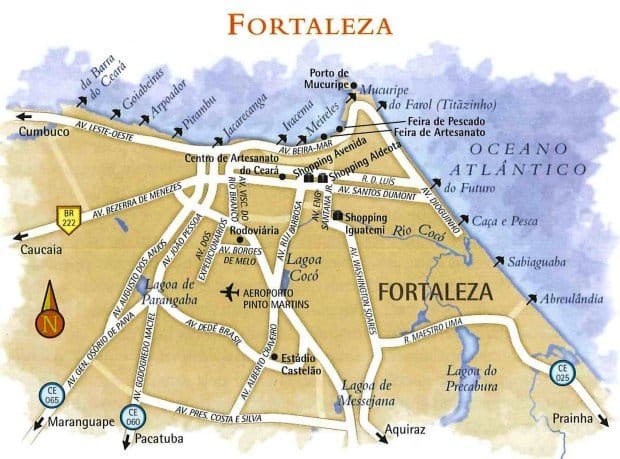
Discover the most beautiful beaches of Ceará in detail.
1. Waterfront neighbourhoods
1.1 Iracema Beach
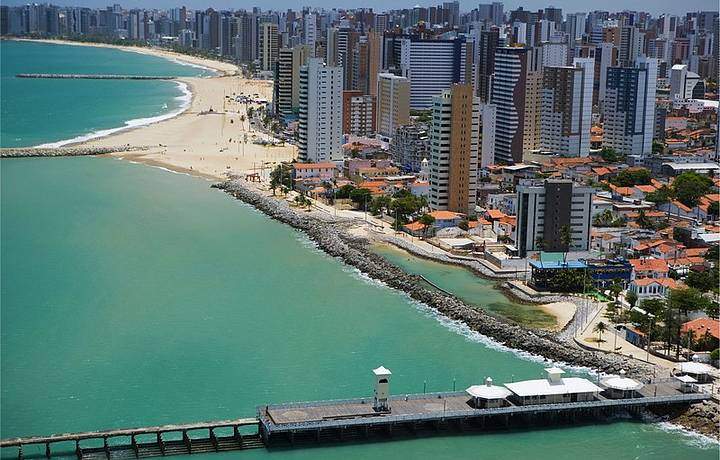
Iracema Beach in Fortaleza is the city’s most famous neighbourhood and is named after the title character of one of the major works of Ceará writer José de Alencar (1829-77).
The sea at Praia de Iracema is not suitable for swimming, but the promenade is always crowded with people walking and jogging around the statue of the Tabajara Indian Iracema. The famous Virgin with the Honey Lips, an emblematic figure of the city, can also be found on the Mucuripe Beach, at the Government Palace and in the Messejana Lagoon.
This section of the Avenida Beira-Mar becomes even busier during the sunset, which can be admired from the viewpoints on the Metal Bridge (built in 1906) and the neighbouring Ingleses Bridge (built in 1923). These platforms stretch out into the sea, a reminder of the time when the Mucuripe Port didn’t exist and ships anchored far from the shore.
The cultural life of Praia de Iracema takes place in the historic buildings, especially those on the Rua dos Tabajaras. Among the bars and restaurants, the Bar do Pirata stands out for its lively forró on Mondays.
1.2 Meirelles and Mucuripe beaches
The beaches of Meireles and Mucuripe, although neighbouring, have different profiles and attract different crowds.
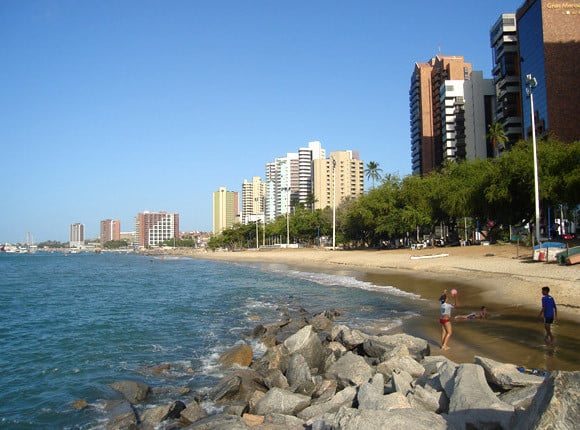
In Meireles, a neighbourhood of family-run hotels and luxurious residences, Fortaleza’s most traditional handicraft fair takes place. With around six hundred stalls set up every day, the fair starts at 6pm in front of the Clube Náutico Atlético Cearense. It’s the perfect place for those looking for souvenirs and local handicrafts.
On the other hand, Mucuripe is a stronghold of the Caiçara community in the heart of the city.
At the end of the afternoon, enjoy a snack at one of the thirty stalls in the fish market. The action in the neighbourhood starts early, at 6am, when the fishermen’s rafts return from the sea with fresh fish. This dynamic makes Mucuripe a lively and authentic place.
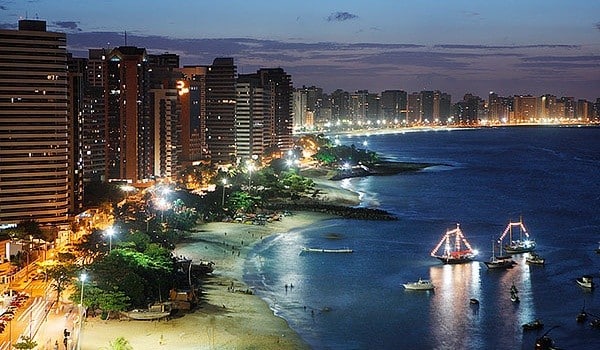
In addition, Mucuripe Beach and Titanzinho Beach, the next beach over, are surfers’ favourites, offering good waves and a relaxed atmosphere. Together, these beaches represent the diversity and cultural richness of Fortaleza, attracting both locals and tourists in search of unique experiences.
1.3 Praia do Futuro
Praia do Futuro is one of the most beautiful and cleanest beaches in Fortaleza, covering eight of the city’s twenty-five kilometres of coastline.
Along its promenade there are stalls offering fresh water showers, chairs and parasols on the sand, as well as drinks and meals.
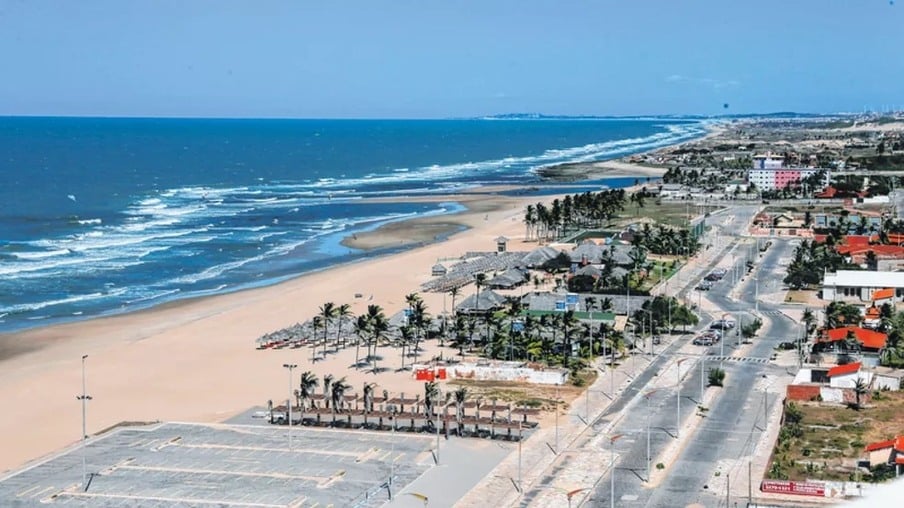
From 4pm, Praia do Futuro gets even livelier. Especially on Tuesdays and Thursdays and on weekends there are music and humour shows. It’s worth remembering that Ceará is the birthplace of some of Brazil’s greatest comedians, such as Renato Aragão, Chico Anysio and Tom Cavalcante.
Praia do Futuro is also known for its clean water and well-developed infrastructure, making it the perfect place to relax and have fun with family or friends.
2. Centre of Fortaleza
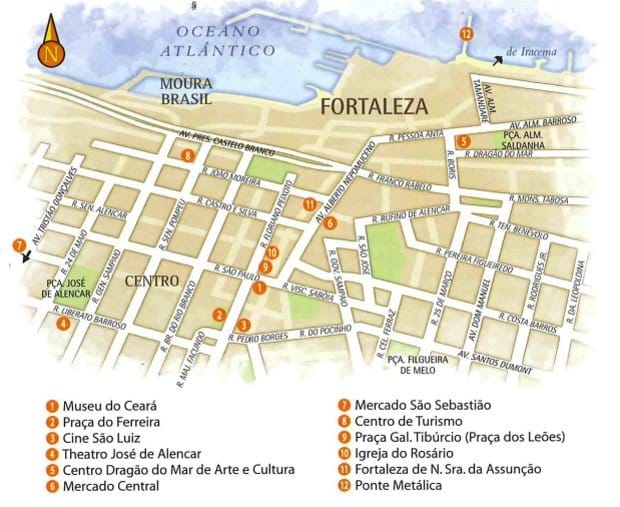
2.1 Walking around the historic centre
A stroll through the historic centre of Fortaleza can begin at the Ceará Museum, near the Iracema Beach, considered by some to be the most important in the city.
The neighbouring General Tibúrcio Cavalcante Square, also known as the Lions Square – due to the life-size bronze animals that adorn it – has been in existence since 1914.
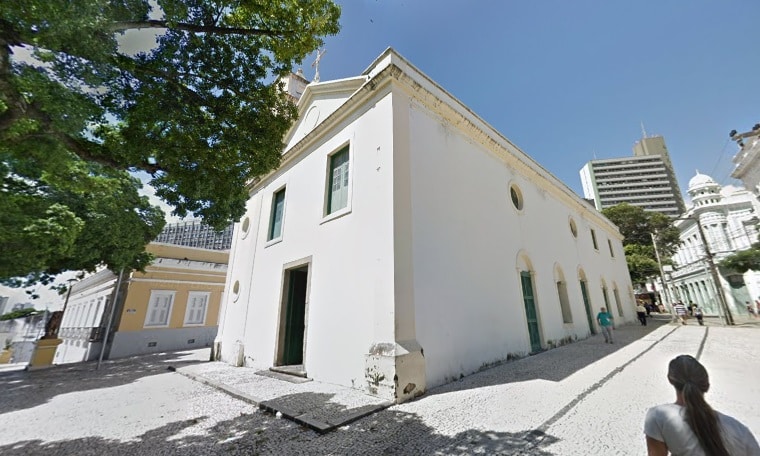
Two imposing 18th century buildings stand out in its surroundings: the Church of Nossa Senhora do Rosário, dating from 1755, which has been restored by the state government, and the Palácio da Luz, once the seat of the government, which now houses the Cearense Academy of Letters..
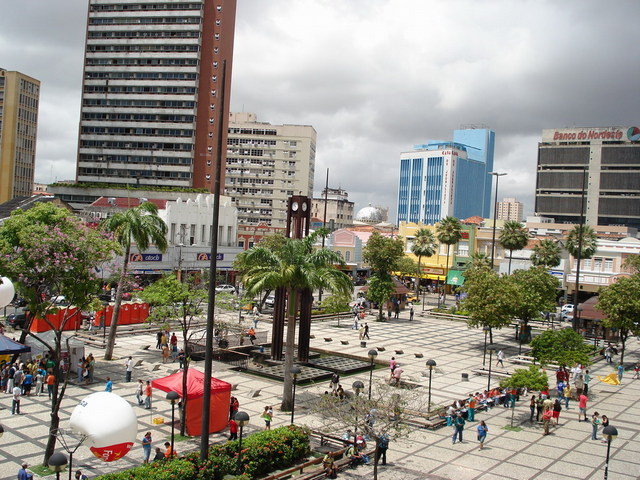
Next you come to the Praça do Ferreira, considered the heart of the centre.
Praça do Ferreira is a vibrant place, full of life and culture, where locals and tourists gather to enjoy the local shops and the various artistic events that take place throughout the day.
This tour offers a rich cultural and historical experience, perfect for those who want to explore the roots of Fortaleza.
2.2 Museum of Ceará
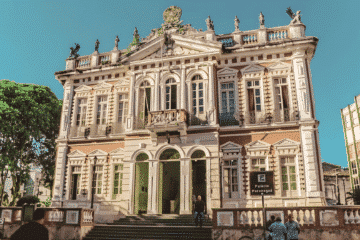
The building that now houses the Ceará Museum began construction in 1855 and was completed in 1871. It was designed for the Provincial Assembly of Ceará, in the middle of the Brazilian empire.
Several engineers succeeded each other in directing the work, which ended with Adolpho Herbster, also hired by the Ceará provincial government to direct urban reforms in the capital, Fortaleza, in the second half of the 19th century.
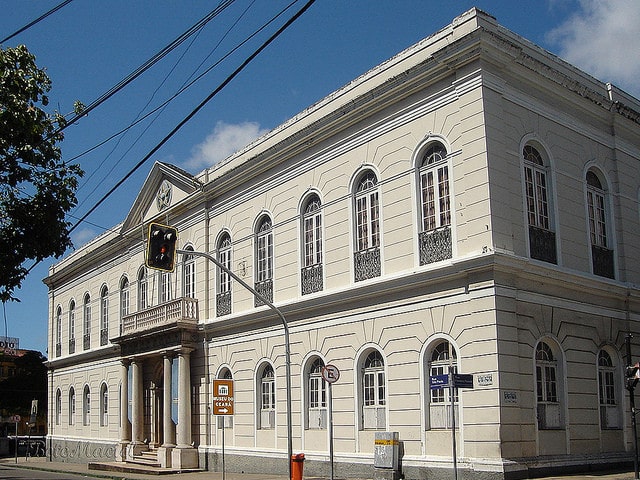
The museum has about 7,000 items in ten rooms. Its collection includes items from Father Cícero and original texts by the popular poet Patativa do Assaré (1909-2002), in the O mote do cordel exhibition.
The geography of the state is presented in the room Ceará, Serra e Mar, while the room Slavery and Abolitionism recounts the episode of the liberation of the slaves in 1884, four years before the Golden Law. Address: Rua S. Paulo, 51, Centro.
2.3 Ferreira Square
Founded in 1825, the city’s main square is surrounded by buildings rich in history. With a style that mixes neoclassical and art deco elements, the Cine São Luiz, completed in 1958 after twenty years of work, has a beautiful Carrara marble staircase and three Czech crystal chandeliers.
Also noteworthy are the Osvaldo Cruz Pharmacy, which has been operating since 1932 in a building dating from 1890, and the Ceará Palace, dating from 1914, which houses the legendary Club Iracema, once a meeting place for high society.
Photographs of these people in costume at the beginning of the 20th century decorate the Pastelaria Leão do Sul, a classic destination for those who want to enjoy a thin pastry accompanied by sugar cane juice, standing up if necessary.
2.4 José de Alencar Theatre
The capital’s most important architectural landmark is this building, constructed between 1908 and 1910, with a metal structure imported from Scotland, eclectic elements and Jugendstil stained glass windows. The garden was designed by the landscape architect Burle Marx.
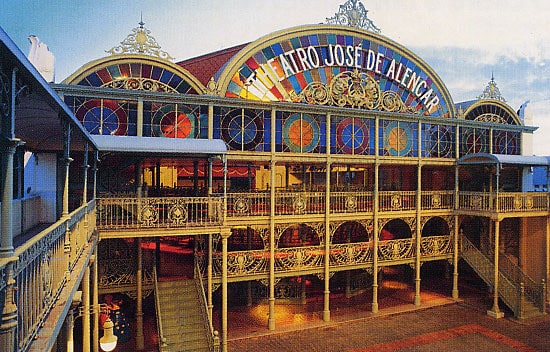
The mobile stage moves forward, up and down. Each box is named after a work by José de Alencar, who is also honoured by a painting on the stage arch by Ceará artist João Vicente. Listed as a Historic-Artistic Site in 1964, the theatre offers guided tours in English and Spanish. Address: Praça José de Alencar, s/n, Centro.
2.5 Dragão do Mar Arts and Culture Centre
Inaugurated in 1998 and housed in a modern, eye-catching building close to the waterfront, Fortaleza‘s largest cultural centre offers an arts and entertainment programme to suit all tastes.
Its 30,000 square metres include art cinemas, a theatre, a planetarium, a public library and exhibition spaces with temporary and permanent exhibitions.
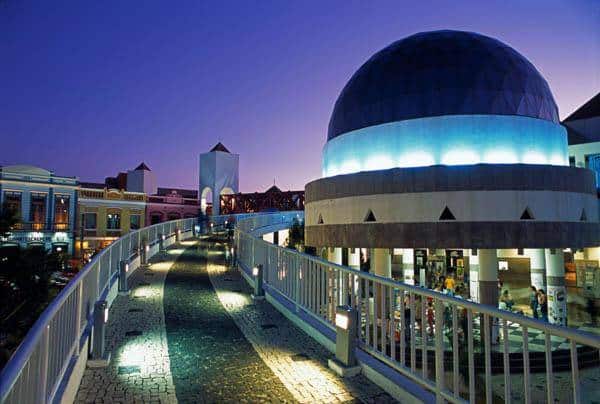
At the Memorial da Cultura Cearense, you can see objects and images from the daily life of the inhabitants of the Cariri hinterland and the state’s cowboys.
The Museum of Contemporary Art of Ceará, meanwhile, highlights the work of José, Leonilson, Bezerra Dias (1957-1993) from Ceará, among the experimental creations of contemporary Brazilian and foreign artists.
The tour can be rounded off with a stop at the café, craft shops or bookshop.
In time: “Dragão do Mar” was the nickname of Francisco José do Nascimento (1839-1914), a jangadeiro from the neighbouring town of Aracati, who refused to transport slaves along the coast of Ceará in 1881 and became an icon of the abolitionist struggle. Address: Rua Dragão do Mar, 81, Praia de Iracema.
2.6 Public markets in Fortaleza
Two large public markets in the centre of Fortaleza may appeal to those interested in immersing themselves in the local culture.
The recently renovated Central Market has 559 shops selling typical food and regional products. Opened in 1809, the market was originally used to sell meat, fruit and vegetables.
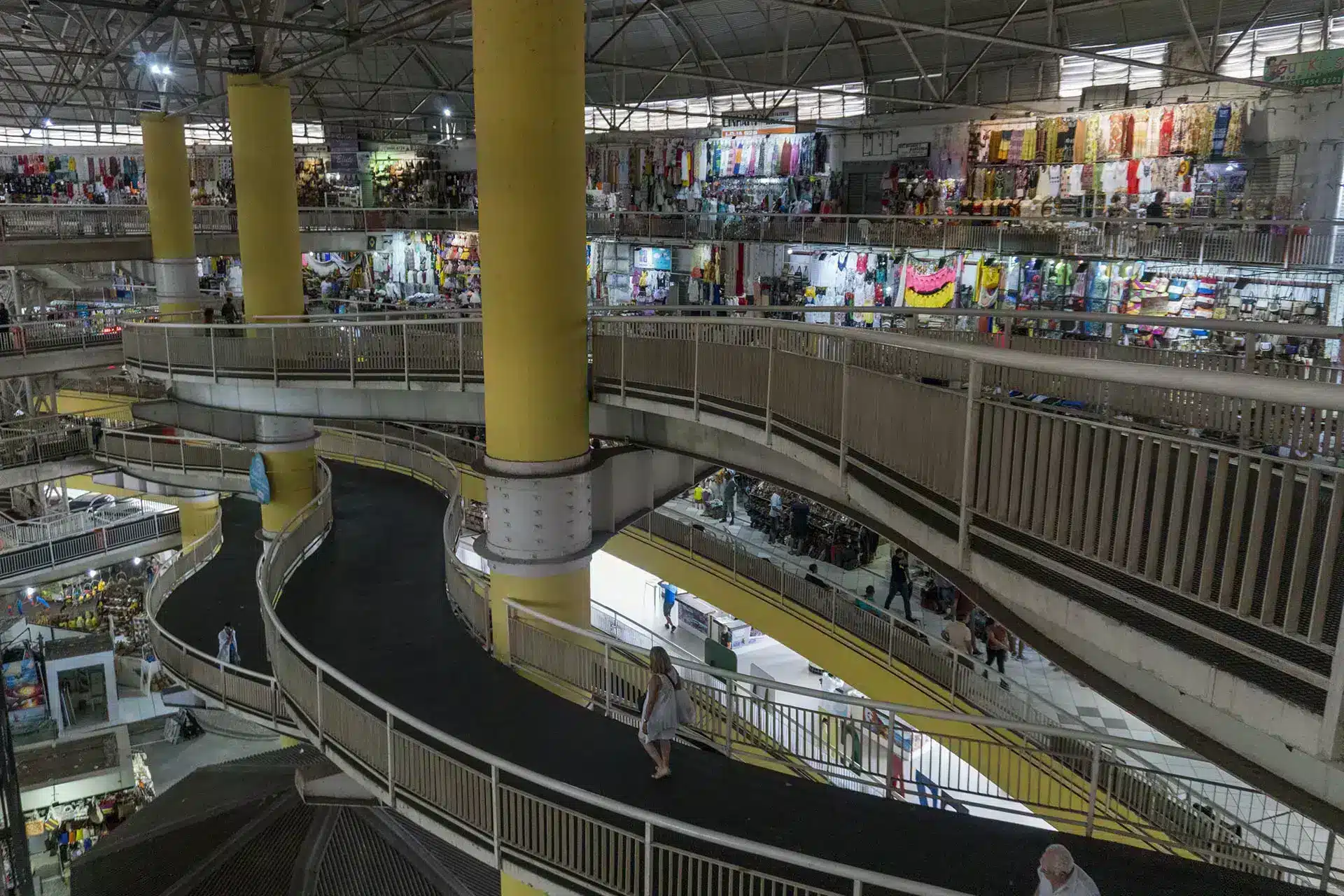
However, about 20 years later, the food gave way to craft stalls. Address: Av. Alberto Nepomuceno, 199, Centro.
The São Sebastião Market, which has no tourist pretensions and is frequented by around 2,000 shoppers a day, mixes fish and household utensils with colourful fruit stalls from the northeast. Here you can try sapoti, pitomba and cajarana. Address: Rua Clarindo de Queirós, 1745, Centro.
2.7 Ceará Tourism Centre
Begun in 1850 and completed only 16 years later, the old Public Prison gave way to the Tourist Centre in 1973.
The Ceará Tourism Centre is an ideal place to shop and learn about the local culture, especially if you are bringing a friend or acquaintance to visit the city.
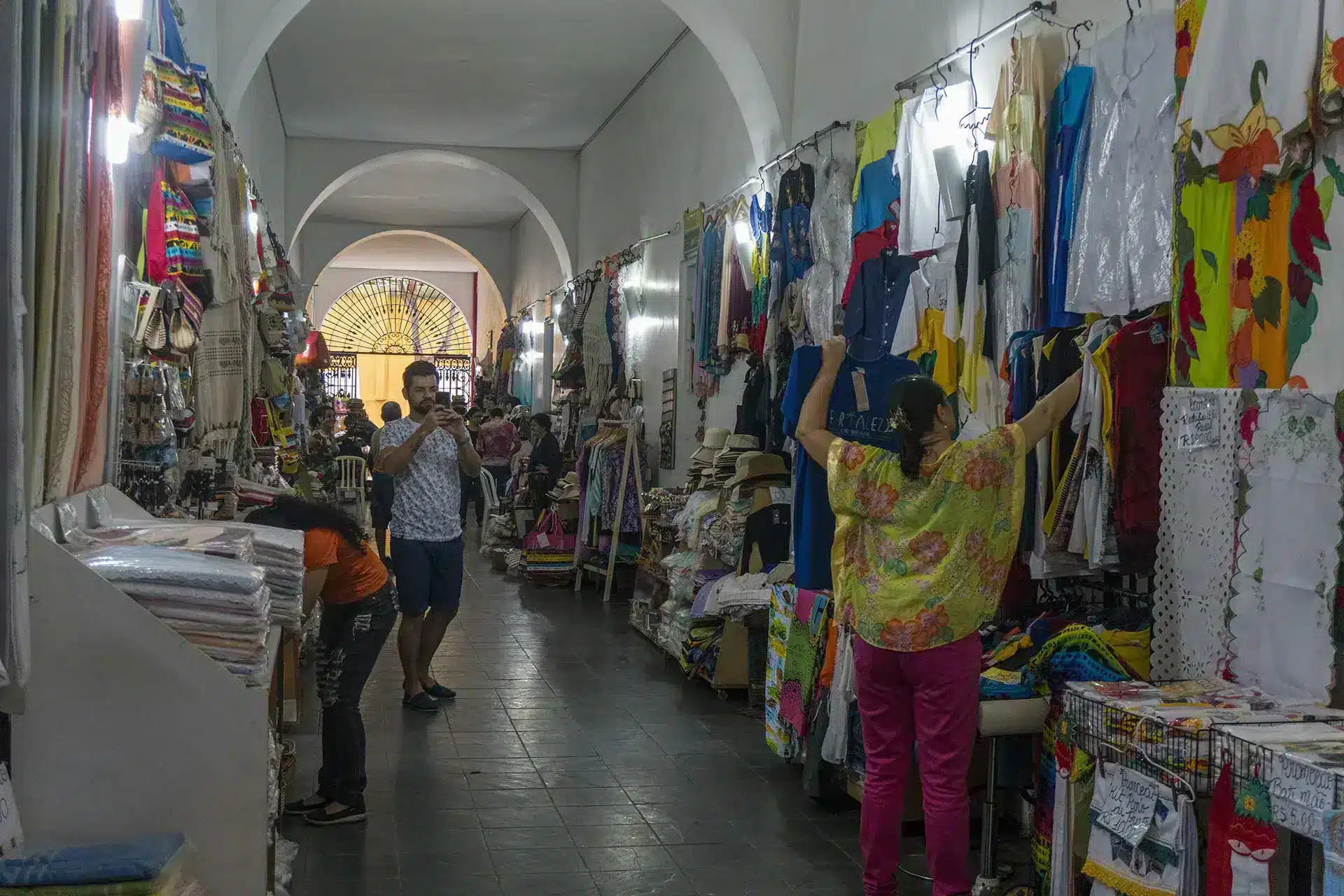
The centre is full of regional handicrafts, typical delicacies, T-shirts and ornaments for souvenirs, as well as embroidered towels of all kinds.
The artisans also make the famous coloured sand bottles. In all, there are more than 100 shops and two museums: the Mineral Museum and the Popular Art and Culture Museum.
The building that now houses the Tourist Centre was once the Fortaleza’s Public Prison. Address: Rua Senador Pompeu, 350, Centro, Fortaleza.
2.8. Ceará Show
Voted the second best attraction in Fortaleza by Trip Advisor, the Ceará Show is the first permanent musical in the state.
In a light-hearted and interactive way, the show tells the story of characters from Ceará who have remained in the memory and imagination of the people, such as India Iracema, Father Cícero and the folkloric character Seu Lunga.
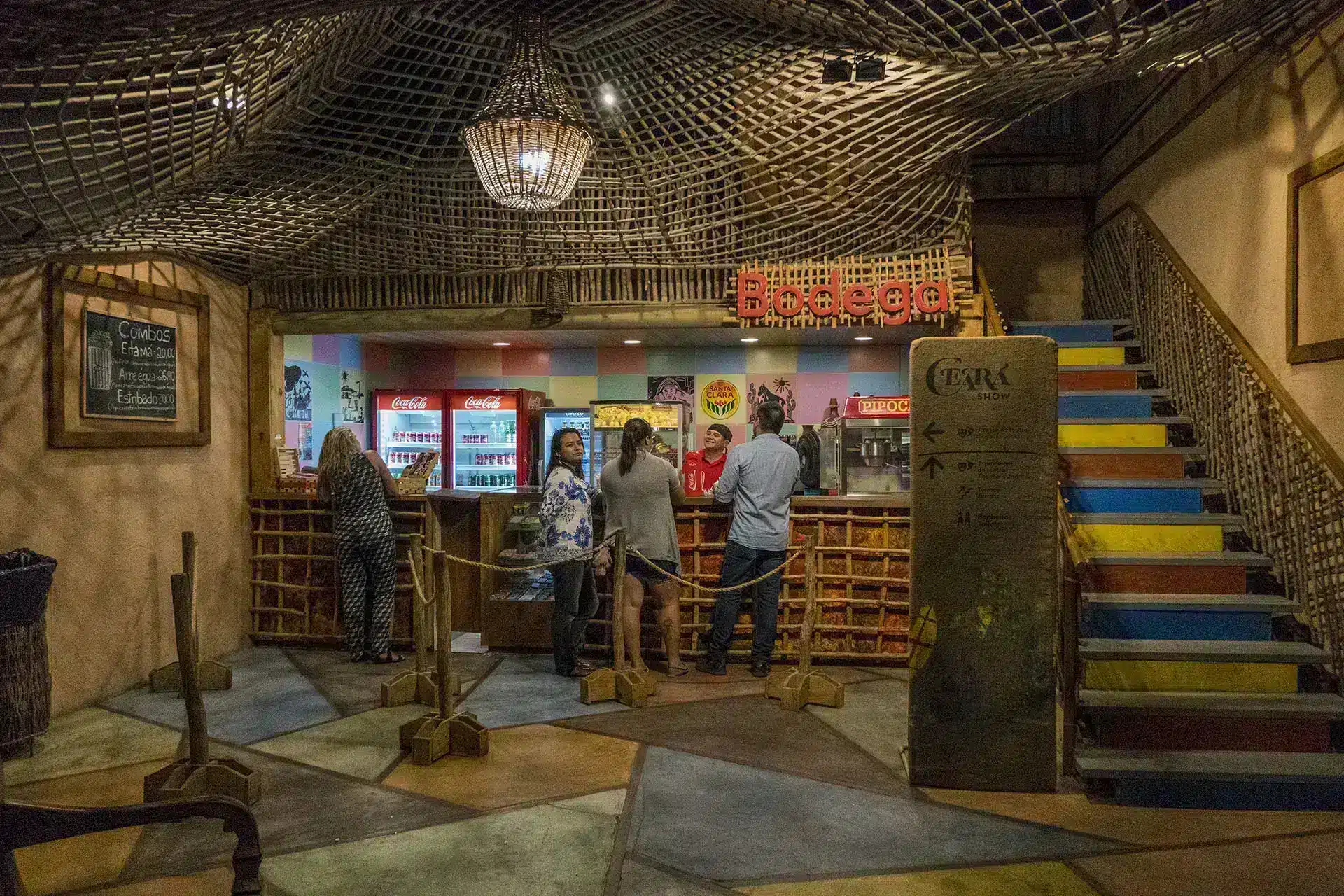
The Ceará Show runs from Thursday to Saturday at 8pm and Sunday at 5pm. It’s impossible not to laugh and be moved by this play, which is both entertaining and a great lesson in Brazilian culture. It’s definitely one of the best things to do at night in Ceará.
3. OTHER TOURIST ACTIVITIES
3.1 José de Alencar House
Part of the 19th century house where the writer José de Alencar was born and lived has been preserved, along with some period furniture, in the remote Alagadiço Novo estate.
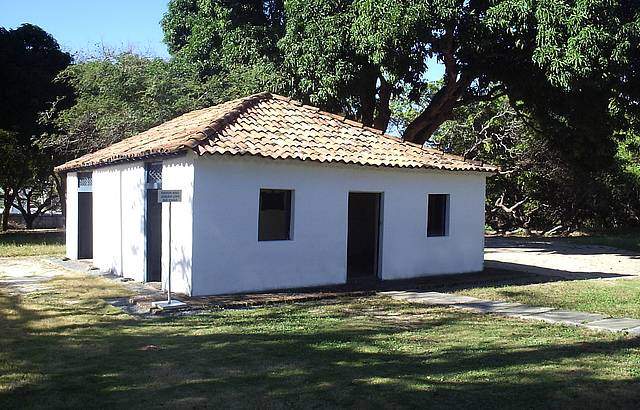
Located in a beautiful green area, the ruins of a sugar mill are well worth a visit, although they could be better maintained and used as a museum. Guides supervise visitors in the morning. Address: Av. Washington Soares, 6055, Alagadiço Novo.
3.2 Art Galleries
The best art exhibitions for sale in Fortaleza take place in two galleries:
- Multiarte: run by the art dealer Max Perlingeiro, director of the Pinakotheke galleries in São Paulo and Rio de Janeiro, it has exhibited works by artists such as Cândido Portinari and Di Cavalcanti, always reproduced in full catalogues. Address: Rua Barbosa de Freitas, 1727, Aldeota.
- Centro Cultural Oboé: The brainchild of the collector Newton Freitas, this centre offers musical and theatrical performances, as well as literary launches. The centre has already presented works by Aldemir Martins, Tarsila do Amaral and Tomie Ohtake. Address: Rua Maria Tomásia, 531, Aldeota.
3.3 Tapioca Route
A delicacy enjoyed throughout the Northeast, Tapioca in Fortaleza even has its own food court: The Tapioqueiras Centre, a series of 26 semi-detached boxes with outdoor tables and their own car park on the way to the eastern beaches via the CE-040 road (at km 10), through Messejana.
Besides the traditional tapioca with fresh coffee, the menu includes chicken, carne-de-sol, prawn, banana and chocolate fillings. Address: Av. Washington Soares, 10215, Messejana.
On the side of the same road, at Rua Barão de Aquiraz, are the tapioqueiros, who have resisted being incorporated into the centre and receive their customers on the verandas of their own houses.
3.4 CachaçaMuseum
The history of Ceará’s pinga production can be discovered in a museum located 25 kilometres southwest of Fortaleza, in the municipality of Maranguape.
Located in the 1846 mansion of the Fazenda Ypióca, the Cachaça Museum is housed in a disused factory and displays machinery, photographs, bottles, old cane mills and huge barrels.
At the end of the tour, there is a souvenir shop and a tasting bar. Address: Fazenda Ypióca, s/n, Ypióca.
3.5 Handicraft shops
Ceará’s rich and varied handicrafts can be seen in various neighbourhoods of the city. In addition to the popular night market on the Meireles waterfront, the Tourism Centre in the central region offers regional products in 99 shops.
Artefacts in fabric, wood and leather, as well as delicacies such as rapadura, sweets and cachaças, are available in a building dating from 1850, which was used as a public prison until 1970. The building also houses the modest Museum of Popular Art and Culture and the Museum of Minerals. Address: Rua Sen.Pompeu, 350, Centre.
More interesting are the four units of the Ceará Handicrafts Centre (Ceart), which is supported by the government. Here you’ll find all kinds of handicrafts, such as hammocks, ceramics, straw and vine weaving and labyrinth lace, an embroidery of Arabic origin that takes a long time to make.
Addresses: Pinto Martins Airport; Iguatemi Shopping Centre; Dragão do Mar Art and Cultural Centre; Av. Santos Dumont, 1589, Aldeota.
3.6 Buggy and 4X4 rides
From the Meireles Beach, near the Clube Náutico, buggy drivers offer day trips to beaches outside the municipality, such as Morro Branco and Canoa Quebrada, along long stretches of sand.
It’s also possible to book longer trips: Jericoacoara, for example, can be reached in two days; Natal, in Rio Grande do Norte, in a fourth day. In these cases, only two passengers with luggage fit in the car and visitors are picked up at hotels.
Trips of more than 300 kilometres can also be made in comfortable four-wheel-drive vehicles that carry six passengers, air conditioning and overnight accommodation in good hotels. Destinations include Jericoacoara, Guaramiranga, Natal, Lençóis Maranhenses and São Luís do Maranhão.
Fortaleza Tourist Guide in Ceará
Publicações Relacionadas
Serra de Ibiapaba: A natural paradise for adventure and ecotourism
Porto das Dunas (Aquiraz) — Beach Park, beaches and things to do in 2026
Ubajara National Park: Adventure Awaits in Ceará
Canoa Quebrada: A Beach Lover's Paradise
Cumbuco: The Ultimate Kitesurfing Destination
West Coast of Ceará: A Hidden Beach Paradise
Rota das Falésias: Descubra o Paraíso Cearense
Paracuru: Your Guide to Water Sports Paradise
East Coast of Ceará: A Traveler's Paradise
Fortim: Exploring the Beauty of Jaguaribe River
Ecotourism and Extreme Sports in Ceará
Baturité Massif: A Scenic Destination in Ceará
Icó: A Historical Gem in Ceará, Brazil
Aracati: Culture, Beaches and Attractions in Canoa Quebrada
The 22 Most Beautiful Beaches in Ceará — Itinerary and Tip
Cariri in Ceará: An Ecological and Cultural Tourism Destination
Route of Emotions: Explore Northeast Brazil's Beauty
Caetanos de Cima is one of the most beautiful beaches in Ceará
3-Day Itinerary in Fortaleza and its Surroundings with Unmissable Tips
Juazeiro do Norte: A Cultural and Historical Overview
Ceará Mountains: A Guide to Nature's Wonders
Religious Tourism in Juazeiro do Norte and in Northeast Brazil
Quixadá: Exploring the Unique Rock Formations
Wind Coast Route: Discover Ceará's Hidden Gems
Ceará: Must-see tourist destinations in Brazil
Things to do in Guaramiranga — a guide to attractions, trails and itinerarie
Kitesurfing in Tatajuba — Spots, Access and Season
Lavras da Mangabeira and the Rio Salgado Canyon Guide
Tatajuba Beach: Tips for Visiting this Paradis
Three-day tour of the Cariri region of Ceará
Jericoacoara (Jeri) — Complete Guide and 5-Day Itinerary
Icapuí: Explore the Land of Lobsters
Accommodation options in Fortaleza: best neighbourhoods and beaches
Beach Park – Complete guide: attractions, tickets and tips for Porto das Duna
This post is also on:
 Português
  English
  Deutsch
  Español
  Français