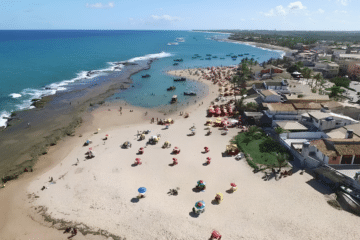
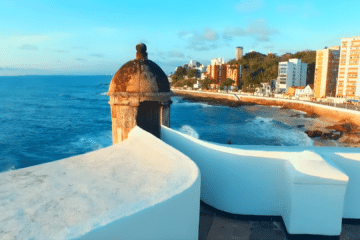
Icapuí, on the easternmost tip of Ceará, some 201 km from Fortaleza, is one of the most authentic destinations in north-eastern Brazil. Known as the “Land of the Lobster”, the town boasts a 65-km coastline with 16 official beaches, where reddish cliffs — the largest continuous stretch of cliffs in Latin America — contrast with the deep blue of the Atlantic.
Historical fact: it was at Ponta Grossa, in Icapuí, that the Spanish explorer Vicente Pinzón landed in February 1500, three months before Cabral’s arrival in Bahia — one of the first places in what is now Brazil to be visited by Europeans.
If you’re looking for a destination that combines tranquillity, unspoilt natural beauty and high-quality cuisine, Icapuí and the east coast of Ceará are the perfect choice.


Geography and the Famous Cliffs Route
Icapuí is the gateway to Ceará for those arriving from Rio Grande do Norte. The municipality forms a strategic part of the Cliff Route, the largest continuous stretch of cliffs in Latin America, featuring dunes, mangroves and natural pools all along the coastline.
This itinerary is a favourite amongst those who love ecotourism and buggy tours, linking iconic destinations such as Aracati, Canoa Quebrada, Beberibe and Fortim. In Icapuí, the route takes on a more rustic and peaceful character, ideal for couples, families or solo travellers looking to escape the hustle and bustle of the big cities. Access by road is via the CE-040, BR-116 and BR-304, and the nearest airports are Aracati (60 km), Mossoró (63 km) and Fortaleza (201 km).
Videos – Tourist information about Icapuí, CE

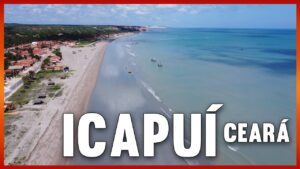
Icapui - Ceará e suas belezas naturais08:26

Icapuí no Ceará

Pesca da Lagosta no Ceará

Icapuí - Pontos Turísticos

Icapuí - Guia Turismo Completo08:25
Things to Do in Icapuí: Unmissable Experiences
As well as relaxing by the sea, Icapuí offers cultural and sporting activities. Check out the latest highlights:
- Lobster cuisine: You simply must try this crustacean. The ‘lobster skewer’ sold on the beach is the region’s trademark dish.
- Raft trips: An authentic way to explore the sea, feel the breeze and learn about the work of local fishermen, particularly at Praia da Redonda.
- Sustainable Tourism: A visit to the Mangue Pequeno Environmental Station at Requenguela Beach is a hands-on lesson in the conservation of mangroves and the municipality’s three environmental protection areas (APAs).
- Kitesurfing: With favourable winds and quieter beaches, such as Tremembé, the destination has become a hotspot for windsurfers.
- Lobster Festival: A free event held every year in May at Praia da Redonda, featuring a food court, a raft regatta, live music and a creative industries fair.
Guide to the Beaches of Icapuí
Each beach has its own distinct character. Find out where to spend your day:

- Ponta Grossa Beach: The most famous and historic beach (the site where Vicente Pinzón landed in 1500). Ideal for taking photos on the cliffs and swimming in the warm waters.
- Peroba Beach: Perfect for those seeking peace and quiet. A fishermen’s haven with cosy guesthouses, about 8 km from the municipal centre.

- Requenguela Beach: An ecotourism paradise, with boardwalks over mangroves, nature watching and a tide that recedes up to 3 km at low tide

- Redonda Beach: The gastronomic and commercial hub, and home to the Lobster Festival. The sunset from the top of the cliffs here is considered the most beautiful in the city.

- Tremembé Beach: Less crowded and ideal for those seeking complete privacy or wanting to go kitesurfing.

- Retiro Grande Beach: Where the fresh water of the stream meets the sea. A bucolic and relaxing setting.

Tips for your trip to Icapuí
- When to go: The sun shines almost all year round. The Lobster Festival, the town’s main cultural and culinary event, takes place every May at Praia da Redonda — it’s worth checking the council’s official calendar before planning your trip.
- Lobster closed season: Lobster fishing is prohibited from 1 November to 30 April, with a total ban on sales between February and April. During these months, please respect the dishes on offer that state their source and avoid encouraging illegal fishing.
- How to get there: The most common route is via Fortaleza, a journey of around 3 hours 30 minutes by car (201 km) via the CE-040 and BR-304. Hiring a car is highly recommended so you can explore the various beaches at your leisure.
- Sustainability: Icapuí is a destination that values the environment, with three environmental protection areas. Practise responsible tourism: take your rubbish home with you and respect the closed seasons for lobsters and manatees, which are also protected in the region.
Frequently Asked Questions about Icapuí and Ceará
How many kilometres of beach are there in Icapuí?
Icapuí has 65 km of coastline and 16 official beaches, set amongst cliffs, dunes, mangroves and coconut groves, on the easternmost tip of Ceará, on the border with Rio Grande do Norte.
How many kilometres is it from Fortaleza to Icapuí?
The distance is approximately 201 km, a journey of around 3 hours and 30 minutes by car via the CE-040 and BR-304.
When is the Lobster Festival in Icapuí?
The event takes place every year in May at Praia da Redonda, combining lobster-based cuisine, live music, a raft race and a creative economy fair.
Which is the best beach in Icapuí?
It depends on what you’re looking for: Ponta Grossa is the most famous and historic; Redonda has the best dining options and the most admired sunset; Requenguela is ideal for ecotourism amidst the mangroves; and Tremembé is a favourite with kitesurfers.
Why is Icapuí known as ‘Lobster Land’?
Small-scale lobster fishing is one of the municipality’s main economic and cultural activities, a tradition celebrated annually at the Lobster Festival and featured in traditional dishes such as lobster skewers, served at beach stalls.

Publicações Relacionadas

Beach Park – Complete guide: attractions, tickets and tips for Porto das Duna
Jericoacoara, Ceará: Complete Guide and 5-Day Itinerary

Guaramiranga: The Complete Guide to the ‘Switzerland of Ceará’ (Itineraries and Tips)
Where to Stay in Fortaleza: Neighbourhoods and Beaches (2026)
What to Do in Fortaleza in 3 Days: A Complete Itinerary
The Best Beaches in Fortaleza and Ceará: A Complete Guide with 22 Options
Religious Tourism in Cariri (CE): Padre Cícero and Pilgrimages
Salgado River Canyon in Lavras da Mangabeira, Ceará

Tourism in the Cariri region of Ceará: A complete 3-day itinerary through the Araripe Geopark
Tatajuba, Ceará: things to do, how to get there and top attractions

Cumbuco Beach (Ceará): The Definitive Guide to Kitesurfing and Leisure
Kitesurfing in Tatajuba — Spots, Access and Season
Serra da Ibiapaba: A Complete Guide to Attractions and Tips
Ubajara National Park: A Complete Visitor’s Guide
Icó, Ceará: History, Architecture and Tourist Attractions
Caetanos de Cima is one of the most beautiful beaches in Ceará
Quixadá, Ceará: Monoliths, the Cedro Dam and the Sertão
Cariri in Ceará: A Comprehensive Guide to Tourism and Culture

The Baturité Massif: A Complete Guide to Tourism in Ceará
Aracati, CE: A Complete Guide to Canoa Quebrada and the Surrounding Area
Aquiraz, Ceará: Guide to Porto das Dunas and Beach Park
Canoa Quebrada, Ceará: A Guide to Cliffs and Beaches
Ceará: The Best of Ecotourism and Extreme Sports in Brazil

Fortim and the Jaguaribe River, Ceará: A Complete Travel Guide

The Costa dos Ventos Route, Ceará: A Complete Guide to 9 Towns
Things to Do in Paracuru, Ceará: Beaches and Sports
The Cliffs Route in Ceará: A Complete Travel Guide
Route of Emotions: An Adventure through North-East Brazil

Juazeiro do Norte: Things to Do and a Guide to Religious Tourism

The Mountains of Ceará: A Guide to Mountain Towns for Tourists
Beaches on the West Coast of Ceará: A Complete Guide
The East Coast of Ceará: A Complete Guide to Beaches and Cliffs
Fortaleza: Complete Guide to What to Do in Ceará's Capital

Ceará: Brazil’s Must-See Tourist Destinations
This post is also on:
 Português
  English
  Deutsch
  Español
  Français