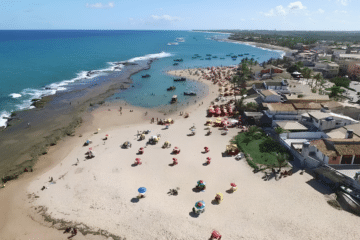
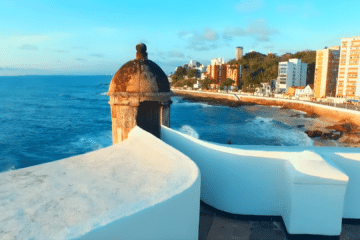
Canoa Quebrada beach is situated 12 km from the town of Aracati, on the east coast of Ceará.
Since the 1970s, Canoa Quebrada has been one of the best-known and most popular beaches in Ceará, as well as being one of the main stops on the Cliff Route.
The beach was the setting for the film “Bela Donna” (1997), produced by Bruno Barreto and directed by Fábio Barreto, and the village is situated on cliffs that rise up to 30 metres above sea level. More recently, Canoa Quebrada also served as a location for the feature film “O Melhor Amigo” (2025), directed by Allan Deberton.

Natural Features
With its reddish sands, Canoa Quebrada grew out of the small fishing village of Vila do Estêvão (Esteves) and, today, tourism is its main source of income.
As well as the magic the place has to offer, the beach offers a variety of activities, such as buggy rides, rafts, mountain biking, sandboarding, nature walks, quad bikes and pay-to-fish.
The region is protected by the Canoa Quebrada Environmental Protection Area (APACQ), established in 1998 by the government of Ceará, which encompasses dunes, cliffs, mangroves and lagoons between Porto Canoa and the mouth of the River Jaguaribe — which is vital for preserving the environmental balance that makes the region such a sought-after destination.

Famous for its lively nights out
Evenings in Canoa Quebrada are lively, attracting people from all over the world and featuring a wide variety of musical styles. The village has a range of restaurants and guesthouses to suit all tastes and budgets.
If you’d like to buy traditional handicrafts made from bottles decorated with coloured sand, it’s well worth visiting Majorlândia, which is just a few kilometres from Canoa Quebrada.

Where to stay in Canoa Quebrada
Canoa Quebrada is a small village and you can get about on foot or by buggy, so the area you choose to stay in has a big impact on the nature of your stay:
- Broadway and Centrinho: the liveliest area, close to bars, restaurants and craft shops — ideal for those who want everything within easy reach and don’t mind the late-night buzz.
- Beachfront: quieter guesthouses, just a few minutes’ walk from Broadway, with the option of sea views.
- The Cliffs Region: panoramic views and a more secluded atmosphere, very popular with couples on romantic getaways.
- Around the village: accommodation further afield, offering more privacy — recommended mainly for those travelling by car.
It’s worth booking in advance during the high season (December to February, New Year and Carnival), when prices rise and the best locations sell out first.
Cuisine in Canoa Quebrada
The cuisine of Canoa Quebrada is dominated by seafood, particularly prawns, but it is also worth trying regional dishes such as peixe na telha (baked on a clay tile), moqueca cearense and the traditional carne de sol. The highest concentration of restaurants is on Broadway, which offers everything from regional eateries and beach huts to international options, such as Italian and Portuguese cuisine — many of which also serve as nightlife hotspots after dinner.
Videos – Tourist information
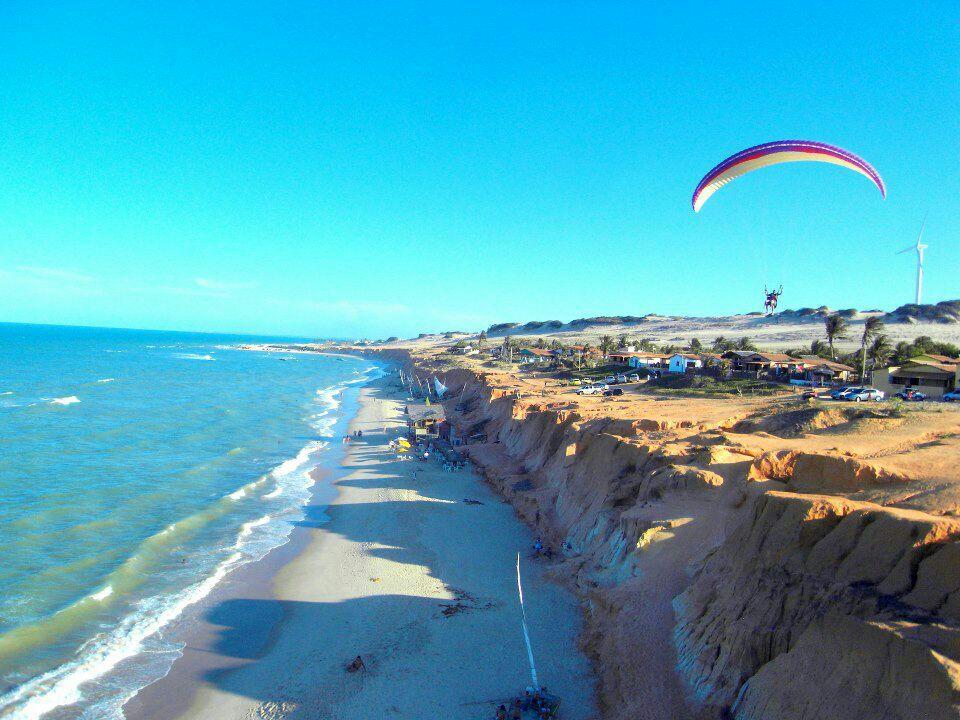
Canoa Quebrada no Ceará - Reportagem05:32

Canoa Quebrada no Ceará - Drone00:59
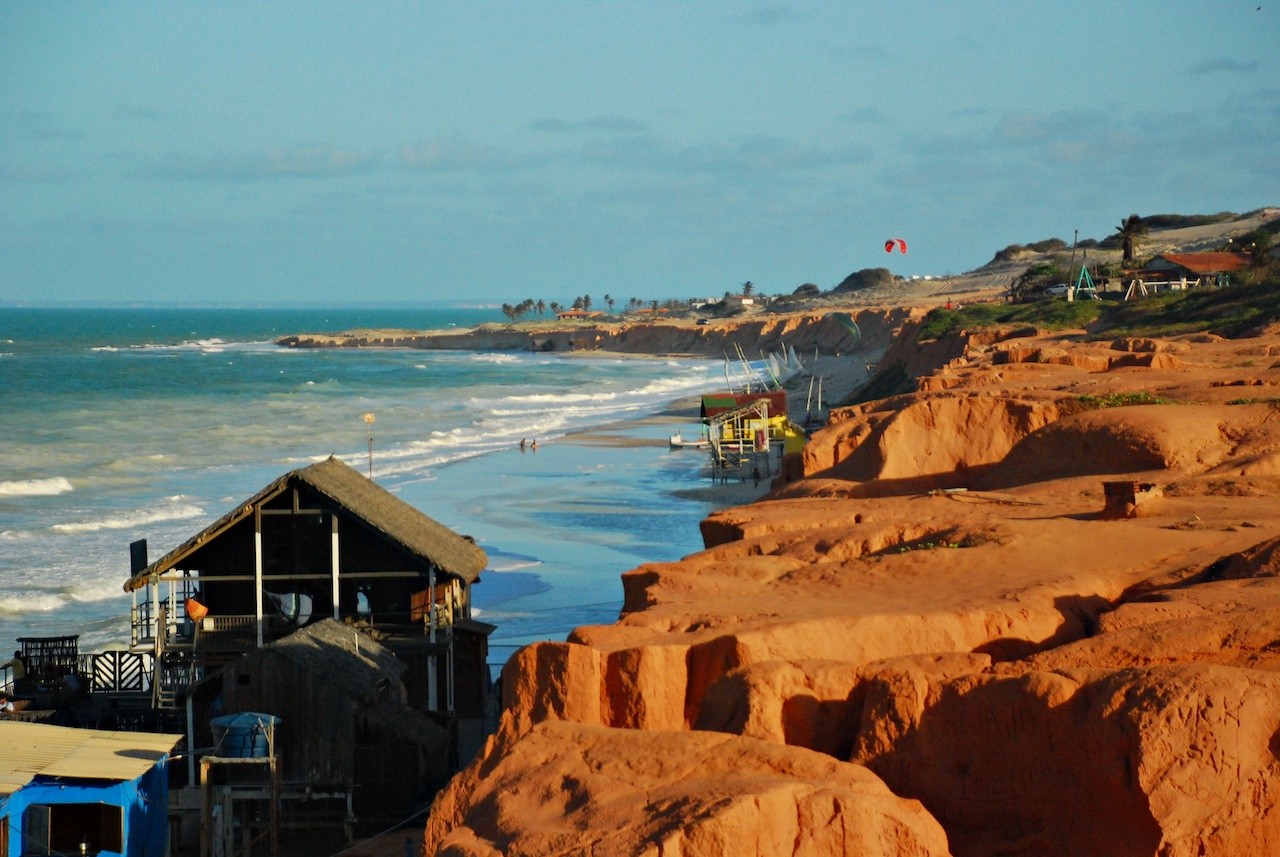
Canoa Quebrada - Lindas Praias e Falésias15:41
Tourist Attractions
Canoa Quebrada is one of Brazil’s most famous tourist destinations, known for its colourful cliffs, stunning beaches and vibrant atmosphere. It offers a variety of attractions and activities to suit all tastes, such as:
- Broadway
- Cliffs
- The hippie legacy
- Buggy Tours
- Paragliding
- The Bells of Canoa Quebrada
- Nearby beaches
Popular Activities
Among the most popular activities are kitesurfing, paragliding and buggy and 4×4 tours of the region. For the more adventurous, there are also guided quad bike or motorbike tours.
Broadway (Rua Dragão do Mar)
On Broadway, Canoa Quebrada’s main street, you’ll find the best bars, restaurants, shops and local culture. It’s a must-visit spot for anyone visiting the town.
Compared to the original in New York, Canoa Quebrada’s Broadway is every bit as good, particularly given the number of people who pack its narrow streets during the high season.

The Cliffs of Canoa Quebrada
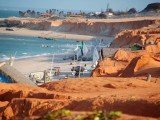
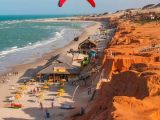
The cliffs are famous for their enormous dunes and vibrant colours, reaching heights of up to 30 metres.

The Legacy of the Hippies
Canoa Quebrada became famous as a destination for European hippies in the 1960s and 1970s, when the area was inhabited by an indigenous tribe and a few fishermen. Many hippies married local people, had children and settled in the region. Today, there are many descendants of Swiss, French and other Europeans amongst the local population.
Although it still retains some of the charm and simplicity of the hippie era, the village has now become a mass tourist destination, with queues of parked coaches during the summer. The stresses of everyday life melt away in the face of the beautiful landscape with its reddish cliffs.

Buggy Tours
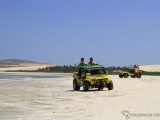
Buggy tours are one of the most popular activities, offering an exciting way to explore the region’s cliffs, dunes and beaches. Local guides offer a variety of itineraries that include tourist attractions and stunning scenery.
Kitesurfing and Windsurfing
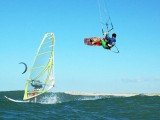
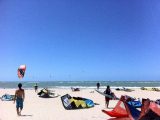
The wind conditions in Canoa Quebrada are ideal for sports such as kitesurfing and windsurfing. There are local schools offering lessons and equipment hire for both beginners and experienced kitesurfers and windsurfers. For those who want to find out more, it’s also worth checking out our definitive guide to kitesurfing in Cumbuco, another great spot in Ceará.
Paragliding
For the adventurous, paragliding offers a unique perspective of the cliffs and beaches, with incredible panoramic views.
The Bells of Canoa Quebrada
The sculptures of the bells, carved into the cliffs, are one of Canoa Quebrada’s landmarks, representing the creativity and artistry of the local residents.
Nearby Beaches
The region’s beaches, which stretch from Praia do Ceará in the east to Retiro Grande, are part of the municipality of Icapuí. Due to the long distances involved, many people prefer to take buggy rides along the sand to explore them, especially Ponta Grossa, which is considered the most beautiful. For a day at the beach, we recommend visiting the village beach, which is easily accessible on foot.
To discover other beaches along the east coast of Ceará, it’s also worth checking out the guide to the East Coast of Ceará and the ranking of the best beaches in Fortaleza and Ceará.
Time of Year
The best time to visit Canoa Quebrada is between September and March, when the weather is drier and temperatures are pleasant, ranging from 25°C to 30°C. During these months, the town welcomes large numbers of tourists, particularly during the New Year and Carnival celebrations, which feature parties and special events.
The months from June to August can see heavier rain and stronger winds, but it is still possible to enjoy the natural beauty and take part in some activities. For those who prefer a quieter atmosphere, the low season, from April to June, can offer a more relaxing experience, with fewer tourists and more affordable accommodation prices.
1–2-day itinerary in Canoa Quebrada
For those short on time, you can experience the highlights of Canoa Quebrada in a day and a half:
- Afternoon of arrival: settle in and take a stroll along Broadway to get your bearings before the evening’s hustle and bustle begins.
- The following morning: book a buggy tour of the cliffs and dunes, stopping at the most photogenic spots and, if it’s the right time of year, making the most of the chance to go sandboarding.
- Late afternoon: head back to the village in time for the sunset over the cliffs, one of the destination’s most popular attractions.
- Evening: Have dinner at one of the restaurants on Broadway and enjoy the nightlife, with live music and bars open late.
- Day 2 (optional): take a buggy ride to Majorlândia to see the coloured sand crafts, or try paragliding over the cliffs before returning to Fortaleza.
Those with more time to spare can extend their itinerary to include other beaches along the Cliffs Route, such as Morro Branco and Majorlândia, or head for the east coast of Ceará towards Icapuí.
How to Get There
Distance from Fortaleza: around 160 km.
1. Private or hire car
Journey time: approximately 2 hours 15 minutes to 2 hours 45 minutes, depending on traffic.
Recommended route: leave Fortaleza via the CE-040, a well-signposted road that passes through Eusébio, Aquiraz, Cascavel, Beberibe and Fortim on its way to Aracati. After Aracati, follow the signs for Canoa Quebrada, which is approximately 12 km away via the CE-371.
2. Buses
Duration: approximately 3 to 4 hours, depending on traffic and stops.
Company: The main bus company operating on this route is Viação São Benedito.
Where to catch the bus: Buses depart from the Engenheiro João Thomé Coach Station in Fortaleza and take you to Aracati coach station, where you can catch a taxi or local transport to Canoa Quebrada.
3. Private Transfers
Duration: approximately 2 hours 15 minutes to 2 hours 45 minutes.
Services: A number of companies and travel agencies offer direct transfer services from Fortaleza to Canoa Quebrada.
Frequently asked questions about Canoa Quebrada, in Ceará
How many kilometres is Canoa Quebrada from Fortaleza?
Canoa Quebrada is about 160 km from Fortaleza, a journey by car taking approximately 2 hours 15 minutes to 2 hours 45 minutes via the CE-040.
Which municipality does Canoa Quebrada belong to?
Canoa Quebrada is a district of the municipality of Aracati, on the east coast of Ceará, situated 12 km from the municipal centre.
Which film was shot in Canoa Quebrada?
The best-known is *Bela Donna* (1997), produced by Bruno Barreto and directed by Fábio Barreto. More recently, the beach was also used as a location for the film *O Melhor Amigo* (2025).
When is the best time to visit Canoa Quebrada?
The period between September and March, when the weather is drier and temperatures range between 25°C and 30°C, is considered ideal — particularly during the New Year and Carnival celebrations.
What is Canoa Quebrada’s Broadway?
It is the village’s main street, home to bars, restaurants, shops and the local nightlife — one of the destination’s busiest meeting places.
How do you get to Canoa Quebrada without a car?
You can take a bus operated by Viação São Benedito, departing from the Engenheiro João Thomé Coach Station in Fortaleza, or book a private transfer directly to the village.
Where’s the best place to stay in Canoa Quebrada?
It depends on what you’re looking for: near Broadway for those who want convenience and a lively nightlife, or along the seafront or in the cliffside area for those seeking a more peaceful atmosphere and panoramic views.
Is it possible to see Canoa Quebrada in a day?
You can experience the highlights — dune buggy rides along the cliffs, the sunset and Broadway in the evening — in a day, but two days allow you to also visit Majorlândia or go paragliding at a more leisurely pace.

Publicações Relacionadas

Beach Park – Complete guide: attractions, tickets and tips for Porto das Duna
Jericoacoara, Ceará: Complete Guide and 5-Day Itinerary

Guaramiranga: The Complete Guide to the ‘Switzerland of Ceará’ (Itineraries and Tips)

Where to Stay in Fortaleza: Neighbourhoods and Beaches (2026)
What to Do in Fortaleza in 3 Days: A Complete Itinerary
The Best Beaches in Fortaleza and Ceará: A Complete Guide with 22 Options
Religious Tourism in Cariri (CE): Padre Cícero and Pilgrimages

Salgado River Canyon in Lavras da Mangabeira, Ceará

Tourism in the Cariri region of Ceará: A complete 3-day itinerary through the Araripe Geopark
Icapuí, Ceará: The perfect destination for those seeking the ‘Land of the Lobster’
Tatajuba, Ceará: things to do, how to get there and top attractions

Cumbuco Beach (Ceará): The Definitive Guide to Kitesurfing and Leisure
Kitesurfing in Tatajuba — Spots, Access and Season
Serra da Ibiapaba: A Complete Guide to Attractions and Tips
Ubajara National Park: A Complete Visitor’s Guide
Icó, Ceará: History, Architecture and Tourist Attractions
Caetanos de Cima is one of the most beautiful beaches in Ceará
Quixadá, Ceará: Monoliths, the Cedro Dam and the Sertão
Cariri in Ceará: A Comprehensive Guide to Tourism and Culture

The Baturité Massif: A Complete Guide to Tourism in Ceará
Aracati, CE: A Complete Guide to Canoa Quebrada and the Surrounding Area
Aquiraz, Ceará: Guide to Porto das Dunas and Beach Park
Ceará: The Best of Ecotourism and Extreme Sports in Brazil

Fortim and the Jaguaribe River, Ceará: A Complete Travel Guide

The Costa dos Ventos Route, Ceará: A Complete Guide to 9 Towns
Things to Do in Paracuru, Ceará: Beaches and Sports
The Cliffs Route in Ceará: A Complete Travel Guide
Route of Emotions: An Adventure through North-East Brazil

Juazeiro do Norte: Things to Do and a Guide to Religious Tourism

The Mountains of Ceará: A Guide to Mountain Towns for Tourists
Beaches on the West Coast of Ceará: A Complete Guide
The East Coast of Ceará: A Complete Guide to Beaches and Cliffs
Fortaleza: Complete Guide to What to Do in Ceará's Capital
Ceará: Brazil’s Must-See Tourist Destinations
This post is also on:
 Português
  English
  Deutsch
  Español
  Français