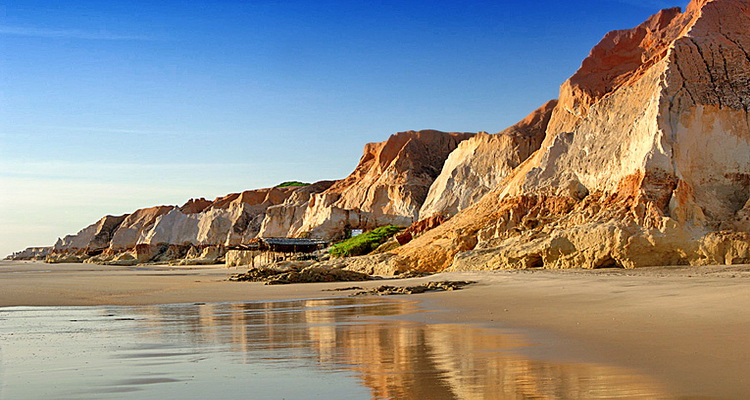
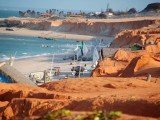
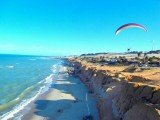
The Cliff Route in Ceará stretches for over 200 kilometres of stunning beaches, with the sea on one side and walls of coloured sand on the other, offering visitors unforgettable experiences.

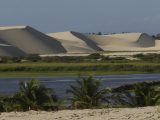
Famous for its scenery, Canoa Quebrada beach captivates tourists from all over the world with its white dunes and cliffs of coloured sand. However, the east coast of Ceará holds other hidden gems for sun and beach lovers.
Whilst travelling along the Cliff Route, tourists can explore a wealth of landscapes, culture and attractions along the way. Starting from Fortaleza, you can discover the main tourist attractions along the Ceará coast on a tour lasting up to eight days.

As well as Fortaleza, the Cliffs Route itinerary includes the municipalities of Aquiraz, Cascavel, Beberibe, Aracati and Icapuí, reaching close to the border with Rio Grande do Norte.
Aquiraz and Beach Park: the first stop on the Cliffs Route
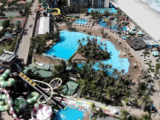
The first stop, Aquiraz, is known for its historic centre and is home to the largest water park in Latin America, Beach Park, situated just 32.3 km from Fortaleza.

Cascavel: Águas Belas Beach and the Mal Cozinhado River
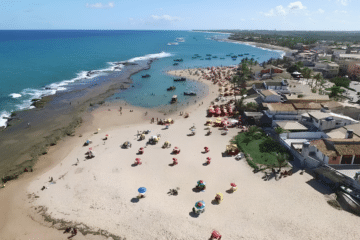
In Cascavel, the Handicraft Centre and Águas Belas Beach, which is bordered by the Mal Cozinhado River, are highlights. At low tide, small, inviting islands of sand form.
Beberibe: Morro Branco and Praia das Fontes
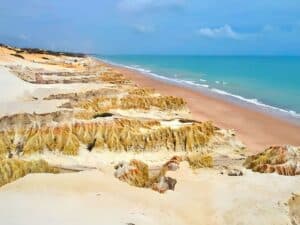
Beberibe is famous for its natural beauty, including Morro Branco beach, home to the Cliffs Natural Monument, and Fontes Beach, known for the variety of colours of the sand.
Aracati and Canoa Quebrada: the heart of the Cliffs Route
Aracati is the gateway to Canoa Quebrada, the route’s most famous beach, with its reddish cliffs reaching up to 30 metres and a nightlife centred on Broadway. On the way between Aracati and Icapuí, it’s also worth stopping off at Fortim, at the mouth of the River Jaguaribe.
Icapuí: the Land of the Lobster and the final stop
The journey culminates in Icapuí, 201 km from Fortaleza, renowned as the land of the lobster — and also known as the place where the sun rises first in Ceará. The municipality boasts 65 km of coastline and 16 official beaches, including the route’s main attractions: Ponta Grossa, Redonda and Tremembé.
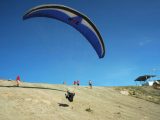
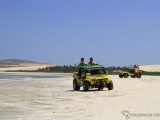
Along the Cliff Trail, you can enjoy buggy and raft trips, as well as panoramic tours. Some beaches offer opportunities to practise sports such as kitesurfing.
In Canoa Quebrada, young people enjoy the fun “skibunda” — sliding down the dunes on wooden boards.


Video about the cliff trail in Ceará
Reportagem sobre a Rota das Falésias no Ceará07:56

Rotas das Falésias no Ceará04:00

Beberibe - Rota das Falésias03:32

Praias das Fontes em Beberibe CE00:59

Praia do Morro Branco em Beberibe CE01:32
Rota das Falésias - Cenários de Cores04:00

Morro Branco, Praia das Fontes e Canoa Quebrada11:16
Suggested itinerary: how to plan your days on the Cliffs Route
The full itinerary can be adapted to suit the time available. One possible breakdown for those who have the 8 days mentioned:
- Days 1–2 — Aquiraz and Porto das Dunas: the historic centre of Aquiraz in the morning, followed by the whole afternoon at Beach Park or on Porto das Dunas beach.
- Day 3 — Cascavel: Águas Belas Beach, a walk along the Mal Cozinhado River at low tide and a visit to the Handicraft Centre.
- Day 4 — Beberibe: Morro Branco in the morning (buggy ride along the cliffs) and Praia das Fontes in the afternoon.
- Days 5–6 — Aracati and Canoa Quebrada: Aracati’s historic centre, the cliffs of Canoa Quebrada by buggy, sunset and an evening on Broadway.
- Day 7 — Fortim: a boat trip to the mouth of the River Jaguaribe and the municipality’s quiet beaches.
- Day 8 — Icapuí: Ponta Grossa, Redonda or Tremembé, bringing the trip to a close in lobster country.
For those on a tighter schedule, a 3- to 4-day itinerary covering just Aquiraz, Beberibe and Canoa Quebrada gives a good taste of the route, as these are the destinations with the best tourist facilities.
Best time of year to do the Cliffs Trail
The region has a hot tropical climate all year round, but certain periods are better suited to particular activities:
- July to January: the driest period, with stronger winds — ideal for those who want to combine the route with kitesurfing and windsurfing on the beaches that offer these conditions.
- December to February: peak season, with New Year’s Eve and Carnival celebrations bringing Canoa Quebrada to life — book your accommodation well in advance during this period.
- February to May: the rainiest period, with fewer tourists and lower prices — a good option for those seeking peace and quiet, even if the weather is more changeable.
Where to stay on the Cliffs Route
There are two ways to organise accommodation along the route:
- Fixed base: stay in one place — usually Porto das Dunas (Aquiraz) or Canoa Quebrada, which have the best range of guesthouses and resorts — and make day trips by buggy or car to the other beaches. This works well for those who have 3 to 5 days.
- Itinerant accommodation: change guesthouses every 1–2 towns, following the day-by-day itinerary suggested above. It requires a bit more planning, but allows you to enjoy each destination at a more leisurely pace, especially in the evenings — it’s well worth it for those who have a full 6 to 8 days.
Aquiraz and Canoa Quebrada offer the widest range of accommodation along the route; in Cascavel, Fortim and Icapuí, however, the options are more limited and it is worth booking in advance, particularly during the high season.
Summary table: the stops on the Cliffs Route
| City | Main attractions | Distance from Fortaleza |
|---|---|---|
| Aquiraz | Beach Park, Porto das Dunas, historic centre | ~32 km |
| Rattlesnake | Águas Belas Beach, Rio Mal Cozinhado, handicrafts | ~65 km |
| Beaver | Morro Branco, Praia das Fontes | ~85 km |
| Aracati / Canoa Quebrada | Cliffs, Broadway, nightlife | ~160 km |
| Fearless | The mouth of the River Jaguaribe, boat trips | ~134 km |
| Icapuí | Ponta Grossa, Redonda, Tremembé — home of the lobster | ~201 km |
Approximate distances by road from Fortaleza. Use this as a guide when planning your journey and check the latest route before setting off.
Frequently asked questions about the Cliffs Route in Ceará
How many days does it take to travel the Cliffs Route?
It is possible to complete the entire route in up to 8 days, stopping in each town, but you can also visit the main highlights (Aquiraz, Beberibe and Canoa Quebrada) on a 2- to 3-day day trip from Fortaleza.
Which towns are part of the Cliffs Route?
Aquiraz, Cascavel, Beberibe, Aracati (including Canoa Quebrada) and Icapuí, as well as Fortim along the way — all on the east coast of Ceará, between the capital and the border with Rio Grande do Norte.
Which is the most famous beach on the Cliffs Route?
Canoa Quebrada, in Aracati, is the best known internationally, with its reddish cliffs and nightlife on Broadway. Morro Branco, in Beberibe, is also one of the route’s postcard-perfect spots.
What is ‘skibunda’?
It is a traditional game played on the dunes of Canoa Quebrada: sliding down the dune whilst sitting on a wooden board, much like a sand toboggan.
Why is Icapuí known as the ‘land of the lobster’?
Because it is one of the largest producers of lobster in Ceará and Brazil, with lobster fishing being one of the region’s main economic and cultural activities.
Is it possible to do the Cliffs Route without your own car?
Yes, but with some limitations. There are regular buses from Fortaleza to Aracati and Icapuí, but to visit the more remote beaches and go on buggy tours between the towns, it’s best to have your own car, book transfers or join organised tours.
Conclusion
The Cliff Trail in Ceará is an unmissable experience, combining natural beauty, vibrant culture and a variety of activities, making it an ideal destination for those seeking adventure and relaxation.

Publicações Relacionadas

Beach Park – Complete guide: attractions, tickets and tips for Porto das Duna
Jericoacoara, Ceará: Complete Guide and 5-Day Itinerary

Guaramiranga: The Complete Guide to the ‘Switzerland of Ceará’ (Itineraries and Tips)

Where to Stay in Fortaleza: Neighbourhoods and Beaches (2026)
What to Do in Fortaleza in 3 Days: A Complete Itinerary
The Best Beaches in Fortaleza and Ceará: A Complete Guide with 22 Options

Religious Tourism in Cariri (CE): Padre Cícero and Pilgrimages

Salgado River Canyon in Lavras da Mangabeira, Ceará

Tourism in the Cariri region of Ceará: A complete 3-day itinerary through the Araripe Geopark
Icapuí, Ceará: The perfect destination for those seeking the ‘Land of the Lobster’

Tatajuba, Ceará: things to do, how to get there and top attractions

Cumbuco Beach (Ceará): The Definitive Guide to Kitesurfing and Leisure
Kitesurfing in Tatajuba — Spots, Access and Season
Serra da Ibiapaba: A Complete Guide to Attractions and Tips
Ubajara National Park: A Complete Visitor’s Guide
Icó, Ceará: History, Architecture and Tourist Attractions
Caetanos de Cima is one of the most beautiful beaches in Ceará
Quixadá, Ceará: Monoliths, the Cedro Dam and the Sertão
Cariri in Ceará: A Comprehensive Guide to Tourism and Culture

The Baturité Massif: A Complete Guide to Tourism in Ceará
Aracati, CE: A Complete Guide to Canoa Quebrada and the Surrounding Area
Aquiraz, Ceará: Guide to Porto das Dunas and Beach Park
Canoa Quebrada, Ceará: A Guide to Cliffs and Beaches
Ceará: The Best of Ecotourism and Extreme Sports in Brazil

Fortim and the Jaguaribe River, Ceará: A Complete Travel Guide

The Costa dos Ventos Route, Ceará: A Complete Guide to 9 Towns
Things to Do in Paracuru, Ceará: Beaches and Sports
Route of Emotions: An Adventure through North-East Brazil

Juazeiro do Norte: Things to Do and a Guide to Religious Tourism

The Mountains of Ceará: A Guide to Mountain Towns for Tourists
Beaches on the West Coast of Ceará: A Complete Guide
The East Coast of Ceará: A Complete Guide to Beaches and Cliffs
Fortaleza: Complete Guide to What to Do in Ceará's Capital

Ceará: Brazil’s Must-See Tourist Destinations
This post is also on:
 Português
  English
  Deutsch
  Español
  Français