Discover the Serra da Capivara National Park: A treasure of history, archaeology and nature in Piauí
The Serra da Capivara National Park, located in the south-east of the Brazilian state of Piauí, is one of the country’s most fascinating tourist destinations, especially for lovers of history, archaeology and nature.
Declared a UNESCO World Heritage Site in 1991, the park is home to the largest concentration of prehistoric archaeological sites in the Americas, with cave paintings dating back up to 50,000 years.
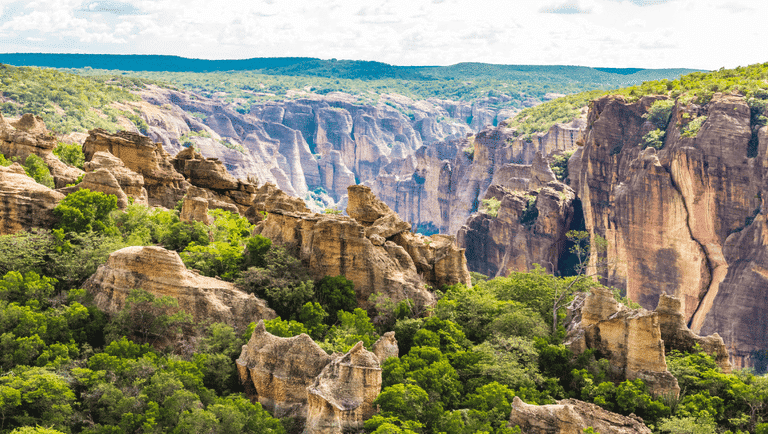
Area and archaeological sites
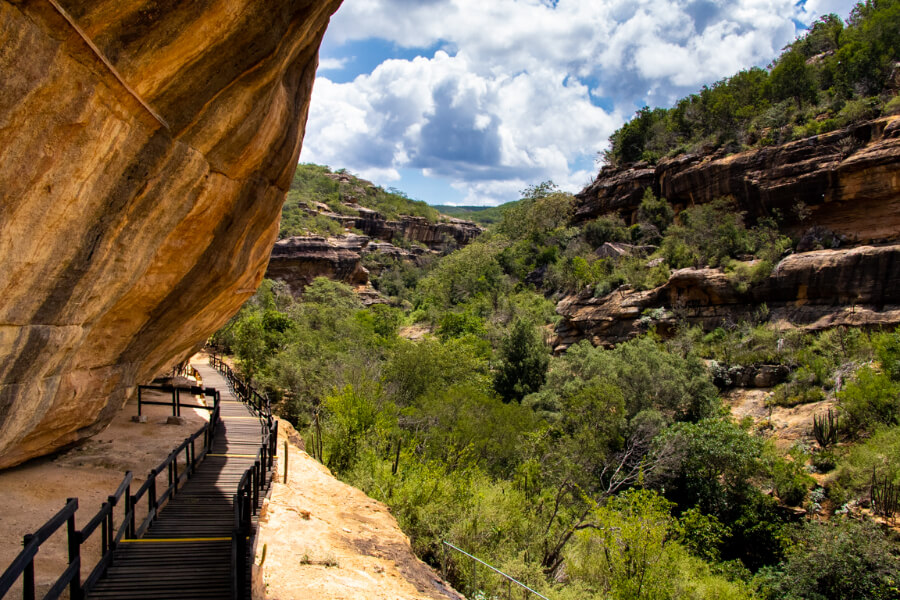
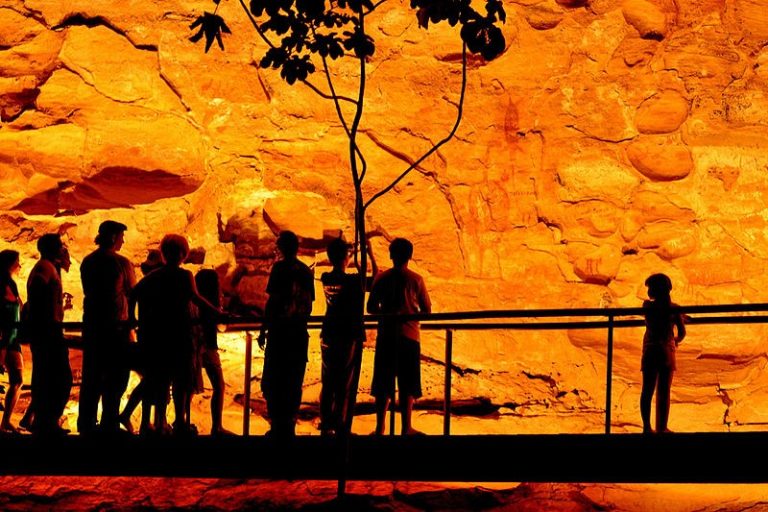
The park covers 129,140 hectares and contains more than 800 archaeological sites, 128 of which are open to the public. Visitors have access to safe trails and stairways that bring them closer to the petroglyphs.
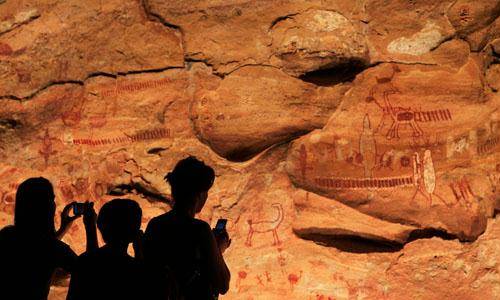
Human settlement
Archaeologist Niede Guidon, who runs the park in partnership with Ibama, has found evidence of human settlement dating back 100,000 years, challenging the classical theory that humans arrived in the Americas via the Bering Strait only 20,000 years ago.
Natural beauty
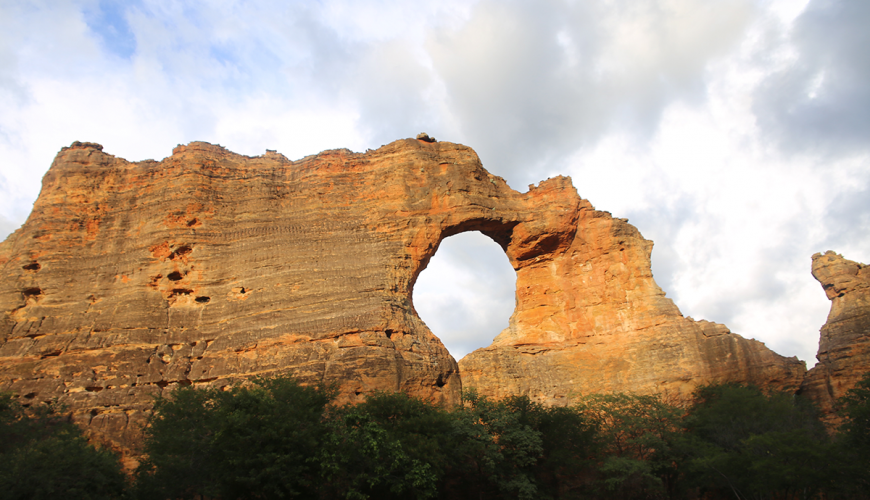
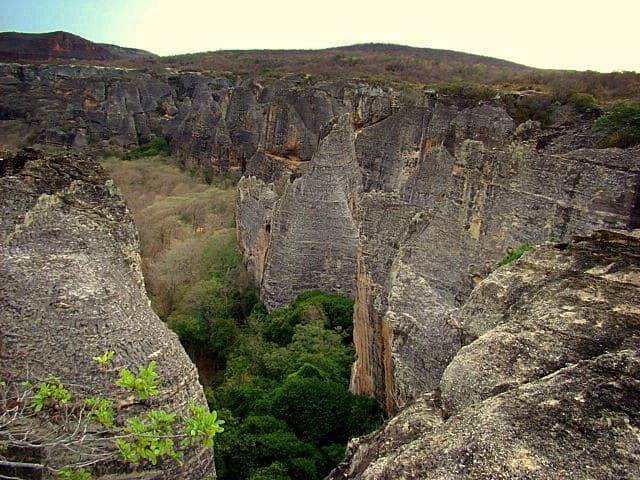
Whatever the controversy, the Serra da Capivara National Park is a stunning place, surrounded by rugged terrain and rocky outcrops covered in undergrowth. In the highest parts, the forests have trees over 20 metres high.
The park’s fauna includes more than thirty species of mammals, two hundred species of birds, as well as lizards, frogs and snakes.
Exploring the park
Visitors can explore the park by car, but those who prefer to walk can choose between easy and difficult trails.
Adventure sports are forbidden and it is compulsory to be accompanied by a guide, who can be hired in local hotels or at the town reception centre. For the visit, it is essential to wear comfortable clothes, trainers, a hat and sunscreen.
Attractions in Serra da Capivara

Parque Nacional Serra da Capivara49:47
Parque Nacional Serra da Capivara - Reportagem
Parque Nacional Serra da Capivara - Episódio 106:14
Parque Nacional Serra da Capivara - Episódio 206:25
1. Archaeological sites
The Park has around 1,300 registered archaeological sites, many of which have preserved cave paintings.
Among the most famous are Boqueirão da Pedra Furada and Toca do Boqueirão da Pedra Furada, where traces have been found of human presence in the region thousands of years ago.
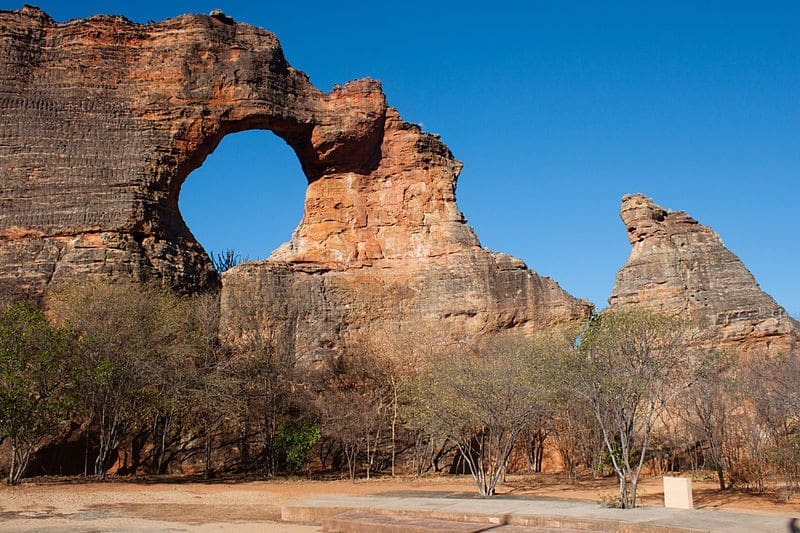
– Boqueirão da Pedra Furada
This iconic attraction is the postcard of the Park.
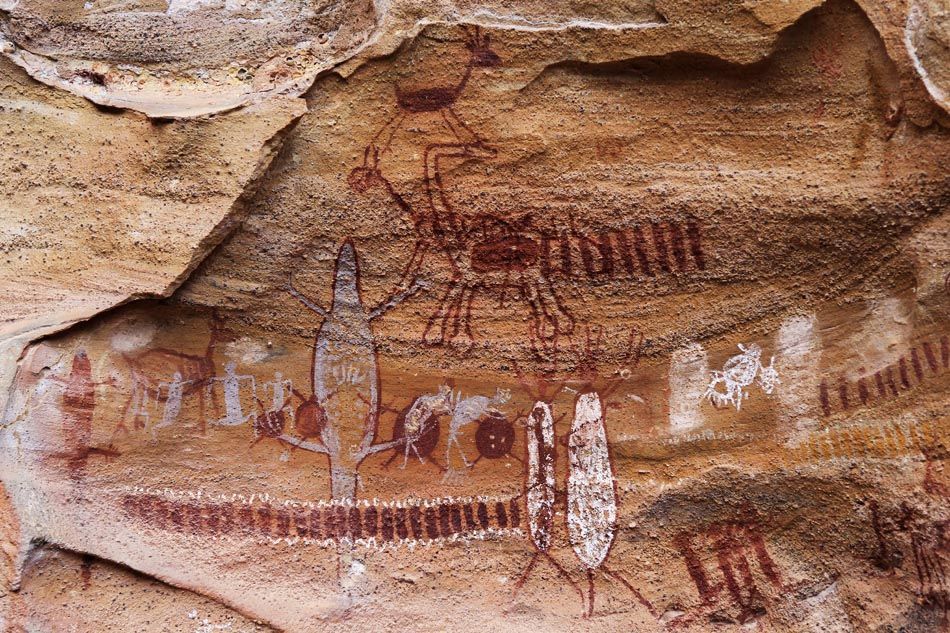
– Rock art in the Toca do Boqueirão da Pedra Furada
The Toca contains around a thousand cave paintings and is considered the Sistine Chapel of the Serra da Capivara, its largest archaeological site. Studies suggest that the paintings were made between 3,000 and 12,000 years ago.

2. Trails and natural landscapes
Several trails take visitors through stunning scenery, with impressive rock formations, canyons, valleys and typical caatinga vegetation. The trails vary in difficulty, from easy walks to more challenging routes.
– Baixão da Pedra Furada Circuit
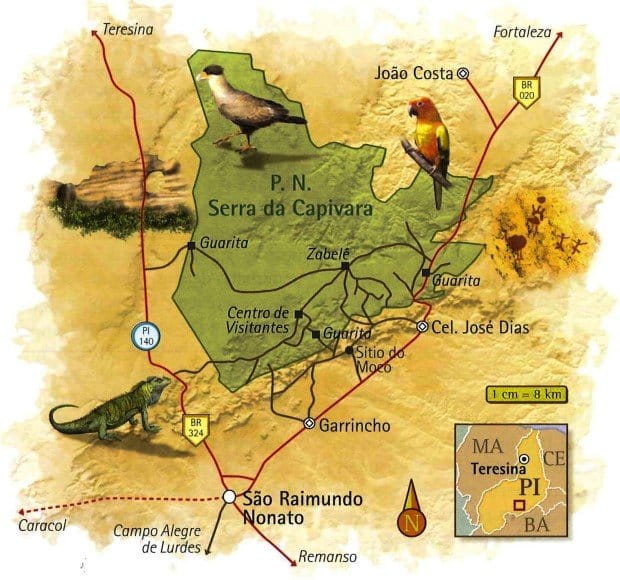
This tour, which can be done in one day, starts at the eastern entrance of the Park, which can be reached via the BR-020 motorway. Passing through the Mocó site, which has toilets, snack bars and a camping area, visitors can also reach the Meio site, where ceramic remains dating back 8,900 years have been found.
The highlight is Toca do Boqueirão da Pedra Furada, where the remains of a bonfire have been found, proving the presence of human groups in the region 100,000 years ago.
– Alto dos Canoas and Caldeirão dos Rodrigues trails
From the Toca do Arame do Sansão, at the bottom of the Baixão da Pedra Furada, follow a path for 800 metres to the stone steps that lead to the top of the plateau.
– Capivara Gorge
For thousands of years, the inhabitants of the mountain passed through this place in search of shelter, now known as the entrance caves of Pajaú, Barro, Inferno, Baixão da Vaca, Pajaú and Paraguaio.

– Sítio do Meio
This is one of the most important archaeological sites in the world, where the oldest pieces of pottery in the Americas were found, 8,960 years old, as well as the first American polished stone artefact.
– Blue deer site
This is where the first prehistoric blue paintings were found. In addition to this archaeological rarity, the walk offers breathtaking views.
– Baixão das Andorinhas
A ravine where you can watch the swallows return to their cave in the late afternoon.
– Jurubeba farm trail
This trail is part of the “No Rastro da Maniçoba” route and shows aspects of the colonial occupation of the region. It lasts about 2 hours and passes the sites of Toca da Dama and Toca da Ema, where you can see the ruins of 19th century houses.
3. Cycle tourism
The area is ideal for cycling. Specialist riders offer light or heavy rides, but you must bring your own bike as the park does not yet have a rental service.
4. Viewpoints
On the way to the sites, visitors will find several viewpoints offering incredible views, such as Alto da Pedra Furada, Vista Panorâmica da Pedra Furada, Serrinha, Toca do Conflito and Mirante da BR-020.
5. Museum of the American Man
Located in the town of São Raimundo Nonato, close to the park, the museum completes the visit with exhibitions on archaeological finds and the history of human settlement in the Americas. The collection includes skeletons, ceramics and other artefacts from excavations in the Serra da Capivara.
6. Fauna and flora observation
The park is a refuge for several species of caatinga fauna and flora, including pumas, capuchin monkeys and several endemic birds. Bird watching is a popular activity.
Visiting Tips
- Best time to visit: The park can be visited all year round, but the best time is during the dry season, from May to September, when temperatures are milder and the trails are more accessible.
- Access and Infrastructure: Access to the park is generally via the town of São Raimundo Nonato, which has a basic tourist infrastructure with accommodation and restaurants. The nearest airport is in Petrolina, Pernambuco, about 300 kilometres away.
- Local Guides: We recommend hiring accredited local guides who know the trails well and can provide an enriching experience, explaining the cave paintings and the history of the park.
Where to stay
The Park has no camping or accommodation facilities. However, in São Raimundo Nonato, there are several accommodation options, such as hotels and hostels. In Coronel José Dias, in addition to inns, there is a campsite in the village of Sítio do Mocó.
Visiting
Serra da Capivara National Park is open all year round, from 6am to 6pm. Tickets can be purchased at the entrance gates until 5pm.
Publicações Relacionadas
Poti River Canyon: Your Ultimate Ecotourism Guide
Luís Correia: Explore the Best Beaches in Piauí
Serra das Confusões National Park Travel Guide
Canary Islands: Ecotourism in the Parnaíba Delta
Piauí: Discover Unique Tourism Experiences
Teresina: Explore Its Unique Geographic Location
Main Tourist Attractions in Piauí You Must Visit
Discover Pedro II: the enchanted Switzerland of Piauí
Sete Cidades National Park's Stunning Rock Formations
Parnaíba Delta: Biodiversity and Ecotourism Hub
Oeiras: Discover the Rich Historical Heritage
Piauí: A Guide to Its Stunning Attractions
Kitesurfing in Barra Grande: The Ultimate Guide
Explore the Archaeological Marvels of São Raimundo Nonato
This post is also on:
 Português
  English
  Deutsch
  Español
  Français