In this travel guide, you’ll discover what to do in São Cristóvão, a historic town in Sergipe which combines history, culture and one of the best-preserved colonial ensembles in Brazil. Founded in 1590, São Cristóvão is the fourth oldest city in the country and the first capital of Sergipe.
Its colonial architectural ensemble remains virtually intact to this day. The town is approximately 25 kilometres from Aracaju, making it easy to fit into a day trip from the capital of Sergipe.

The urban complex of São Cristóvão was listed by IPHAN in 1967 (Book of Archaeological, Ethnographic and Landscape Heritage, entry no. 40) and, like Salvador, developed according to the Portuguese urban planning model: a division between the upper town (seat of civil and religious authority) and the lower town (the port area and home to the poorest sections of the population).
Hiring a guide is not compulsory, but the professionals offering their services in Praça de São Francisco, opposite the Museum of Sacred Art, are usually very knowledgeable and can help you get the most out of your visit.

The History of São Cristóvão
São Cristóvão is the fourth oldest city in the country and was the first capital of Sergipe. It was founded by Cristóvão de Barros in 1590. The city underwent a series of relocations before settling on the banks of the Paramopama River, a tributary of the Vaza-Barris River, where it remains to this day. In 1637, it was invaded by the Dutch and was virtually destroyed.
The Portuguese-Spanish troops, under the command of the Count of Bagnoli, attempted to cut off the invaders’ supplies: they set fire to crops, scattered the livestock and encouraged the population to leave the city.
When the Dutch found São Cristóvão virtually deserted, they completed its destruction. It was not until 1645 that they were expelled from the Sergipe captaincy, leaving the city in ruins. At the end of the 18th century, Sergipe was annexed to Bahia and São Cristóvão became the seat of Ouvidoria. In 1710, the town was invaded by inhabitants of Vila Nova, in the north of Sergipe, who were rebelling against the collection of taxes by Portugal. By the mid-18th century, São Cristóvão had been completely rebuilt.

In 1763, the city was invaded by Black people from the mocambos and persecuted Indigenous people. On 8 July 1820, by a Royal Charter issued by King João VI, Sergipe was granted independence from Bahia and elevated to the status of Province of the Empire of Brazil.
St Christopher then became the capital of the new province. Shortly afterwards, the plantation owners led a movement to move the capital to a region with a port capable of accommodating larger vessels, thereby facilitating the shipment of sugar production — at the time, the main source of local wealth.
On 17 March 1855, the provincial governor, Inácio Joaquim Barbosa, moved the capital to Aracaju. From then on, São Cristóvão experienced a decline in population, which was only reversed at the beginning of the 20th century, with the arrival of textile mills and the railway.

Video – History and Tourist Attractions of São Cristóvão in Sergipe

São Cristóvão em Sergipe14:37

São Cristóvão 4ª cidade mais antiga do Brasil - História
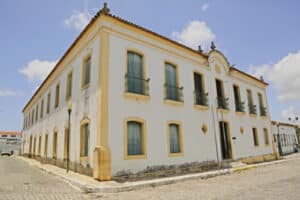
História de São Cristóvão SE21:45
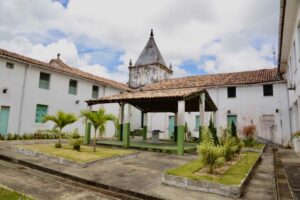
Igreja Santa Izabel e Santa Casa de Misericórdia01:40
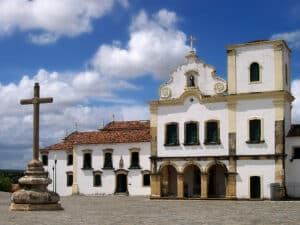
Igreja e Convento de São Francisco em São Cristóvão02:10
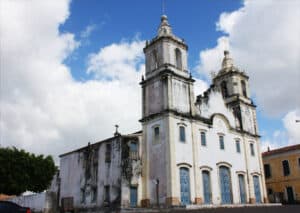
Igreja Matriz de Nossa Senhora da Vitória 01:35

São Cristóvao e Laranjeiras - cidades históricas SE
Things to Do in St Kitts: Must-See Tourist Attractions
The municipality of São Cristóvão is known nationwide for being home to a site recognised as a World Heritage Site by the United Nations Educational, Scientific and Cultural Organisation (UNESCO) — see the official entry on the UNESCO website. Designated in 2010, Praça São Francisco is home to public and private buildings that bear witness to the period when the crowns of Portugal and Spain were united. The most notable of these is the complex comprising the Church and Convent of São Francisco. See below for the 9 attractions that mustn’t be missed on your itinerary:
- São Francisco Square
- The area around São Francisco Square
- Sergipe Historical Museum
- Parish Church of Our Lady of Victory
- Convent and Church of Santa Cruz (or São Francisco)
- São Cristóvão Museum of Sacred Art
- Church of St Francis
- Church of Saint Isabel and the Holy House of Mercy
- Convent and Church of Our Lady of Mount Carmel
1. São Francisco Square
It stands out amongst the listed heritage sites for its exceptional and cohesive ensemble of monuments, comprising both public and private buildings.

Built between the 16th and 17th centuries, the square offers a unique illustration of the fusion of Spanish and Portuguese laws and practices in the formation of colonial urban centres.
Praça de São Francisco combines the land-use patterns followed by Portugal with the standards defined by Spain for its colonial cities. Consequently, its authenticity is evident in the urban layout, the surroundings, the building techniques and the historical and cultural context of the complex as a whole.
2. The area around São Francisco Square
The area around São Francisco Square comprises:
- Church of Mercy
- Provincial Palace and Old Town
- Church and Convent of St Francis
- Chapel of the Third Order (now the Museum of Sacred Art)
- Santa Casa, Sergipe Museum
- Zeca de Noberto Folklore Centre
Laid out in accordance with the length and width stipulated by Law IX of the Philippine Ordinances, the square incorporates the concept of Praça Maior, also used in the colonial towns of Hispanic America, in keeping with the Portuguese urban model for colonial towns in tropical settings.
It is therefore regarded as a remarkable synthesis of urban planning models of Iberian origin. Its civil and religious buildings — notably the complex comprising the Church and Convent of São Francisco — embody exceptional universal value and remain virtually intact.
3. Sergipe Historical Museum
Located in Praça São Francisco, it is housed in an 18th-century building and brings together the key elements that help to tell the story of the state.

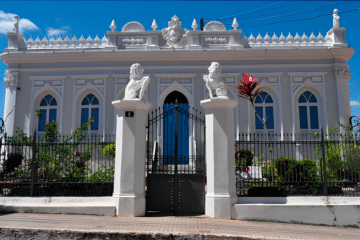
The Sergipe Historical Museum is housed in the former Provincial Palace, a Baroque building dating from the late 18th century. The building was once the residence of the presidents of the province of Sergipe and also housed the Town Hall, a school and a tax office. In 1860, it was visited by King Pedro II. The museum has 13 rooms open to the public, with permanent and temporary exhibitions.

The collection includes important artefacts, such as the painting by Horácio Pinto da Hora depicting Ceci and Peri — characters from the novel O Guarani, by José de Alencar — as well as furniture, documents, coins and crockery that reveal the historical significance of São Cristóvão.
4. Parish Church of Our Lady of Victory
Built on top of a hill, the church marked the original centre of the upper town. The Parish Church of Nossa Senhora da Vitória was built as a parish church in 1608 by Dom Constantino Barradas, the fourth Bishop of Bahia, during the pontificate of Pope Paul V. It bears the coat of arms of Philip IV of Spain, as Brazil was a colony within the Iberian Union (1580–1640).

Over time, the church was elevated to the status of Episcopal See. It suffered significant damage during the eight years of Dutch rule in Saint Kitts (1637–1645), when the town served alternately as a base for Portuguese guerrilla forces and as the seat of Dutch power.
Following the end of Dutch rule, Saint Kitts was significantly expanded and the church was rebuilt by the local residents. In 1666, the town sent an appeal to the Portuguese Crown requesting funds for a complete renovation of the church.
The request was only granted decades later: in 1702, São Cristóvão received 4,000 cruzados from the Crown to fund the works. The Nossa Senhora da Vitória Parish Church served as the focal point for the construction of other religious buildings in the town.
This renovation was followed by the Church and Convent of Santa Cruz (Convent of São Francisco, 1693), the Convent and Church of the Carmelite Order (1699), the Hospital and Church of the Misericórdia and the Church of Nossa Senhora do Carmo, Rosário dos Homens Negros (1743).
Structure of the church
The Church of Nossa Senhora da Vitória was built on a hillside, at the highest point of the upper town, at the top of the former Praça São Francisco de Assis — now Praça Getúlio. The façade is imposing, with two towers clad in white Portuguese tiles and ornate wooden doors. The interior, however, is simpler, featuring paintings attributed to José Teófilo de Jesus (1758–1847).
5. Convent and Church of Santa Cruz (or São Francisco)
The Convent and Church of Santa Cruz, in São Cristóvão, is also known as Convent and Church of São Francisco. The architectural complex comprises the Church, the Convent and the Third Order, which today houses the Museum of Sacred Art.

Construction of the convent and the church
The decision to build the convent was taken in 1657, when the Franciscan friars arrived in São Cristóvão under the leadership of the Portuguese friar Luiz do Rosário. In 1659, the church and the Franciscans’ retreat were built. By 1693, the foundation stone of the convent had been laid — but the complex was not completed until the second half of the 18th century, delayed by the poverty of the Franciscan Order and society at the time.
The friars relied on charity to fund their work: they asked the plantation owners for donations to pay for the altars.
For this reason, in addition to its material value, the site holds great sentimental value — the altars were built with the help of Jesuits, the local population and also slave labour, which played a significant role in their construction. Opposite the church and the convent stands the Cruzeiro, erected in 1658 as a symbol of the Franciscan mission.
Interior: altars, arches and paintings
The church is one of the most richly detailed in the municipality. From floor to ceiling, the decoration enchants visitors and worshippers alike, and the striking arches are immediately noticeable as you enter. In the centre of the nave, an altar dedicated to Saint Benedict welcomes visitors. Further along, on either side, the statues of St Anthony and Our Lady of the Immaculate Conception, the church’s patron saint, stand out.
The altars are gilded. On the ceiling, the original painting of Saint Francis of Assisi taking Jesus Christ down from the cross catches the eye — a scene depicting a dream the saint had, in which he helps Jesus in his suffering. It is the only painting in the church that directly depicts the Franciscan presence.
On the outside of the building, there is another statue of Saint Francis, which differs from the others: the saint is depicted holding a skull, representing, according to Catholic belief, ‘Sister Death’. This statue is also an original. Although it retains much of its original character, the church has undergone alterations over the years: the current floor consists of replicas, and the original tower was demolished in 1844 after developing major structural cracks.
The convent and its unique architecture
In the convent section, the highlight is the Cloister with its stonework, considered a unique work of art amongst the Franciscan convents in Brazil. The support system, consisting of freestanding vertical pillars — rather than columns — is also a rare feature in the North-East. The site has previously housed the General Treasury, the Provincial Assembly, the Library, the Infirmary and the General Post Office.
It lay abandoned for many years and was even used as barracks for troops involved in the War of Canudos. From 1980 onwards, the Convent began to host religious and technical meetings, and today it is one of the most popular venues in Sergipe for Catholic retreats and gatherings. For almost 400 years, a Mass has been celebrated every Tuesday with the blessing of St Francis, bringing the faithful together every week.
6. São Cristóvão Museum of Sacred Art
To the left of the convent stands the former Chapel of the Third Order of St Francis, now home to the Museum of Sacred Art. Opened in 1974, it is one of the three most important museums of sacred art in Brazil, alongside those in São Paulo and Bahia.

The collection brings together works dating from the 17th century to the 20th century. Across the building’s two floors, visitors can admire wooden and gold altars, articulated statues, furniture, antique artefacts and the Convent Chapel, which is open only on specific religious occasions.

Among the most precious artefacts — dating from the 17th century — are the Throne of the Blessed Sacrament, made of gold-leafed cedar, and two crucified Christs carved from ivory. In total, the museum houses more than 500 catalogued pieces, all originating from the state of Sergipe.
7. Church of St Francis
Situated in the central part of the convent complex, the Church of São Francisco was listed by IPHAN in 1941, which underscores its importance for the preservation of Brazil’s historical and cultural heritage. Built predominantly in the Rococo style, the church features an altar adorned with designs of flowers, fruit, shells and bows, all gilded with gold leaf.

On the high altar stands the image of Christ on the Cross, alongside the image of St Francis of Assisi. Further ahead, the statues of Our Lady of the Immaculate Conception and, on the right, Saint Anthony stand out — both of great significance in the local Catholic tradition, symbolising the faith and devotion of the faithful.
On the ceiling are two paintings by the Bahian artist José Teófilo de Jesus, dating from the 18th and 19th centuries. Known for his contributions to regional religious art, the artist captured in these works a portrait of the cultural and religious richness of the period.
8. St Isabel’s Church and the Holy House of Mercy
A Baroque complex begun in the first half of the 17th century and completed in the early 18th century, comprising the Santa Casa de Misericórdia and Santa Izabel Church is one of the most striking historic buildings in São Cristóvão.

Listed by the National Institute of Historic and Artistic Heritage (IPHAN), the complex is situated in Praça São Francisco and houses relics and mementoes of those who have passed through the city over the centuries. The Santa Casa, which today houses the Town Hall, was originally built as a hospital.
From the 20th century onwards, it served as a care home and, later, as an orphanage. Between 1922 and 2017, it was run by the Missionary Sisters of the Immaculate Conception of the Mother of God.
According to Gaspeu Fontes, chief executive of João Bebe-Água Foundation for Culture and Tourism, the site has been the setting for several important episodes in the town’s history: “These lands were donated to the Brotherhood of Mercy in 1608, and this was the headquarters of the Santa Casa de Misericórdia, which took in the Portuguese who were fighting in the wars of that period.” “On 12 April 1907, the administration of the Santa Casa was handed over to the Vicar of São Cristóvão by the Treasurer, Captain Elias de Oliveira,” recalled Gaspeu.
The building served as a poorhouse until 1911 and, afterwards, as an orphanage. Jorge dos Santos, known as “Seu Jorge do Estandarte” and one of the leading figures in San Cristóvo folklore, described what daily life was like at the old Santa Casa: “The orphanage took in the children of mothers who worked in the old factories and who were unable to raise them; that is why they were entrusted to the Sisters of the Immaculate Conception.”
“I used to be an altar boy and attend Mass, where I saw the affection the nuns showed the children, and vice versa. This house is of great value to the people of San Cirsto; as well as being a religious house, it had a great deal to offer.”
9. Convent and Church of Our Lady of Mount Carmel
The Carmo complex is situated in Praça Senhor dos Passos, in the upper part of the city, overlooking the Church of Nossa Senhora da Vitória and the River Vaza Barris. It is one of the main symbols of the historical and religious heritage of São Cristóvão.

History and construction
The complex comprises the Conventual Church of Nossa Senhora do Carmo (known as Carmo Maior), the Chapel of the Third Order (or Carmo Menor), the Museum of Votive Offerings and the Memorial to Saint Dulce of the Poor, the latter having been established more recently and maintained by the friars of the Carmelite Order.
Built in the Baroque style, construction of the complex began in 1699, 109 years after the city’s foundation, by the religious order Carmelites of the Calced Order — who had arrived in São Cristóvão around 1618.
The building work continued throughout the 17th and 18th centuries. Over time, particularly the so-called Carmo Maior, the church gradually lost some of its original architecture and ornamentation, mainly due to successive restorations: the extension of the chapel, for example, began in 1739 and lasted until 1745, with a further intervention recorded in 1766 (a date which still appears on the church’s façade). These changes have, to some extent, altered the original character of the buildings.

In 1637, when the Dutch arrived in Saint Kitts, there was a small convent on the site, which they soon destroyed. After that, the convent and churches had to be rebuilt several times, which led to many changes to the original structure — particularly in the Carmo Maior, which changed from the Baroque to the Neoclassical style.
The site currently serves as a novitiate convent, where the younger friars live before taking their final vows.
Despite the changes it has undergone over the centuries, the complex’s most striking feature remains its wealth of detail: the doors, the columns of the cloisters linking the churches, the side altars of the Carmo Menor which survived the renovations, as well as paintings on the walls and ceiling that recount the history of the Carmelite Order and of Saint Teresa, who was closely associated with the order. The church of Carmo Menor was founded to bring together so-called lay Catholics — people who live out their spirituality and pass on the faith and religious precepts without the obligation of celibacy.
The Legend of the Lord of the Steps
The site is also known for housing the image of the Senhor dos Passos, found by fishermen in a box in the Paramopama River, along with a note reading ‘to the city of Sergipe Del Rey’. The statue was handed over to the friars, who, coincidentally, already had a devotion to the Senhor dos Passos. Owing to the depth of their devotion, it was not placed on the secondary side altar, but rather on the main altar.

News of the discovery spread rapidly and came to play a prominent role in the religious life of the people of São Cristóvão. Subsequently, the friars commissioned an image of Our Lady of Soledade — also known as Our Lady of Sorrows — to accompany the Lord of the Steps in the traditional procession which, every year, attracts pilgrims from far and wide.
Traditions and the procession
The procession of the Senhor dos Passos has European characteristics, such as the custom of covering the statue or passing beneath it. According to local tradition, the candles used in the celebration refer to the need fishermen once had to light their way with the statue, from the Paramopama River to the churches of Carmo.

Most of the images found in the churches within the complex are of Portuguese origin — such as Saint Anthony, Our Lady of the Good Death, Senhor dos Passos, Nossa Senhora das Dores, Nossa Senhora do Bom Sucesso and Santo Alberto de Jerusalém, amongst others.
The exception is Our Lady of Mount Carmel, of Spanish origin. There are also more recent images, created to complement specific Carmelite devotions: Saint Mary Magdalene de’ Pazzi, Saint Teresa of Ávila and Saint Elijah. The entire collection in the churches is listed by IPHAN, with the exception of these more recent pieces, which were carved from wood in Brazil.
Practical Information for Visiting St Kitts
Before planning your itinerary, it’s worth gathering some practical information about what to do in Saint Kitts and how to make the most of your trip.
- How to get there: São Cristóvão is about 25 km from Aracaju, about 30 to 40 minutes by car or intercity bus.
- Duration of the visit: allow between half a day and a full day to explore São Francisco Square, the museums and the churches in the historic quarter at your leisure.
- Best time to visit: Any time of year is fine, but weekdays tend to be quieter, so you can visit churches and museums without the crowds.
- Combine with other destinations: São Cristóvão is often visited as part of the same itinerary as Laranjeiras, another historic town in Sergipe, or as part of a more comprehensive tour of the state.
For those with more time to spare, it is well worth extending the trip to other destinations in Sergipe, such as Santa Luzia Island, Croa do Goré Island, the Sergipe Pantanal in Pacatuba, the Canindé de São Francisco or the Xingó Canyon. Further details on the listing and protection of the historic site can be found directly on the IPHAN website.
Frequently Asked Questions
Where is São Cristóvão and how do you get there from Aracaju?
São Cristóvão is about 25 km from the capital of Sergipe, a journey of approximately 30 to 40 minutes by car or intercity bus, making the town a great day trip from Aracaju.
Why is São Cristóvão considered a UNESCO World Heritage Site?
São Francisco Square, with its complex of public and religious buildings, was designated a UNESCO World Heritage Site in 2010, as it is an exceptional example of the fusion of Portuguese and Spanish urban planning styles in a colonial city.
Do you need to hire a guide to visit the city?
It isn’t compulsory. You can visit the main sights on your own, but the guides based in Praça de São Francisco, opposite the Museum of Sacred Art, are usually very knowledgeable and help to make the visit more rewarding.
How long does it take to explore Saint Kitts?
A leisurely stroll, taking in São Francisco Square, the museums and the main churches, usually takes between half a day and a full day, depending on each visitor’s interest in history and colonial architecture.
Are the museums and churches in São Cristóvão worth a visit?
Yes. The Sergipe Historical Museum and the Museum of Sacred Art house rare collections, including pieces dating from the 17th to the 20th centuries, whilst the churches in the complex retain their original altars made of gold and carved wood, which are rarely found in such good condition in other cities in the Northeast.
Is it possible to combine a visit to São Cristóvão with other destinations in Sergipe?
Yes. Many visitors take the opportunity to visit Laranjeiras as well – another nearby historic town – or to include São Cristóvão in a wider tour of the state, taking in beaches, river islands and natural attractions such as the Xingó Canyon.

Publicações Relacionadas
Discover Pirambu: A Comprehensive Travel Guide to the North Coast of Sergipe
Pacatuba SE and the Sergipe Pantanal: Tourist Guide
Discover Aracaju: The Complete Travel Guide to the Capital of Sergipe
Laranjeiras: A Guide to Tourism and Cultural Heritage in the Heart of Sergipe
Xingó Canyon — Tours, How to Get There and Accommodation
Sergipe: A Comprehensive Travel Guide to Brazil’s Smallest State
Parque dos Falcões and the Itabaiana Mountains, Sergipe: Tourist Guide
The South Coast of Sergipe: A Travel Guide and Things to Do
Praia do Saco (Estância, SE) — Guide: how to get there, what to do and tip
Discover Santa Luzia Island: A Comprehensive Travel Guide to Sergipe
Ponta dos Mangues Beach and the Santa Isabel Biological Reserve: Tourist Guide
Discover Canindé de São Francisco: A Comprehensive Travel Guide to a Paradise of Culture and Nature
Croa do Goré Island, Aracaju (SE): A Comprehensive Travel Guide
7-day itinerary around Sergipe: Aracaju, Xingó and the beaches
This post is also on:
 Português
  English
  Deutsch
  Español
  Français