Lord of Bonfim ribbons: History and Meaning
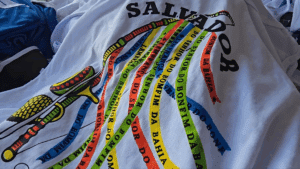
The ribbons of Senhor do Bonfim are amulets of faith and tradition that have a long and rich history, especially associated with the city of Salvador, in Bahia, and the Church of Nosso Senhor do Bonfim.


Video about the history of Senhor do Bonfim ribbons

História das Fitinhas do Senhor do Bonfim

História das Fitinhas do Senhor do Bonfim01:07

Curiosidades sobre as Fitinhas do Senhor do Bonfim00:50

História das Fitas do Senhor do Bonfim
1. Origin and first form
This piece measured approximately 47 cm — the length attributed to the right arm of the image of Nosso Senhor do Bonfim, sculpted in Setúbal (Portugal) and installed in the church in the 18th century.
The first “measures” were made of silk, hand-embroidered with the saint’s name and finished with gold or silver thread.
2. Evolution to the wristband
The adaptation is attributed, in some accounts, to Manuel Antônio da Silva Serva, although there are varying versions of the transition.
3. Use and meaning
Tradition of the three knots
Colours and symbolism
Devotional function and votive offerings
4. Material and production
5. Cultural significance
6. Interesting facts
- Traditional measurement linked to the original piece: 47 cm.
- Tradition of tying three knots, each with a wish.
- Transition from medallions/necklaces to wristbands consolidated in the 20th century.
Bahia.ws is the largest tourist guide for Bahia and Salvador.

Publicações Relacionadas
Parks and Squares in Salvador for Leisure Activities
Salvador’s Historic Centre, Pelourinho, Baroque churches and museum
39 Museums in Salvador: Discover the history and culture of Bahia
Lacerda Elevator — history, construction and visits
History and sights of Avenida Contorno in Salvador BA
Church of São Pedro dos Clérigos — History, architecture and religious art
History of the Church of Nosso Senhor do Bonfim in Salvador
4 Must-See Museums in Salvador: Art, History and Culture
Discover the Magnificence Fort of Nossa Senhora de Monte Serrat
Tourist attractions for children in Salvador: Fun and learning
The best beaches near Salvador (distance, facilities and tips)
Cathedral Basilica of Salvador — History, Sacred Art and Collection
Churches of Salvador: Architectural and Historical Treasures
Rio Vermelho is Salvador’s trendiest and most bohemian neighbourhood
History of the Cathedral Basilica of Salvador
7-day itinerary in Salvador and the surrounding area: Pelourinho, the islands and Praia do Forte
Church of Nossa Senhora dos Mares (Salvador) — History and Architecture
Pelourinho (Salvador) — Historical Guide, Architecture, and UNESCO World Heritage Site
Prostitution, sex, massage parlours and nightclubs in Salvador
Tourist attractions and architectural heritage of Salvador (BA)
Solar do Unhão & MAM-BA — History, Architecture and a Visit
History of the Church and Convent of São Francisco in Salvador
Santo Antônio da Barra Fort — history, Barra Lighthouse and the Nautical Museu
Church of the Third Order of St Francis — History, Art and Baroque Architecture
Find out how to celebrate Carnival in Salvador, Bahia
Church and Convent of Nossa Senhora da Palma in Salvador, Bahia
The most visited churches in Salvador — itinerary and tips
Ponta de Humaitá — Lighthouse, church and the best sunset in Salvador
History of the Founding of Salvador, Bahia - History of Brazil
Church and Convent of Santa Clara do Desterro and its History in Salvador
Discover the reasons for a holiday in Salvador, Bahia
Bahia Maritime Museum: History of Navigation at the Barra Lighthouse
Palaces in Salvador to visit and learn about Brazil's history
Places of interest in Salvador — A comprehensive guide
History of São Marcelo Fort — Salvador, Bahia
Tourist attractions in the Gamboa neighbourhood in Salvador BA
This post is also on:
 Português
  English
  Deutsch
  Español
  Français