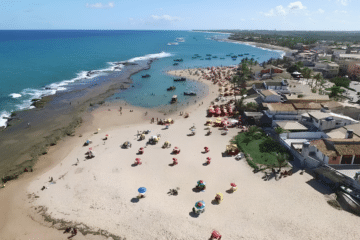
Itacaré (BA): guide to beaches, waterfalls, maps and history
Itacaré lies in southern Bahia, on the Costa do Cacau (Cocoa Coast), about 70 km from Ilhéus. Surrounded by the Atlantic Forest, the town combines small, wild beaches, waves famous among surfers, waterfalls and a historic center with mansions from the cocoa boom. For this reason, it appeals both to those seeking peace and quiet and to those who want adventure.
- Location: southern Bahia, on the Costa do Cacau, about 70 km from Ilhéus via the BA-001.
- Population: 27,704 inhabitants (IBGE 2022 Census).
- Urban beaches: Concha, Resende, Tiririca, Costa and Ribeira.
- Rural beaches: Itacarezinho, Jeribucaçu, Prainha and the Trilha das Quatro Praias.
- Waterfalls: Tijuípe, Noré, Cleandro and the falls of the Rio de Contas.
- Surfing: waves all year round; however, the biggest ones arrive from May to August.
- Suggested stay: 4 to 6 days.

Videos about Itacaré on the Costa do Cacau

Itacaré - Guia de Turismo06:49

Itacaré - Reportagem08:06

Itacaré - Praias e Dicas03:07

Rio de Contas - Rafting04:14

Itacaré - Drone

Itacaré - Drone
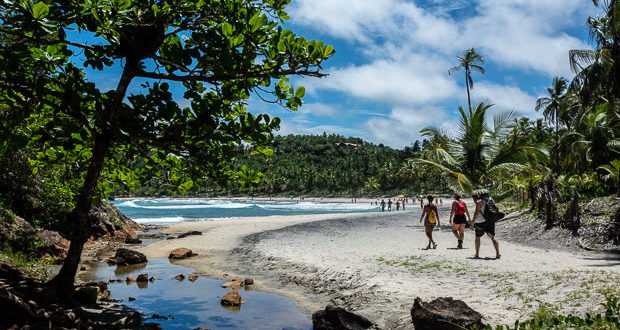
Itacaré - Drone - Praias03:56
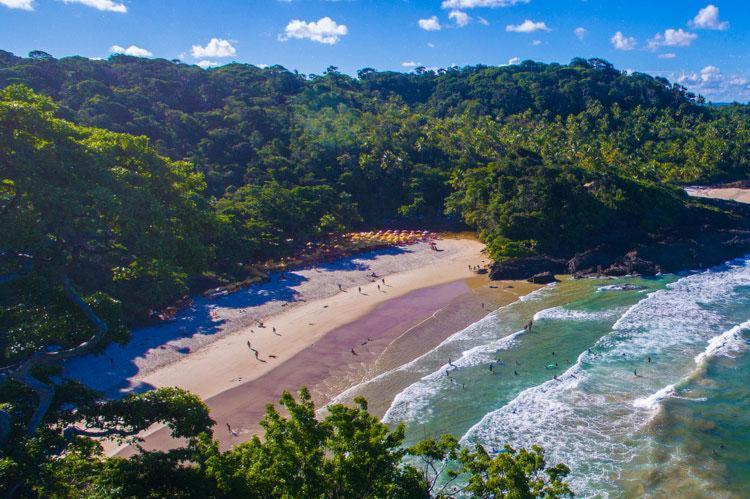
Ilhéus e Itacaré - Guia Completo33:46
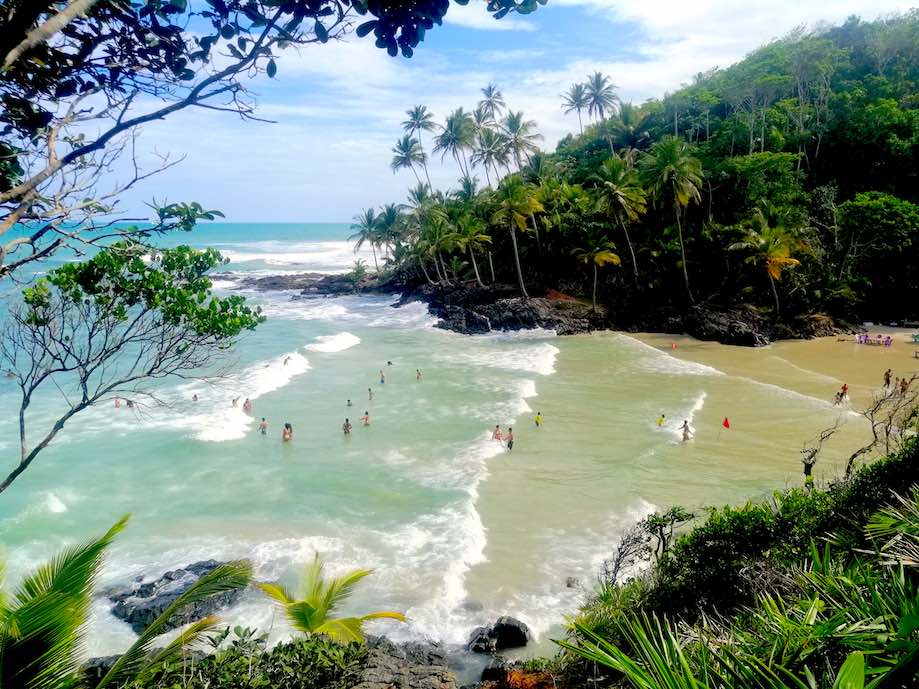
Itacaré - Paraíso no Sul da Bahia04:40
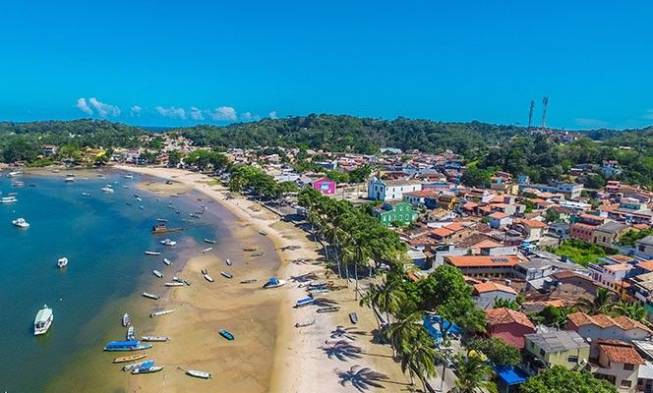
Itacaré na Costa do Cacau - Guia Completo36:47
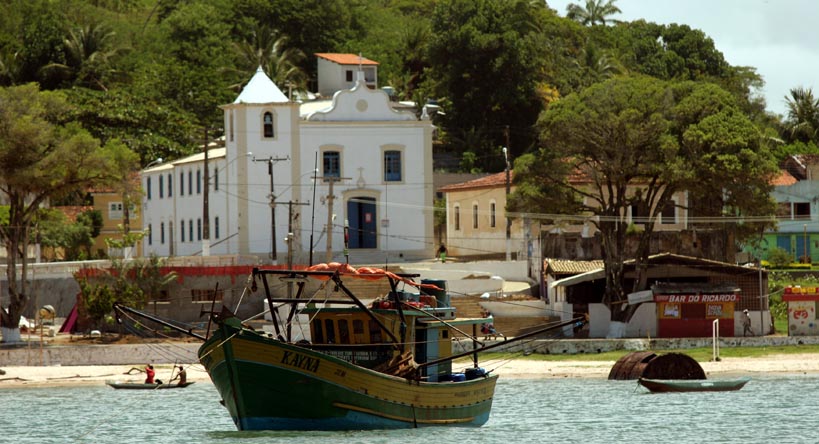
Cachoeira da Usina, Jeribucaçu, Arruda e Havaizinho03:56
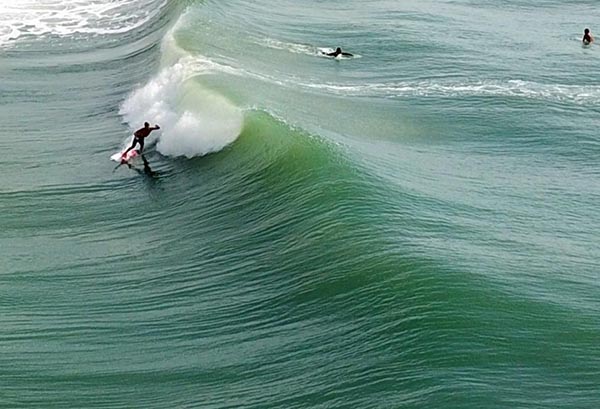
Surf em Itacaré - Guia de Turismo e Dicas
Maps of Itacaré
First of all, it is worth looking at the maps below to understand where the center, the urban beaches and the rural beaches are, along the BA-001.


What the beaches of Itacaré are like
In general, the beaches are divided into two areas:
- Urban beaches: reached from the town center, on foot, by car, by taxi or with tour agencies.
- Rural beaches: reached via the BA-001, the road to Ilhéus; however, some require short hikes.
In addition, the tides change the scenery a lot, especially at new and full moon. As a result, on the same day you may find natural pools or big waves, ideal for surfing. That is why it is worth visiting the same beach at different times of day.
Urban beaches of Itacaré
Despite the name, many urban beaches are quiet and surrounded by forest. What’s more, several of them are linked by short paths, so you can see almost all of them in a single day.
Praia da Coroa (da Avenida or do Centro)

Right in the center, at the mouth of the Rio de Contas, it is surrounded by boats, athletes and historic mansions. Although it is unsuitable for swimming, it is great for football, volleyball and, above all, for watching the sunset.
Praia da Concha

It is the most popular beach with tourists, with a calm sea, guesthouses, restaurants and kiosks. Therefore, it is ideal for families and for stand-up paddling. In addition, boat trips leave from here along the Rio de Contas to waterfalls and mangroves.

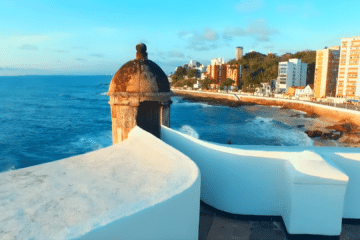
At the corner of the beach, meanwhile, stands the lighthouse that once guided boats loaded with cocoa. After its restoration, according to the old fishermen, it became the only square lighthouse in the world. Nearby, the Ponta do Xaréu lookout also offers a beautiful view.


Passarela da Vila

Less than a 10-minute walk from Concha, the Passarela da Vila is a charming promenade with well-kept landscaping, bars and restaurants. Around it, there are banks, supermarkets and pharmacies. Consequently, it is one of the most sought-after areas to stay in and, at night, one of the liveliest spots in town.
Praia do Resende

Just past Concha, about 1 km from the center, Resende has white sand, natural pools and a lawn for relaxing. Besides that, the waves are consistent, and the beach often draws capoeira players.
Praia da Tiririca

Today, it is the town’s main surf spot, with waves from 0.5 m to 3 m and a young crowd. Not surprisingly, it hosts surf competitions. In addition, it has guesthouses and simple facilities at the top of the hill.


Praia do Costa

On the other hand, Praia do Costa is more deserted and has no kiosks. However, the sea has strong currents, so be careful when going into the water.
Praia da Ribeira

At the end of the Caminho das Praias, Ribeira combines a calm sea, a freshwater river with small cascades and simple kiosks. It also has a zip line and is good for snorkeling. Moreover, this is where the trails to Siriaco and Prainha begin.
Praia do Siriaco

About a 15-minute hike from Ribeira, Siriaco is isolated and has no facilities. In return, it has a small cave inhabited by bats. For this reason, going with a guide is recommended.

Prainha and Praia de São José

The town’s postcard image, Prainha is surrounded by Atlantic Forest and, on the best days, has tubular waves. Access is via a trail of about 40 minutes from Ribeira that crosses streams, so a guide is recommended. Alternatively, you can enter through the Villa de São José condominium, with a walk of about 10 minutes and a day use fee at the restaurant.
Next to it, Praia de São José also has spectacular scenery and some accommodation nearby.

Praia do Pontal

On the opposite bank of the Rio de Contas, facing the center, Pontal is reached mainly by boat. Thus, the crossing is already part of the trip. Furthermore, the beach is wide, with coconut groves and calm waters.

Rural beaches of Itacaré
Along the BA-001, the rural beaches are surrounded by preserved Atlantic Forest. In general, they are more deserted, and some can only be reached by trails.
Trilha das Quatro Praias
The Trilha das Quatro Praias (Four Beaches Trail) is about 4 km long and moderately difficult. Along the way, it passes Engenhoca, Havaizinho and Camboinha, and finally ends at Itacarezinho. Although it is less well known, it delights ecotourism lovers.

Approximate time between the beaches:
- Entrance to Engenhoca: 15 minutes.
- Engenhoca to Havaizinho: 15 minutes.
- Havaizinho to Camboinha: 10 minutes.
- Camboinha to Itacarezinho: finally, 20 minutes.
Praia da Engenhoca

The first beach on the trail is small, isolated and horseshoe-shaped. For this reason, it is the favorite of longboarders, with waves from 0.5 m to 3 m. In addition, it forms natural pools and has a few simple beach shacks.
Praia do Havaizinho

Next comes Havaizinho, with small coves, reefs, coconut palms and clear waters. At low tide, the strip of sand becomes wide and the sea calmer. On the other hand, on swell days the strong waves attract experienced surfers.
Praia de Camboinha

Of the four, it is the smallest and the most deserted. Therefore, it is ideal for anyone seeking silence and contemplation.
Praia de Itacarezinho

With about 3 km of sand, Itacarezinho is the largest beach in the municipality. As a result, it is great for walking, surfing and snorkeling, and between September and March turtles nest here. It also has a restaurant and a freshwater cascade. Access is via the trail or a private road, with paid parking and a lookout.

Praia de Jeribucaçu

About 9 km from the center, Jeribucaçu has the complete package: light sand, coconut palms, strong waves of up to 3 m and the mouth of the rio Jeribucaçu. From the parking lot, a 30- to 40-minute trail leads through the forest. Finally, the few beach shacks are simple, so bring water and snacks.
Surfing in Itacaré

The region has waves all year round and water between 23 °C and 30 °C. For this reason, it is one of the most popular surf destinations in Brazil’s Northeast.
- Winter (May to August): the season of the biggest waves, from 1 m to 3 m, ideal for experienced surfers.
- Summer (December to March): smaller waves predominate, although some strong swells still come in.
- Autumn and spring: mixed conditions, with small to medium waves.
In short, the best beaches for surfing are Tiririca, Resende, Engenhoca, Havaizinho, Itacarezinho, Jeribucaçu and Prainha. For beginners, incidentally, there are surf schools in town.
Waterfalls and excursions near Itacaré
Cachoeira do Tijuípe

Although it is not tall, the Tijuípe waterfall enchants with several wide cascades. Moreover, access is easy via the BA-001, so it is a relaxed outing for the whole family.
Cachoeira do Véu de Noiva

One of the tallest falls in the region, the Véu de Noiva makes for great photos. Thus, it is a good choice for anyone who wants direct contact with nature.
Taboquinhas

A district of the municipality on the banks of the Rio de Contas, Taboquinhas is the base for adventure sports. There, the river’s rapids are great for rafting and canoeing. In addition, there is a zip line and rappelling.
Cachoeira do Noré

On the Rio de Contas, the Cachoeira do Noré is widely used for rappelling. Therefore, it is a must-stop for lovers of outdoor sports.
Cachoeira de Cleandro

To reach the Cachoeira de Cleandro, you go up the Rio de Contas by boat or canoe. Then you cross a farm with cocoa and clove plantations and guaiamum (blue land crab) breeding. After a walk of about 10 minutes, three waterfalls appear, with a natural pool above them.
Rio de Contas

The Rio de Contas rises in the Chapada Diamantina and runs more than 400 km before flowing into the sea at Itacaré. Thus, sailing by boat, speedboat or canoe, you will find waterfalls in the middle of the forest, mangroves and cocoa farms. For those who prefer to avoid adrenaline, in fact, it is the most relaxing excursion in town.
History of Itacaré

According to the IBGE, the town grew out of an Indigenous village, where the Jesuit Luís da Grã built a chapel dedicated to São Miguel (Saint Michael). For this reason, the settlement was named São Miguel da Barra do Rio de Contas. Later, in 1718, the chapel became a parish. Then, on January 27, 1732, the settlement was raised to the status of vila. Finally, in 1931, the seat was transferred and the municipality came to be called Itacaré.
Thanks to its position at the mouth of the Rio de Contas, the vila was an important port at a time when transport was mainly by sea. According to tradition, it also served as a clandestine port for goods and precious stones from the interior. That is why, legend has it, pirates hid in the river, and some ships loaded with treasure are said to have sunk there.
At the end of the 19th century, cocoa boosted the economy. However, with the opening of roads, the port lost importance and came to serve only for fishing. Later, in the 1980s, the vassoura-de-bruxa (witches’ broom) blight devastated the cocoa farms, and the town fell into decline.
At the same time, isolation helped to preserve nature and the old houses. After all, for many years, access was only by dirt road. Then, in 1998, the paved road to Ilhéus brought tourism and transformed the town. Since then, the town has grown toward the beaches, with the Pituba neighborhood, whose main street is the Caminho das Praias, and the Concha neighborhood, where many guesthouses are located.
Video about the history of Itacaré in Bahia

Conheça a História e os Atrativos Históricos de Itacaré BA
Historic center of Itacaré
Igreja de São Miguel

Built by the Jesuits at the top of the town, the church overlooked the river bar, where the large vessels entered. According to local records, the current building was completed between 1718 and 1723.

Casa dos Jesuítas
Built in the same period, the Casa dos Jesuítas stands next to the church. According to the oldest residents, a tunnel linked the altar to the house and served as an escape route during Indigenous attacks. Today, however, this tunnel has been filled in.
Mansions from the cocoa boom
From 1900 onward, cocoa money built mansions in three main styles:
- Sobrados (two-story townhouses): residences of the cocoa colonels.
- Raised-basement houses: homes of merchants and small farmers.
- Single-story houses: finally, those inhabited by the poorest population.
In addition to its heritage, the town preserves traditions such as capoeira, which is a cultural hallmark of the town.
How to get there and practical tips
- From Ilhéus: about 70 km via the BA-001; the nearest airport, incidentally, is in Ilhéus.
- From Salvador: about 270 km via the ferry to Itaparica, or around 390 km via the BR-101.
- Bus: there are frequent departures from the Ilhéus bus station; however, check the schedules with the bus companies.
- Trails: for Prainha, Siriaco and the more isolated waterfalls, go with a local guide.
- Tides: before heading to the beaches, check the tide table.
Frequently asked questions about Itacaré
Where is Itacaré?
Itacaré lies in southern Bahia, on the Costa do Cacau, about 70 km from Ilhéus via the BA-001.
Therefore, the nearest airport is in Ilhéus.
What are the best beaches in Itacaré?
The most famous are Concha, Tiririca, Resende, Ribeira, Prainha, Itacarezinho and Jeribucaçu.
In addition, the Trilha das Quatro Praias passes through Engenhoca, Havaizinho, Camboinha and Itacarezinho.
What is the calmest beach in Itacaré?
Praia da Concha has the calmest sea and the best facilities.
For this reason, it is the favorite of families with children.
How many days should you spend in Itacaré?
In general, 4 to 6 days are enough for the urban beaches, the rural ones and a waterfall.
If you want to go rafting in Taboquinhas, however, set aside one more day.
When is the best time to surf in Itacaré?
From May to August, when the biggest waves arrive.
In summer, on the other hand, the waves are smaller and better for beginners.

Publicações Relacionadas
Arembepe: beaches (Piruí, Praia do Canto), Hippie Village and the Tamar Project

Paranaguá Palace — History, architecture and visiting information | Ilhéus (BA)

São Jorge Parish Church in Ilhéus — history, architecture and religious art

History of the Convent and Church of Nossa Senhora da Piedade in Ilhéus

São Sebastião Cathedral (Ilhéus) — History, architecture and tourism
The 15 Most Visited and Well-Known Beaches in Bahia
The 3 most paradisiacal beaches in Bahia

Skydiving, Paragliding and Ballooning in Bahia

Historic Towns in Bahia: A Journey Through Time
Places to visit on the south coast of Bahia

História da Arte - Caracteristicas, Aspectos e Periodos
Tourist Attractions in Bahia: main attractions, beaches and cities

Subaúma, Bahia: where it is, things to do and where to stay

Massarandupió Naturist Beach, Bahia: Rules and Access
Beaches on the South Coast of Bahia: 10 Best and Tips
Towns and the Abrolhos Archipelago — The southernmost tip of Bahia

Baixio: Between lagoons, dunes and the charm of a village surrounded by nature
Best Beaches in Bahia: Your Guide to Paradise
Salinas da Margarida (BA) — Beaches, Attractions and a Complete Guide

Guarajuba Beach, Bahia: Natural Pools and Tips

Barra do Cahy: Brazil's first beach - history and nature

Garcez Beach: Discover Paradise in Jaguaripe

Barreiras: An Ecological Paradise in Bahia
Catabrigas Waterfall — A natural haven in Ibirajá, Itanhém (BA)

Serra Grande: Your Guide to Bahia's Paradise
Corumbau, Bahia: Ponta de Corumbau, beaches, map, how to go

Taipu de Fora: Discovering Natural Pools

Iguaí: A Guide to Waterfalls and Relaxation
Morro de São Paulo: Map, Beaches & How to Get There (2026)
Tourism in São Francisco do Conde (BA) — Tips and Attractions

Todos-os-Santos Bay (Bahia) — History, geography and conservation
Todos os Santos Bay — Nature, History and Water-based Tourism
Bay of Todos os Santos: nature, history and cultur

Rafting in Taboquinhas: The Ultimate Adventure Guide
Abseiling Sites in Bahia: Top Locations to Explore

Diving Spots in Bahia: Discover Underwater Treasures
This post is also on:
 Português
  English
  Deutsch
  Español
  Français