Published on · Updated on
This map of Northeast Brazil shows the region’s coastline, which runs from Maranhão to Bahia along more than 3,300 km of shore. In addition, the region has white-sand beaches, dunes, plateaus, historic towns and a culture full of music, festivals and good food. In this guide, you will find the nine states, from north to south, and what each one does best.
- States: Maranhão, Piauí, Ceará, Rio Grande do Norte, Paraíba, Pernambuco, Alagoas, Sergipe and Bahia.
- Coastline: more than 3,300 km; all nine states have beaches.
- Population: about 54.7 million people (IBGE, 2022 Census).
- Area: about 1.55 million km², almost 18% of Brazil’s territory.
- Highlights: Lençóis Maranhenses, Jericoacoara, Pipa, Porto de Galinhas, Maragogi, Praia do Forte and Chapada Diamantina.
- Best time to go: from September to March, on most of the coast.
Map of Northeast Brazil and its coastline
First of all, the map below shows the Northeast Region and its nine states. As a result, it is easy to see how the coast begins in Maranhão, turns east in Ceará and Rio Grande do Norte, and then runs south down to Bahia.

In general, the northern coast, from Maranhão to Ceará, has many dunes, lagoons and strong winds. The eastern coast, from Rio Grande do Norte to Bahia, on the other hand, has cliffs, reefs, natural pools and coconut groves. Finally, Bahia has the longest coastline of any Brazilian state, while Piauí has the shortest.
The states of Northeast Brazil, from north to south
Each of the nine northeastern states, after all, has its own character. Therefore, it pays to know the highlight of each one before you plan your trip:
- Maranhão: stands out for the Lençóis Maranhenses, a national park of dunes and lagoons, and for the cultural heritage of São Luís.
- Piauí: home to Serra da Capivara National Park and, on its short coast, the beaches of Luís Correia and the Parnaíba Delta.
- Ceará: famous for dunes and beaches such as Jericoacoara and Canoa Quebrada; it is also the land of forró and bobbin lace.
- Rio Grande do Norte: beaches like Ponta Negra, Genipabu and Pipa; moreover, it is the country’s largest sea salt producer.
- Paraíba: known for beaches like Tambaba, for its food and for the São João festival in Campina Grande.
- Pernambuco: stands out for frevo and maracatu, for historic cities like Olinda and Recife, and for the beaches of the south coast.
- Alagoas: famous for the clear waters of Maragogi and Maceió, and also for its handicrafts.
- Sergipe: Brazil’s smallest state has the beaches of Aracaju and, in the backlands, the Xingó Canyon.
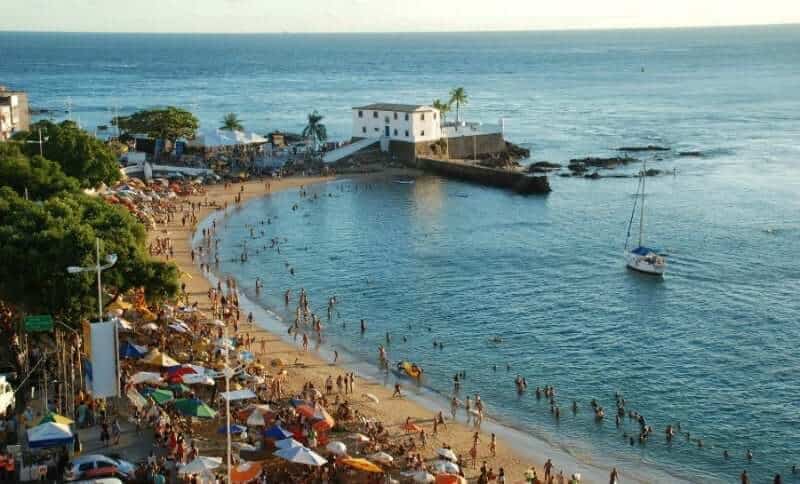
- Bahia: known for its music, its food and the Salvador Carnival, plus beaches like Porto da Barra and Praia do Forte.

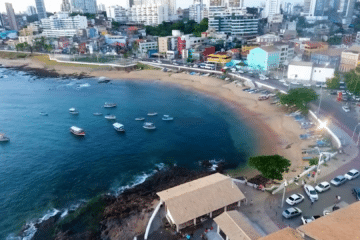
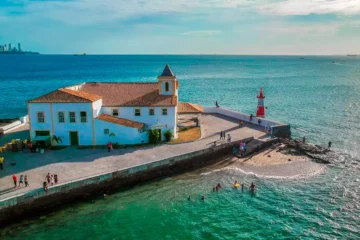
Beaches and landscapes of the Northeast
Elements of a tropical paradise

Nordeste Brasileiro: Destinos Turísticos Imperdíveis
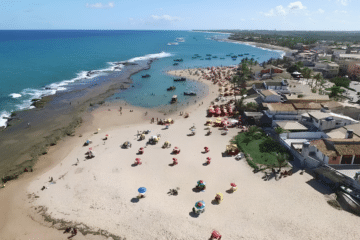
Here, in fact, you find every element of a tropical paradise: blue sea, white sand, coconut palms and sunshine almost every day.
Without a doubt, this beauty alone is worth the trip. However, the Northeast is much more than a string of beautiful beaches. Its soul also lives in its towns and in the history they carry.

History and culture of the Northeast
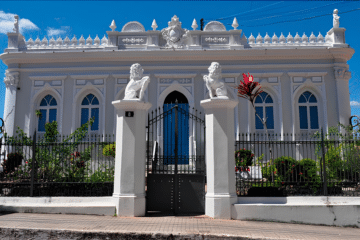
Traces of the past
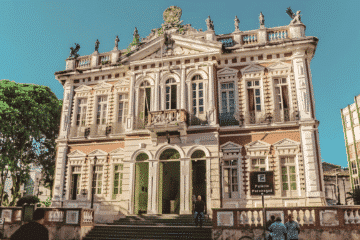
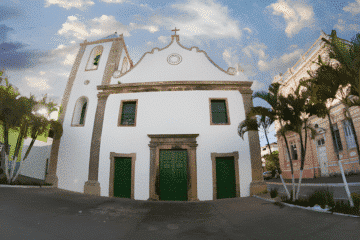
The first Europeans landed in this region. That is why traces of the past are everywhere: in the Baroque churches among the modern buildings of the state capitals and in the quiet squares of small villages. They also survive in the forts that still seem to watch over the coast and in the townhouses, tiles and fountains.


Archaeological sites and fossils
There is, moreover, a far more distant past. It appears, for example, in the rock paintings of Serra da Capivara and Pedro II, in Piauí. It is also present in the fossils of the Araripe Plateau, in Santana do Cariri, in the Cariri region of Ceará.
In Sete Cidades, also in Piauí, erosion has carved huge rock formations over millions of years.

The sertão: the vast interior
In the sertão, on the other hand, travel is harder and the landscape is arid. Even so, anyone with the patience to face the roads and the simple lodgings will be rewarded.
There, for instance, handicrafts pass from masters to apprentices. In addition, the São João festivals ring with the accordion, and the street markets are full of sounds and smells.

Plateaus, dunes and lagoons
Surprises of Chapada Diamantina
In Chapada Diamantina, in Bahia, tourism is well organized. Its waterfalls, rivers and caves, some with pools of blue water, draw travelers from all over the world. As a result, they bring life to the small towns of the region, which grew up around diamond mining.

Lençóis Maranhenses
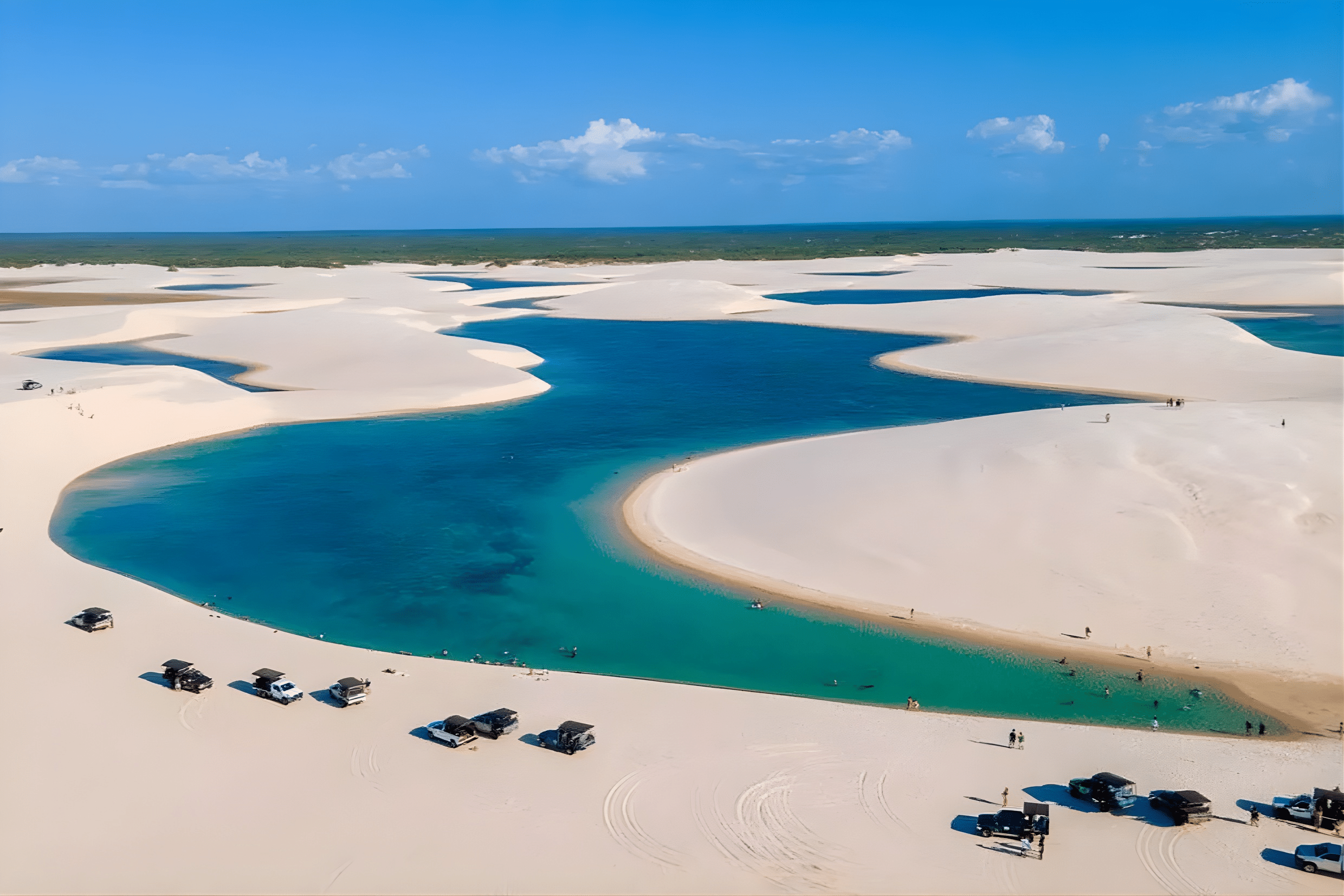
In the Lençóis Maranhenses, in turn, the landscape has a strange beauty. You see white dunes shaped by the wind, with blue or green lagoons, winding rivers and small fishing villages. Since 2024, in fact, the park has been a UNESCO World Natural Heritage Site.
Adventure on the dunes
To enjoy the dunes of the Northeast, therefore, bring an adventurous spirit. In Genipabu, in Rio Grande do Norte, for example, buggy rides are the main attraction.

Local tales
Among the white hills, locals also tell their stories. They speak, for example, of villages swallowed by the sand, of ghost ships buried under the dunes and of lights seen on full-moon nights.
Pleasures of the Northeast
Endless in its charms, the Northeast offers many pleasures. First, those of body and soul, with music, dance, drumming and carnivals of afoxés and maracatus.
Then come the pleasures of the table: Bahia’s acarajé, vatapá and caruru, Pernambuco’s bolo de rolo, Maranhão’s cuxá and tapioca, found all over the region.
And, finally, the simplest pleasure of all: looking at a beach with blue sea, coconut palms and plenty of sun.
Why does the Northeast coast attract so many tourists?
In short, several factors make the Northeast coast one of the most popular destinations in Brazil:
- Natural beauty: beaches such as Jericoacoara, Praia do Forte and Porto de Galinhas, plus dunes, plateaus and waterfalls.
- Climate: the tropical climate brings sun for most of the year, especially on the coast.
- Variety: options range from quiet, isolated beaches to busy urban seafronts.
- Culture: the mix of Indigenous, African and European influences shows in the June festivals and in the carnivals.
- Food: dishes like acarajé, vatapá, caruru, baião de dois and tapioca, plus regional sweets and cachaças.
- History: towns with colonial architecture, Baroque churches and archaeological sites.
- Activities: surfing, kitesurfing, diving, buggy and jangada rides, hiking and cultural tours.
- Handicrafts: pottery, lace and embroidery and straw objects.
- Infrastructure: capitals such as Salvador, Recife, Fortaleza, Natal and Maceió have airports, hotels and resorts.
Tips for traveling the Northeast coast
- Transport: a rental car helps for remote beaches and villages; in the capitals, however, transfers and ride-hailing apps are usually enough.
- Luggage: pack light clothes, a hat, sunglasses, sunscreen and insect repellent.
- Health: keep your vaccinations up to date and, in addition, protect yourself from the mosquitoes that carry dengue, Zika and chikungunya.
- Nature: do not step on coral, do not feed animals and, whenever possible, hire licensed guides.
- Festivals: for São João and Carnival, book your accommodation well in advance.
Frequently asked questions about the map of Northeast Brazil
Which states appear on the map of Northeast Brazil?
There are nine: Maranhão, Piauí, Ceará, Rio Grande do Norte, Paraíba, Pernambuco, Alagoas, Sergipe and Bahia.
All of them, in fact, have beaches.
How long is the Northeast coastline?
Altogether, it stretches for more than 3,300 km, from Maranhão to Bahia.
Bahia has the longest stretch; Piauí, on the other hand, has the shortest.
When is the best time to visit Northeast Brazil?
In general, from September to March, when there is less rain on most of the coast.
In Maranhão, however, the Lençóis lagoons are fullest between June and September.
Which beaches in the Northeast should you not miss?
Porto de Galinhas (PE), Jericoacoara (CE), Praia do Forte (BA), Maragogi (AL), Pipa (RN) and the Lençóis Maranhenses (MA).
All of them, therefore, rank among the most famous in Brazil.
Do I need to rent a car to travel around the Northeast?
Above all, it depends on your itinerary. For remote beaches and villages, yes; in big cities, however, buses and transfers may be enough.
On the dunes, for example, the best option is a buggy or 4×4 tour with local guides.

Publicações Relacionadas
Monte Santo, Bahia: Via Sacra, Santa Cruz shrine and history

European architecture - chronology, styles and characteristics

The culture of Northeastern Brazil: how it originated, influenced and flourished

Musical styles, rhythms, singers and composers of northeastern Brazil

Extreme Sports in Northeast Brazil: Where to Go

Influences and main dishes of northeastern cuisine
Brazil's historic moments illustrated in great works

Biography of Victor Meirelles and analysis of the work "The First Mass in Brazil"
Jean-Baptiste Debret: biography and works in Brazil
Baroque architecture in Brazil: Minas and Nordeste churches

Popular Art from the Northeast of Brazil

History, biography and paintings of Frans Post in Dutch Brazil

History and Chronology of the Portuguese Tile Industry
Franciscans in Brazil: Urban, architectural and artistic heritage
Colours of houses and buildings in the colonial architecture of the northeast
King Momo, Pierro, Harlequin and Colombina - Carnival characters

History and Chronology of the Carnival of Salvador de Bahia
History of the introduction of Portuguese tiles in Brazil

Maranhão handicrafts: buriti, tiles and where to buy

The influence of Arab architecture on the buildings of Pernambuco
Historic Towns in the Northeast: Explore the Past

Northeastern Brazilian Rhythms: 7 Main Musical Styles

Rural Maracatu: A carnival tradition in the interior of Pernambuco

Cordel woodcut: what it is, history and great artists

Brazil's northeastern subsoil has emeralds and archaeology
History of the 8-bass accordion and its influence on forró

June festivals: Tradition and Culture in the Northeast of Brazil

Bobbin lace in Brazil: origin, technique and Ceará

Diógenes Rebouças and His Architectural Legacy

Turban is Religion, Fashion and Culture in Brazil and the World

Casa Grande & Senzala: The Work of Gilberto Freyre
São Jorge dos Erasmos Sugar Mill: A Landmark in Brazil

Graciliano Ramos: The life and work of the Brazilian writer

Lampião and Cangaço: Between history and mythology
Lampião and the Cangaço: Between History and Mythology