1. History of the Forts of Salvador, Bahia
The city of Salvador was founded with defence in mind: the Portuguese colonisers’ aim was to secure sovereignty over the territory. For this reason, the forts became the central elements of the colonial capital’s defensive system.
Trenches, bastions and towers, positioned at strategic points, were transformed into ramparts and gun batteries.
Some projects were the result of the creativity of Portuguese military personnel; others were drawn up by military engineers trained at Italian and French schools, who had been recruited by the colonial administration. These projects made use of the local topography both for defensive purposes and to achieve architectural flexibility.
When the first governor-general, Tomé de Souza, arrived at the former Vila do Porto da Barra in 1549, the location of the administrative centre had already been decided. By order of King D. João III, Tomé de Souza established the fortified town at the highest and most sheltered point in the region, surrounded by marshes that were difficult to cross and overlooking the Bay of Todos os Santos.
The Portuguese established a defence system that evolved until the 18th century. The initial defences consisted of a wall made of taipa and clay, which was sufficient to repel attacks by indigenous peoples. Subsequently, this wall was extended and reinforced with stone and lime, and came to incorporate bastions facing the sea — the route taken by privateers — and towers at the access gates to the districts of São Bento and Carmo.
In the 17th century, the old wall gave way to a multi-layered defence system, comprising trenches, walls and fortifications situated at strategic points and adapted to keep pace with advances in artillery.
The threat of foreign invasions in the early 17th century accelerated the construction of fortified positions. The defensive line, comprising the forts of Santo Antônio da Barra, Mar (now São Marcelo), Santo Alberto, Nossa Senhora do Mont Serrat and Itapagipe, as well as the batteries at Ribeira das Naus, was already sufficiently organised to deter invaders.
In 1624, this system enabled the city to put up resistance against the Dutch, although it was ultimately overcome by the invaders’ military superiority. Following the reconquest in 1625, the defences were restored and expanded; in 1638 the city managed to repel a further Dutch assault, cementing its reputation as the ‘Indomitable Salvador’.
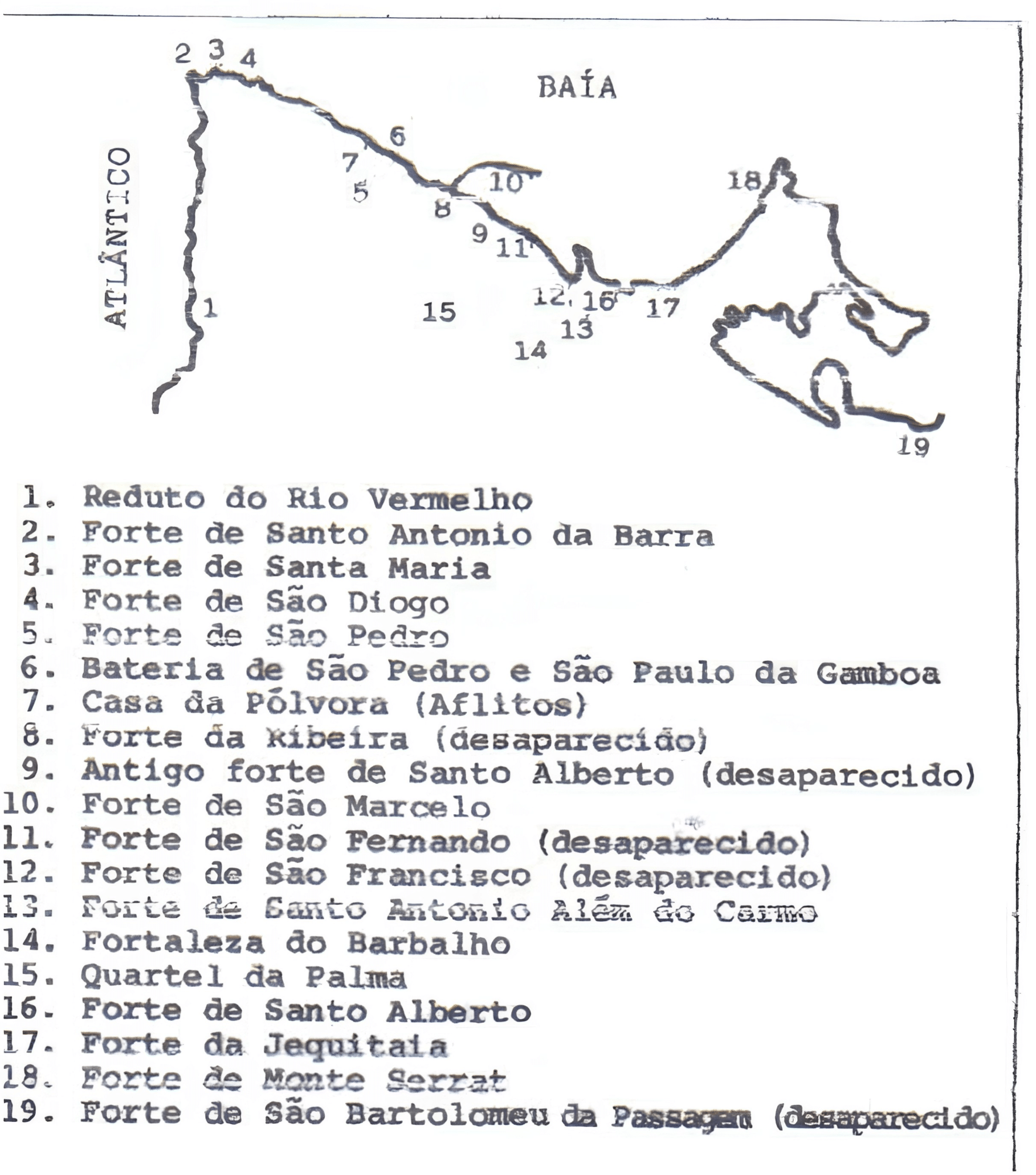
1. Chronology of the construction of the forts in Salvador
From the end of the 16th century to the Dutch invasion
- St Albert’s Tower
- Santo Antônio da Barra Fort
- Monserrate Fort (Our Lady of Mont Serrat)
- Lagartixa Fort (Lagartixa Fortlet)
Fortifications after 1625
- Defences of Porto da Barra — Forts of Santa Maria and São Diogo
- Forte do Mar (Nossa Senhora do Pópulo) / São Marcelo
18th-century fortresses
- Fort of St Peter
- São Paulo da Gamboa Battery
- Fort of Santo Antônio Além do Carmo
- Além-do-Carmo Complex
- Barbalho Fort (Our Lady of Monte do Carmo)
- Jiquitaia Fort
- Notable Lost Figures (other structures lost over time)
2. The Construction of Forts and Lighthouses in Salvador

Forte São Diogo e Forte Santa Maria00:48

Forte Nossa Senhora de Mont Serrat- Ponta do Humaitá03:40
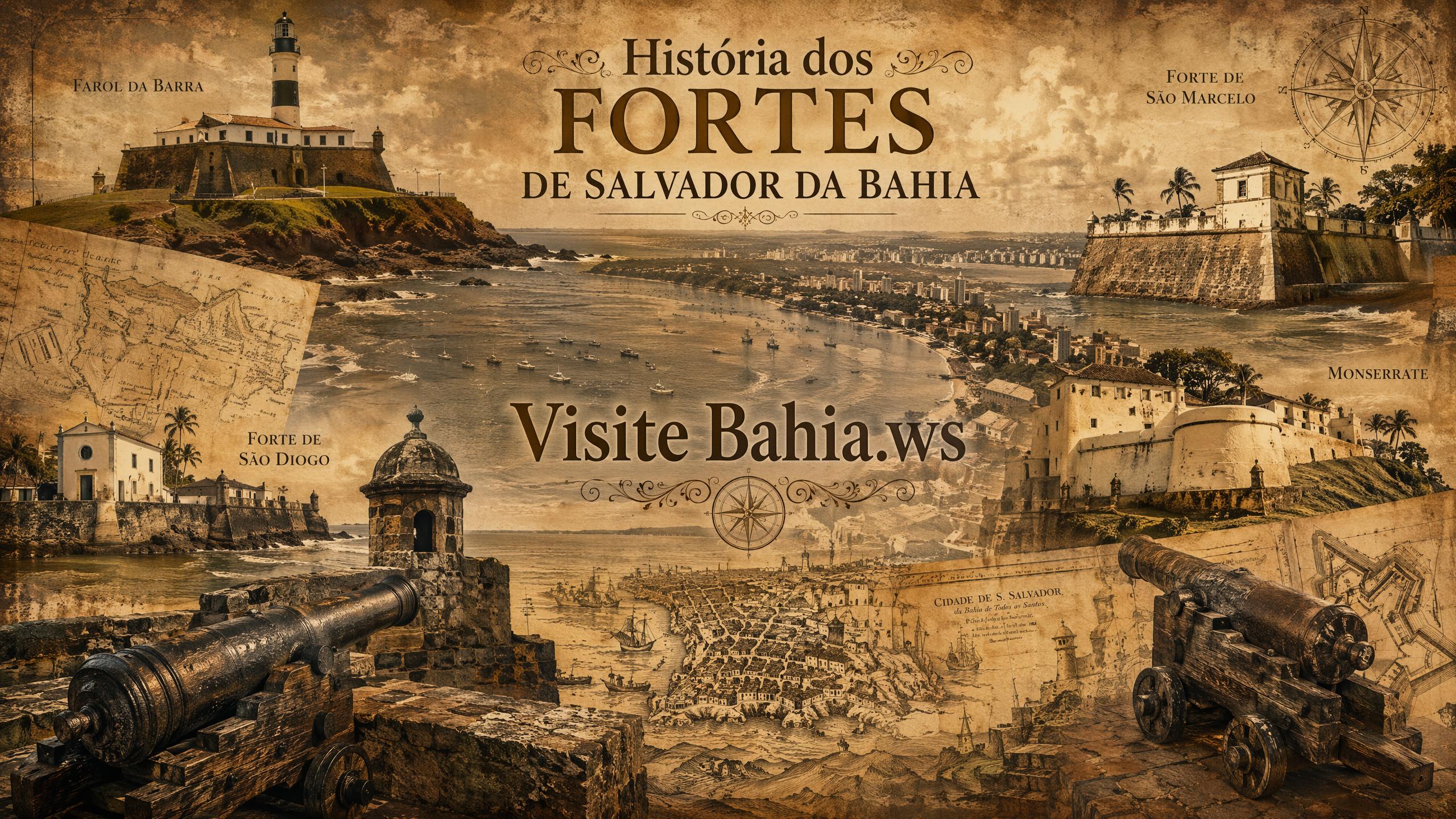
História dos Fortes de Salvador da Bahia
Por que o Farol da Barra foi construído?08:50

Farol de Itapuã - Drone
Ponta de Humaitá e Forte São Marcelo - Drone03:57
The construction of forts and lighthouses in Salvador was intended to protect the city and ensure Portuguese sovereignty over the territory. These structures formed part of a defensive system designed to control access via Baía de Todos os Santos and protect the port.
Religious considerations in the choice of venue
During the colonial era, the choice of site for the city also took religious and symbolic criteria into account: it was believed that the higher a city was built, the closer it would be to God and his protection.
Military strategy and location
From a military perspective, the occupation of the inland plateau of the bay was well-suited to the Portuguese defensive model, as the position offered a good anchorage for vessels and allowed batteries and fortifications to be positioned at strategic points. With this spatial layout, a defence structure was established at the locations deemed most important for surveillance and cross-fire.
Weaknesses in the defence system
As the city expanded beyond its original walls, the system of fortifications proved inadequate: the areas accessible by sea were very extensive and, on some occasions, the firepower of the batteries failed to prevent landings or bombardments by forces such as the Dutch and French.
Ponta do Humaitá
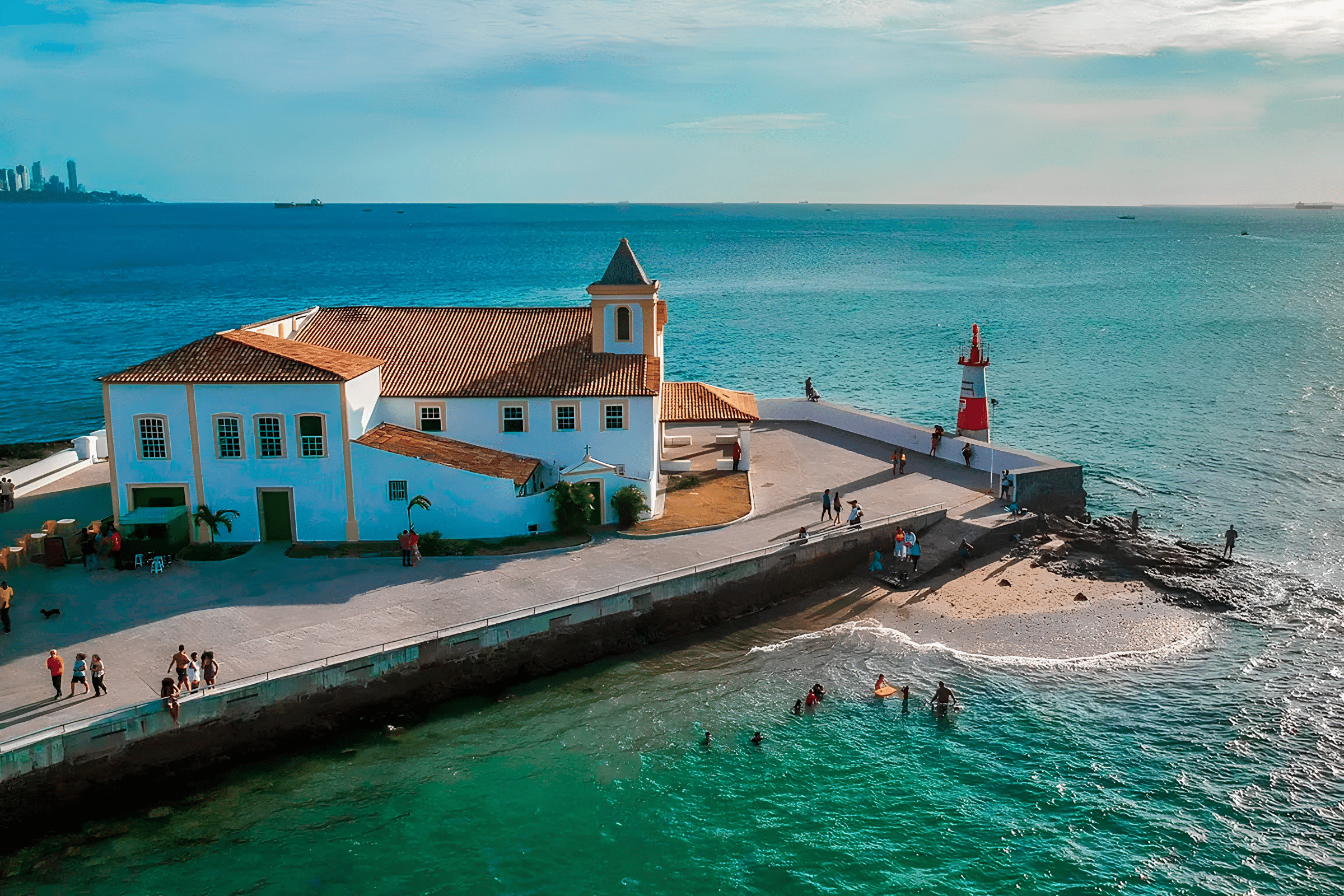
Ponta do Humaitá is one of Salvador’s most notable landmarks. Ships approaching from the south, passing close to Itaparica Island, were able to evade the line of fire from some of the batteries, which highlights the limitations of the defensive system’s coverage.
Interview with Colonel Anésio Ferreira Leite
According to Colonel Anésio Ferreira Leite, president of the Brazilian Association of Friends of Military Fortifications and Historic Sites (ABRAF): “Salvador once had more than 30 fortifications. Currently, only 11 remain. We are throwing away our heritage and our roots.”
Salvador’s main fortifications
- The first fortified post at Ponta do Padrão (now Largo do Farol da Barra) dates back to the early colonial period; the Fort of Santo Antônio da Barra dates back to the 16th century, and the lighthouse installed in its tower came into operation in the late 1690s.
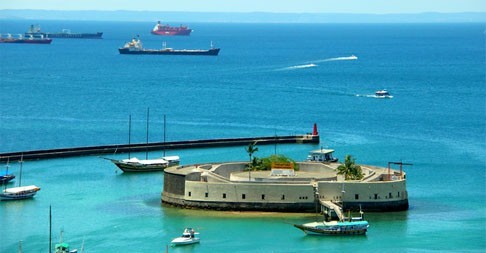
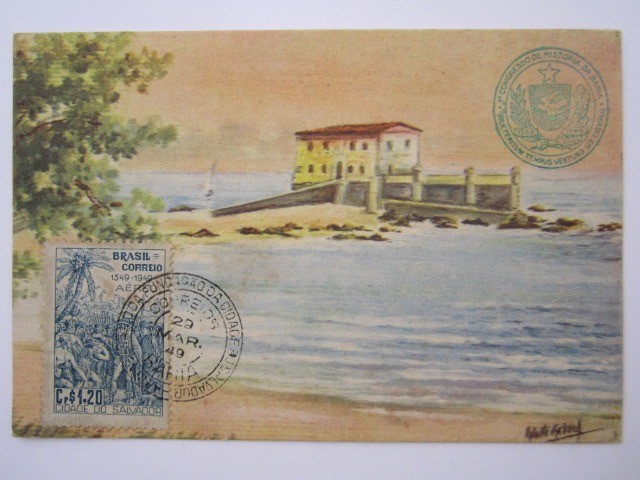
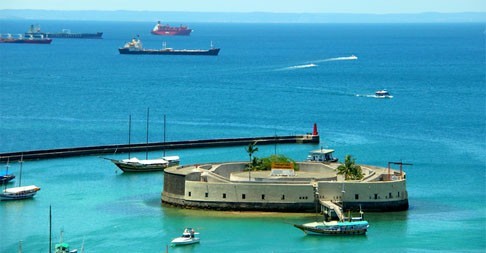
- The Fort of São Marcelo (Forte do Mar) underwent major works in the 17th century and was established as a circular fortification.
- In Barra, the forts Santa Maria and São Diogo were built/fortified in the early 17th century to protect access to the harbour.
- In the Campo Grande area are the Fort of São Pedro and the Fort of São Paulo da Gamboa, which form part of the defensive system established between the 17th and 18th centuries.
- The São Paulo da Gamboa Fort once housed a large cannon (weighing around 13 tonnes), which was later moved to an area near the 6th Military Region barracks in Mouraria.
- At the entrance to the São Joaquim Maritime Terminal stands the Forte Santo Alberto (or Forte da Lagartixa), so named because it houses smaller, movable artefacts.
- The Fort of Santo Antônio Além do Carmo is situated in the Santo Antônio neighbourhood. ‘Além do Carmo’ referred to the area beyond the northern gate of the historic city. The largest fortification in Salvador is the Fort of Nossa Senhora do Monte do Carmo (Barbalho Fort).
3. Discover the forts and lighthouses of Salvador, Bahia
3.1. Barra Lighthouse / Santo Antônio da Barra Fort
Barra Beach, Avenida Oceânica

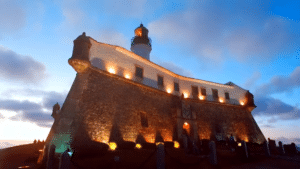
História do Forte de Santo Antônio da Barra em Salvador25:49
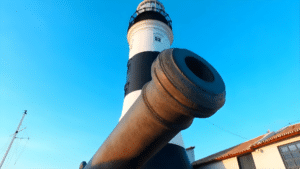
Forte de Santo Antônio da Barra — história, Farol da Barra e Museu Náutico15:09
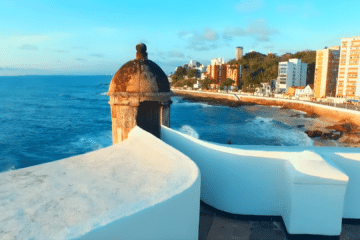
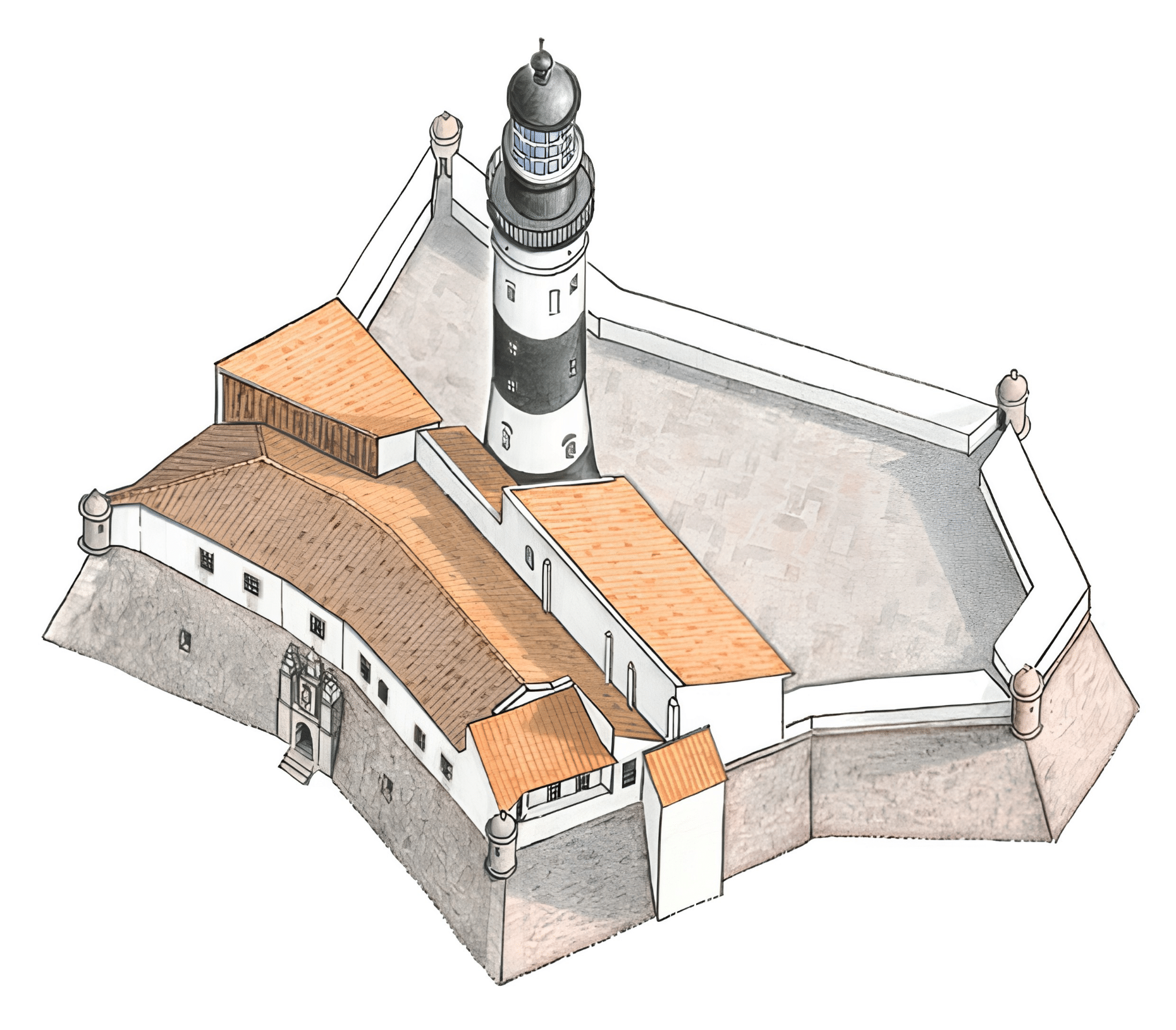
The Fort of Santo Antônio da Barra, known as the Barra Lighthouse, stands on the headland that separates the Atlantic coastline from the cove of Baía de Todos os Santos (formerly Ponta do Padrão). The fortification is imposing and offers panoramic views of the sea.
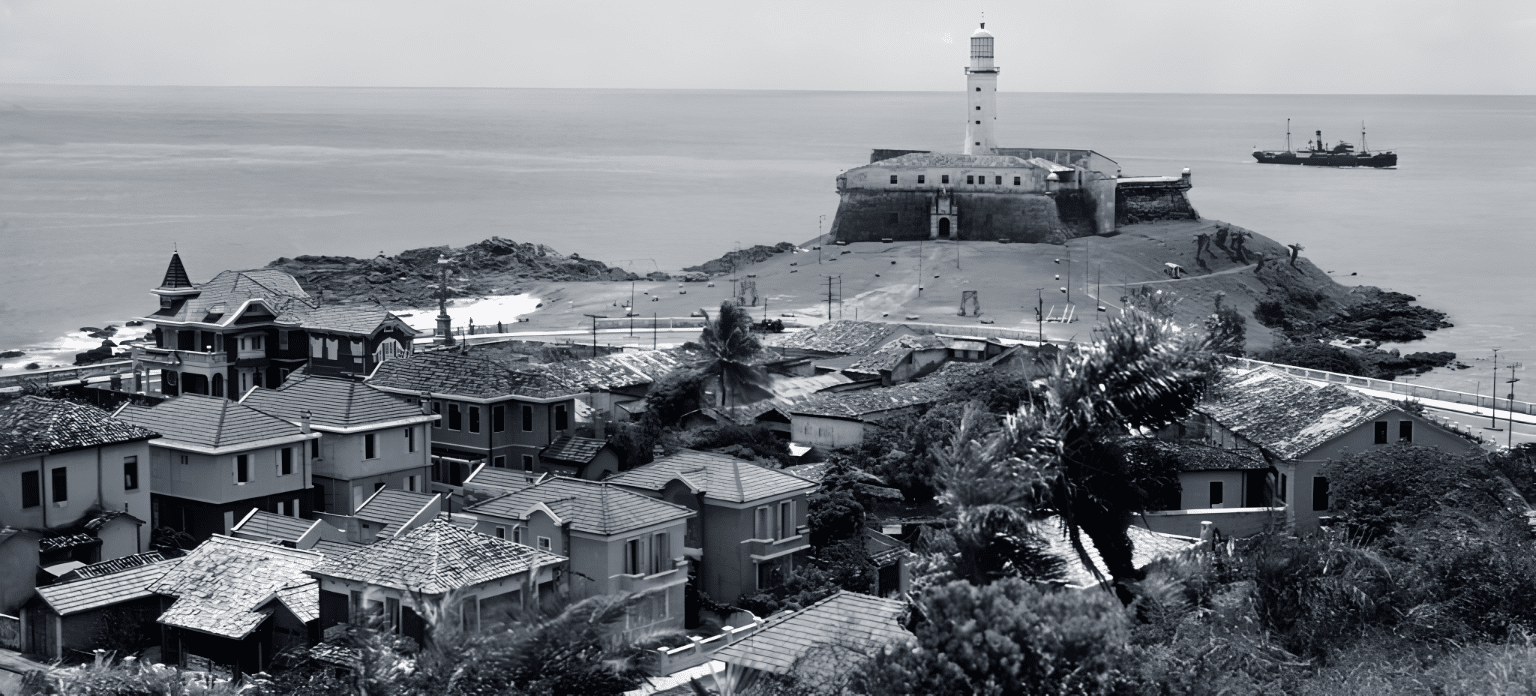
There are references to early buildings on the site dating back to the 16th century (the 1530s). The lighthouse in the tower was first lit at the end of the 17th century (c. 1698). Between the 17th and 18th centuries, the fort took on a bastioned layout (star-shaped). Lighting evolved from whale oil to electrification in the 20th century. Historical sources and materials from the Nautical Museum indicate variations in the light’s range over time; modern figures cite a greater range following successive modernisations.
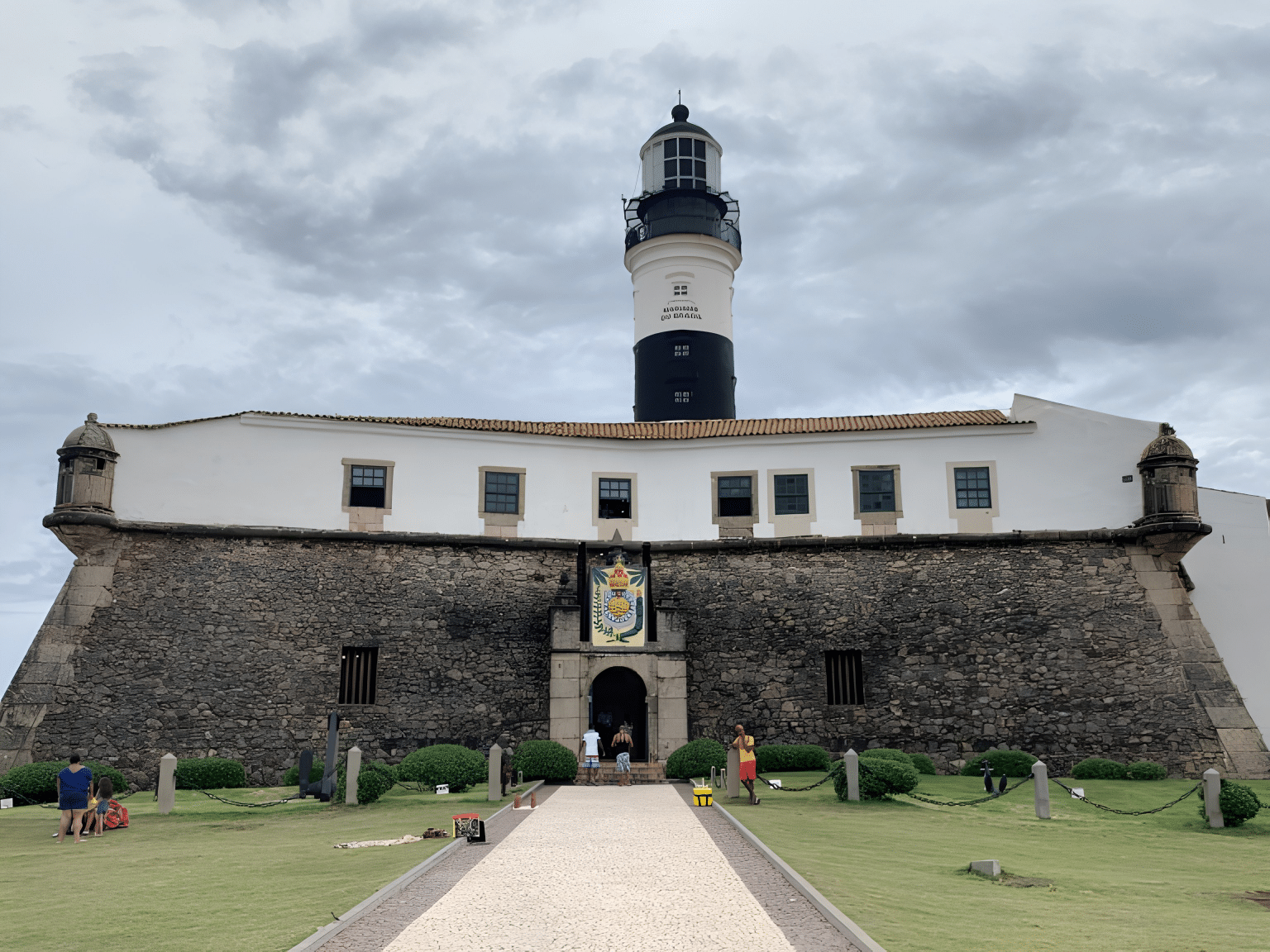
The fort houses the Bahia Maritime Museum and a café. The climb up the tower consists of 94 steps and offers a view of the historic machinery of the lighting system.
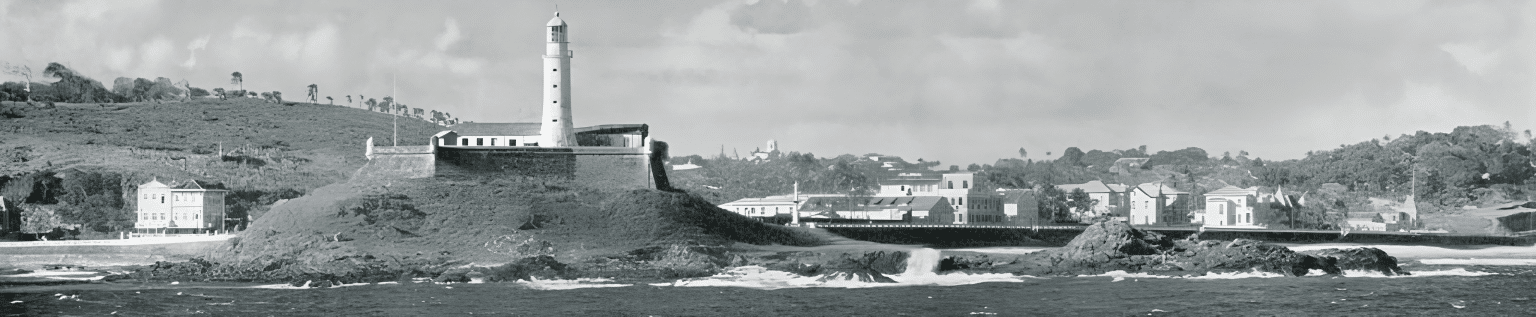
The sinking of the galleon Santíssimo Sacramento
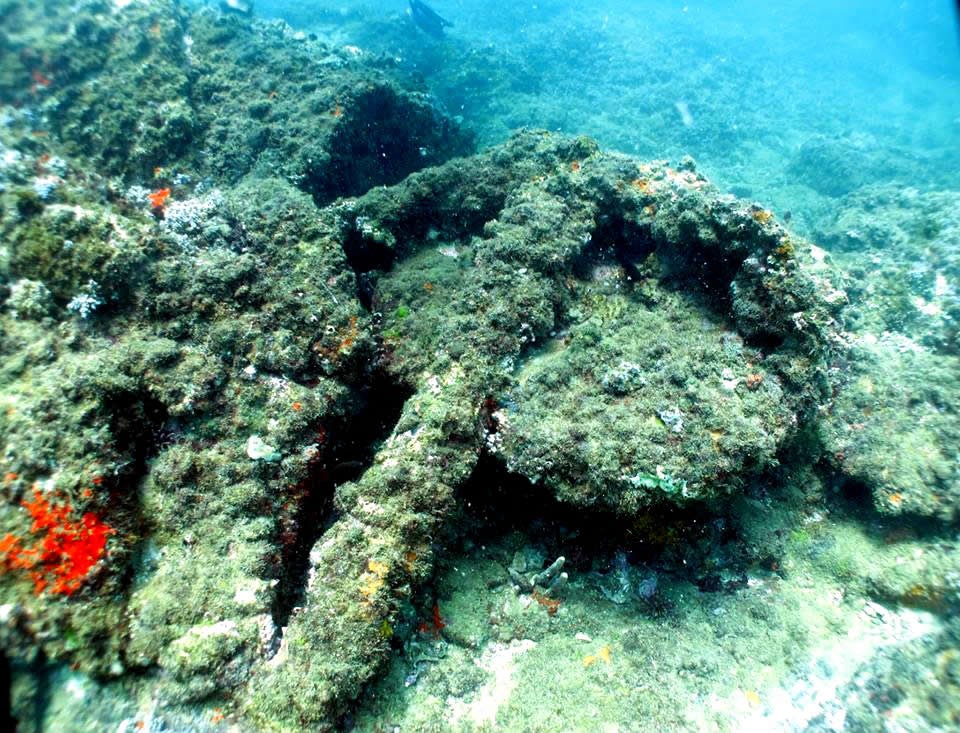
Naufrágio do galeão Santíssimo Sacramento em 1668
The galleon Santíssimo Sacramento sank at the entrance to the bay on 5 May 1668. Historical studies and accounts suggest there were a small number of survivors (around 70, according to some sources). Remains of the hull were identified centuries later at depths of between 25 and 30 metres.
See also: History of the Founding of Salvador, Bahia • Salvador’s Historic Centre • History of the Fort of Santo Antônio da Barra
3.2. Itapuã Lighthouse
Striped in red and white — Itapuã
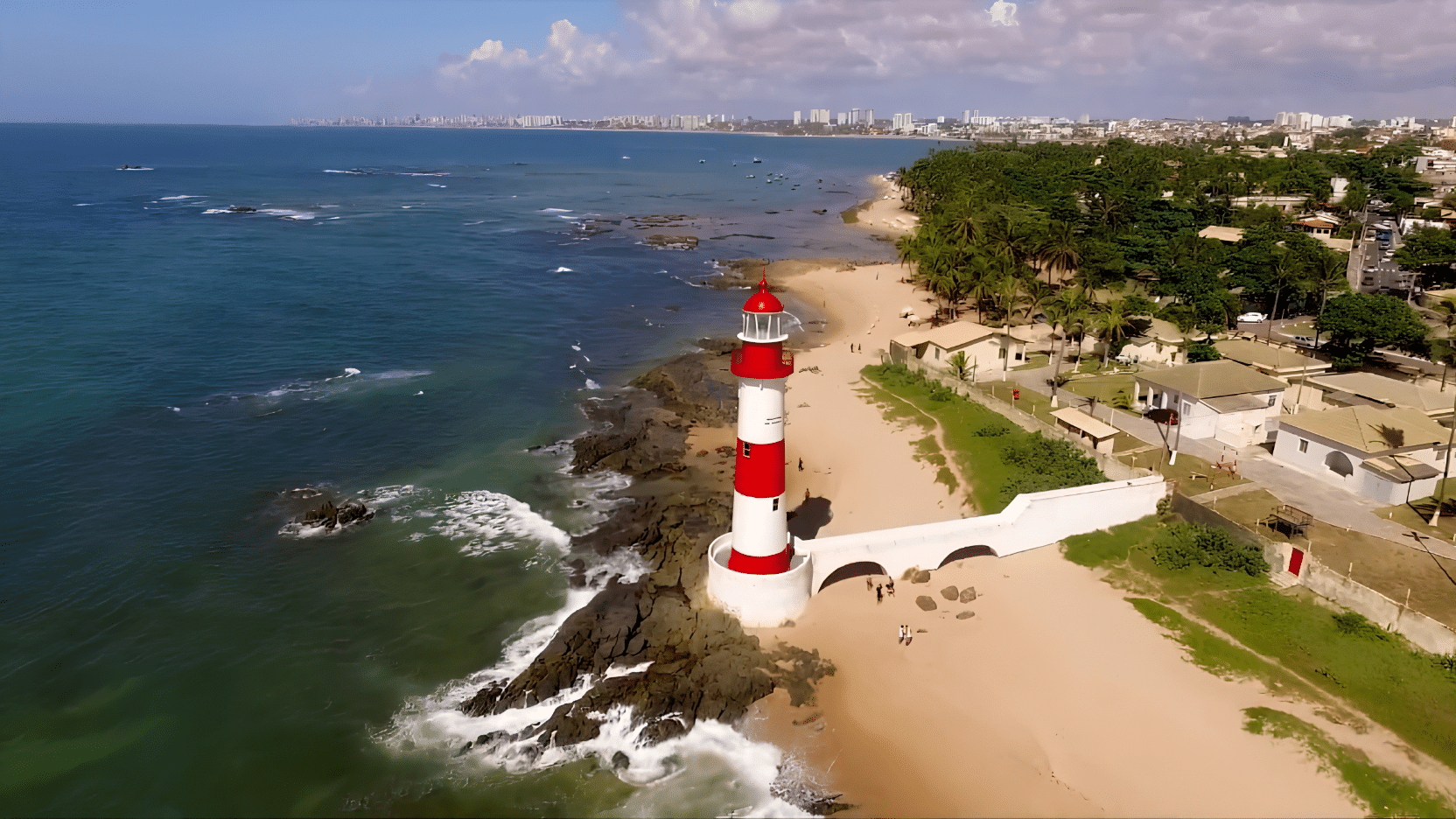
The Itapuã Lighthouse was built in 1873 (a design attributed to Zózimo Barroso) to warn of sandbanks and guide shipping. The cast-iron tower is approximately 21 m high, with a concrete base and a connecting bridge. Since the mid-20th century, it has featured horizontal red and white stripes. Local guidebooks state that the distance to the Barra Lighthouse is around 20–25 km.
3.3. Nossa Senhora de Monte Serrat Fort (Monserrate)
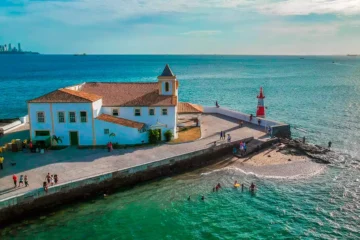
Ponta de Humaitá
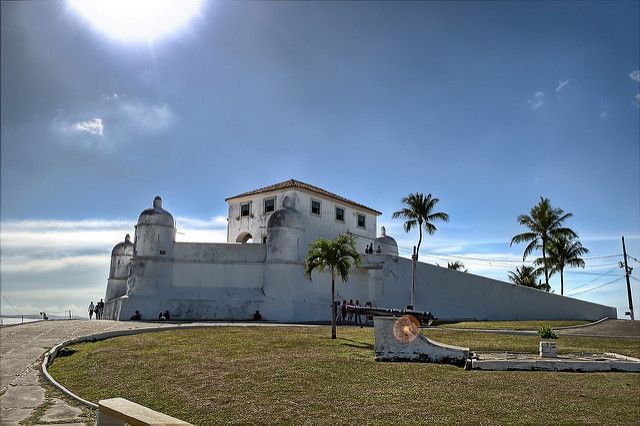
História do Forte de Nossa Senhora de Monte Serrat
Built on the site of an earlier fort, work on the Fort of Monte Serrat began in the late 16th century and the fort underwent a series of extensions up until the 18th century. It played a part in the fighting of 1624 (Johan van Dorth was killed nearby) and is a fine example of bastioned military architecture. Today it houses a museum collection and offers views of the bay and Itaparica Island.
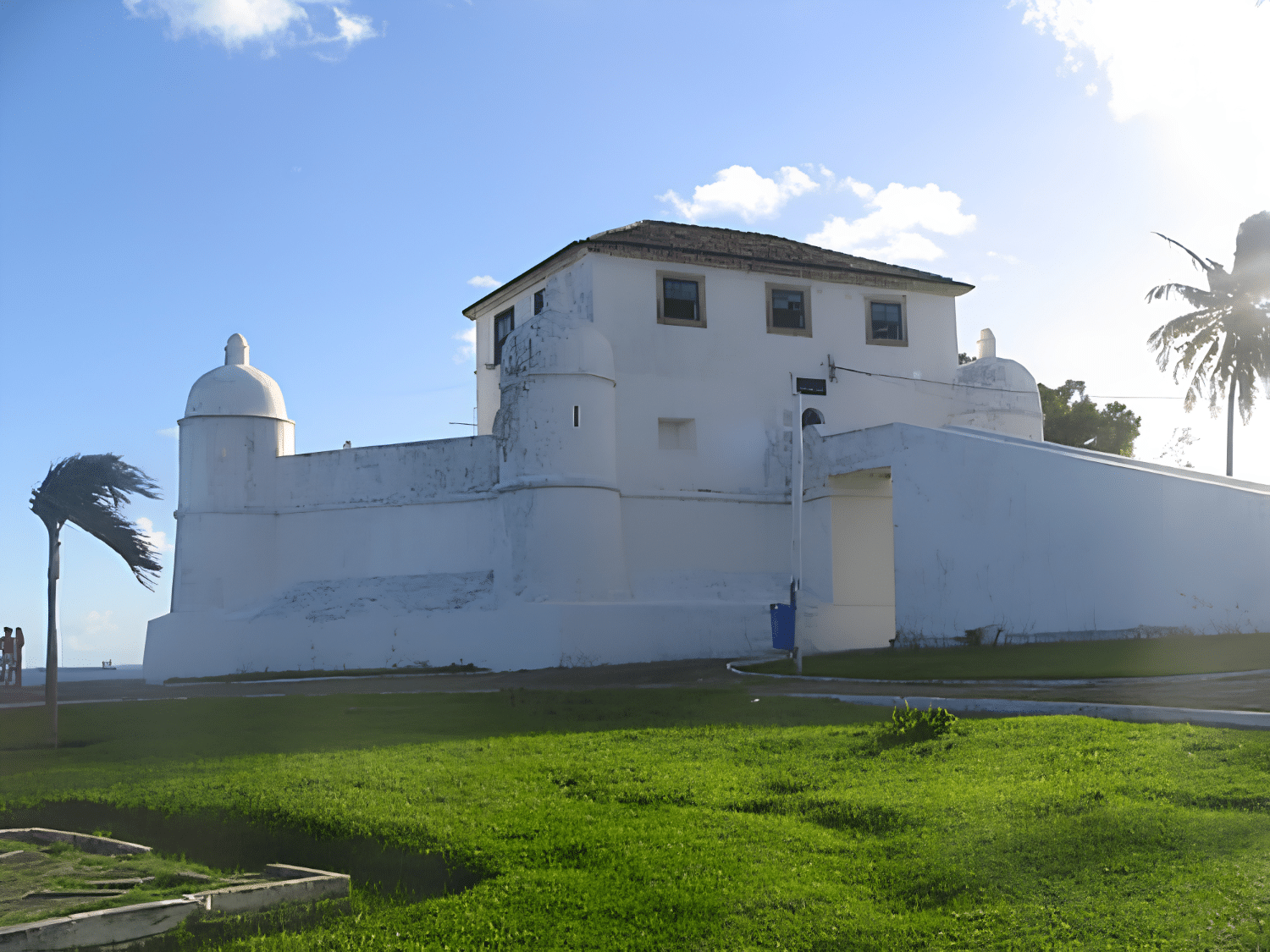
Source: History of the Fort of Nossa Senhora de Monserrate
3.4. Fort Santa Maria
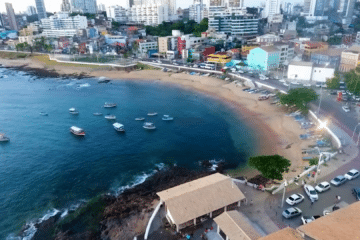
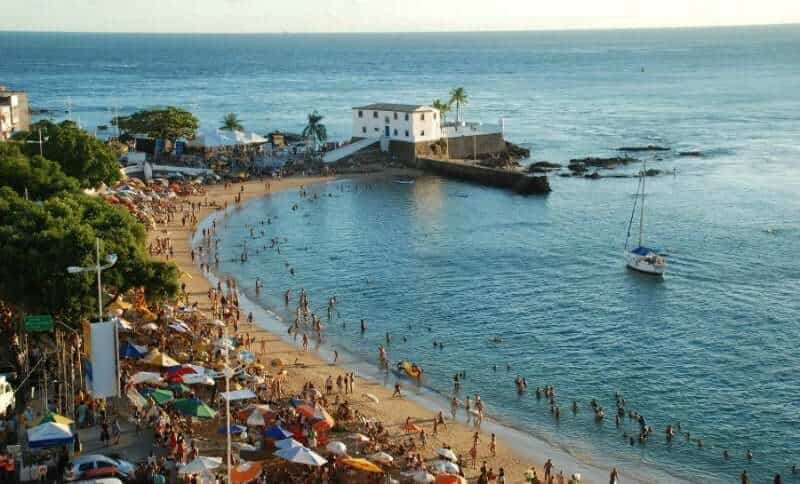
Porto da Barra Beach
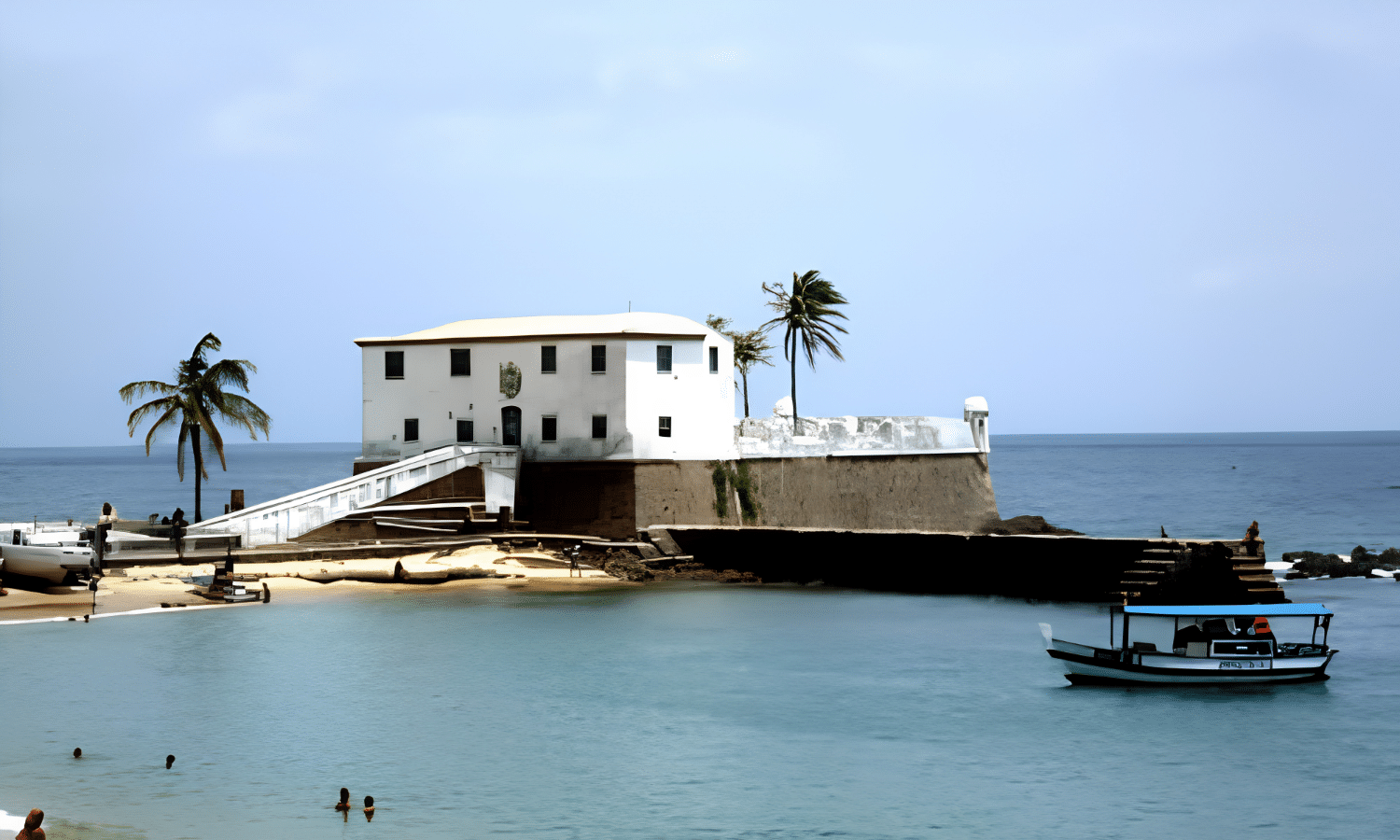
Begun around 1614 (designed by Francisco de Frias da Mesquita) and rebuilt in masonry in 1696 (work attributed to José Pais Esteve), the Fort of Santa Maria was listed by IPHAN in 1938 and, since May 2016, has been home to the Espaço Pierre Verger.
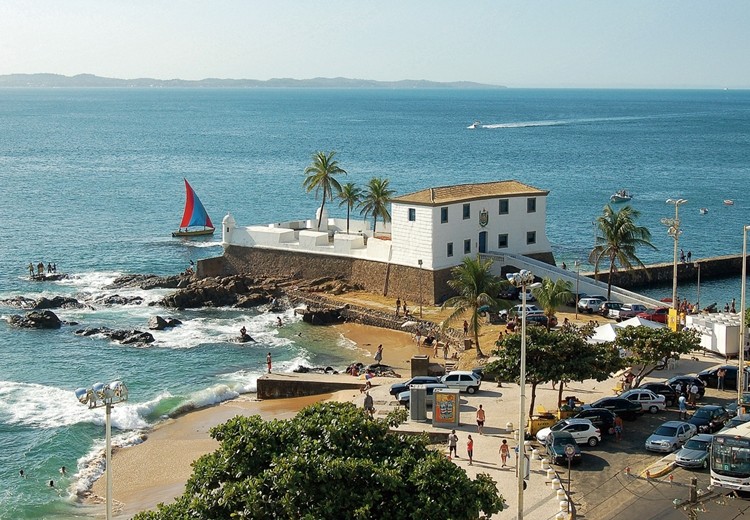
Forte de Santa Maria expulsou os Holandeses do Brasil04:09
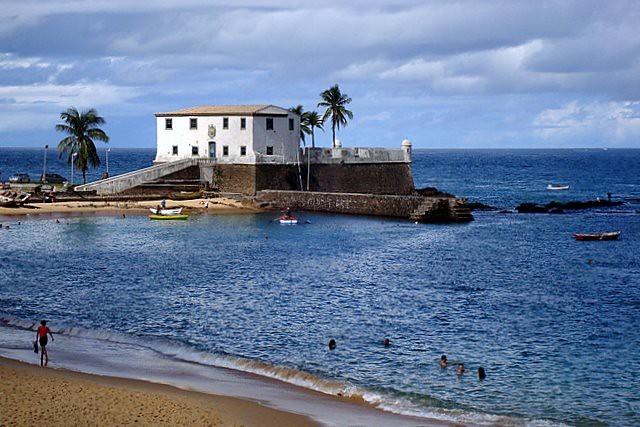
História do Forte de Santa Maria em Salvador - BA28:03
3.5. São Diogo Fort
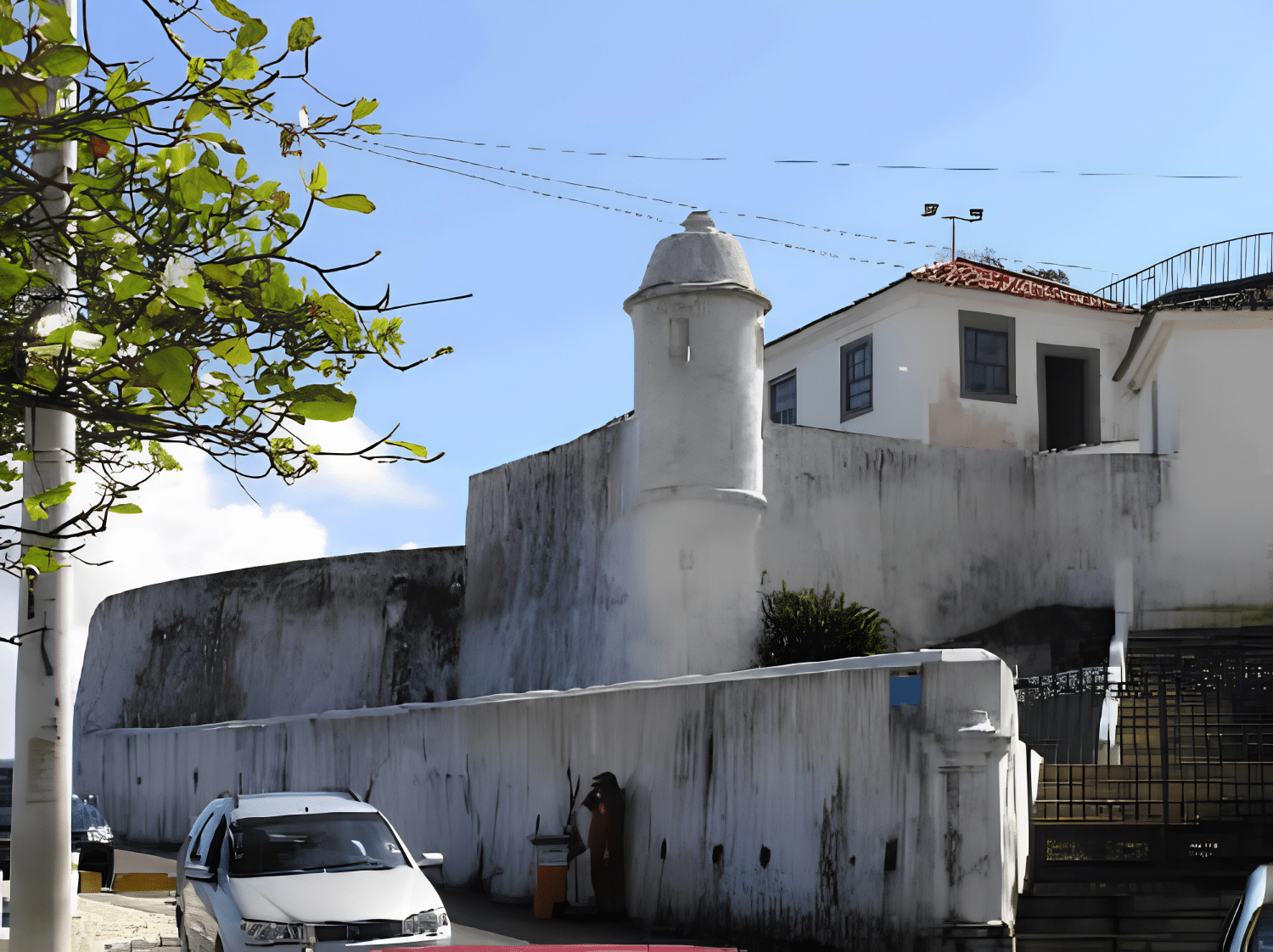
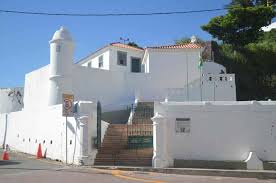
São Diogo Fort – Salvador, Bahia: The original São Diogo Fort dates from around 1609–1613. Rebuilt following the invasions, it underwent works between 1626 and 1635 and was renovated in the 18th and 19th centuries. Since May 2016, it has been home to the Espaço Carybé de Artes, forming part of the cultural regeneration of the coastal forts.
História do Forte de São Diogo em Salvador BA
3.6. São Marcelo Fort (Forte do Mar)
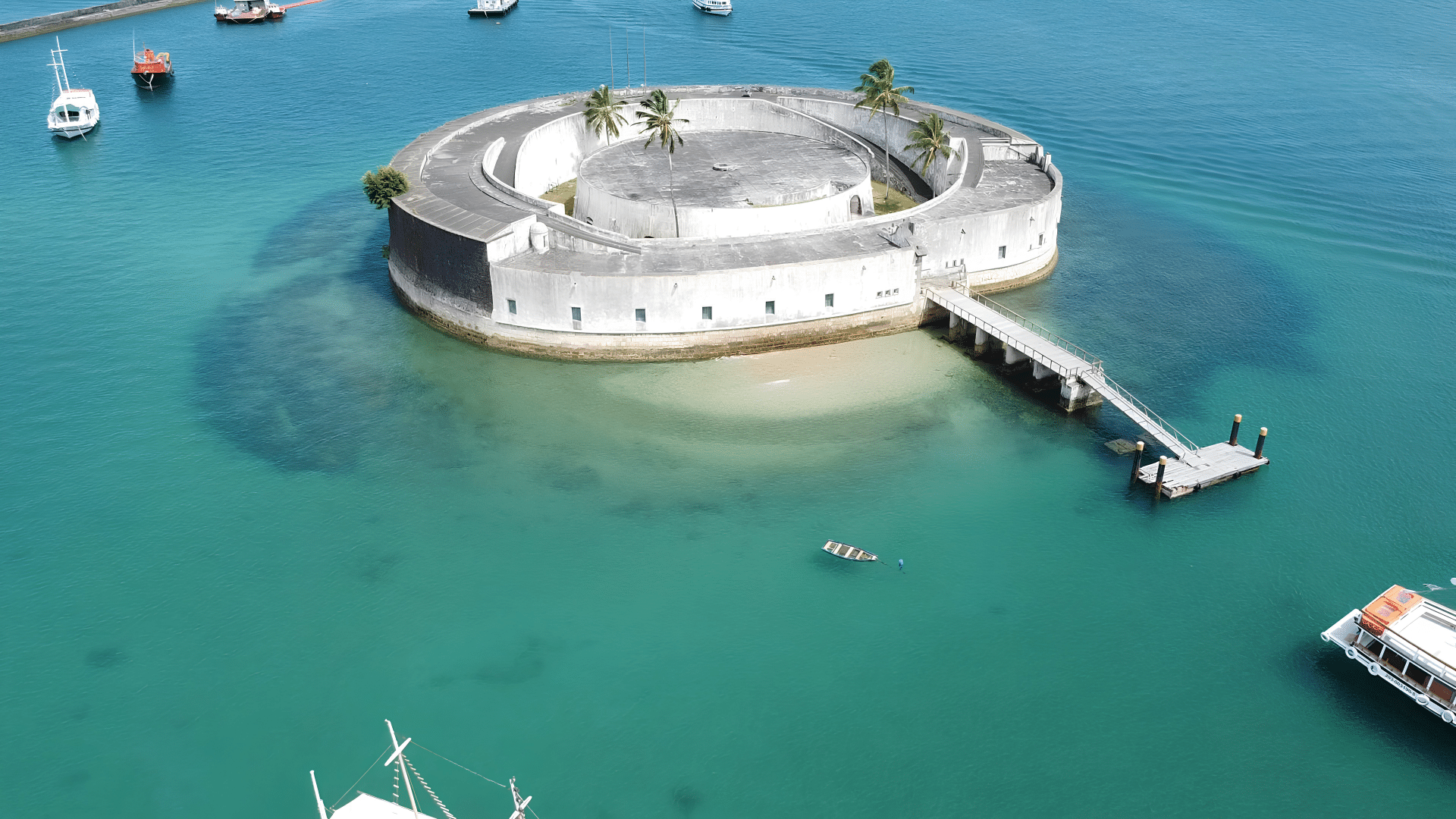
Originally built of timber in the early 17th century and rebuilt in masonry following the Dutch invasion, the Fort of São Marcelo has a circular Renaissance-style layout. It is situated on a sandbank some 300 m from the coast, opposite the Historic Centre, and has been the scene of historic events, such as those linked to the Bombing of Salvador (1912). It once served as a prison and is now a tourist attraction open to visitors (see local opening hours).
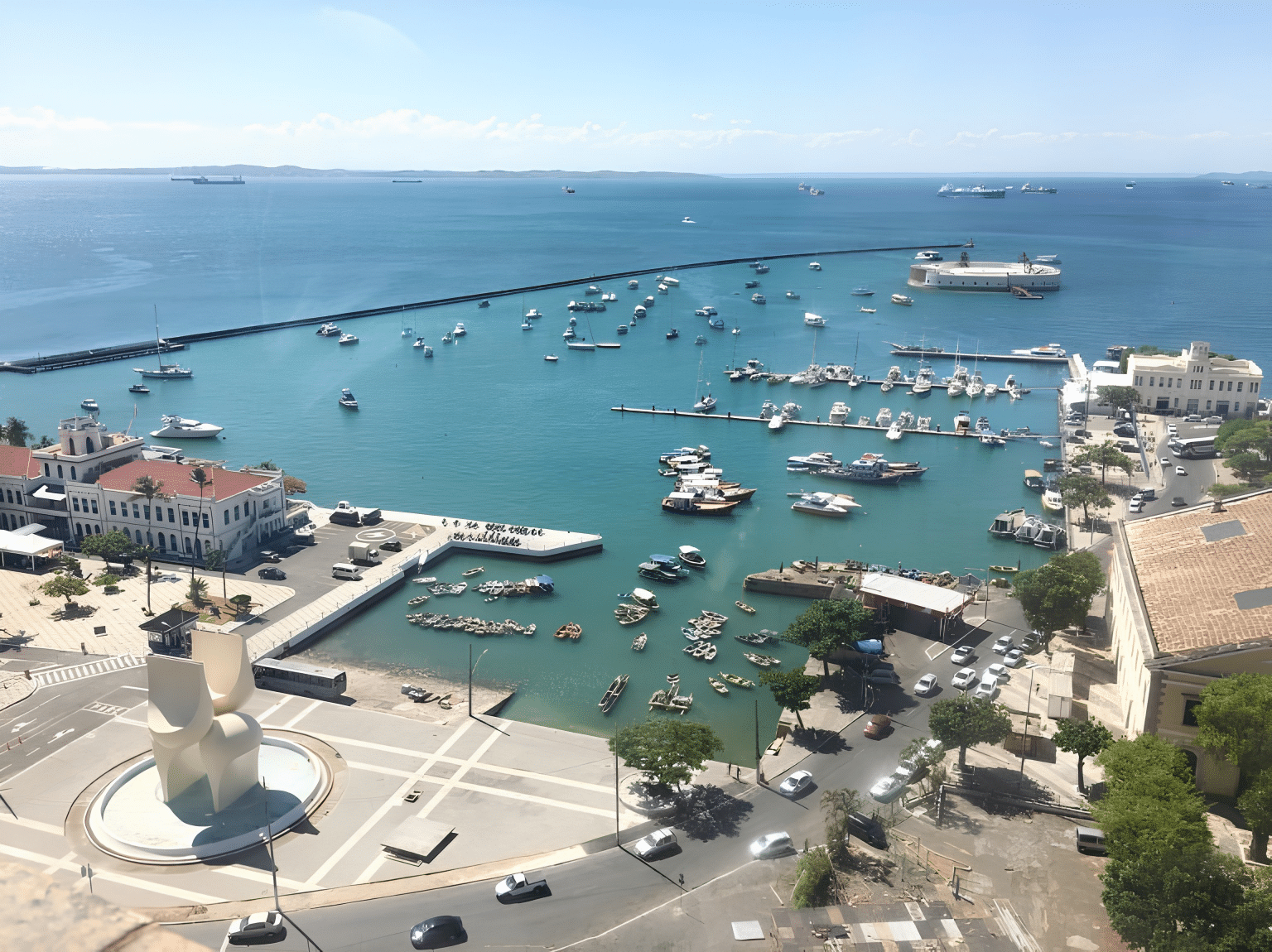
See also: History of São Marcelo Fort • History of the Fortresses and Defences of Salvador
3.7. Santo Alberto Fort / São Tiago Tower (Lagartixa Fort)
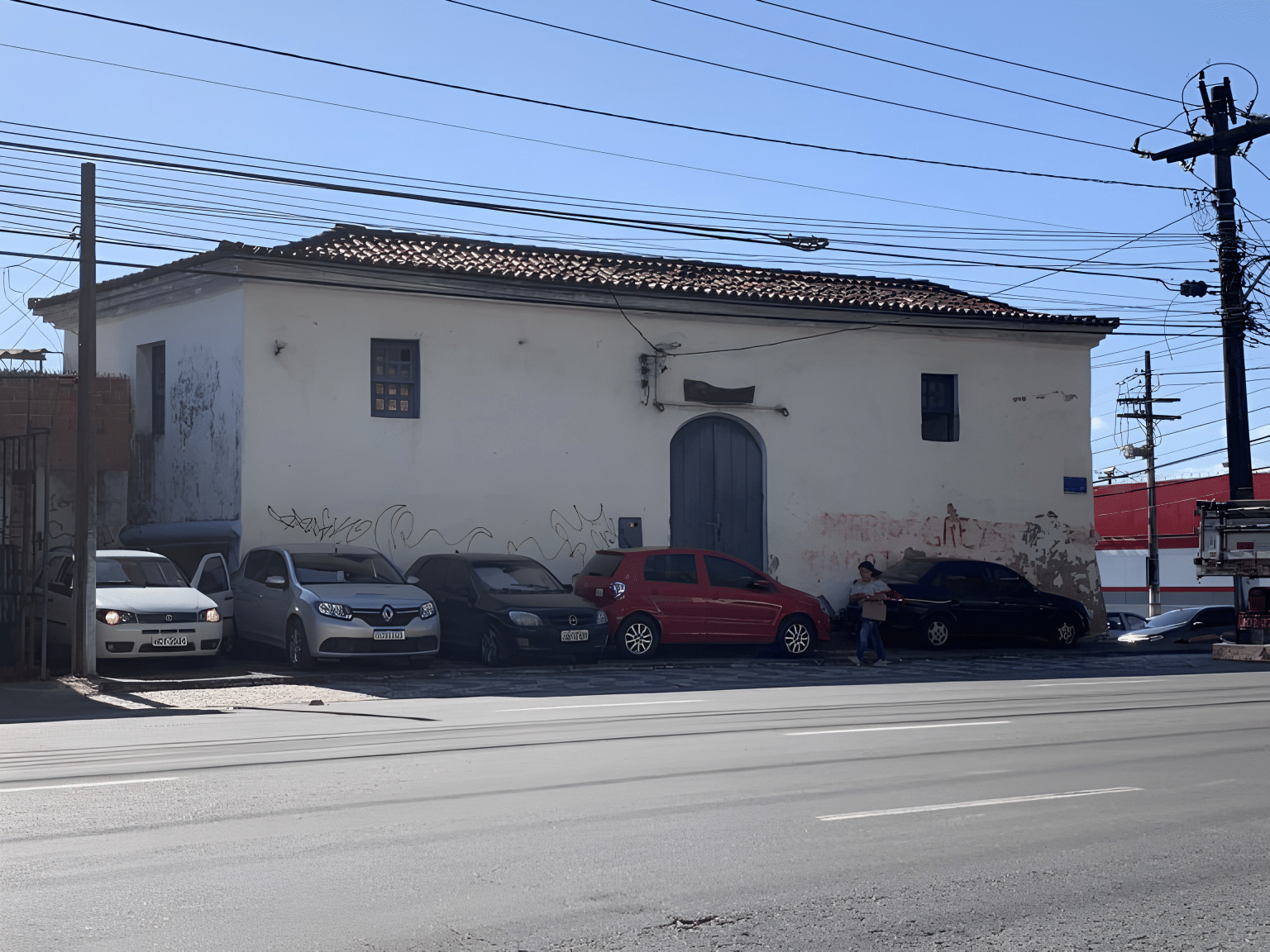
With its origins in the former Tower of São Tiago, the current structure of the Fort of Santo Alberto dates back to the late 17th century (1694). The fort played a part in various historical events (for example, in 1823 it authorised the embarkation of troops during the final phase of the struggle for independence) and served a variety of purposes in the 20th century. Following the expansion of the port, it became further removed from the sea and access to it is currently restricted at many times.
A History of the Forts and Lighthouses of Salvador, Bahia

Publicações Relacionadas
Barreiras: Where Carnival Meets Adventure Tourism
Trekking in the Pati Valley in Chapada Diamantina
Santo Amaro da Purificação — History, Culture and Tourism in the Recôncavo Baiano
Lagoa Encantada in Ilhéus: A Preserved Natural Paradise
Taipu de Fora: Discovering Natural Pools
Lapão Cave: The Ultimate Adventure Experience
Humpback whales in Brazil — characteristics, migration and sanctuaries (Abrolhos)
Bahia Maritime Museum: History of Navigation at the Barra Lighthouse
Alameda do Sol — Vila da Praia do Forte (BA) | Things to do
History of grape and wine production in the São Francisco Valley
Morro de São Paulo: Beach Guide and How to Get There
Cocoa farms attract tourists to Bahia - Chocolate Road
Costa do Dendê: A Tropical Paradise in Bahia
Trekking in the Pati Valley in Chapada Diamantina
Chapada Diamantina's architectural style and influences
The Coconut Coast and its tourism heritage
Tourist attractions for children in Salvador: Fun and learning
Church and Convent of Santa Clara do Desterro and its History in Salvador
Salinas da Margarida (BA) — Beaches, Attractions and a Complete Guide
Cathedral Basilica of Salvador — History, Sacred Art and Collection
Church and Convent of Nossa Senhora da Palma in Salvador, Bahia
Santo Antônio da Barra Fort — history, Barra Lighthouse and the Nautical Museu
Igatu: Explore the 19th-Century Stone Houses
Discover the Magnificence Fort of Nossa Senhora de Monte Serrat
Tourist Information about Chapada Diamantina
Solar do Unhão & MAM-BA — History, Architecture and a Visit
Church of the Third Order of St Francis — History, Art and Baroque Architecture
Church of São Pedro dos Clérigos — History, architecture and religious art
Skydiving in Bahia: An Unforgettable Experience
Canavieiras: A Hidden Gem in Bahia's Coastline
São Jorge Parish Church in Ilhéus — history, architecture and religious art
Waterfalls of Chapada Diamantina: A Guide for Adventurers
Santa Rita de Cássia: Attractions and Activities
Belmonte's Rich History and Cultural Heritage
Prado (BA) — Beaches, Cliffs and Whale Watching | Whale Coast
Ponta de Corumbau — an unspoilt paradise on the southern coast of Bahia
This post is also on:
 Português
  English
  Deutsch
  Español
  Français