Bom Jesus da Lapa at a glance
- Where it is: in western Bahia, on the banks of the São Francisco River, about 796 km from Salvador by road.
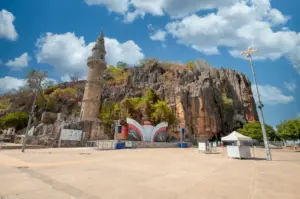
- Main attraction: the Bom Jesus da Lapa Sanctuary, set inside the caves of a limestone hill about 90 metres high.
- Main festival: the Bom Jesus pilgrimage, from 29 July to 6 August, is the largest in Bahia and one of the largest in Brazil.
- Getting there: by car or by bus (about 12h45 from Salvador). Therefore, plan your trip well in advance.
- Visiting the sanctuary: it is open all year round; however, access may be controlled during the pilgrimages.
- How long to stay: 1 to 2 days are enough for the sanctuary and the town; during the pilgrimages, though, allow more time.
Gallery


The Bom Jesus da Lapa Sanctuary
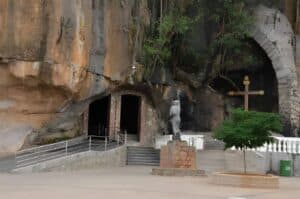
The sanctuary lies inside caves in a large limestone massif on the banks of the São Francisco River. In other words, it is not a built church, but a group of natural caves turned into places of prayer. That is why the visit is so striking: the walls and ceiling are the rock itself.
The main cave, the Grotto of Bom Jesus, is about 50 metres long and 7 metres high. In addition, it holds the image of Senhor Bom Jesus, the focus of devotion, and altars carved into the stone. Altogether, the hill has several caves; among them, the Grotto of Nossa Senhora da Soledade stands out as the second most important for the celebrations.
What to see at the sanctuary
- Grotto of Bom Jesus: the main cave, with the image of Bom Jesus and the busiest masses.
- Grotto of Nossa Senhora da Soledade: dedicated to the patron saint of the September festival.
- Room of Miracles (Sala dos Milagres): where pilgrims leave votive offerings, photos and objects in thanks for prayers answered.
- Sanctuary esplanade: the large open area where open-air masses are held during the pilgrimages.
- Top of the hill: from the summit, the view over the town and the São Francisco River is one of the most beautiful in western Bahia.
Video about the Bom Jesus da Lapa Sanctuary

Santuário do Bom Jesus da Lapa - Guia de Turismo18:10
Santuário do Bom Jesus da Lapa na Bahia07:32

Santuário do Bom Jesus da Lapa - Reportagem e História02:16

Bom Jesus da Lapa - Capital Brasileira da Fé06:25
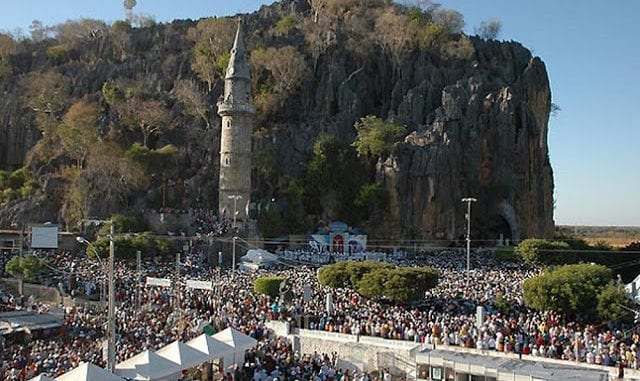
Bom Jesus da Lapa - Drone04:43
Pilgrimages and festivals: calendar
Bom Jesus da Lapa welcomes pilgrims all year round; however, the major celebrations take place between July and October.
- Pilgrimage of the Land and the Waters — first weekend of July: organised by rural communities, with an opening mass and debates on environmental issues.
- Bom Jesus Pilgrimage — 29 July to 6 August: the main one. First there is a novena on the esplanade; then, on 6 August, the great procession through the town. During that week, the town receives hundreds of thousands of pilgrims.
- Pilgrimage of Nossa Senhora da Soledade — September: the main feast day is 15 September.
- Pilgrimage of Nossa Senhora Aparecida — October: with a triduum and a procession on 12 October.
Since dates and programmes may change from year to year, always check the official sanctuary calendar before you travel.
History of the sanctuary
In 1691, the Portuguese Francisco de Mendonça Mar arrived in the region with an image of Senhor Bom Jesus and decided to live in the cave. From then on, the fame of the place spread across the sertão and the pilgrimages began.
As the number of pilgrims grew, shelters, chapels and support services were built. Later, from 1956 onwards, the Redemptorist missionaries took charge of the celebrations and of welcoming pilgrims. As a result, the town grew around the devotion and became known as the “capital of faith” of the sertão.
Things to do in Bom Jesus da Lapa besides the sanctuary
- São Francisco riverfront: ideal for a late-afternoon walk and for watching the sunset over the river.
- Boat trips on the São Francisco: they leave from the riverside and show the town and the hill from the water.
- Town centre and religious shops: the streets around the sanctuary are full of shops selling religious items, crafts and souvenirs.
- São Francisco cuisine: it is worth trying river fish, such as surubim, in the town’s restaurants.
How to get to Bom Jesus da Lapa
Reference information from October 2026. Timetables and prices change, so check with the companies.
1. By bus from Salvador
- The journey takes about 12h45, usually on an overnight bus that leaves Salvador in the evening and arrives in the morning.
- Fares range, on average, from R$ 290 to R$ 415, depending on the seat type.
- During the pilgrimage season, in addition, there are many chartered buses from cities across the Northeast and Centre-West of Brazil.
2. By car
- It is about 796 km from Salvador. Therefore, it is a long journey that is worth splitting into two stages.
- Use a navigation app to choose the best route and check road conditions before you set off.
3. By plane
- The town has the Eva Ribeiro Regional Airport, opened in 2023, but so far we have found no regular commercial flights. For this reason, check the situation before planning to fly.
Where to stay in Bom Jesus da Lapa
- Town centre, near the sanctuary: the most practical option, because everything is within walking distance.
- Riverside: quieter, with views of the São Francisco.
- Pilgrimage season: demand is huge. Therefore, book your accommodation several months in advance.
Tips for visiting the sanctuary
- Wear light, comfortable clothes that are also appropriate for a place of worship.
- Bring water, sunscreen and a hat, because the sertão sun is strong.
- In addition, carry cash for small expenses and offerings.
- During the pilgrimages, arrive early for mass and agree on a meeting point with your group, since the crowds are large.
- Finally, respect moments of prayer inside the caves.
Frequently asked questions about Bom Jesus da Lapa
Where is Bom Jesus da Lapa?
It is in western Bahia, on the banks of the São Francisco River, that is, about 796 km from Salvador by road.
When is the Bom Jesus da Lapa festival?
The Bom Jesus Pilgrimage runs from 29 July to 6 August, and 6 August is the high point, with the great procession. In addition, the Pilgrimage of Nossa Senhora da Soledade takes place in September.
How long is the bus from Salvador to Bom Jesus da Lapa?
On average, about 12h45, usually overnight.
Does Bom Jesus da Lapa have an airport?
Yes, the Eva Ribeiro Regional Airport. However, so far there are no confirmed regular commercial flights; therefore, check before you travel.
Do you have to pay to enter the sanctuary?
We found no entrance fee for visitors. Even so, access to the caves may be controlled during the pilgrimages.
How many people live in Bom Jesus da Lapa?
According to the 2022 IBGE census, 65,550 inhabitants. During the pilgrimages, however, the town receives many times more visitors than residents.
When is the best time to visit Bom Jesus da Lapa?
To experience the festival, between July and September. On the other hand, to visit the sanctuary calmly, choose the other months of the year.
What does “Lapa” mean?
“Lapa” is an old Portuguese word for a cave or rock shelter. So the town’s name effectively means “Good Jesus of the Cave”.
See also: São Francisco Valley · Barreiras · Juazeiro · Paulo Afonso

Publicações Relacionadas
Arembepe: beaches (Piruí, Praia do Canto), Hippie Village and the Tamar Project

Paranaguá Palace — History, architecture and visiting information | Ilhéus (BA)

São Jorge Parish Church in Ilhéus — history, architecture and religious art

History of the Convent and Church of Nossa Senhora da Piedade in Ilhéus

São Sebastião Cathedral (Ilhéus) — History, architecture and tourism
The 15 Most Visited and Well-Known Beaches in Bahia
The 3 most paradisiacal beaches in Bahia

Skydiving, Paragliding and Ballooning in Bahia

Historic Towns in Bahia: A Journey Through Time
Places to visit on the south coast of Bahia

História da Arte - Caracteristicas, Aspectos e Periodos
Tourist Attractions in Bahia: main attractions, beaches and cities

Subaúma, Bahia: where it is, things to do and where to stay

Massarandupió Naturist Beach, Bahia: Rules and Access
Beaches on the South Coast of Bahia: 10 Best and Tips
Towns and the Abrolhos Archipelago — The southernmost tip of Bahia

Baixio: Between lagoons, dunes and the charm of a village surrounded by nature
Best Beaches in Bahia: Your Guide to Paradise
Salinas da Margarida (BA) — Beaches, Attractions and a Complete Guide

Guarajuba Beach, Bahia: Natural Pools and Tips

Barra do Cahy: Brazil's first beach - history and nature

Garcez Beach: Discover Paradise in Jaguaripe

Barreiras: An Ecological Paradise in Bahia
Catabrigas Waterfall — A natural haven in Ibirajá, Itanhém (BA)

Serra Grande: Your Guide to Bahia's Paradise
Corumbau, Bahia: Ponta de Corumbau, beaches, map, how to go

Taipu de Fora: Discovering Natural Pools

Iguaí: A Guide to Waterfalls and Relaxation
Morro de São Paulo: Map, Beaches & How to Get There (2026)
Tourism in São Francisco do Conde (BA) — Tips and Attractions

Todos-os-Santos Bay (Bahia) — History, geography and conservation
Todos os Santos Bay — Nature, History and Water-based Tourism
Bay of Todos os Santos: nature, history and cultur

Rafting in Taboquinhas: The Ultimate Adventure Guide

Abseiling Sites in Bahia: Top Locations to Explore

Diving Spots in Bahia: Discover Underwater Treasures
This post is also on:
 Português
  English
  Deutsch
  Español
  Français