Published on · Updated on
The beaches of Maranhão are famous for the dunes of Parque Nacional dos Lençóis Maranhenses (Lençóis Maranhenses National Park) and for their lush mangroves. With a look that differs from the rest of Brazil’s Northeast, the Maranhão coast brings together almost deserted beaches in fishing villages and urban beaches around São Luís.
In fact, many people don’t even know that Maranhão has beaches. However, the state has the second-longest coastline in Brazil, at about 640 km, behind only Bahia. As a result, anyone looking only for the classic “blue sea with coconut palms” ends up missing out on unique landscapes.
- Coastline: about 640 km, so it is the second-longest in Brazil.
- Highlights: Atins, Caburé, Tutóia, Ilha dos Lençóis and also the beaches of São Luís.
- Closest to São Luís: Calhau, Olho d’Água, Araçagy and Panaquatira.
- Lençóis lagoons: fullest from June to September.
- Note: in São Luís, however, the tide can vary by more than 6 meters a day.

What the Maranhão coast is like
The Maranhão coast is the greenest in Brazil. After all, the state holds about 36% of the country’s mangroves, the largest area of any state, according to the ICMBio Mangrove Atlas. In addition, it has dunes, rivers that meet the sea and a high degree of preservation.
Thus, the beaches offer a different kind of tropical beauty, with great potential for leisure, sun-and-beach tourism and ecotourism. In general, the water is darker and greener than in the rest of the Northeast because of the rivers and mangroves. On the other hand, this ensures rich wildlife, with birds such as the scarlet ibis (guará).
Before heading to the beach, it is worth paying attention to two points:
- Tides: in the São Luís region, the difference between high and low tide can exceed 6 meters. Therefore, check the tide table, because the strip of sand changes a lot throughout the day.
- Water quality: some urban stretches of São Luís are unfit for swimming at certain times of year. So, check the official bulletins before going into the sea.
The most beautiful beaches of Maranhão

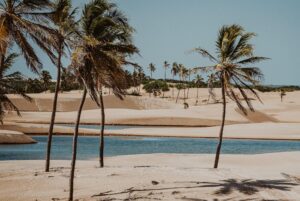
Guia Turístico de Tutóia no Maranhão

Praias de Tutóia no Maranhão05:06

Praias da Ilha dos Lençóis em Cururupu05:35

Kitesurf em Atins03:55
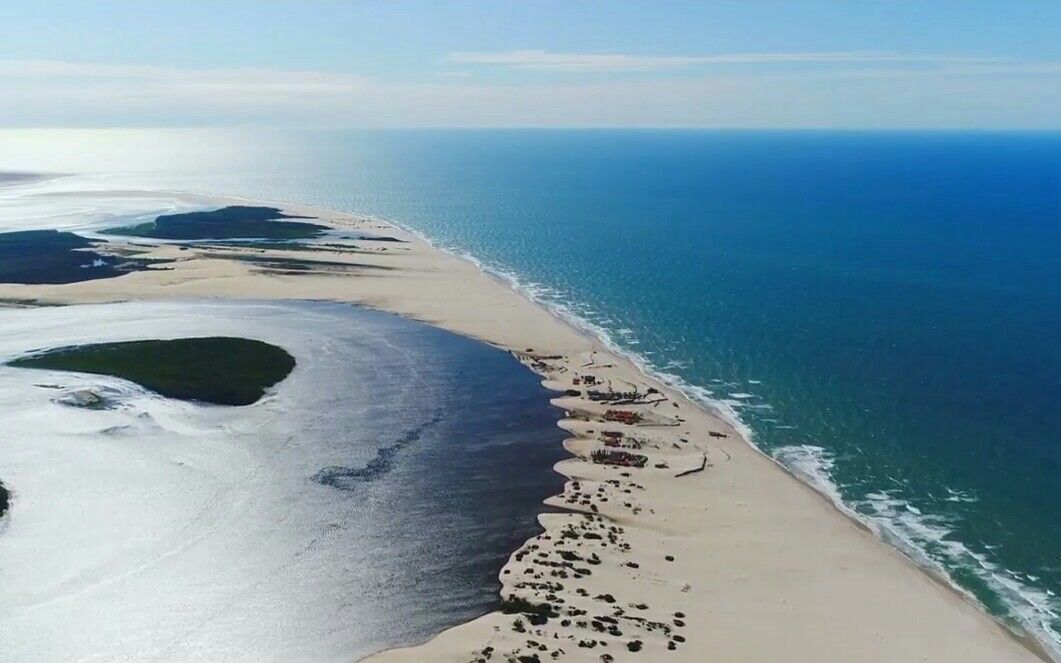
Caburé é um vilarejo de pescadores no Maranhão13:04

Praia de Panaquatira no Maranhão00:36

Praia do Calhau no Maranhão03:44

Praia do Araçagy no Maranhão04:07

Praia da Ponta D'areia no Maranhão02:04

Praia de São Marcos no Maranhão02:03
1. Beaches of Tutóia
Tutóia lies in the east of the state, about a five-hour drive from São Luís. The region combines dunes, beaches, mangroves, rivers and lagoons, and it is also the gateway to the Pequenos Lençóis.
In addition, the lagoons of Balneário de Lagoinha stand out, forming between the dunes during the rainy season. Among the beaches, incidentally, the best known are Praia da Barra, Andreza, Arpoador, Moita Verde and Praia do Amor.
Most of the Delta do Parnaíba (Parnaíba Delta) in Maranhão lies within the municipality. For this reason, boat tours of the delta leave from the port of Tutóia and pass islands such as Cajueiro and Melancieira, mangroves and the flight of the scarlet ibises at dusk. To explore the region, a 4×4 vehicle and a local guide are recommended.
2. Beaches of Ilha dos Lençóis, in Cururupu
Ilha dos Lençóis, in Cururupu, on the state’s western coast, is an ecological sanctuary and one of the most remote destinations in Brazil. Its landscape mixes dunes, mangroves and flocks of scarlet ibises (guarás), birds of an intense red color. However, since the island is wild and has little infrastructure, it is best to go with an agency or a local guide.
3. Praia de Atins, in Barreirinhas

In Atins, the rio Preguiças (Preguiças River) meets the sea and mixes fresh and salt water. Moreover, the village sits on the edge of the Lençóis Maranhenses, and during the rainy season lagoons appear between the dunes. Because of the constant winds, Atins has also become one of the country’s top kitesurfing destinations.
Today, the village also has bars, restaurants and guesthouses with a rustic feel. Find out more in the Atins guide.
4. Praia de Caburé, in Barreirinhas

Caburé is an almost deserted beach on a narrow peninsula between the sea and the rio Preguiças. Thus, you can alternate a swim in the sea with a freshwater dip in the river. In addition, the boat tour from Barreirinhas passes dunes and mangroves and usually stops at Caburé.
5. Praia de Panaquatira, in São José de Ribamar

Praia de Panaquatira is in São José de Ribamar, in Greater São Luís, about 40 km from the city center. It is considered one of the best in the region, because it has about five kilometers of calm, shallow sea. Therefore, it is perfect for families with children.
6. Praia do Calhau, in São Luís

Praia do Calhau, on the other hand, is one of the most popular beaches in the capital. It runs along Avenida Litorânea, where restaurants and beach stalls create a lively atmosphere, especially in the late afternoon. At low tide, moreover, the strip of sand becomes huge.
7. Praia do Araçagy, in São José de Ribamar

About 20 km from downtown São Luís, Praia do Araçagy is ideal for anyone seeking peace and quiet and typical Maranhão food. In addition, it is surrounded by dunes and kiosks, and it is easy to reach by car.
8. Ponta d’Areia, in São Luís

Ponta d’Areia is one of the busiest beaches in São Luís, less than 5 km from the city center. Although it is often not recommended for swimming, it is a meeting point for all kinds of people. Besides that, it has bars, restaurants and a beautiful sunset.
9. Praia do Olho d’Água, in São Luís

With a more rustic look, Praia do Olho d’Água is known for its dunes and cliffs. In the second half of the year, strong winds attract wind-sports enthusiasts, for example kitesurfers and windsurfers.
10. Praia de São Marcos, in São Luís

Considered the capital’s most “youthful” beach, São Marcos draws surfers during the day. At night, in turn, bars and events bring the waterfront to life.
When to visit the beaches of Maranhão
Maranhão has two well-defined seasons. From January to June, it rains more and, as a result, the Lençóis lagoons fill up. From July to December, however, the weather is drier and windier, which is ideal for the beach and kitesurfing.
Finally, to see the Lençóis lagoons full, the best period is from June to September. See more details on when to visit the Lençóis Maranhenses and plan your trip with the 7-day Maranhão itinerary, which also includes the historic center of São Luís.
Frequently asked questions about Maranhão beaches
Does Maranhão have beaches?
Yes. In fact, Maranhão has the second-longest coastline in Brazil, with about 640 km of shore.
The beaches range from urban waterfronts in São Luís to deserted beaches in the Lençóis Maranhenses.
Is the sea in Maranhão salt water?
Yes, the beaches of Maranhão are on the ocean, so the water is salty.
However, in places such as Atins and Caburé, the sea meets freshwater rivers, and in the Lençóis the lagoons are filled with rainwater.
What are the most beautiful beaches in Maranhão?
Among the most beautiful are Atins, Caburé, the beaches of Tutóia and Ilha dos Lençóis.
Near São Luís, on the other hand, Panaquatira, Calhau and Araçagy stand out.
What is the best beach to stay at in São Luís?
Calhau and Ponta d’Areia have the most hotels, bars and restaurants, and therefore they are the most convenient places to stay.
For calm swimming, however, choose Panaquatira or Araçagy.
Which cities in Maranhão have beaches?
The main ones include São Luís, São José de Ribamar, Raposa, Barreirinhas (Atins and Caburé), Tutóia and Cururupu.
In addition, Paulino Neves is close to the Pequenos Lençóis.

Publicações Relacionadas
7-day itinerary through Maranhão

Tiles from São Luís do Maranhão: History, Art and Heritage

Best Time to Visit Lençóis Maranhenses for Water Fun
Historical and Artistic Museum of Maranhão Overview

Fonte do Ribeirão (São Luís): history, galleries and legends

Arthur Azevedo Theatre and its Rich History

History of João Lisboa Square in São Luís do Maranhão

Maranhão Natural History and Archaeology Research Centre
Casa de Nhozinho: A Journey Through Maranhão Culture

Rua do Giz in São Luís do Maranhão - History and Architecture

História da Igreja de São José do Desterro em São Luís do Maranhão

João do Vale Theatre and Its Rich History
Convento das Mercês: Historical Significance Unveiled

Cine Éden: A Historic Cinema in São Luís

Barreirinhas: the gateway to Lençóis Maranhenses

Santo Amaro do Maranhão: The Paradise of the Lagoons

Exploring Caburé: The Enchanting Peninsula of Maranhão

Atins: A Hidden Gem on the Maranhão Coast
Historical curiosities about São Luís do Maranhão

History and Colonial Architecture of São Luís do Maranhão
Access to the Lençóis Maranhenses National Park

Pedra Caída Complex: Your Guide to Adventure

Chapada das Mesas National Park Adventure Guide

Cafua das Mercês: Preserving Black Memory Today

Convent and the Church of Nossa Senhora do Carmo History

Benedito Leite Public Library's Rich History

Cristo Rei Palace: Architecture of the 19th Century

Josué Montello House of Culture in Maranhão History

Church of Nossa Senhora dos Remédios History

Gonçalves Dias Square, São Luís: where it is and what to see

Church of Our Lady of Victory: Historical Significance
Catarina Mina: The Story Behind the Alley

Casa Real Empório: History and Culture Combined

La Ravardière Palace: A Historic Monument in the City

Palácio dos Leões: A Historical Landmark Tour