La Ravardière Palace in São Luís do Maranhão
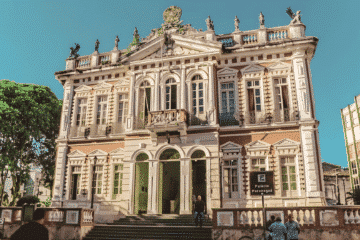
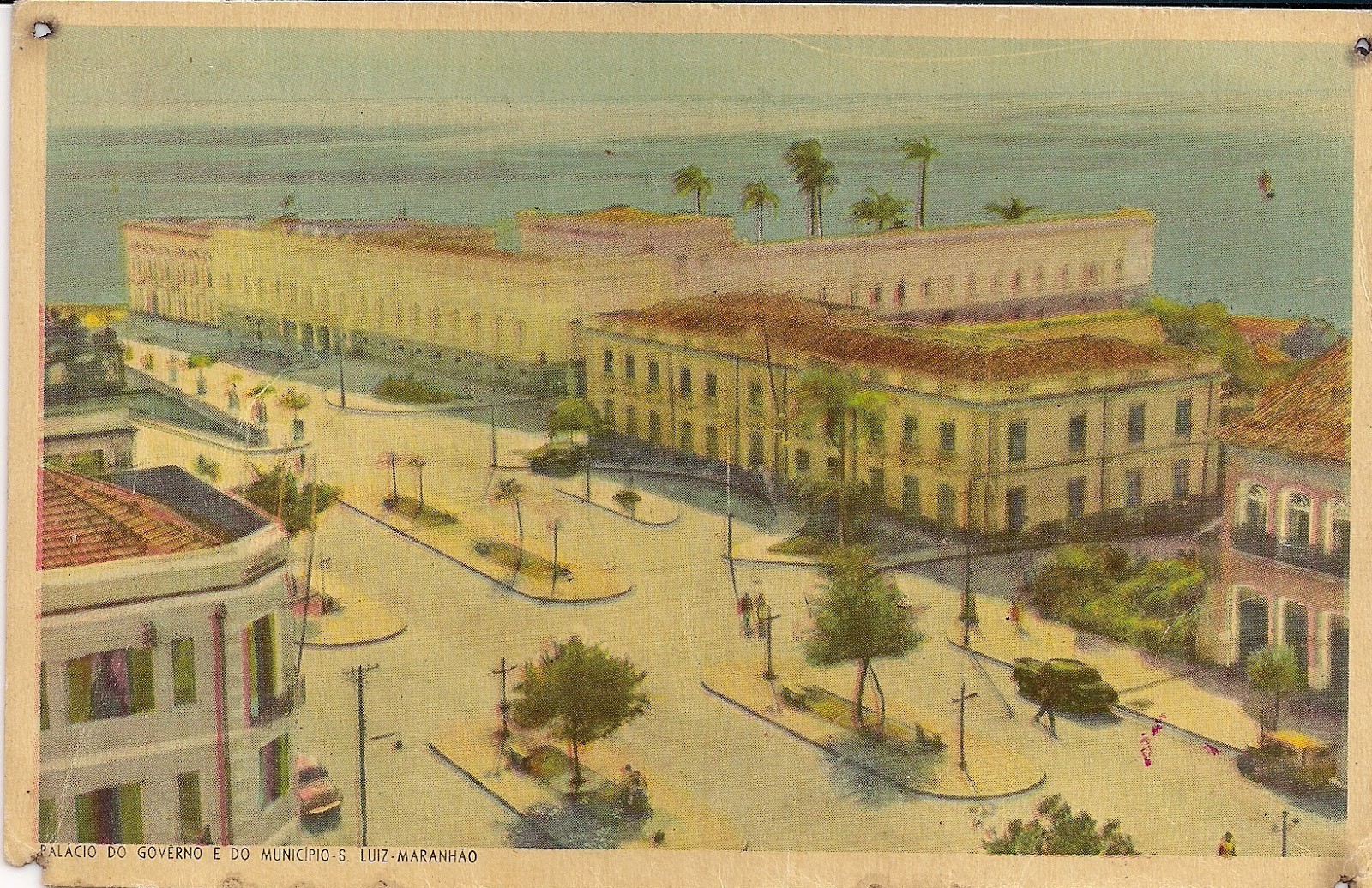
The La Ravardière Palace, built in 1689, is one of the city’s first major buildings and currently serves as the administrative headquarters of the Municipal Government.
Historical heritage
The Palais de La Ravardière has been declared a Historic Monument and is located in one of the city’s most beautiful squares, the Praça Dom Pedro II, which is a civic square as it houses the seats of civil and religious power, including the Palais dos Leões (State Government), the Forum of Justice, the Cathedral of Sé and the Episcopal Palace.
History and renovations
Before becoming the City Hall, the mansion served as the Town Hall and the prison.
After its change of function, it underwent a series of renovations that gave it its current features, including one carried out in the 1930s by the São Luís City Hall, which sought to correct the deficiencies of the capital’s buildings and also affected the structure of this building.
The remodelling of some of the public spaces in the Palais de La Ravardière was intended to adapt them to new conditions of use and hygiene, making them healthier.
But the intention was also to adapt these spaces to the new technologies of transport (cars), services (lighting, sewers, etc.) and construction (concrete) that were emerging at the beginning of the 20th century.
The most significant remodelling of the palace took place in the town hall, with the addition of workshops and garages for official cars.
Architectural structure
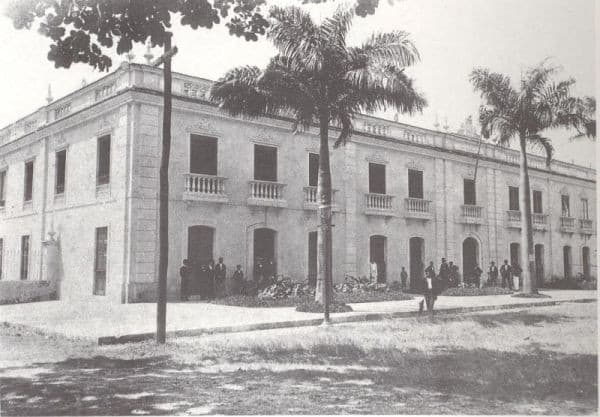
In keeping with the architectural tradition of the city, the Palais de La Ravardière is not very tall, with only two floors that used to house the prison and have now been adapted for the administrative work of the city council.
The aesthetics of the place are not striking, perhaps due to the lack of organisation.
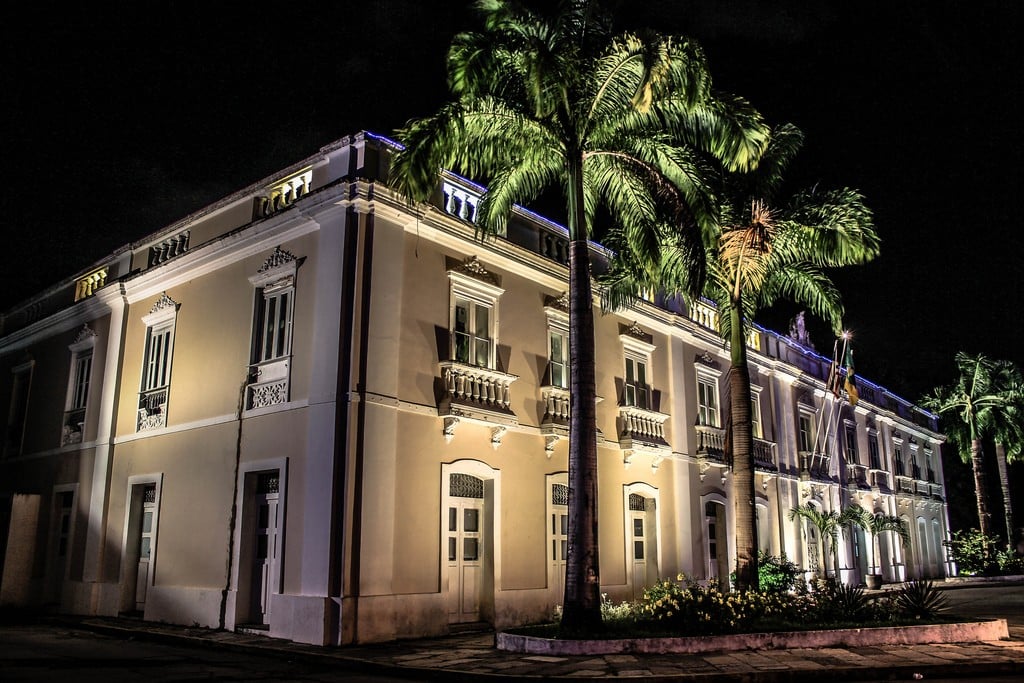
The façade of the palace is asymmetrical, decorated with a shell and stylised acanthus leaves, suggesting a small pediment. On the upper floor, the glazed windows have balconies and are decorated at the top.
The decoration extends to the corbels supporting the small balconies.
On the ground floor, the windows have depressed arches with carved iron flags. The decoration, similar to that of the upper windows, is confined to the main arch.
Staircase and tributes
The staircase leading to the upper floor of the Palais de La Ravardière is remarkable for its design and balustrades. Recently, during the 2013 demonstrations in June, the windows of the palace were smashed and later replaced.
The palace is named in honour of Daniel de La Touche, Lord of La Ravardière, who is considered the founder of the city.
In front of the building there is a bronze bust of the captain, sculpted by the artist Bibiano Silva. On special occasions, such as the Pink October and Christmas, the façade of the building is lit up.
Conclusion
The Palace is an important symbol of the history and culture of São Luís do Maranhão, reflecting both the architectural evolution of the city and the importance of the local historical heritage.
São Luís do Maranhão Tourist Guide

Publicações Relacionadas
Convent and the Church of Nossa Senhora do Carmo History
Palácio dos Leões: A Historical Landmark Tour
Maranhão: A Journey Through Nature and Culture
Josué Montello House of Culture in Maranhão History
Rua do Giz in São Luís do Maranhão - History and Architecture
Tiles from São Luís do Maranhão: History, Art and Heritage
Chapada das Mesas National Park Adventure Guide
Cristo Rei Palace: Architecture of the 19th Century
Catarina Mina: The Story Behind the Alley
Casa de Nhozinho: A Journey Through Maranhão Culture
Environmental Wealth of Maranhão: A Tropical Paradise
Macapá Waterfall: A Natural Treasure in Maranhão
Benedito Leite Public Library's Rich History
Kitesurfing in Atins: Your Ultimate Guide
Church of Our Lady of Victory: Historical Significance
Cafua das Mercês: Preserving Black Memory Today
Barreirinhas: the gateway to Lençóis Maranhenses
7-day itinerary through Maranhão
Convento das Mercês: Historical Significance Unveiled
Atins: A Hidden Gem on the Maranhão Coast
Arthur Azevedo Theatre and its Rich History
Historical and Artistic Museum of Maranhão Overview
São Luís do Maranhão: A Journey Through History
History of the Founding of São Luís do Maranhão
Carolina Travel Guide: Visit Waterfalls in Maranhão
Access to the Lençóis Maranhenses National Park
Gonçalves Dias Square: A Historic Landmark
História da Igreja de São José do Desterro em São Luís do Maranhão
Church of Nossa Senhora dos Remédios History
Best Time to Visit Lençóis Maranhenses for Water Fun
Pedra Caída Complex: Your Guide to Adventure
Historical curiosities about São Luís do Maranhão
Santo Amaro do Maranhão: The Paradise of the Lagoons
Cine Éden: A Historic Cinema in São Luís
History of João Lisboa Square in São Luís do Maranhão
The most beautiful beaches on the coast of Maranhão
This post is also on:
 Português
  English
  Deutsch
  Español
  Français