Cafua das Mercês – Black Museum
The Cafua das Mercês, located in São Luís do Maranhão, is a former slave depot that tells the story of black people through the exhibition of works of art and objects from the time of slavery, including instruments of torture.
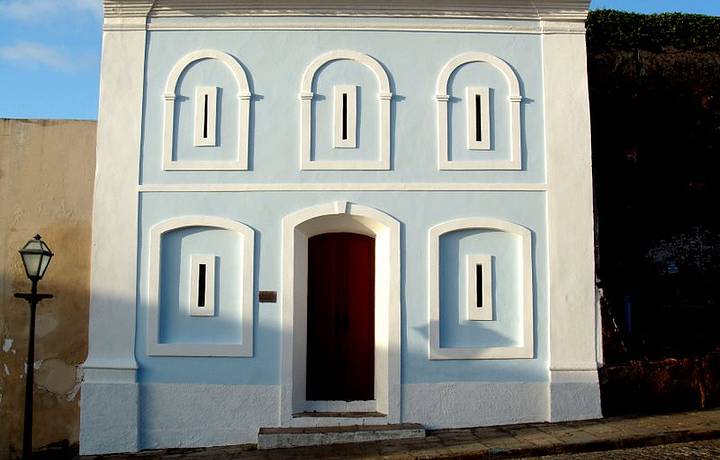
Preserving memory
Today, the Cafua das Mercês, also known as the Museu do Negro, houses a centre for the preservation of black memory. The museum’s collection depicts the harsh life imposed on the slaves who lived in the city at the end of the 18th century.
Exhibition Collection
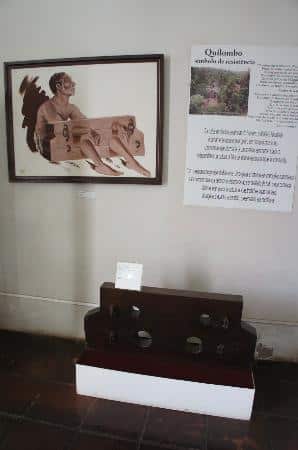
Among the various pieces on display are objects of worship used in religious ceremonies, such as statuettes, gourds, pipes and pairs of tambor de mina. The museum also keeps instruments of torture, which recall the suffering of the blacks brought to Maranhão from Africa.
One example is the vira-mundo, a rectangular piece of wood, open in two halves, with holes for the slaves’ wrists and ankles, which was closed with a large bolt or padlock.
Structure of the Museum
In the inner courtyard of the Cafua, lined with stonework and surrounded by a high stone wall, are a pair of millstones (part of the mill used for grinding grain) and a replica of the Pelourinho.
The original, which stood in front of the Carmo Church, was destroyed during the Liberation of the Slaves in May 1888.
Current exhibitions
On the upper floor there is an exhibition of African, Masks, Figurines and Costumes recently acquired by the Maranhão Historical and Artistic Museum (MHAM). This collection includes more than 20 pieces from groups such as Baule, Melinke, Dogon, Punu and Senufo, carved in wood or made of beads and plant fibres.
Cultural importance
For Concita Monteiro, head of the State Museology Department, the Cafua das Mercês is not only a space for preserving local culture, but also a means of transmitting that memory, allowing visitors to identify with the museum. “When we enter this environment, we become subjects of history, because this is a place of social transformation,” she said.
The challenges of visiting
The historian points out that, unlike tourists, the people of Maranhão have not yet been sufficiently awakened to visit museums.
History of the site
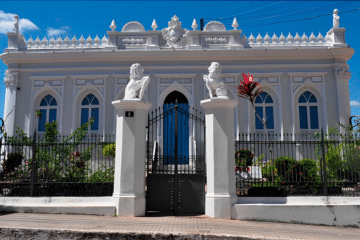
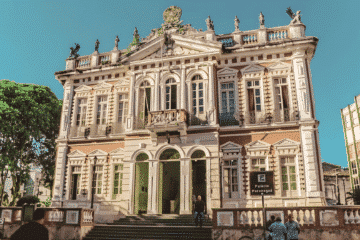
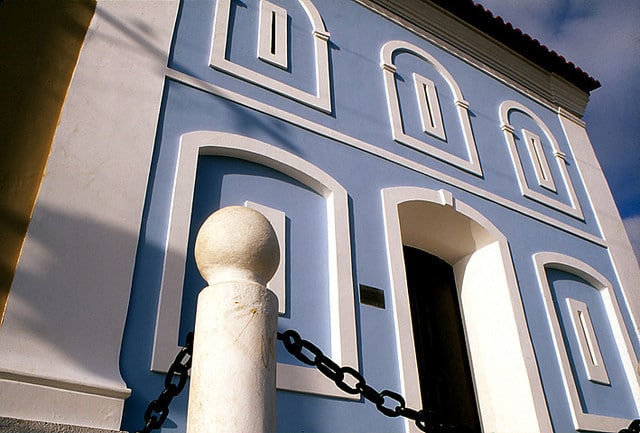
Located on Rua Jacinto Maia, in a neighbourhood with a long commercial tradition, the small sobrado of Cafua das Mercês – whose word comes from the Bantu dialect and means cave or dark and isolated place – bore witness to the suffering of the slaves, most of whom were of African descent.
With a uniform façade and two floors in the colonial style, the cafua had no windows, only arrow slits that allowed light and ventilation in, highlighting the oppressive and degrading conditions in which blacks lived during the empire.
This was the site of São Luís’ slave market, a veritable auction centre for black people. They disembarked at Portinho and were taken to the sobrado, where they were crammed into small rooms before being put on display, with a sign around their neck indicating their price, to await a buyer.
Opening of the museum
The Cafua das Mercês was acquired by the State Government in 1970, restored and opened to the public two years later, with the inauguration of the Museu do Negro on 5 February.
Useful information
- Location: Rua Jacinto Maia, 54, Praia Grande, next to the Mercês Monastery.
- Hours of operation: Monday to Friday, from 9am to 6pm. Free admission
Publicações Relacionadas
Gonçalves Dias Square: A Historic Landmark
Catarina Mina: The Story Behind the Alley
Historical curiosities about São Luís do Maranhão
Church of Nossa Senhora dos Remédios History
Atins: A Hidden Gem on the Maranhão Coast
Maranhão Natural History and Archaeology Research Centre
Alcântara: A Must-See Tourist Destination
Chapada das Mesas National Park Adventure Guide
Exploring Caburé: The Enchanting Peninsula of Maranhão
Cristo Rei Palace: Architecture of the 19th Century
João do Vale Theatre and Its Rich History
Cine Éden: A Historic Cinema in São Luís
History of the Founding of São Luís do Maranhão
Carolina Travel Guide: Visit Waterfalls in Maranhão
Benedito Leite Public Library's Rich History
Ribeirão Fountain: A Historical Landmark in São Luís
Casa Real Empório: History and Culture Combined
Access to the Lençóis Maranhenses National Park
Pedra Caída Complex: Your Guide to Adventure
Kitesurfing in Atins: Your Ultimate Guide
Rua do Giz in São Luís do Maranhão - History and Architecture
Best Time to Visit Lençóis Maranhenses for Water Fun
Casa de Nhozinho: A Journey Through Maranhão Culture
Church of Our Lady of Victory: Historical Significance
Historical and Artistic Museum of Maranhão Overview
La Ravardière Palace: A Historic Monument in the City
Santo Amaro do Maranhão: The Paradise of the Lagoons
7-day itinerary through Maranhão
Barreirinhas: the gateway to Lençóis Maranhenses
Tiles from São Luís do Maranhão: History, Art and Heritage
Macapá Waterfall: A Natural Treasure in Maranhão
Environmental Wealth of Maranhão: A Tropical Paradise
São Luís do Maranhão: A Journey Through History
History and Colonial Architecture of São Luís do Maranhão
História da Igreja de São José do Desterro em São Luís do Maranhão
Palácio dos Leões: A Historical Landmark Tour
This post is also on:
 Português
  English
  Deutsch
  Español
  Français