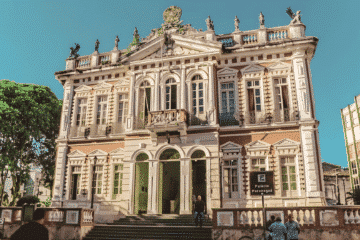
Popular culture of Maranhão at Casa de Nhozinho
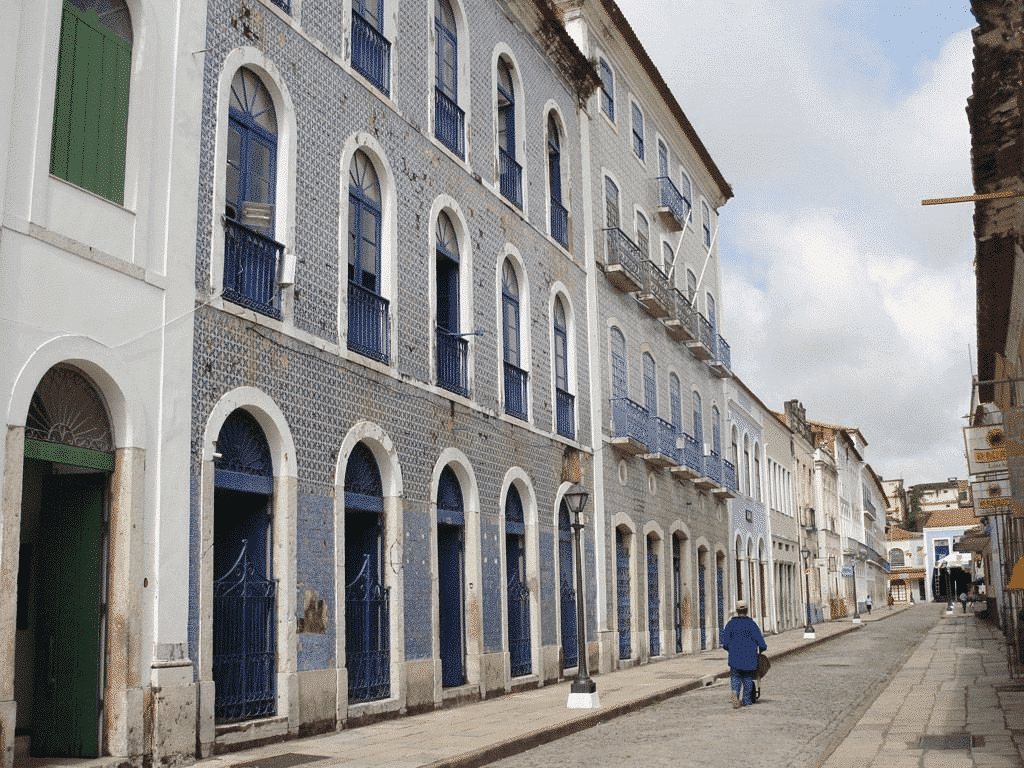
Maranhão’s popular culture is the central theme of the exhibitions at Casa de Nhozinho, a museum housed in a imposing 19th-century mansion on Rua Portugal, one of the city’s most beautiful streets.
A tribute to the Maranhão craftsman
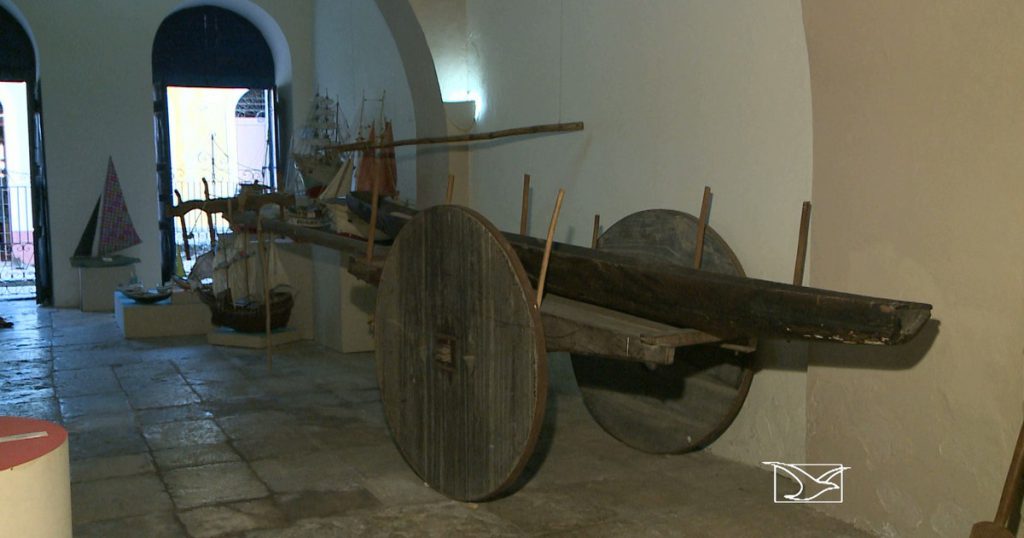
The museum is named in honour of the great Maranhão craftsman Antônio Bruno Nogueira, known as Nhozinho, who was famous for making wooden ox wheels.
Exhibitions and collection
The house offers visitors a showcase of the region’s cultural production techniques, as well as a repository of items that reveal the customs and way of life of the people of Maranhão since the beginning. There is also a small shop on the premises, selling regional products.
The exhibition at Casa de Nhozinho is based on the 4 elements of nature:
1. Water Room and Land Room
On the ground floor, the Water Room houses collections directly related to boating and the sea, such as canoes and fishing nets. Meanwhile, the Earth Hall shows man’s relationship with the land, shaped by agriculture and the construction of his home. In this space, the Green Patio has been created, which highlights the relationship between man and nature.
2. Fire Pavilion
On the first floor, visitors have access to the Fire Pavilion, where the entire collection of Crafts is displayed, including popular toys, miniatures, recycled objects, fabrics and the related collections of Nhozinho, Domingos Vieira Filho, José Cupertino, Vítor Gonçalves, João do Farol and Beto Bittencourt, as well as Indigenous Material Culture and metal objects.
3. Air Pavilion
The second floor, with a second entrance from the Rua de Nazaré, is called the Air Pavilion. Here visitors have access to the Cofo Gallery, which is used for temporary exhibitions.
4. Diverse collection
The Casa de Nhozinho collection includes toys made of wood, dolls made of canarana, bush and cloth, hammocks made from handlooms, which are very common in the daily life of the people of Maranhão, bobbin lace, embroidery and products made from natural fibres such as buriti, tucum, guarimã, carnaúba and babaçu. Also noteworthy are the cofos (an artefact very present in the state’s culture, with various uses, such as transporting food), ceramics and materials from the indigenous culture.
About Nhozinho
Antônio Bruno Pinto Nogueira, known as Nhozinho, was the son of Sebastião José Nogueira and Marcolina Pinto Nogueira. Born on 17 May 1904 in Bacuripanã, in the municipality of Cururupu (MA), he was an exceptional artist. From an early age he was involved in folk art, making kites, animals, trees and more.
At the age of 12, he began to develop an illness that deformed his legs, arms and hands, affecting his mobility and partially impairing his sight. So he used his art to make a wooden cart which he used to get around.
Nhozinho lived in Rua Jacinto Maia, where he made 50 sewing boxes for a sewing machine factory.
At first he worked with wood, but later he began to work with buriti, a more malleable material, from which he made his greatest works: the famous bumba-meu-boi wheels, which are in the collections of national and foreign collectors. His works were included in an exhibition of folk art at the Domus Centre in Milan, Italy, in 1972.
Nhozinho’s bumba-meu-boi figures had a soul, which he expressed in their physiognomic features, gestures and spontaneous and natural attitudes. Nhozinho died in São Luís, in the district of Alemanha, on 23 May 1974.
Tourist Information
Casa de Nhozinho
Rua Portugal, 185, Praia Grande
Open Tuesday to Saturday from 9am to 6pm and Sunday from 9am to 1pm.
Closed on Mondays.
Free entry.
Tourist Guide to São Luís do Maranhão and the Northeast.

Publicações Relacionadas
Chapada das Mesas: The Heart of Maranhão's Nature
Tutóia: Discover the Beauty of Maranhão's Coast
Church of Our Lady of Victory: Historical Significance
Tiles from São Luís do Maranhão: History, Art and Heritage
Palácio dos Leões: A Historical Landmark Tour
Arthur Azevedo Theatre and its Rich History
History of João Lisboa Square in São Luís do Maranhão
Historical and Artistic Museum of Maranhão Overview
Church of Nossa Senhora dos Remédios History
Convent and the Church of Nossa Senhora do Carmo History
Historical curiosities about São Luís do Maranhão
The most beautiful beaches on the coast of Maranhão
Rua do Giz in São Luís do Maranhão - History and Architecture
História da Igreja de São José do Desterro em São Luís do Maranhão
Josué Montello House of Culture in Maranhão History
Maranhão Natural History and Archaeology Research Centre
Chapada das Mesas National Park Adventure Guide
Santo Amaro do Maranhão: The Paradise of the Lagoons
Benedito Leite Public Library's Rich History
History of the Founding of São Luís do Maranhão
Environmental Wealth of Maranhão: A Tropical Paradise
Cafua das Mercês: Preserving Black Memory Today
João do Vale Theatre and Its Rich History
Atins: A Hidden Gem on the Maranhão Coast
History and Colonial Architecture of São Luís do Maranhão
Barreirinhas: the gateway to Lençóis Maranhenses
Carolina Travel Guide: Visit Waterfalls in Maranhão
7-day itinerary through Maranhão
Cristo Rei Palace: Architecture of the 19th Century
La Ravardière Palace: A Historic Monument in the City
Catarina Mina: The Story Behind the Alley
Convento das Mercês: Historical Significance Unveiled
Best Time to Visit Lençóis Maranhenses for Water Fun
Casa Real Empório: History and Culture Combined
Macapá Waterfall: A Natural Treasure in Maranhão
Lençóis Maranhenses National Park: A Natural Wonder
This post is also on:
 Português
  English
  Deutsch
  Español
  Français