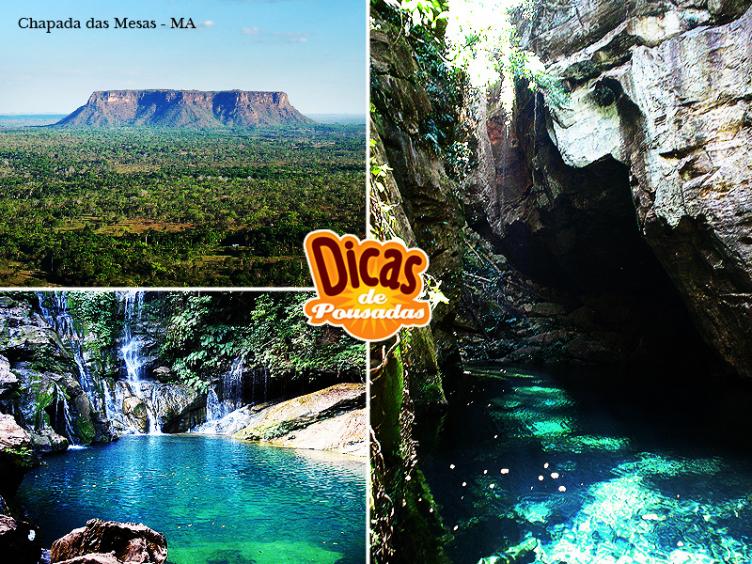
The Chapada das Mesas National Park is one of Brazil’s most impressive tourist destinations, with sandstone formations dating back some 70 million years.
With altitudes that can reach around 400 metres, its mountains, waterfalls, rivers and lakes offer visitors a unique and captivating experience.
Location and access
The park is located in the south of Maranhão, on the border with Tocantins, about 860 kilometres from the capital, São Luís.
The park was created in 2005 to conserve the biodiversity of Brazil’s Cerrado, Caatinga and Amazon biomes.
The park can be accessed via the BR-010 and BR-230 motorways, from the townships of Estreito, Riachão, Carolina and Imperatriz.

Map of Chapada das Mesas National Park

The park is divided into four towns in the centre-south of Maranhão: Carolina, Riachão, Estreito and Imperatriz.
Video about Chapada das Mesas National Park
Complexo Turístico Pedra Caida
Chapada das Mesas - Reportagem37:33
Chapada das Mesas - O que fazer - Parte 107:22
Chapada das Mesas - O que fazer - Parte 206:49
Tourist Activities
Natural attractions
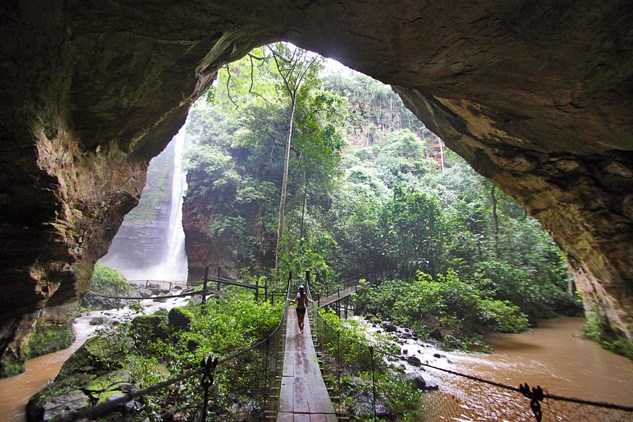
Among the most popular tourist activities are abseiling and ecological trails, which take visitors to the region’s crystal-clear natural pools. One of the most visited waterfalls is the Cachoeira de São Romão, which has a drop of 26 metres.
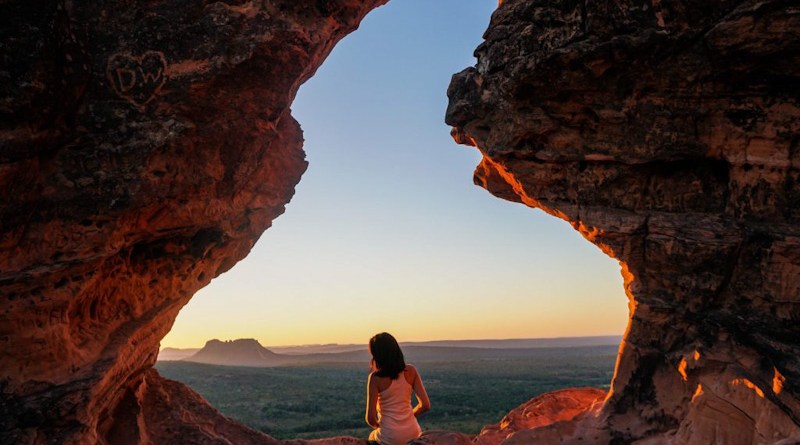
The name “Chapada” derives from the rock formations shaped by the action of wind and rain, which resemble tables.
Ecotourism and adventure
With a total area of 160,000 hectares, the park offers many opportunities for ecotourism activities, such as watching endemic birds and learning about the cave paintings at Morro das Figuras.
For those seeking relaxation, a dip in the waters of the Poço Azul or in the region’s waterfalls is highly recommended.
Outstanding waterfalls
The park is home to several impressive waterfalls, such as
- Cachoeira do Santuário: 50 metres high.
- Santa Bárbara Waterfall: known for its rock formation that resembles the image of the saint, over 70 metres high.
- São Romão Waterfall: the largest waterfall in Maranhão.


Visitors can explore several trails that allow direct contact with local fauna, such as monkeys, anacondas, macaws and owls.
Pedra Caída Tourist Complex
About 36 km from Carolina is the Pedra Caída Ecological Sanctuary, which has several waterfalls, the main one being 46 metres high.
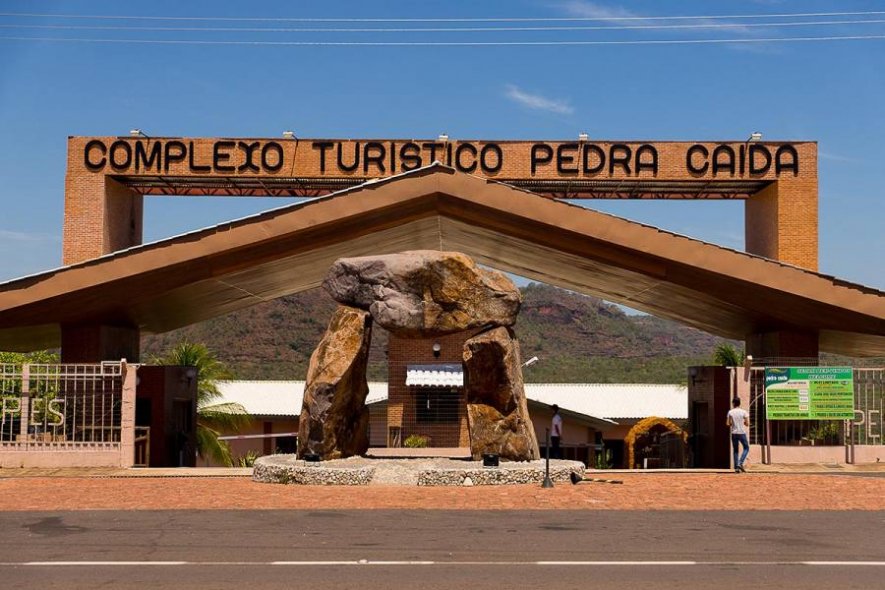
Complexo Turístico Pedra Caida
The site offers radical activities such as hiking, abseiling and zip-lining, with one of the longest in the country at 1,400 metres.
Riachão and Poço Azul
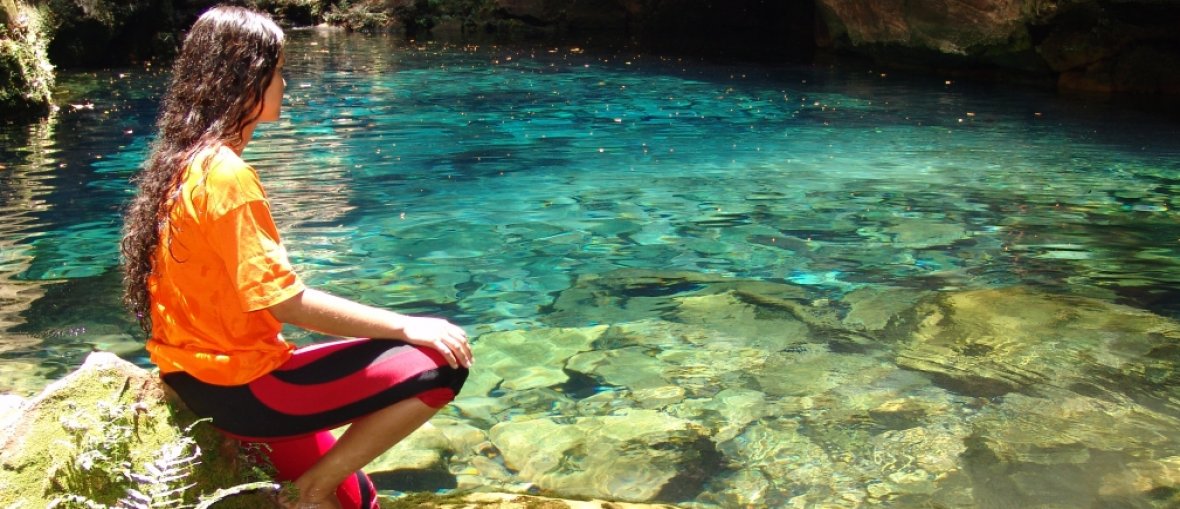
In the south-west of Maranhão, Riachão is synonymous with adventure and is home to attractions such as the Santa Bárbara Waterfall, the Poço Azul (Blue Fountain) and the Encanto Azul (Blue Pool), a pool of crystal-clear water surrounded by rocks.
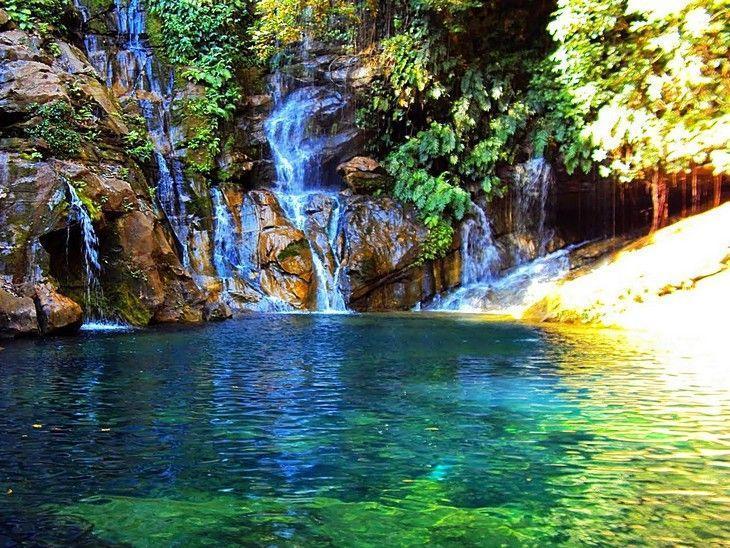
Poço Azul, Encanto Azul e Cachoeira Santa Bárbara
The region is ideal for activities such as snorkelling, where you can observe the rich aquatic life.


Trekking to Morro do Chapéu

Morro do Chapéu is not exactly inside the park, but in a “buffer zone”.
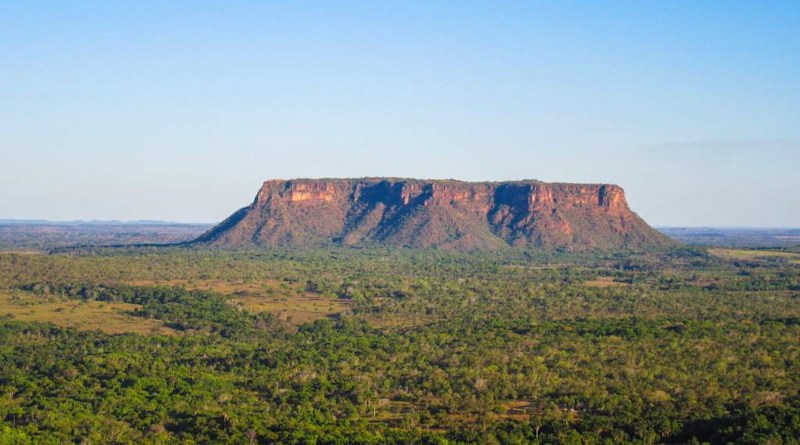
Trilha no Morro do Chapéu - Chapada das Mesas
The trek to Morro requires physical fitness as it involves a 365 metre climb up sandstone cliffs. It is considered the highest point in the Chapada das Mesas and is shrouded in mystical legends.
Best time to visit
The best time to visit the park is between May and September, when rainfall is low. Although the waterfalls are not as crowded as in summer, the temperature is milder and more pleasant for adventure activities.
Bottom line
The Chapada das Mesas National Park is an unmissable destination for nature and ecotourism lovers.
With its impressive geological formations, rich biodiversity and diverse adventure activities, the park offers a unique experience that is well worth exploring.
For those who want to get the most out of their visit, it is recommended that you spend at least four days in the region and consider hiring local guides.
Discover the Chapada das Mesas Waterfalls

Publicações Relacionadas
7-day itinerary through Maranhão

Tiles from São Luís do Maranhão: History, Art and Heritage

Best Time to Visit Lençóis Maranhenses for Water Fun
Historical and Artistic Museum of Maranhão Overview

Fonte do Ribeirão (São Luís): history, galleries and legends

Arthur Azevedo Theatre and its Rich History

History of João Lisboa Square in São Luís do Maranhão

Maranhão Natural History and Archaeology Research Centre

Casa de Nhozinho: A Journey Through Maranhão Culture

Rua do Giz in São Luís do Maranhão - History and Architecture

História da Igreja de São José do Desterro em São Luís do Maranhão

João do Vale Theatre and Its Rich History

Convento das Mercês: Historical Significance Unveiled

Cine Éden: A Historic Cinema in São Luís

Barreirinhas: the gateway to Lençóis Maranhenses

Santo Amaro do Maranhão: The Paradise of the Lagoons

Exploring Caburé: The Enchanting Peninsula of Maranhão

Atins: A Hidden Gem on the Maranhão Coast
Historical curiosities about São Luís do Maranhão

History and Colonial Architecture of São Luís do Maranhão
Access to the Lençóis Maranhenses National Park
Maranhão Beaches: the 10 Most Beautiful on the Coast

Pedra Caída Complex: Your Guide to Adventure

Cafua das Mercês: Preserving Black Memory Today

Convent and the Church of Nossa Senhora do Carmo History

Benedito Leite Public Library's Rich History

Cristo Rei Palace: Architecture of the 19th Century

Josué Montello House of Culture in Maranhão History

Church of Nossa Senhora dos Remédios History

Gonçalves Dias Square: A Historic Landmark

Church of Our Lady of Victory: Historical Significance
Catarina Mina: The Story Behind the Alley

Casa Real Empório: History and Culture Combined

La Ravardière Palace: A Historic Monument in the City

Palácio dos Leões: A Historical Landmark Tour

History of the Founding of São Luís do Maranhão
This post is also on:
 Português
  English
  Deutsch
  Español
  Français