Church of Nossa Senhora dos Remédios in São Luís do Maranhão
The Church of Nossa Senhora dos Remédios dates from 1719 and is part of the urban ensemble of the Gonçalves Dias Square, formerly known as the Largo dos Remédios. Festivals were held here during the month of October, making it famous and earning it mentions in literary works such as Aluísio Azevedo’s O Mulato.

Tourist Importance
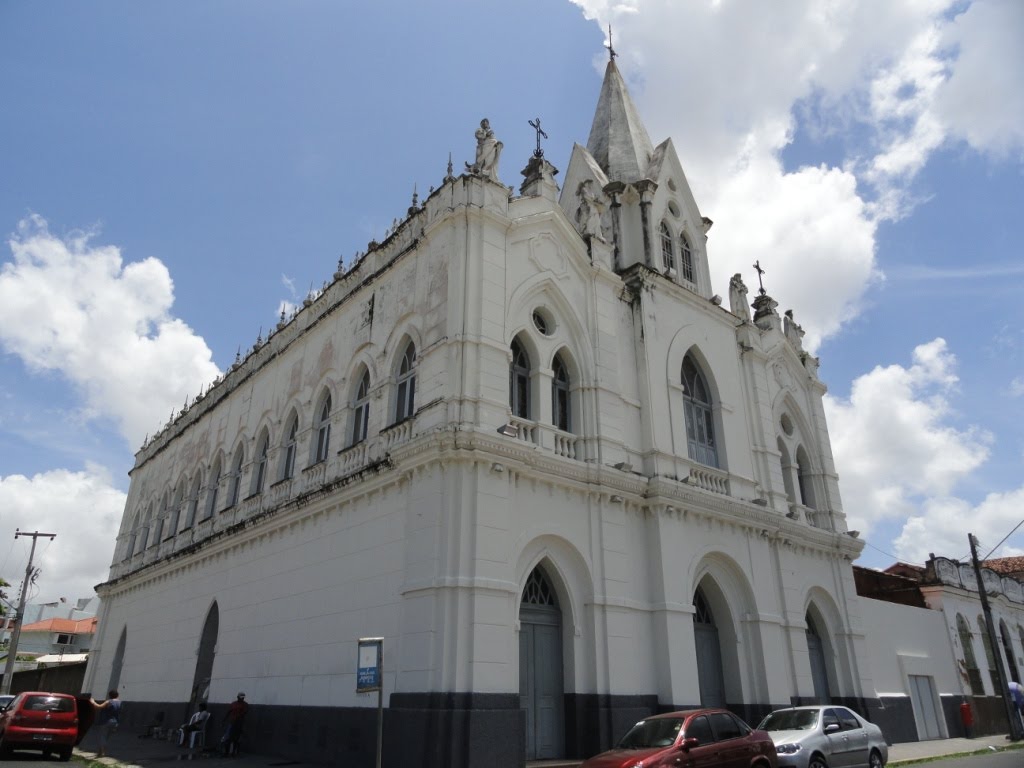
Igreja de Nossa Senhora dos Remédios
Today, the Church of Nossa Senhora dos Remédios is one of the most famous tourist attractions of São Luís, due to its privileged location overlooking the Beira-mar. The church is the only one in the city with elements of Gothic architecture, which makes it stand out from the other buildings.
History and devotion
Built in devotion to the Mother of God, the church served as accommodation for pilgrims who came to the capital to pay homage to the saint.
Due to its location in a less populated part of the city, the church was often visited by promise-payers, who, according to Augusto Marques, stopped coming when a runaway slave who had killed his master hid in the place.
The temple remained abandoned until 1775, when the governor of the time ordered the construction of a road that followed the contours of today’s Rua Rio Branco, formerly known as Rua dos Remédios. This intervention facilitated access to the temple, which was once again visited.
Interventions and reforms
Over the years, the Church of Nossa Senhora dos Remédios has undergone several interventions. In 1892, a renovation increased its area, but due to the condition of the land behind it, it almost collapsed and fell into ruins.
The major remodelling carried out between 1903 and 1911 gave the church its present appearance. The work was carried out with the help of local people, including bricklayers and servants, as well as tradesmen who financed the work.
Architectural features
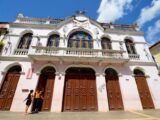
The façade has a single bell tower with stained glass windows in the side openings, and two side bodies supporting images of the four evangelists: Luke, John, Matthew and Mark.
On the second level of the façade there are ogival arched openings filled with stained glass. On the ground floor, three doors give access to the interior of the church, and on the side there are twelve windows similar to those on the main façade.
Inside, the church has only one nave, separated from the sides by Corinthian columns supporting the choir and aisles, protected by a 19th century balustrade.
The beautiful stained glass windows that decorate the church are of German origin and date from the 20th century. The stained glass window in the main entrance, the largest, depicts the Nativity. Today the church is one of the most popular for weddings.
Final thoughts
The Church of Nossa Senhora dos Remédios is not only an important historical and architectural landmark of São Luís do Maranhão, but also a place of devotion and celebration for many believers and visitors.
São Luís do Maranhão Tourist Guide

Publicações Relacionadas
7-day itinerary through Maranhão
Tiles from São Luís do Maranhão: History, Art and Heritage

Best Time to Visit Lençóis Maranhenses for Water Fun
Historical and Artistic Museum of Maranhão Overview

Fonte do Ribeirão (São Luís): history, galleries and legends
Arthur Azevedo Theatre and its Rich History
History of João Lisboa Square in São Luís do Maranhão

Maranhão Natural History and Archaeology Research Centre
Casa de Nhozinho: A Journey Through Maranhão Culture
Rua do Giz in São Luís do Maranhão - History and Architecture
História da Igreja de São José do Desterro em São Luís do Maranhão

João do Vale Theatre and Its Rich History
Convento das Mercês: Historical Significance Unveiled
Cine Éden: A Historic Cinema in São Luís

Barreirinhas: the gateway to Lençóis Maranhenses

Santo Amaro do Maranhão: The Paradise of the Lagoons

Exploring Caburé: The Enchanting Peninsula of Maranhão

Atins: A Hidden Gem on the Maranhão Coast
Historical curiosities about São Luís do Maranhão

History and Colonial Architecture of São Luís do Maranhão

Access to the Lençóis Maranhenses National Park

Maranhão Beaches: the 10 Most Beautiful on the Coast

Pedra Caída Complex: Your Guide to Adventure

Chapada das Mesas National Park Adventure Guide

Cafua das Mercês: Preserving Black Memory Today

Convent and the Church of Nossa Senhora do Carmo History

Benedito Leite Public Library's Rich History

Cristo Rei Palace: Architecture of the 19th Century

Josué Montello House of Culture in Maranhão History

Gonçalves Dias Square: A Historic Landmark

Church of Our Lady of Victory: Historical Significance
Catarina Mina: The Story Behind the Alley

Casa Real Empório: History and Culture Combined

La Ravardière Palace: A Historic Monument in the City

Palácio dos Leões: A Historical Landmark Tour

History of the Founding of São Luís do Maranhão
This post is also on:
 Português
  English
  Deutsch
  Español
  Français