Historical and Artistic Museum of Maranhão
If you want to learn about the way of life of the wealthy families of São Luís in past centuries, their customs, habits and curiosities, don’t miss a visit to the Maranhão Historical and Artistic Museum.
Housed in a 19th-century manor house, the museum reconstructs the dwellings of a São Luís that has remained in time. With a rich collection of around 10,000 pieces, the museum was inaugurated on 28 July 1973, the date on which Maranhão joined Brazilian Independence.

In the house, you can keep in touch with a city that no longer exists. “We have designed the museum to give you a sense of how families lived and worked in those days,” says Conceição Monteiro Ribeiro, who is in charge of the museology department.
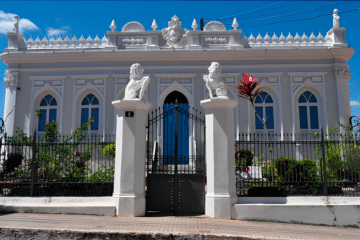
When you arrive at the mansion, you are immediately struck by the exuberance of the property. Built with materials brought from the Itapecuru Valley by the farmer José Inácio Gomes de Sousa, who built the manor in 1836, the house retains most of its original features. “Of course, we had to adapt some of the rooms that house the museum’s administration, but the property is practically original,” says Conceição Ribeiro proudly.
The ground floor houses the garden, entrance hall, shop, monitoring room and administration headquarters, as well as the Apolônia Pinto Theatre. On the upper floor, the 14 rooms include a living room, a music room, a double bedroom, a girls’ bedroom and a boys’ bedroom, as well as a kitchen and a sewing room.
The Hall of Entrance on the ground floor, which was used as a distribution point between the different parts of the house and as a shelter for vehicles such as carriages, also houses the staircase leading to the Hall of Reception of the house. The U-shaped plan divided the building into wings: the social wing, designed to receive visitors and less intimate people; the intimate wing, made up of bedrooms and dressing rooms; and the service wing, made up of the kitchen, storerooms and niches.
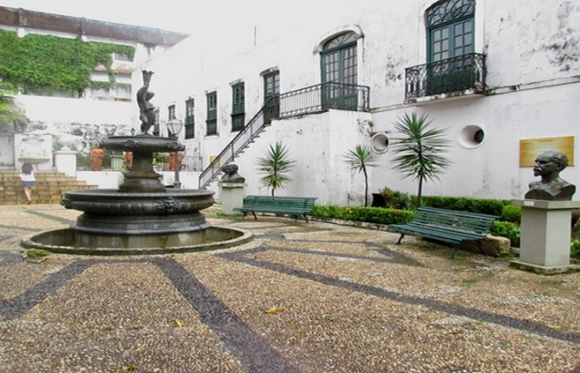
This distribution was exclusive to the first floor, since the ground floor was reserved for the service and circulation of the slaves, with the exception of the theatre, a distinctive feature of the property, where Arthur Azevedo rehearsed some of his plays. The space was named the Apolônia Pinto Theatre after the first lady of Maranhão theatre. There is also a fountain on the site.
In 1857, Mr Alexandre Colares Moreira, one of the owners of the manor, bought the land next door and opened doors and windows to access it, transforming it into a beautiful garden. Today, the site contains sculptures of Greek gods and a fountain that was removed from the Avenida Silva Maia (centre).
Video about the Historical and Artistic Museum of Maranhão
Museu Histórico e Artístico do Maranhão - Parte 111:10

Museu Histórico e Artístico do Maranhão - Parte 210:28

Museu Histórico e Artístico do Maranhão - Parte 314:10
Collection of the Historical and Artistic Museum of Maranhão
The museum’s collection is very diverse and includes many pieces of historical and cultural interest. Some of the most important pieces in the collection are
- Spittoons or spittoons – Used for the disposal of saliva, representing an aspect of the hygiene and customs of the time.
- Throne chair – A portable toilet used before the introduction of indoor toilets in homes.
- Rocking Cradle – An example of children’s furniture from this period.
- Porcelain – Includes French, Portuguese and English pieces.
- Sewing machines – Hand-cranked models reflecting the technology of the 19th century.
- Furniture of the First Half of the 19th Century – Includes various pieces of furniture that characterise the décor and lifestyle of wealthy families.
- Wooden Bookcase – A gift from the then President of Argentina, Júlio Roca, with carved drawings depicting tourist attractions in São Luís and Buenos Aires.
- Manuscripts – Such as the second edition of Aluísio de Azevedo‘s “O Mulato” and Graça Aranha‘s “Malazarte“.
- Sheet music and a Violin – which belonged to the writer Dunshe de Abranches.
- Tiles of various origins, a numismatic collection, glass, crystal, paintings, sculptures, engravings, Catholic religious art, art of African origin and a documentary collection.
When designing the space, the organisers were inspired by novels that describe the way of life of Maranhão families, such as “O Mulato” by Aluísio de Azevedo. Some of the rooms are based on passages from the book, such as the kitchen.
Visit:
Museu Histórico e Artístico do Maranhão
Where: Rua do Sol, 302, Centro
Visit: Tuesday to Sunday, 9am to 6pm
Tourist Guide to São Luís do Maranhão and the Northeast

Publicações Relacionadas
7-day itinerary through Maranhão

Tiles from São Luís do Maranhão: History, Art and Heritage

Best Time to Visit Lençóis Maranhenses for Water Fun

Fonte do Ribeirão (São Luís): history, galleries and legends

Arthur Azevedo Theatre and its Rich History
History of João Lisboa Square in São Luís do Maranhão

Maranhão Natural History and Archaeology Research Centre
Casa de Nhozinho: A Journey Through Maranhão Culture
Rua do Giz in São Luís do Maranhão - History and Architecture

História da Igreja de São José do Desterro em São Luís do Maranhão

João do Vale Theatre and Its Rich History
Convento das Mercês: Historical Significance Unveiled

Cine Éden: A Historic Cinema in São Luís

Barreirinhas: the gateway to Lençóis Maranhenses

Santo Amaro do Maranhão: The Paradise of the Lagoons

Exploring Caburé: The Enchanting Peninsula of Maranhão

Atins: A Hidden Gem on the Maranhão Coast
Historical curiosities about São Luís do Maranhão

History and Colonial Architecture of São Luís do Maranhão

Access to the Lençóis Maranhenses National Park

Maranhão Beaches: the 10 Most Beautiful on the Coast

Pedra Caída Complex: Your Guide to Adventure

Chapada das Mesas National Park Adventure Guide

Cafua das Mercês: Preserving Black Memory Today

Convent and the Church of Nossa Senhora do Carmo History

Benedito Leite Public Library's Rich History

Cristo Rei Palace: Architecture of the 19th Century

Josué Montello House of Culture in Maranhão History

Church of Nossa Senhora dos Remédios History

Gonçalves Dias Square: A Historic Landmark

Church of Our Lady of Victory: Historical Significance
Catarina Mina: The Story Behind the Alley

Casa Real Empório: History and Culture Combined

La Ravardière Palace: A Historic Monument in the City

Palácio dos Leões: A Historical Landmark Tour

History of the Founding of São Luís do Maranhão
This post is also on:
 Português
  English
  Deutsch
  Español
  Français