The Ribeirão Fountain is undoubtedly one of the most popular tourist attractions in São Luís.
Located between Rua do Ribeirão and Rua dos Afogados, this beloved symbol of the city was returned to the people after a long period of restoration by the City Council.
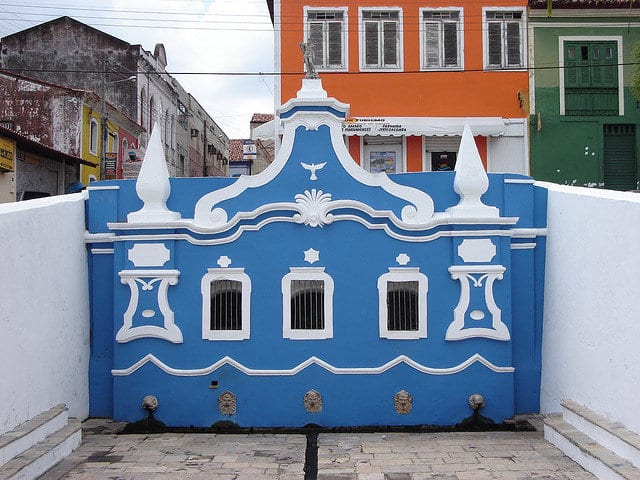
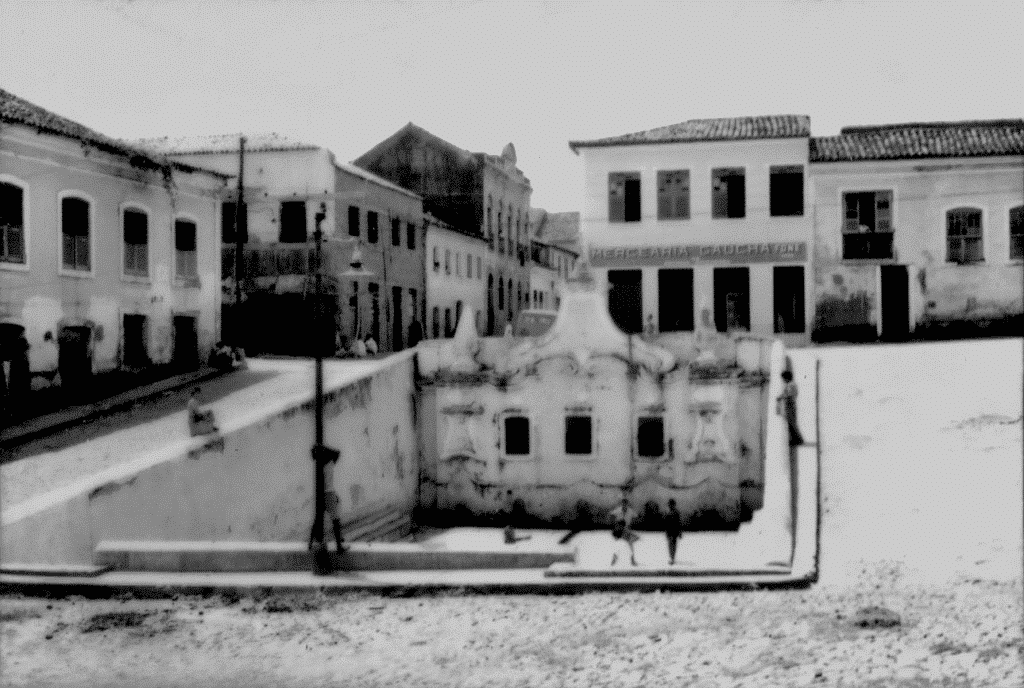
Like several other fountains in the capital, the Ribeirão has lost its original purpose of supplying water to the city, and today, more than 200 years after its inauguration, it serves as a backdrop for tourist photos.
Built in 1796 during the administration of Lieutenant Colonel D. Fernando Antônio de Noronha, who wanted to improve the region’s sanitation and water supply, it is remembered in various stories told by the people of Ludovico.

História da Fonte do Ribeirão em São Luís do Maranhão
One of them refers to the underground galleries, about two metres wide and two metres high, which were once open to the public but are now closed.
It is said that these tunnels were opened to transport priests and monks between the city’s churches, so that they wouldn’t be seen by the population. Others link the Ribeirão Fountain to one of the most famous legends of São Luís, that of the Enchanted Serpent.
The head of the sleeping monster is said to be there. Some claim to have seen the red eyes of the great serpent.
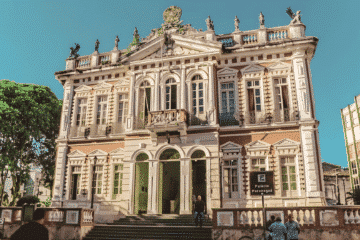
Architecture – The Ribeirão Fountain is located in a large courtyard lined with stone walls. Its sky-blue façade has a pediment at the bottom decorated with pagan and Christian symbols, such as a dove of the Divine, and a stone statue of Neptune at the top, the current one being a replica.
The original is kept by IPHAN to prevent vandalism. Below are three latticed windows giving access to the underground galleries mentioned above.
There are also two ornate pilasters on the sides. Finally, there are the five famous foreheads of the fountain, in the shape of fish and gods.
The frowns are made of stone with bronze toecaps, from which the water is channelled and carried to the pond, then down a stream that runs the length of the courtyard to the River Anil.
Ribeirão Fountain
Where: Rua do Ribeirão, Centre
How to get there
Take the bus to Av. Beira-mar and get off in front of RFFSA. Turn right and cross the street before the José Sarney bridge, where you will find Rua do Ribeirão. The fountain is at the end of the street.
Tourism and travel guide of São Luís do Maranhão

Publicações Relacionadas
Rua do Giz in São Luís do Maranhão - History and Architecture
Casa de Nhozinho: A Journey Through Maranhão Culture
Lençóis Maranhenses National Park: A Natural Wonder
Alcântara: A Must-See Tourist Destination
Environmental Wealth of Maranhão: A Tropical Paradise
Kitesurfing in Atins: Your Ultimate Guide
Cine Éden: A Historic Cinema in São Luís
Maranhão: A Journey Through Nature and Culture
History and Colonial Architecture of São Luís do Maranhão
Church of Our Lady of Victory: Historical Significance
Carolina Travel Guide: Visit Waterfalls in Maranhão
Access to the Lençóis Maranhenses National Park
Josué Montello House of Culture in Maranhão History
Cristo Rei Palace: Architecture of the 19th Century
History of the Founding of São Luís do Maranhão
Church of Nossa Senhora dos Remédios History
Maranhão Natural History and Archaeology Research Centre
Macapá Waterfall: A Natural Treasure in Maranhão
7-day itinerary through Maranhão
Historical and Artistic Museum of Maranhão Overview
Arthur Azevedo Theatre and its Rich History
Atins: A Hidden Gem on the Maranhão Coast
Palácio dos Leões: A Historical Landmark Tour
Convento das Mercês: Historical Significance Unveiled
Best Time to Visit Lençóis Maranhenses for Water Fun
The most beautiful beaches on the coast of Maranhão
Catarina Mina: The Story Behind the Alley
Benedito Leite Public Library's Rich History
Chapada das Mesas: The Heart of Maranhão's Nature
Cafua das Mercês: Preserving Black Memory Today
Santo Amaro do Maranhão: The Paradise of the Lagoons
La Ravardière Palace: A Historic Monument in the City
Casa Real Empório: History and Culture Combined
João do Vale Theatre and Its Rich History
History of João Lisboa Square in São Luís do Maranhão
História da Igreja de São José do Desterro em São Luís do Maranhão
This post is also on:
 Português
  English
  Deutsch
  Español
  Français