Rua do Giz, also known as 28 de Julho, is an area that was once the setting for soap operas, home to an important economic corridor and the cradle of São Luís do Maranhão bohemian life.
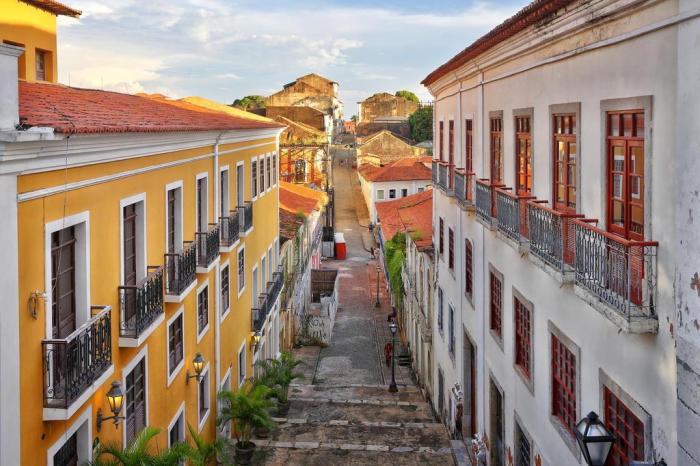
Among the streets of the historic centre, Rua do Giz stands out for its architectural ensemble and its social importance in the daily life of the city.
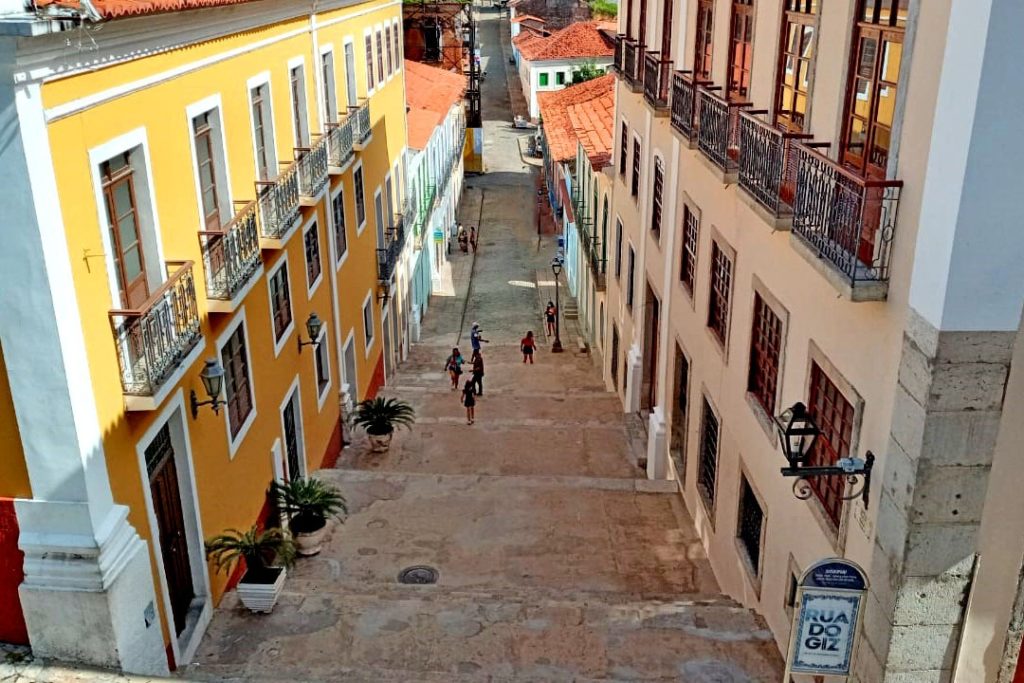
Rua do Giz em São Luís do Maranhão
Length and name
Rua do Giz covers a long area of the former Freguesia de Nossa Senhora da Vitória (now the Praia Grande neighbourhood), starting at Largo do Palácio and ending at Rua Nova Cascata.
After an urban redevelopment that filled in the Largo and part of Rua de Nazaré, the street now begins at Rua de Nazaré and ends at Rua Jacinto Maia, which runs parallel to Convento das Mercês.
The origin of the name “Rua do Giz” refers to the steep and slippery clay slopes in the area, which made traffic difficult.
This geographical aspect led to the construction of a staircase to overcome this access difficulty. The reference to “chalk” is linked to the composition of the soil, which is clayey and therefore slippery, which justifies the name.
This explanation was given by the researcher Carlos de Lima, who stressed the relationship between the name of the street and its physical characteristics.
The name “28 July”, according to Domingos Vieira Filho, refers to Antônio Henriques Leal, who was treasurer in 1865, and alludes to the date when the Province of Maranhão joined the Independence of Brazil in 1823.
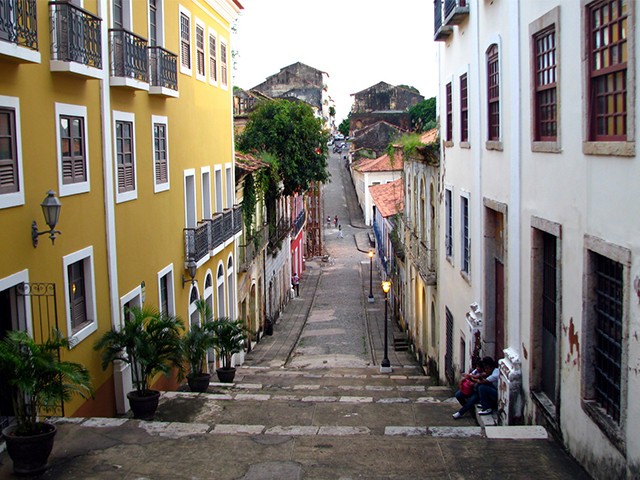
Lower Meretrício Area (ZBM)
Rua do Giz still retains the characteristics of the period when, together with Rua da Palma, Rua Estrela, Rua Saúde, Rua Afonso Pena and Rua Travessas da Lapa, Rua Feliz and Rua Portinho, they formed the Lower Meretrício area (ZBM). Stigmatised as a place of debauchery, prostitution and indecency, this group of streets went through two distinct periods.
According to Professor Marize Campos, the intention to segregate a space in the capital for prostitution was part of a wider project of urban sanitation of São Luís, linked to the interests of moral hygiene. The idea was to order and civilise the city by defining a space for pleasure within the urban perimeter.
From the beginning of the 1930s, Ludovico’s meretricious neighbourhood became the target of government intervention.
From September 1931, houses of prostitution were subject to “day and night inspections by the Civil Guard“. In São Luís, this interference initially took the form of restrictions on the hours at which prostitutes could move around the city.
During this period, the region was known by locals for the glamour of its nightclubs and venues.
Ludovic’s elite frequented these places, where the courtesans were well dressed and the salons offered quality music with the best musicians in the city, giving the owners the status of “madams” of great power and respect.
Mansion houses on Rua do Giz
The second moment in the history of Rua do Giz began in the 1980s and marked the decline of the ZBM. The madams became old prostitutes, many of them with children and in dire financial straits. The glamorous nightclubs that once existed have given way to poorly maintained mansions, converted into apartment blocks to accommodate large families.
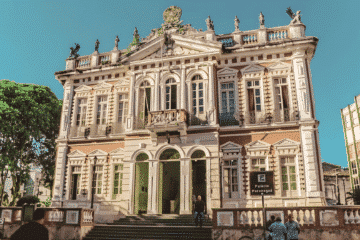
The colonial houses on this stretch of Rua do Giz contrast with some of the most beautiful and imposing mansions on the street, which have been the homes of illustrious personalities and important businesses in the city.
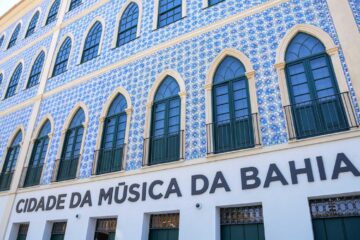
These include the Solar da Baronesa de Anajatuba, which now houses the Maranhão Historical and Artistic Heritage Institute (IPHAN), and the sobrado of the musician Lilah Lisboa, which houses the Maranhão Music School.
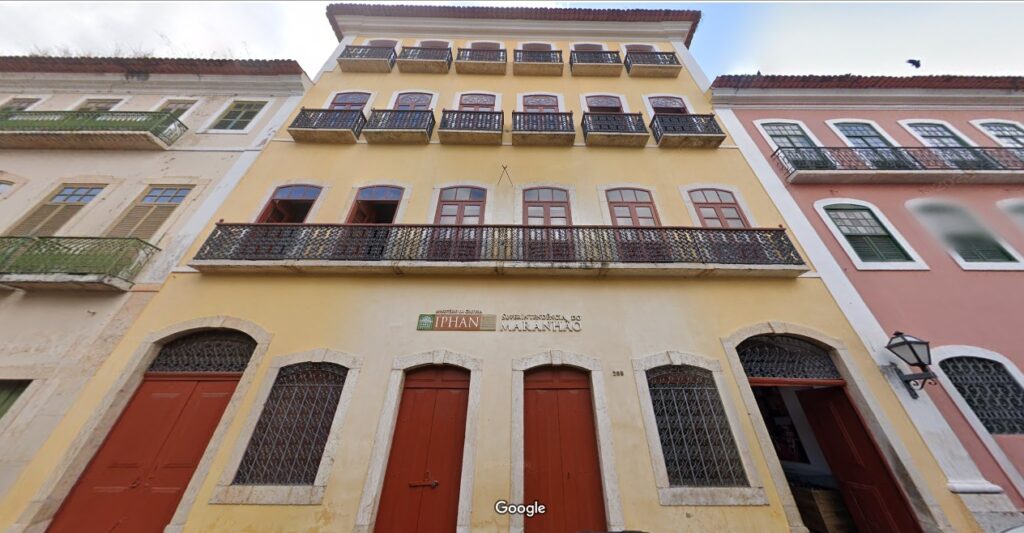
The Trojan Horse building, one of the tallest in the region, has four floors and a symmetrical façade facing west.
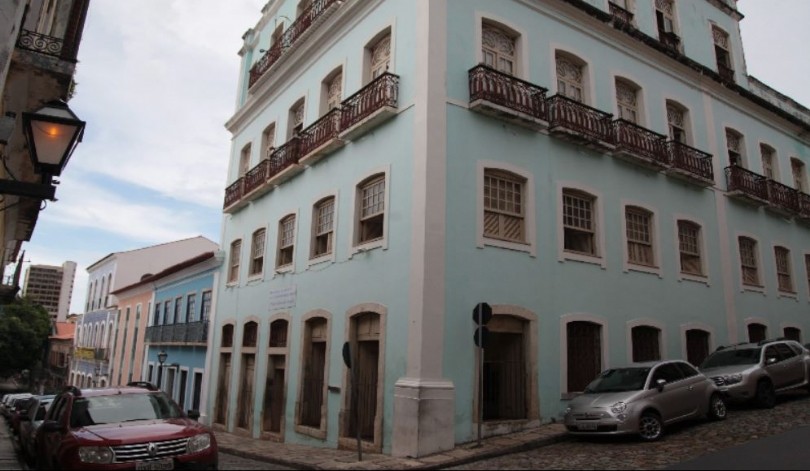
The second building has three floors and is made of colonial stone with decorative elements in the Modern Art style brought to São Luís by the Italian architect Gaspar Iconazone. Its façade is set back from the neighbouring buildings, surrounded by a wall of circular modules.
Contemporary commerce and culture
Historically, Rua do Giz was home to several shops and banks, such as Machado Cavalcanti & Cia, which sold imported food, and Batista Nunes & Cia, which sold offal, stowaways and cigarettes.
Banks included the Banco Comercial do Maranhão, the Bank of Maranhão, founded in 1855, and the famous Banco Comercial. There were also credit centres such as Ferreira & Cia, which offered commission and consignment services, and Viana & Santos.
Today, Rua do Giz is a lively area full of restaurants, hotels, museums and cultural centres, such as the Domingos Vieira Filho Popular Culture Centre, the Casa da FÉsta and the Maranhão Natural History and Archaeology Research Centre. It will soon also house the Museum of the Portuguese Language – Maranhão.
Conclusion
Rua do Giz is a testimony to the rich history and social evolution of São Luís do Maranhão. Its architecture and cultural heritage reflect the changes the city has undergone over the years, highlighting the importance of this street in the historical and social context of the region.

Publicações Relacionadas
Arthur Azevedo Theatre and its Rich History
História da Igreja de São José do Desterro em São Luís do Maranhão
Casa de Nhozinho: A Journey Through Maranhão Culture
Best Time to Visit Lençóis Maranhenses for Water Fun
Atins: A Hidden Gem on the Maranhão Coast
Cristo Rei Palace: Architecture of the 19th Century
Kitesurfing in Atins: Your Ultimate Guide
Chapada das Mesas: The Heart of Maranhão's Nature
Cine Éden: A Historic Cinema in São Luís
Lençóis Maranhenses National Park: A Natural Wonder
Pedra Caída Complex: Your Guide to Adventure
Chapada das Mesas National Park Adventure Guide
Tutóia: Discover the Beauty of Maranhão's Coast
São Luís do Maranhão: A Journey Through History
Church of Nossa Senhora dos Remédios History
Historical and Artistic Museum of Maranhão Overview
Convent and the Church of Nossa Senhora do Carmo History
History of João Lisboa Square in São Luís do Maranhão
Gonçalves Dias Square: A Historic Landmark
Historical curiosities about São Luís do Maranhão
Exploring Caburé: The Enchanting Peninsula of Maranhão
Alcântara: A Must-See Tourist Destination
Macapá Waterfall: A Natural Treasure in Maranhão
History of the Founding of São Luís do Maranhão
Cafua das Mercês: Preserving Black Memory Today
The most beautiful beaches on the coast of Maranhão
Santo Amaro do Maranhão: The Paradise of the Lagoons
History and Colonial Architecture of São Luís do Maranhão
Church of Our Lady of Victory: Historical Significance
Maranhão Natural History and Archaeology Research Centre
Maranhão: A Journey Through Nature and Culture
Convento das Mercês: Historical Significance Unveiled
Ribeirão Fountain: A Historical Landmark in São Luís
Carolina Travel Guide: Visit Waterfalls in Maranhão
La Ravardière Palace: A Historic Monument in the City
João do Vale Theatre and Its Rich History
This post is also on:
 Português
  English
  Deutsch
  Español
  Français