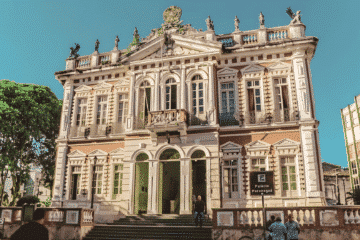
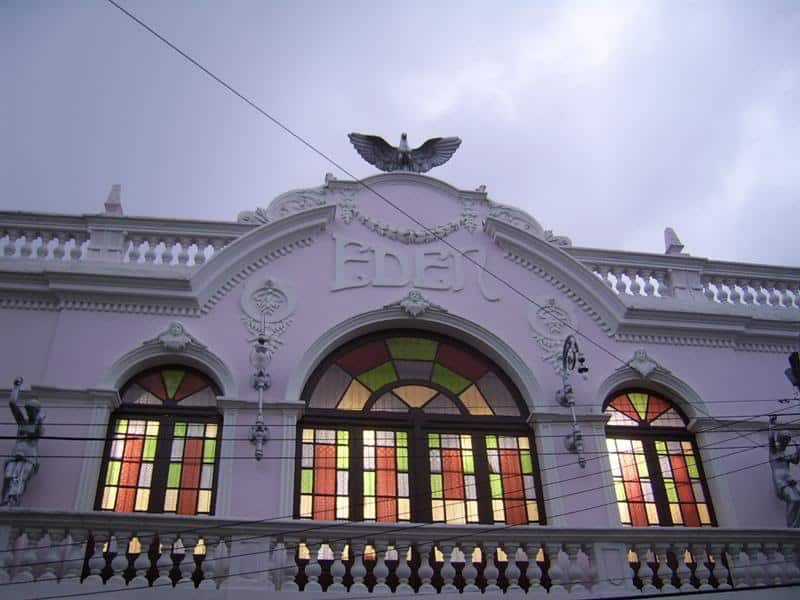
Cine Éden is a magnificent cinema in São Luís do Maranhão whose façade has been preserved and retains its original features, including the name of the venue in relief.
The urbanisation of São Luís and the emergence of cinemas
In the first half of the 20th century, as São Luís began to take on a modern character, moving from an agricultural-export economy to an urban-industrial one, there was a proliferation of cinemas in the capital.
These venues were distributed throughout the outlying districts and were mostly located near the factories and workers’ villages of the city. Although the capacity of these cinemas was small, they were able to meet the demand of the public in the region.
The golden past of the cinemas is closely linked to the establishment of factories on the island and their policy of compensation for the workers.
The owners of these factories showed concern for their workers, believing that the physical and mental health of the workers would have a direct impact on the company’s production. “With satisfied workers, more production, more profit for the directors,” explained Professor Paulo da Trindade Nerys, from the Department of Physical Education at the Federal University of Maranhão(UFMA), who is responsible for the course’s Cinema and Leisure study group.

Contributions of the urbanisation process
According to Manuela Nobre, a member of the research group, the process of urbanisation and the organisation of working class neighbourhoods were fundamental to the creation of cinemas.
The expansion of the urban centre took place with the formation of neighbourhoods based on the installation of factories in a rectilinear direction, from the centre to the rural area of the city (Anil), following the route of the Caminho Grande.
In 1983, the Factory of Santa Efigênia was located in São Luís, and in the last decades of the 19th century, the municipality already had five factories focused on cotton spinning and weaving.
The installation of cinemas in the workers’ villages brought a kind of convenience to the workers, who didn’t have to go far from the factories to enjoy their leisure time.
With urbanisation and the reorganisation of the city, it became essential to create appropriate environments for these pastimes close to home.
Factory owners went to great lengths to create these spaces, making significant investments. This meant greater control over the workers, who became the continuity of the machinery.
In addition, the improvement of public and private transportation, such as the extension of tram lines, provided better access to different leisure venues throughout the city, explains Paulo da Trindade.
Workers’ villages and the beginnings of cinemas
Factories such as the Companhia Industrial Carioca, located in the Areal neighbourhood (now Monte Castelo), and the Companhia de Fiação e Tecidos do Rio Anil, in the village of Anil, where the Rio Anil Integrated Centre (Cintra) now stands, were responsible for the emergence of cinemas.
In the latter, considered a rural and sparsely populated area, at least four cinemas were opened. In 1913, the popular Petit cinema was created, followed by others such as the Rialto (1927), the Cine Anil and the Rivoli, neither of which has an exact opening date.
In the João Paulo area, where there were tanneries and spinning and phosphorus factories, the Cine Rex opened, specialising in Bang Bang and Action films.
In the Areal district there was at least one factory, the Companhia Industrial Carioca. “In this particular case, we can’t say that the cinema was built only because of the factory, but it was also motivated by the expansion of the middle class that inhabited this area,” says Manuela Nobre.
There was also the industrial complex of Centro/São Pantaleão/Fabril/Camboa, whose workers came from Lira, Belira, Codozinho and Madre Deus. To cater for this population, there was the Cine Rialto (Rua do Passeio, next to the Djalma Marques Hospital – “Socorrão”).
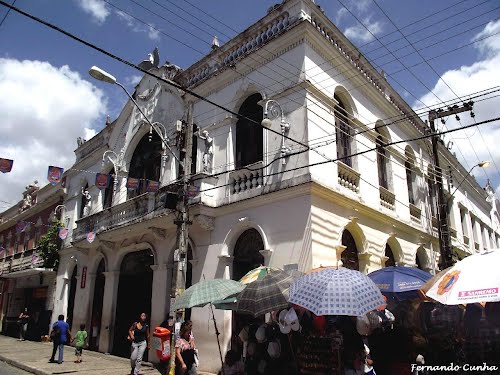
Other cinemas in the city, such as the Cine Éden (Rua Grande, now the Marisa shop), were aimed at the wealthy, although their ticket prices were the same as those of the other cinemas.
Despite its elitist character, the Cine Éden retained the original features of its façade, which is very well preserved.
The decline of the cinema
The decline of the cinema coincided with the modernisation of the media. Just as women had given up their paperbacks to go to the cinema at the weekend, the audience for film production began to prefer to get together with friends to listen to radio programmes.

Publicações Relacionadas
Exploring Caburé: The Enchanting Peninsula of Maranhão
History of João Lisboa Square in São Luís do Maranhão
Ribeirão Fountain: A Historical Landmark in São Luís
Church of Nossa Senhora dos Remédios History
São Luís do Maranhão: A Journey Through History
Casa Real Empório: History and Culture Combined
Josué Montello House of Culture in Maranhão History
Arthur Azevedo Theatre and its Rich History
Historical and Artistic Museum of Maranhão Overview
Convent and the Church of Nossa Senhora do Carmo History
Access to the Lençóis Maranhenses National Park
Lençóis Maranhenses National Park: A Natural Wonder
Cafua das Mercês: Preserving Black Memory Today
The most beautiful beaches on the coast of Maranhão
Chapada das Mesas: The Heart of Maranhão's Nature
Historical curiosities about São Luís do Maranhão
João do Vale Theatre and Its Rich History
Maranhão Natural History and Archaeology Research Centre
Tiles from São Luís do Maranhão: History, Art and Heritage
History and Colonial Architecture of São Luís do Maranhão
Carolina Travel Guide: Visit Waterfalls in Maranhão
Environmental Wealth of Maranhão: A Tropical Paradise
La Ravardière Palace: A Historic Monument in the City
Church of Our Lady of Victory: Historical Significance
Rua do Giz in São Luís do Maranhão - History and Architecture
Benedito Leite Public Library's Rich History
Convento das Mercês: Historical Significance Unveiled
História da Igreja de São José do Desterro em São Luís do Maranhão
History of the Founding of São Luís do Maranhão
Tutóia: Discover the Beauty of Maranhão's Coast
Barreirinhas: the gateway to Lençóis Maranhenses
Palácio dos Leões: A Historical Landmark Tour
Santo Amaro do Maranhão: The Paradise of the Lagoons
Alcântara: A Must-See Tourist Destination
Kitesurfing in Atins: Your Ultimate Guide
Chapada das Mesas National Park Adventure Guide
This post is also on:
 Português
  English
  Deutsch
  Español
  Français