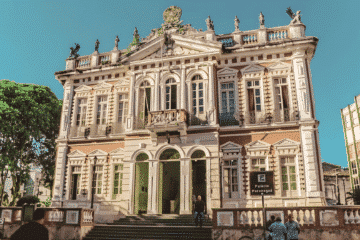
Cristo Rei Palace in São Luís do Maranhão
The Cristo Rei Palace is located in the Largo dos Amores and is an example of 19th century Ludovico architecture. Historically, it served as a residence for nobles, housed Jesuit schools and was the seat of the Archbishopric. Today, the palace houses the headquarters of the Federal University of Maranhão (UFMA).
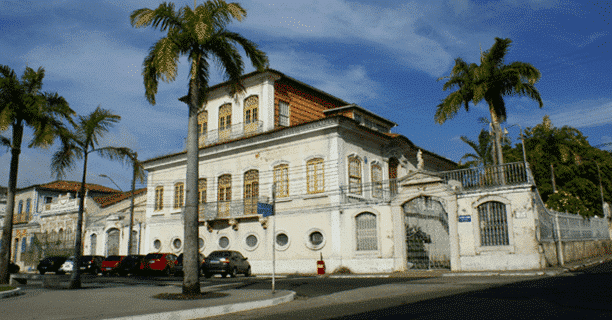
Architectural features
Predominantly neoclassical in style, the palace has a main staircase in stone, which retains its original features and is one of the entrances to the interior of the building.
Another important attraction is the Cristo Rei Memorial, which houses clothing, a collection of paintings, manuscripts and devices such as the Remetec, used to communicate and publicise the first entrance examinations.
With the title of Guardian of UFMA’s Memory, the Cristo Rei Palace, located in Praça Gonçalves Dias, is a beautiful example of São Luís’s colonial architecture.
Built in 1838 on the initiative of Commander José Joaquim Vieira Belfort, the mansion served as his family home in its early years.
Video about Cristo Rei Palace in São Luís do Maranhão

Palácio Cristo Rei
Origin of the name “Cristo Rei
The origin of the name “Cristo Rei” for the palace dates back to its use as the seat of the Archbishopric of São Luís. The title “Christ the King” is a reference to the figure of Jesus Christ, often associated in the Christian tradition with kingship and spiritual leadership.
The choice of this name reflects not only the religious function of the building, but also the importance of the palace as a symbol of faith and ecclesiastical authority in the region.
Over time, the palace has consolidated itself as an important cultural and historical heritage site, especially after its transformation into the headquarters of the Federal University of Maranhão (UFMA), reinforcing the link between the name “Cristo Rei” and its relevance to local history and identity.
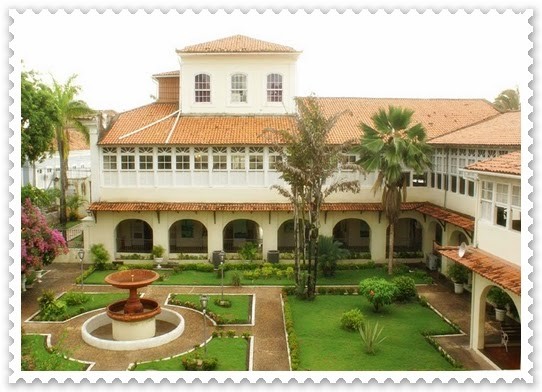
History of the Palace
The Belfort heirs sold the property in 1900 to the Vice Consul of the United States of America, Joaquim Baptista do Prado, a banker who used to offer sophisticated delicacies to the poor.
After his death by suicide, the mansion was auctioned off and passed through several owners until it came into the hands of the Bishops of São Luís, becoming the seat of the Archbishopric of the capital and named Palácio Cristo Rei.
In the following years, the Archbishopric ceded the building to the Faculty of Philosophy of Maranhão, which became the University of Maranhão Foundation.
During the rectorate of Josué Montello, the building was acquired by the institution and renovated to house the university.
In 1991, a major fire consumed part of the mansion and destroyed important university documents, forcing the institution to carry out extensive renovations to the palace, which reopened on 21 October 1993. On that date, the UFMA inaugurated the Cristo Rei Memorial, with the aim of preserving the history of the university.
The Memorial Collection
The Memorial’s collection includes documents, official clothing, photographs and old machines used by university courses such as Remetec. There is also a wing for temporary exhibitions.
Structure and design
The Palace of Cristo Rei was built by the architect Manoel Pulgão in the Late Baroque style. The mansion has two floors and a belvedere, with two side entrances. The main entrance gives access to the garden and the staircase to the second floor, which is decorated with a carved stone portal crowned by a statue of the goddess Diana.
On the ground floor, a set of seven glasses with large irons decorates the façade. On the upper floor there are three doors with balconies and double-lined windows on each side.
The central set of doors is repeated in the belvedere, whose side walls are covered with colonial tiles. From here you have a beautiful view of Gonçalves Dias Square and the São Francisco Bridge over the Anil River.
The garden is one of the highlights of the site, containing a fountain, probably part of a set of six English pieces from 1856, commissioned by Raimundo Teixeira Mendes, founder of the Companhia de Águas Rio Anil. There is also a Frown on the back wall of the garden, similar to the city’s famous fountains.
Useful information
Address: Palácio Cristo Rei, Praça Gonçalves Dias, 351
Hours: Monday to Friday, from 8 to 11am and from 2 to 5pm
Entrance fee: Free.
Conclusion
The Cristo Rei Palace is an important cultural heritage site in São Luís do Maranhão, reflecting the rich history and architectural evolution of the region.

Publicações Relacionadas
Casa Real Empório: History and Culture Combined
Pedra Caída Complex: Your Guide to Adventure
History and Colonial Architecture of São Luís do Maranhão
History of João Lisboa Square in São Luís do Maranhão
Exploring Caburé: The Enchanting Peninsula of Maranhão
Arthur Azevedo Theatre and its Rich History
The most beautiful beaches on the coast of Maranhão
Maranhão Natural History and Archaeology Research Centre
Tiles from São Luís do Maranhão: History, Art and Heritage
História da Igreja de São José do Desterro em São Luís do Maranhão
João do Vale Theatre and Its Rich History
Lençóis Maranhenses National Park: A Natural Wonder
Access to the Lençóis Maranhenses National Park
History of the Founding of São Luís do Maranhão
Josué Montello House of Culture in Maranhão History
7-day itinerary through Maranhão
Historical curiosities about São Luís do Maranhão
Church of Our Lady of Victory: Historical Significance
Cafua das Mercês: Preserving Black Memory Today
Catarina Mina: The Story Behind the Alley
Gonçalves Dias Square: A Historic Landmark
Cine Éden: A Historic Cinema in São Luís
Atins: A Hidden Gem on the Maranhão Coast
Carolina Travel Guide: Visit Waterfalls in Maranhão
Rua do Giz in São Luís do Maranhão - History and Architecture
Casa de Nhozinho: A Journey Through Maranhão Culture
Environmental Wealth of Maranhão: A Tropical Paradise
Chapada das Mesas National Park Adventure Guide
Barreirinhas: the gateway to Lençóis Maranhenses
Benedito Leite Public Library's Rich History
Convent and the Church of Nossa Senhora do Carmo History
Palácio dos Leões: A Historical Landmark Tour
Chapada das Mesas: The Heart of Maranhão's Nature
Maranhão: A Journey Through Nature and Culture
Alcântara: A Must-See Tourist Destination
La Ravardière Palace: A Historic Monument in the City
This post is also on:
 Português
  English
  Deutsch
  Español
  Français