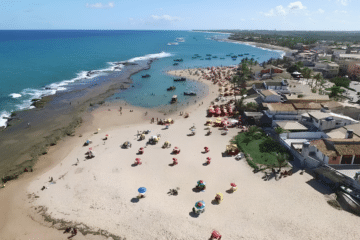
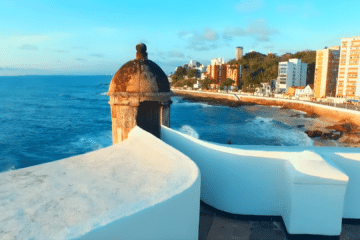
Tutóia is the gateway to the Lençóis Maranhenses and the Parnaíba River Delta.
The municipality of Tutóia, in Maranhão, is an ideal starting point for those who wish to visit the Lençóis Maranhenses National Park and the Parnaíba River Delta.
Geographically privileged, Tutóia is located opposite the Parnaíba River Delta and next to the Lençóis Marhenses.
The region’s dunes are one of its main attractions and can be explored on foot, by buggy or 4×4.
In recent times, Tutóia has become one of the most popular destinations for ecotourism in Maranhão.
Visitors can explore some 20 kilometres of paradisiacal beaches, with calm seas and white sand dunes, including Praia do Arpoador and Praia dos Namorados.
You can also visit the Taboa, Jacaré, Areia and Lagoinha lagoons and the Cajueiro, Coroatá, Melancieiro, Igoronhon, Grande, Pombas, José Correia, Caieira and Papagaio islands that make up the great Parnaibano Delta.
The region is also rich in handicrafts, with products made from straw, leather, coconut, horn, thread and shells.

Videos about Tutóia, Parnaíba Delta and Lençóis Maranhenses


Roteiro de 3 dias em Tutóia MA

Tutóia no Maranhão05:06
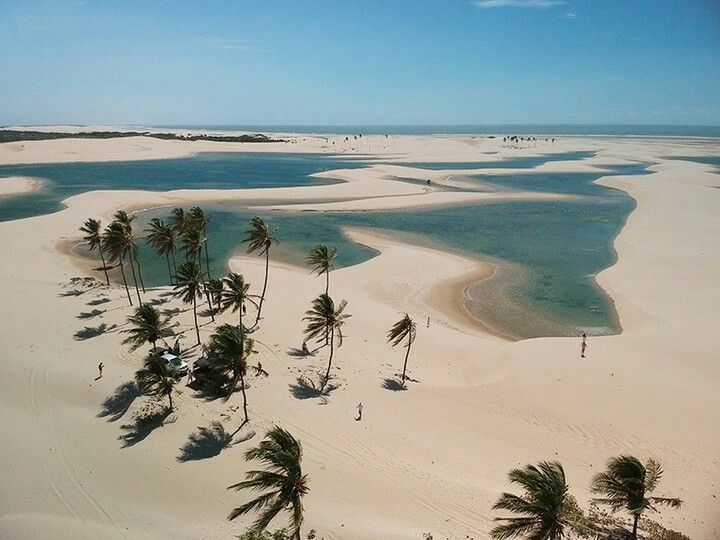
Dicas de Viagem sobre os Lençóis Maranhenses11:11
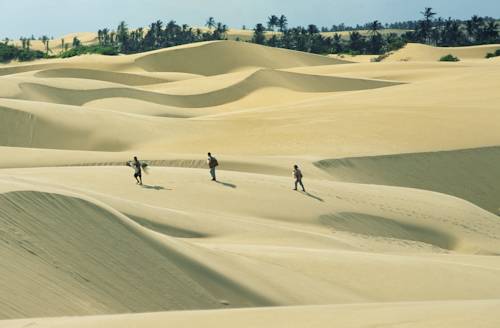
Tutóia no Maranhão - Guia Turístico
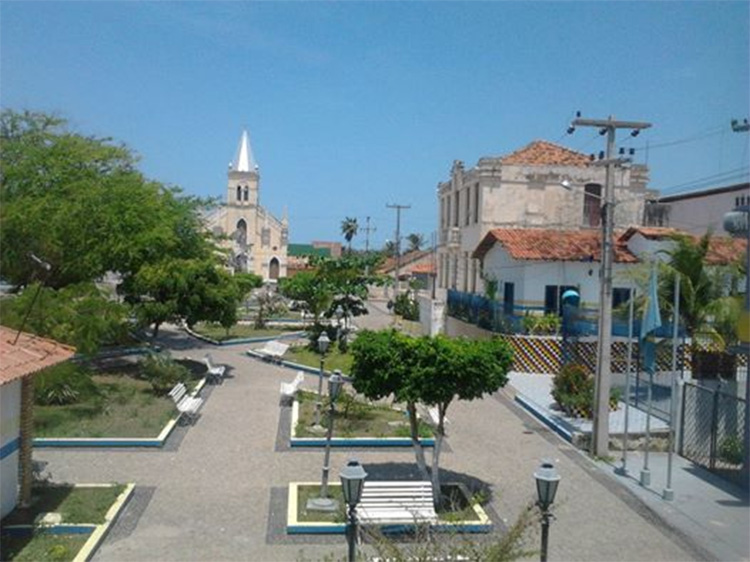
Drone - Tutóia no Maranhão01:30

Arpoador beach in Tutóia
Founded on March 28th 1938, the name “Tutóia” means “sheet of sand”. Some say its true meaning is “good water” in the language of the Tupi Indians who also inhabited the area.
With an extensive coastline, the dunes of the Little Lençóis Maranhenses surround many of its beaches and lagoons. This justifies the name given to it by the Tremembés Indians who lived in the region in the 18th century.
Tutóia is a micro-region of the Lençóis Maranhenses, known for its natural attractions, including dunes, lagoons and beaches.
During the rainy season (from January to July) it is possible to enjoy the natural pools formed between the dunes, whose waters are crystal clear, unlike those of the sea, which are more turbid due to the influence of the mangroves.

Tourist attractions in Tutóia
- Delta do Rio Parnaíba: With a total area of 2,700 km², Tutóia is part of the Parnaíba Delta, the only open sea delta in the Americas. This ecosystem includes rivers, mangroves, dunes, islands and islets, providing an excellent opportunity to explore the region’s natural beauty.
- Pequenos Lençóis: Located between Tutóia and Paulino Neves, Pequenos Lençóis is another attraction not to be missed, with small dunes up to 30 metres high and freshwater lagoons surrounded by a rich natural landscape.
- Praia do Amor: Ideal for nature lovers, Praia do Amor offers a beautiful swim in the sea and is a great place to enjoy a stunning sunset. Other places not to be missed are Arpoador beach and the lagoons of Taboa, Jacaré, Areia and Lagoinha.
- Praia do Arpoador: One of Tutóia’s most famous beaches, perfect for relaxing and enjoying the stunning sea views.


Suggested itineraries
To get the most out of your visit to Tutóia, consider the following itineraries:
1 day itinerary
- Morning: Start the day at Arpoador Beach and enjoy the sun and the sea.
- Afternoon: Walk around the Taboa and Jacaré Lagoons, where you can swim and relax.
- In the evening: Dinner at a local restaurant to sample the local cuisine.
2 day itinerary
1st day
- Morning: Visit the Parnaíba River Delta, exploring the islands and mangroves.
- In the afternoon: Lunch on one of the islands and return for walks in the dunes of the Pequenos Lençóis.
- In the evening: Attend a local cultural event or festival if available.
2nd day
- Morning: Relaxing day at Praia do Amor, with time for swimming and a picnic.
- Afternoon: Visit local craft workshops and buy souvenirs.
- Evening: Enjoy the sunset on the beach and end your visit with a delicious dinner.

How to get to Tutóia
If you want to visit Tutóia, you can buy bus tickets from São Luís to Tutóia at the bus station in São Luís. The journey takes an average of six hours.
Tips on Tutóia, the Parnaíba Delta and Lençóis Maranhenses
Historical background of Tutóia
The settlement was founded on the left bank of the Tutóia River, where it flows into the canal of the same name, formed by the western branch of the Parnaíba River. The first inhabitants of the region were the Tremembés Indians, known for their bravery. In 1727 there were two data of six leagues measured and demarcated by the Indians.
Under the name of Viçosa, Tutóia was promoted to the category of town in 1758, but continued to be known by its present name. In 1871, due to its slow development, the town was transferred to Barreirinhas and became a backwater. In 1890, the town reacted to this situation by separating from Barreirinhas and becoming an autonomous municipality.
In 1901, the seat of the municipality was transferred to the town of Porto Salina, which had been founded in 1822, when Colonel Paulino Gomes Nunes began his commercial activities on the left bank of the river. On that occasion, Porto Salina, under the name of Tutóia, was elevated to the category of town, becoming the definitive seat of the municipality.
Tutóia became a city in 1938.
Honour: Tutoiense.
Tourist and travel guide to Maranhão and the Northeast.

Publicações Relacionadas
Palácio dos Leões: A Historical Landmark Tour
The most beautiful beaches on the coast of Maranhão
Arthur Azevedo Theatre and its Rich History
Chapada das Mesas: The Heart of Maranhão's Nature
Pedra Caída Complex: Your Guide to Adventure
São Luís do Maranhão: A Journey Through History
Historical curiosities about São Luís do Maranhão
Barreirinhas: the gateway to Lençóis Maranhenses
Gonçalves Dias Square: A Historic Landmark
History and Colonial Architecture of São Luís do Maranhão
Ribeirão Fountain: A Historical Landmark in São Luís
Cafua das Mercês: Preserving Black Memory Today
Chapada das Mesas National Park Adventure Guide
Benedito Leite Public Library's Rich History
História da Igreja de São José do Desterro em São Luís do Maranhão
Kitesurfing in Atins: Your Ultimate Guide
Maranhão: A Journey Through Nature and Culture
History of the Founding of São Luís do Maranhão
Carolina Travel Guide: Visit Waterfalls in Maranhão
La Ravardière Palace: A Historic Monument in the City
Macapá Waterfall: A Natural Treasure in Maranhão
Church of Our Lady of Victory: Historical Significance
Exploring Caburé: The Enchanting Peninsula of Maranhão
History of João Lisboa Square in São Luís do Maranhão
Tiles from São Luís do Maranhão: History, Art and Heritage
Rua do Giz in São Luís do Maranhão - History and Architecture
7-day itinerary through Maranhão
Convent and the Church of Nossa Senhora do Carmo History
Access to the Lençóis Maranhenses National Park
Cristo Rei Palace: Architecture of the 19th Century
Best Time to Visit Lençóis Maranhenses for Water Fun
Cine Éden: A Historic Cinema in São Luís
Catarina Mina: The Story Behind the Alley
Church of Nossa Senhora dos Remédios History
Casa Real Empório: History and Culture Combined
Convento das Mercês: Historical Significance Unveiled
This post is also on:
 Português
  English
  Deutsch
  Español
  Français