The environmental wealth of Maranhão
Maranhão is the synthesis state of Brazil. It combines the characteristics of the North, the Northeast and the Middle-West.
Different nuances of climate, vegetation, hydrography, coastline, relief, history and culture blend together in a tropical tableau of colours, tastes, sounds, textures, smells and breathtaking landscapes that reflect the Brazilian joy of being from Maranhão.
Discovering Maranhão in its entirety is like travelling to the Amazon, the Northeastern Sertão, the Cerrados of Central Brazil, the North and Northeastern Coasts, the Chapadas, the Sierras, a counterpart to the Pantanal and all the unique contact (transition) areas between these ecosystems in a single trip.
In the midst of so much diversity, the peculiarities also hold good surprises. The country’s most mixed-race people have created and managed to preserve one of the most significant, original, authentic and rich Brazilian cultural manifestations amidst the natural and built beauty.


The environmental wealth of Maranhão

A riqueza ambiental do Maranhão - Arquipélago de Maiaú
Maranhão is what we might call the“Amazonian Northeast” or“Northeastern Amazon“, north and northeast at the same time, or even “mid-north” or “mid-northeast”.
This Brazilian state has a privileged location: it lies at the eastern end of the Eastern Amazon and at the northern/western end of the Northeast.
Politically, it is the Northeast (it used to be Mid-North), geographically it is a mixture of North and Northeast, and culturally it is marked by indigenous and white influences and a strong black presence. This diversity could only produce a rich culture of its own, evident in its cuisine, crafts, history, folklore, popular culture and music.
It is here that these two large and distinct regions meet, together with an “extension” of the Brazilian Central Plateau, creating a unique and essentially Brazilian moment, both geographically and culturally.
The Amazon in Maranhão
Maranhão’s varied landscape includes Amazon rainforest, pre-Amazon rainforest, cocais, valleys, cerrados, caatingas, carrascos, rivers, chapadas, caves and grottos, vast plains, mountain ranges, waterfalls, tabuleiros, bays, gulfs, sands, dunes, Lakes, Reservoirs, Sea and river Beaches, igarapés, cerradão, campos, alagados, várzeas, delta, ilhas, coqueirais, salgados, transitional forests of different types, corals, semi-deserts, among others, painting a truly tropical picture of the Brazilian geographical synthesis.
Its attractions are not only concentrated on the coast, as in the other northeastern states, nor are they mainly limited to its vast interior, as in the rest of the Amazon.
Maranhão has a vast territory that is home to such diverse landscapes and ecosystems as
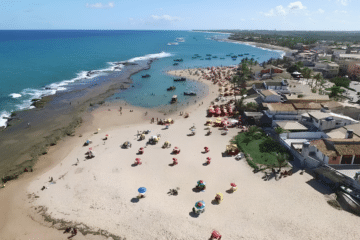
- It has the longest coastline in Brazil. That’s right! Maranhão has the longest coastline in Brazil, because if you count all its inlets, bays, gulfs, coves and islands, it reaches more than 1000 kilometres, that’s longer than Bahia.
- It has the largest number of islands on the Brazilian coast, with the formation of many river and sea archipelagos, most of which are still preserved and unknown. The capital itself, São Luís, is on an island.
- The largest area of mangroves in Brazil (50%). With flora and fauna typical of the coastal Amazon and the northeastern coast, it contributes to one of the most fish-rich seas and a very high biodiversity.
- The pororoca is a unique and impressive natural phenomenon. The pororoca of the Mearim River, where surfing competitions are held every year.
- The largest preserved and unknown area of cerrados and chapadões in Brazil and South America. The Maranhão savannah has unique characteristics and is the country’s newest agricultural frontier.
- The largest coral reef in South America. Largely unknown due to the strong and dangerous sea currents that cross it.
- The largest open sea delta in the Americas. The third largest in the world, the Parnaíba Delta, of which 75% is in Maranhão.
- The largest lake basin in the Northeast. The Baixada Maranhense is a true marshland.
- A unique landscape in the world. The Lençóis Maranhenses are an example of this, with their dunes interspersed with crystal clear rainwater lagoons.
- A vast area of lush Amazon rainforest with many endemic animal species, inhabited by one of Brazil’s last semi-nomadic tribes, the Awá-Guajá.
- An extensive hydrographic network of perennial and fish-bearing rivers. Maranhão has a rich biodiversity and a variety of interconnected ecosystems.


Maranhão’s environmental wealth: Ecosystems and Biodiversity
1. Guarás Forest

The Guarás Forest is a lush ecosystem on the west coast of Maranhão, known for its rich biodiversity. This area is home to a combination of Amazon rainforest, mangroves, restinga forests and deserted islands.
- Biodiversity: The fauna of the Guarás Forest is rich and diverse, including species such as the guará, a red-plumed bird that gives the area its name, as well as herons, spoonbills and various species of fish and crustaceans in the mangroves. These environments are essential for the reproduction and feeding of many species, as well as providing shelter for endangered animals such as the manatee.
- Environmental importance: Mangroves play a crucial role in protecting coastlines from erosion and act as a natural filter for pollutants, as well as providing breeding grounds for many marine species. The Guarás forest is also essential for conserving water resources and maintaining ecological balance.

2. Lençóis Maranhenses
The Lençóis Maranhenses are one of Maranhão’s most iconic ecosystems, known for their vast white sand dunes interspersed with crystal-clear lagoons formed by rainfall.
- Biodiversity: Although it looks like a desert, this region is home to a rich and adapted life. The flora includes a variety of grasses and xerophytic plants that have survived the arid conditions. The fauna is equally diverse, with species such as the field fox, giant anteater and various species of migratory birds.
- Environmental importance: The Lençóis Maranhenses are essential for regulating the local water cycle. The lagoons formed during the rainy season are resting and breeding areas for various species of birds and fish. The area also attracts eco-tourists and raises awareness of environmental conservation.

3. Maranhão’s Cerrado
The Maranhão Cerrado is a tropical savannah formation rich in biodiversity and one of Brazil’s newest agricultural frontiers.
- Biodiversity: This ecosystem is home to a variety of plant species such as shrubs, grasses and small trees, as well as a diverse fauna that includes maned wolves, wolves, jaguars, armadillos and a variety of birds, such as the canary and the caracara hawk. Many of these species are endemic and adapted to the conditions of the Cerrado.
- Environmental importance: The Cerrado is crucial for maintaining Brazil’s water resources, serving as a cradle for several river basins. The vegetation helps to fix soil and prevent erosion, and plays an important role in mitigating climate change by storing carbon.
4. The mangroves of Maranhão
Maranhão’s mangroves are considered one of the largest mangrove areas in Brazil, covering about 50 per cent of the state’s coastline.
- Biodiversity: These ecosystems are rich in biodiversity, harbouring a variety of plant species such as red mangroves, white mangroves and black mangroves, as well as a rich fauna, including crabs, fish, water birds and marine mammals such as manatees.
- Environmental importance: Mangroves are essential for coastal protection, acting as natural barriers against storms and erosion. They also act as nurseries for many species of fish and crustaceans, supporting local fisheries and marine biodiversity. Mangroves also play a vital role in filtering pollutants and stabilising water quality.

These ecosystems not only contribute to Maranhão’s biodiversity, but also play a crucial role in environmental protection and the sustainability of local communities. The conservation of these areas is essential to ensure the continuity of the ecosystem services that sustain life and culture in the region.
Maranhão’s environmental wealth, flora and fauna

Publicações Relacionadas
Cine Éden: A Historic Cinema in São Luís
Macapá Waterfall: A Natural Treasure in Maranhão
Cristo Rei Palace: Architecture of the 19th Century
Gonçalves Dias Square: A Historic Landmark
Pedra Caída Complex: Your Guide to Adventure
7-day itinerary through Maranhão
La Ravardière Palace: A Historic Monument in the City
Maranhão Natural History and Archaeology Research Centre
Chapada das Mesas National Park Adventure Guide
Convento das Mercês: Historical Significance Unveiled
Candombá is a typical flower of the Chapada Diamantina
Historical curiosities about São Luís do Maranhão
Barreirinhas: the gateway to Lençóis Maranhenses
Tropical flowers are grown on a large scale in northeastern Brazil
Tiles from São Luís do Maranhão: History, Art and Heritage
Orchids: Tips and Techniques for Efficient Cultivation and Care
Arthur Azevedo Theatre and its Rich History
Church of Our Lady of Victory: Historical Significance
História da Igreja de São José do Desterro em São Luís do Maranhão
São Jorge Parish Church in Ilhéus — history, architecture and religious art
History of João Lisboa Square in São Luís do Maranhão
Historical and Artistic Museum of Maranhão Overview
Santo Amaro do Maranhão: The Paradise of the Lagoons
Carolina Travel Guide: Visit Waterfalls in Maranhão
Exploring Caburé: The Enchanting Peninsula of Maranhão
Casa de Nhozinho: A Journey Through Maranhão Culture
Josué Montello House of Culture in Maranhão History
Kitesurfing in Atins: Your Ultimate Guide
Marechal Newton Cavalcanti Educational Centre Overview
Palácio dos Leões: A Historical Landmark Tour
São Luís do Maranhão: A Journey Through History
Tutóia: Discover the Beauty of Maranhão's Coast
Catarina Mina: The Story Behind the Alley
Boqueirão da Onça: A Unique Brazilian Eco-Treasure
Access to the Lençóis Maranhenses National Park
Convent and the Church of Nossa Senhora do Carmo History
This post is also on:
 Português
  English
  Deutsch
  Español
  Français