Travel guides for Bahia, Alagoas, Ceará and the whole of the North-East of Brazil: beaches, ready-made itineraries, culture and accommodation tips. Get inspired and plan your trip.
Salvador Travel Guide
This is the guide to tourism in Salvador, in Bahia: history, the Historic Centre, churches, museums, forts, beaches, neighbourhoods, carnival and tips for planning your trip. All the articles provide everything you need to choose what to visit and how to organise your time in the city.
Tourist Attractions in Salvador, Bahia
Salvador was founded in 1549 by Tomé de Sousa and served as the seat of the royal administration of Brazil until 1763, when power was transferred to Rio de Janeiro.
This history can be found in the streets of the Historic Centre, in the Baroque churches, in the forts and in the museums, and is interwoven with Afro-Brazilian culture, which is evident in the music, the festivals and neighbourhood life.
The most popular attractions are Pelourinho and the Historic Centre, the Lacerda Lift, the churches, the museums, the forts and the Barra Lighthouse, as well as the city’s beaches. The guides in this category provide details on each of them.
How many days should I stay in Salvador?
It depends on what you want to see. For the Historic Centre and the main attractions, even a short stay is enough for a good itinerary. If you’re thinking of including beaches, neighbourhoods and islands, the 7-day itinerary on the website offers a comprehensive suggestion.
Why is Salvador important in the history of Brazil?
Salvador was founded in 1549 by Tomé de Sousa and served as the seat of the royal administration until 1763, when the capital was moved to Rio de Janeiro. That is why the city has so many colonial monuments.
What is Pelourinho?
It is the best-known part of Salvador’s Historic Centre, with its colourful mansions, Baroque churches and museums. The Historic Centre is a UNESCO World Heritage Site.
What are the best beaches in Salvador?
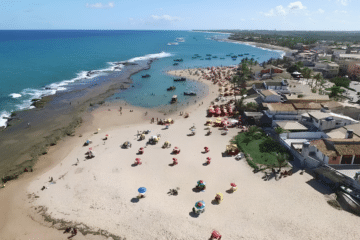
The city has dozens of beaches, each with its own character, ranging from urban to more peaceful. The guide to Salvador’s 23 beaches compares the options, and there is a separate article on beaches near the city.
Where to stay in Salvador?
The best area depends on your itinerary: near the Historic Centre, along the waterfront or in livelier neighbourhoods. The website’s accommodation guide provides essential tips.
What is the carnival in Salvador like?
Carnival is one of the city’s best-known festivals, featuring street parades and floats with live music. The website’s guide explains how to celebrate and what to expect.
Is it possible to visit the islands in Todos os Santos Bay?
Yes, the bay has several islands, each with their own beaches, history and culture. The guide to the main islands sets out the options and how to visit them. Check timetables and ferry crossings before you go.
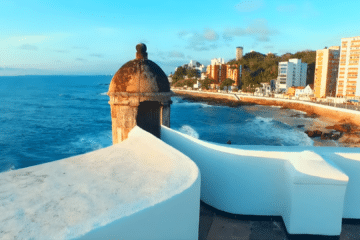
The history of the founding of Salvador, Bahia, began as a fortified city, or at least that was the intention of King João III of Portugal. As the capital or “head” of Brazil, its defence was a constant concern. The prominence of the fortifications in the landscape of the city […]
Founded in 1549 by Tomé de Souza, the Historic Centre of Salvador is home to monuments dating from the 17th to the 19th centuries, offering tourism in Salvador centred on history, Baroque churches and must-see museums. The difference between Salvador, the Historic Centre and Pelourinho Salvador is the city as […]
Diogo Álvares Correia, better known as Caramuru, is a central figure in the secret history of Salvador, Bahia. Hidden fragments of history remain in the city’s streets, squares and monuments — stories that we will reveal here. The first encounters in Todos os Santos Bay In 1501, Amerigo Vespucci discovered […]
The Church of São Pedro dos Clérigos, situated in the historic centre of Salvador, is one of the finest examples of Brazilian colonial Baroque architecture. The Brotherhood dates back to the 16th century (c. 1580) and, from the early 18th century onwards, began work on its own headquarters in Terreiro […]
Salvador, Brazil’s first capital, is a city with a rich history, a vibrant culture and impressive architecture. Its tourist attractions and architectural heritage reflect a blend of influences — from Portuguese colonisation to Afro-Brazilian heritage — and attract visitors from all over the world. Overview Salvador boasts beaches, historic sites, […]
Lord of Bonfim ribbons: History and Meaning The ribbons of Senhor do Bonfim are amulets of faith and tradition that have a long and rich history, especially associated with the city of Salvador, in Bahia, and the Church of Nosso Senhor do Bonfim. Video about the history of Senhor do […]
Introduction The Church of Nosso Senhor do Bonfim isn’t the prettiest, but it is certainly the most famous in Salvador due to the traditional “Lavagem do Bonfim”, a celebration marked by Baianas throwing water on the steps of the church during a festival that lasts all day, enlivened by afoxé […]