Penedo (AL): tourist attractions, history and things to do
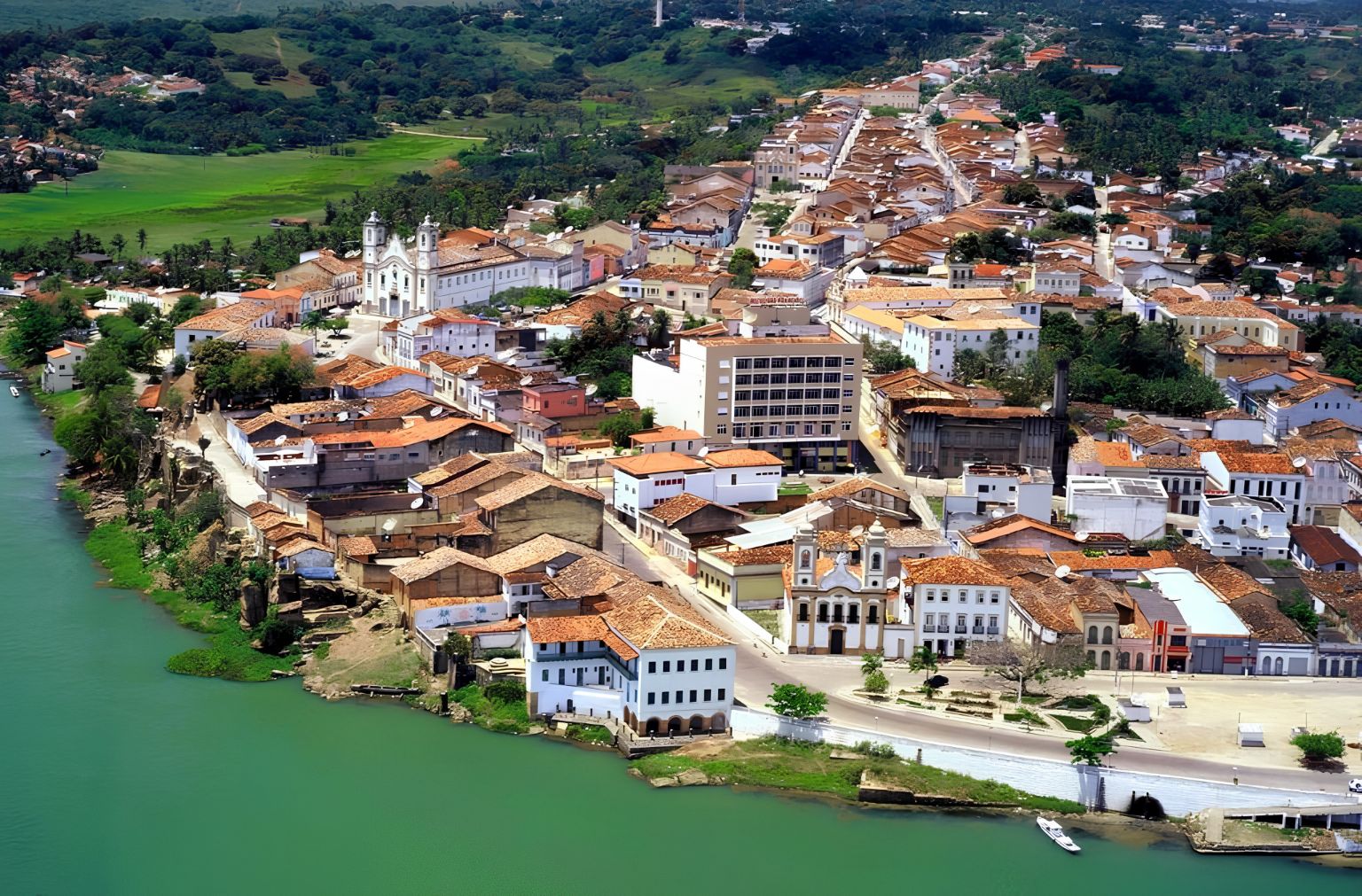
Penedo, in Alagoas, is one of the most beautiful historic towns in Brazil’s Northeast. Built on a rock on the banks of the São Francisco river, it was born as a village in the 16th century and, since then, it has kept a rare ensemble of Baroque and Rococo churches, mansions and townhouses. For this reason, the historic center was listed by IPHAN in 1996. In addition, the city has the Teatro Sete de Setembro, the Museu do Paço Imperial and trips through the Marituba wetlands.
- Where it is: southern Alagoas, on the left bank of the São Francisco river, close to the border with Sergipe.
- Population: 58,650 inhabitants (IBGE 2022 Census).
- Distances: about 170 km from Maceió and 120 km from Aracaju.
- Origin: village recognized in 1560, then town (vila) in 1636 and finally city in 1842.
- Highlights: Igreja da Corrente, Convento de São Francisco, Paço Imperial, Teatro Sete de Setembro and Casa do Penedo.
- Heritage: historic center listed by IPHAN in 1996.
Map of Alagoas and location of Penedo
Penedo lies at the far southern end of the Alagoas coast, about 40 km upriver from the mouth of the São Francisco. Therefore, it pairs well with Piaçabuçu, where the river meets the sea, and with the beaches of the Litoral Sul de Alagoas.

Videos about Penedo


History of Penedo
In 1534, according to IBGE, Duarte Coelho Pereira, lord-proprietor of the captaincy of Pernambuco, found a small village next to a large rock (a “penedo”), seven leagues from the mouth of the São Francisco. Then, in 1560, the second lord-proprietor, Duarte Coelho de Albuquerque, officially recognized the place as Penedo do São Francisco.
The village became a town (vila) in 1636. Shortly afterwards, in 1637, the troops of Maurício de Nassau occupied the region, which remained under Dutch rule for about ten years. During that period, in fact, the town was even called Maurícia.
Later, thanks to navigation and trade along the river, Penedo grew rich. As a result, it gained large churches in the 17th and 18th centuries and townhouses in the 19th century. Finally, on April 18, 1842, the town was raised to the status of city. Moreover, in 1859 it was visited by Dom Pedro II, on his way to the Paulo Afonso waterfall.
Tourist attractions in Penedo
Igreja de Nossa Senhora da Corrente
A masterpiece of the Rococo style in Brazil, the Igreja de Nossa Senhora da Corrente began to be built in 1764 and was finished around 1790. Its simple façade, however, hides an interior of immense richness.
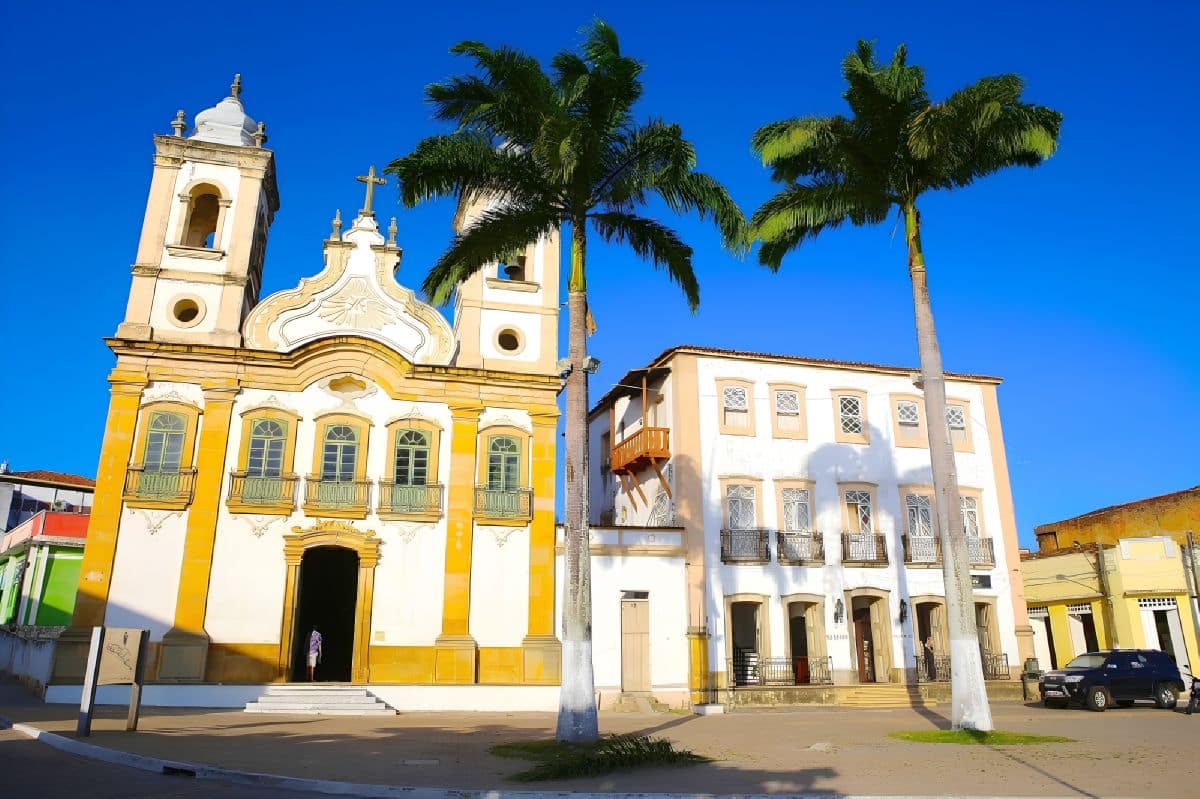
The high altar is covered in gold leaf, with carvings in shades of blue and pink marble. In addition, the side walls of the nave are covered with Portuguese azulejo tiles.

The carved pulpit and the ceiling painting are also impressive; the latter is attributed to Libório Lázaro Leal, an artist from Pernambuco who worked on several churches in the city. Meanwhile, the 19th-century English tile floor was restored with funds from the Programa Monumenta.

According to tradition, moreover, the church hid runaway enslaved people behind a false door in the left side altar. Address: Praça 12 de Abril, no number, Centro.
Igreja de São Gonçalo Garcia dos Homens Pardos
Opened in 1759, one year after construction began, the Igreja de São Gonçalo Garcia dos Homens Pardos stands out for its façade. Its bell towers, in Neo-Gothic style, however, were only added in the 19th century. Address: Avenida Floriano Peixoto, no number, Centro.

Catedral de Nossa Senhora do Rosário
Construction of the Catedral de Nossa Senhora do Rosário began in 1690. Later, in 1815, the original façade was demolished, and a new one, with beautiful colored stained-glass windows, was built in its place. Address: Praça Barão de Penedo, no number, Centro.

Igreja de Nossa Senhora dos Anjos and Convento de São Francisco
Built by the Franciscans between the 17th and 18th centuries, the complex of the Igreja de Nossa Senhora dos Anjos and the Convento de São Francisco follows the Portuguese Baroque style. For this reason, it is considered one of the most important in Alagoas.

The sober exterior, however, contrasts with the rich Rococo carving inside. On the ceiling, for example, the illusionistic painting by Libório Lázaro Leal stands out. Address: Praça Frei Camilo de Lellis, 218, Centro.
Museu do Paço Imperial
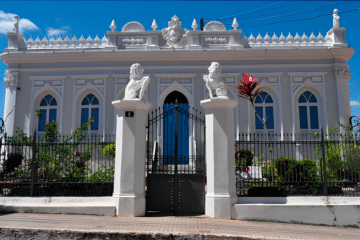
In 1859, this townhouse hosted Dom Pedro II and his entourage and, since then, it has been called the Paço Imperial. Today, the museum brings together pieces from the 18th and 19th centuries, donated mainly by families from the city.

Opened in 1971, the museum houses sacred art, furniture and decorative objects. In fact, it was an initiative of the then mayor Raimundo Marinho, who was honored in 2002 with an adjoining memorial.
It is well worth going up to the second floor to see the São Francisco river from above. Also striking is the portrait of the emperor, 2.20 m high by 1.30 m wide, painted by Francisco Lopes Ruiz. Address: Praça 12 de Abril, no number, Centro.
Teatro Sete de Setembro
Designed to house the Filarmônica Imperial de Penedo, founded in 1865, the theater began to be built in 1881. Three years later, it was opened precisely on Independence Day, which explains its name.
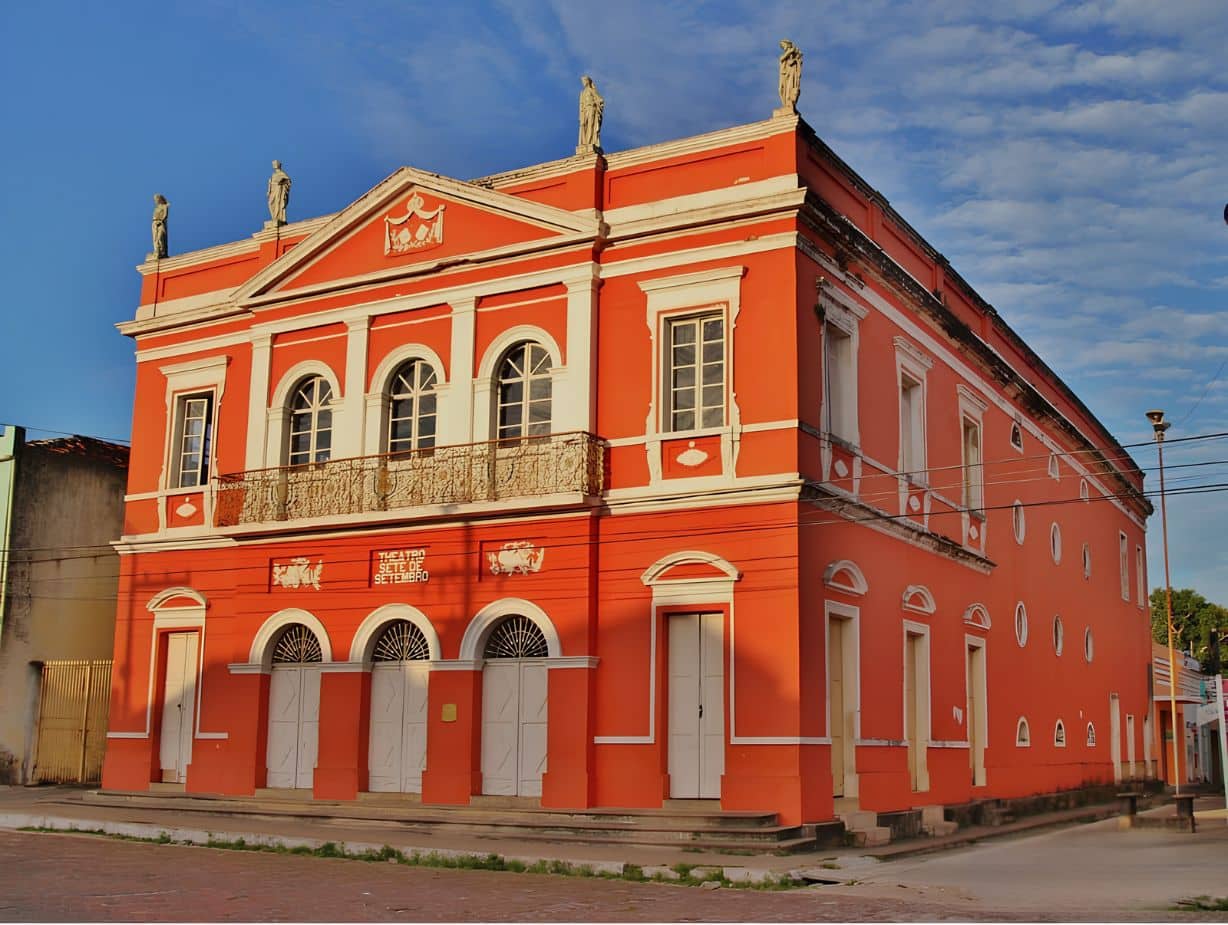
Designed by the Italian architect Luiz Lucariny, the Neoclassical building displays four porcelain statues at the top of its façade. They represent the muses of poetry, music, dance and painting. After being restored in the 1980s, the theater began to host the Festival de Férias no Teatro between July and August. Address: Avenida Floriano Peixoto, 81, Centro.
Casa do Penedo
The nine rooms of this museum sum up the history of the city. In them, you will find objects from distinguished local families, as well as a good collection of photos and documents.

Run by a foundation, the Casa do Penedo also restores old newspapers and books and supports writers from Penedo. In addition, guided tours can be booked. Address: Rua João Pessoa, 126, Centro.
Trip to Marituba do Peixe
About 20 km from the city, on the way to Piaçabuçu, lies Marituba do Peixe. Known as the “Pantanal alagoano” (the Alagoas Pantanal, a vast wetland), the floodplain has navigable channels surrounded by vegetation.
The trip is made by canoe and lasts about an hour. Usually, the local guides, found at the agencies or in front of the Igreja da Corrente, hire the boatman.
In the village, many women sell straw bags, hats and baskets at their front doors. Finally, another attraction is the casa de farinha (cassava-flour mill), where rustic wooden tools are still used.
How to get to Penedo and tips
- From Maceió: it is about 170 km along the AL-101 Sul, so roughly three hours by car.
- From Aracaju: it is about 120 km; however, you need to cross the river by ferry from Neópolis (SE).
- How long to stay: a full day is enough for the historic center; however, set aside one more for Piaçabuçu and the river mouth.
- Combine with: Piranhas, Marechal Deodoro and the 5-day itinerary through Alagoas.
To plan your trip, also see the guide to Maceió and the guide to Alagoas.
Frequently asked questions about Penedo
Where is Penedo?
It is in southern Alagoas, on the banks of the São Francisco river, close to the border with Sergipe.
In other words, it is about 170 km from Maceió and 120 km from Aracaju.
What are the tourist attractions in Penedo?
The main ones are the Igreja da Corrente, the Convento de São Francisco, the Catedral do Rosário, the Paço Imperial, the Teatro Sete de Setembro and the Casa do Penedo.
In addition, the canoe trip through Marituba do Peixe is well worth it.
When was Penedo founded?
The village was officially recognized in 1560, then became a town (vila) in 1636 and a city in 1842.
Thus, it is one of the oldest settlements in Alagoas.
Is the historic center listed as heritage?
Yes. IPHAN listed the historic and landscape ensemble of the city in 1996.
That is why churches and townhouses are preserved.
How many days should you stay in Penedo?
One day is enough for the historic center.
However, with two days you can also include the mouth of the São Francisco, in Piaçabuçu.

Publicações Relacionadas

The Best Beaches in Alagoas That You Must Explore
Where to Stay in Maceió: Best Areas Revealed
3 Days in Maceió and Surroundings: A Guide
Marapé Dunes: where the river, lagoon and sea meet in Jequiá da Praia

Explore the best beaches in Maceió and the surrounding area

A 5-day tour of Alagoas: The best destinations

Barra Grande Beach: Discover Stunning Landscapes
Beaches of Maragogi and neighbouring towns: Complete guide
Maceió: Your Guide to Visiting Alagoas in Brazil
The Best Beaches in Alagoas: Hidden Gems Revealed
Beaches on the North Coast of Alagoas: Maceió to Maragogi
Nine Islands Archipelago: A Guide to Paradise
Maceió’s Beaches — A Complete Guide: Pajuçara, Ponta Verde and Ipioca
Beaches in Maceió: A coastal paradise awaits

Coral Coast: Discover the Beauty of Alagoas
Southern Coast of Alagoas: A Nature Paradise
The Southern Coast of Alagoas: Beaches, Lagoons and Towns
Piaçabuçu: Adventure on the banks of the São Francisco River

Piranhas: A Colonial Gem by the River

Maragogi Attractions: Snorkeling in Natural Pools
Japaratinga: Your Guide to Coral Coast Relaxation
São Miguel dos Milagres: Explore Untouched Beaches
Barra de Santo Antonio: The Best Beaches to Visit
Barra de São Miguel: Beaches and Attractions Guide
Marechal Deodoro: Historical Heritage and Paradise Beaches
Maceió: Top Beaches and Attractions to Explore
Alagoas: Discover the Brazilian Caribbean Beaches
This post is also on:
 Português
  English
  Deutsch
  Español
  Français