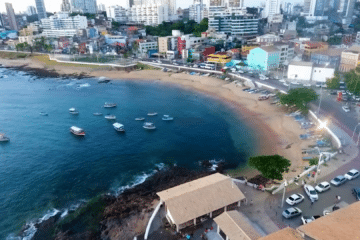
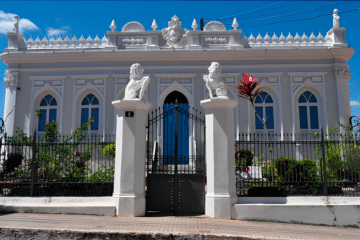
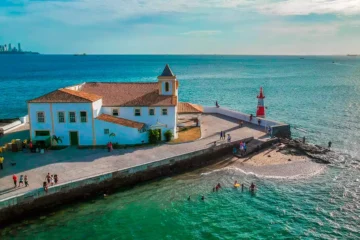
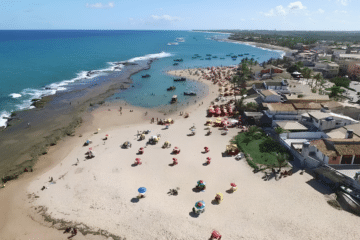
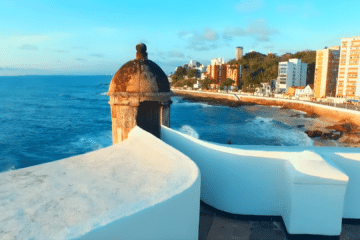
Salvador, Brazil’s first capital, is a city with a rich history, a vibrant culture and impressive architecture. Its tourist attractions and architectural heritage reflect a blend of influences — from Portuguese colonisation to Afro-Brazilian heritage — and attract visitors from all over the world. Overview Salvador boasts beaches, historic sites, […]
Tag: turismo
Tourist Areas in Bahia – Tourist Guide
Tourism in Bahia is characterised by the fact that the state is one of the most important tourist centres in Brazil. Bahia has an immense variety of landscapes, cultural traditions and attractions, allowing it to be divided into tourist areas, each with a name characteristic of its main physical and […]
Iemanjá Festival: Meaning and Celebrations
Iemanjá, thousands of Bahians and tourists flock to the beaches of Rio Vermelho in Salvador every year on 2 February. The goddess Iemanjá Iyemanjá, Yemanjá, Yemaya, Iemoja or Yemoja is an African orisha whose name derives from the Yoruba expression “Yèyé omo ejá” (“Mother whose children are fish”). Identified in […]
Itineraries focused on religious tourism in Salvador, Bahia
Salvador: A destination for religious tourism Salvador, the capital of Bahia, is one of the main destinations for religious tourism in Brazil, reflecting its rich historical and cultural heritage. Church and Spirituality Religious tourism in Salvador takes place in more than 300 secular churches. It is often said in the […]
The dress of the Baianas is influenced by African culture
The Baiana costume: A cultural expression The costume worn by baianas, often called baiano, reflects the influence of African culture in Brazil, combined with the swaying hips and swaying gait characteristic of samba. Traditional Baiana costume The traditional costume of the baiana is a set of traditional clothes and is […]
Origin and history of Acarajé: Discover the Afro-Brazilian tradition
Acarajé: An expression of Afro-Brazilian tradition Much more than just a dish from Bahian cuisine, acarajé is a true expression of the rich Afro-Brazilian tradition. With roots in Africa, this delicacy symbolises the fusion of cultures and the resilience of Afro-descendant communities over the centuries. Street vendors in Salvador Sold […]