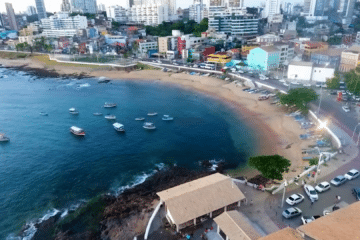
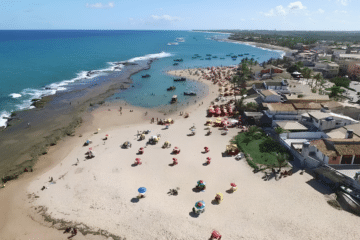
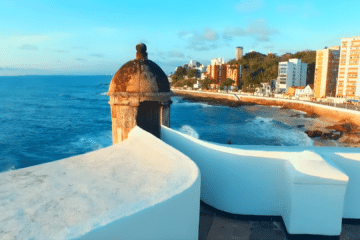
The municipality of Prado, in the far south of Bahia, is the gateway to the Costa das Baleias. It boasts idyllic beaches, colourful cliffs, mangroves, lagoons and a well-established tourist infrastructure.

Prado offers experiences ranging from peaceful leisure activities to active ecotourism: boat trips, diving, hiking and whale watching in season.

Why visit the Prado?
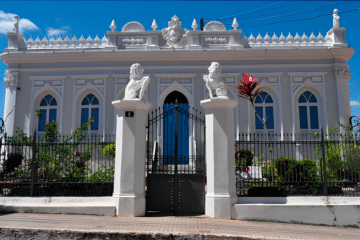
Prado combines nature and historical heritage. It boasts long beaches, reefs, natural pools and a historic centre featuring grand colonial mansions and churches.
Furthermore, it is a strategic stop on itineraries that include Abrolhos and Monte Pascoal National Park.

Municipality, districts and map
The municipality of Prado, in Bahia, has several towns and districts by the sea, some of the best known being:
- Prado – The main town, with beaches and tourist facilities.
- Cumuruxatiba – One of the most popular destinations, with peaceful, unspoilt beaches.
- Corumbau – Famous for its tranquillity and natural beauty, with deserted beaches and crystal-clear waters.
- Barra do Cahy – A historic site offering access to Monte Pascoal National Park.
- Ponta do Corumbau – A region known for its coral reefs and natural pools.
These districts are among the main coastal attractions in the municipality of Prado, offering natural beauty and a wide range of leisure activities.


History and Culture
The town of Prado was founded in 1755. Prado still retains its 18th-century houses, cobblestone streets and historic churches.


Historical Heritage
Prado is situated on the border between the Coast of Discovery and the Coast of the Whales, and its history records the first contact between the indigenous peoples and the fleet of Pedro Álvares Cabral, at the mouth of the River Cahy, before reaching Porto Seguro.
Videos about the municipality of Prado and Abrolhos

Prado na Bahia03:14

Prado Guia Turístico18:51
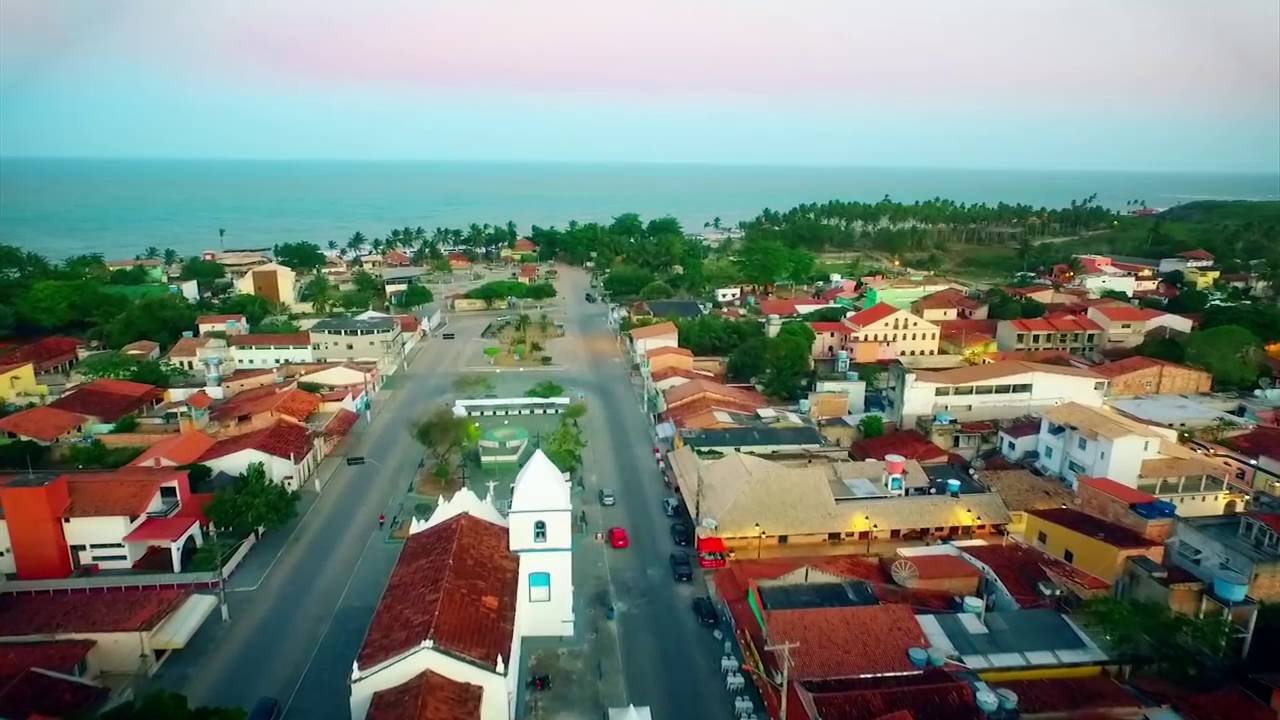
Roteiro de 2 dias em CUMURUXATIBA15:42
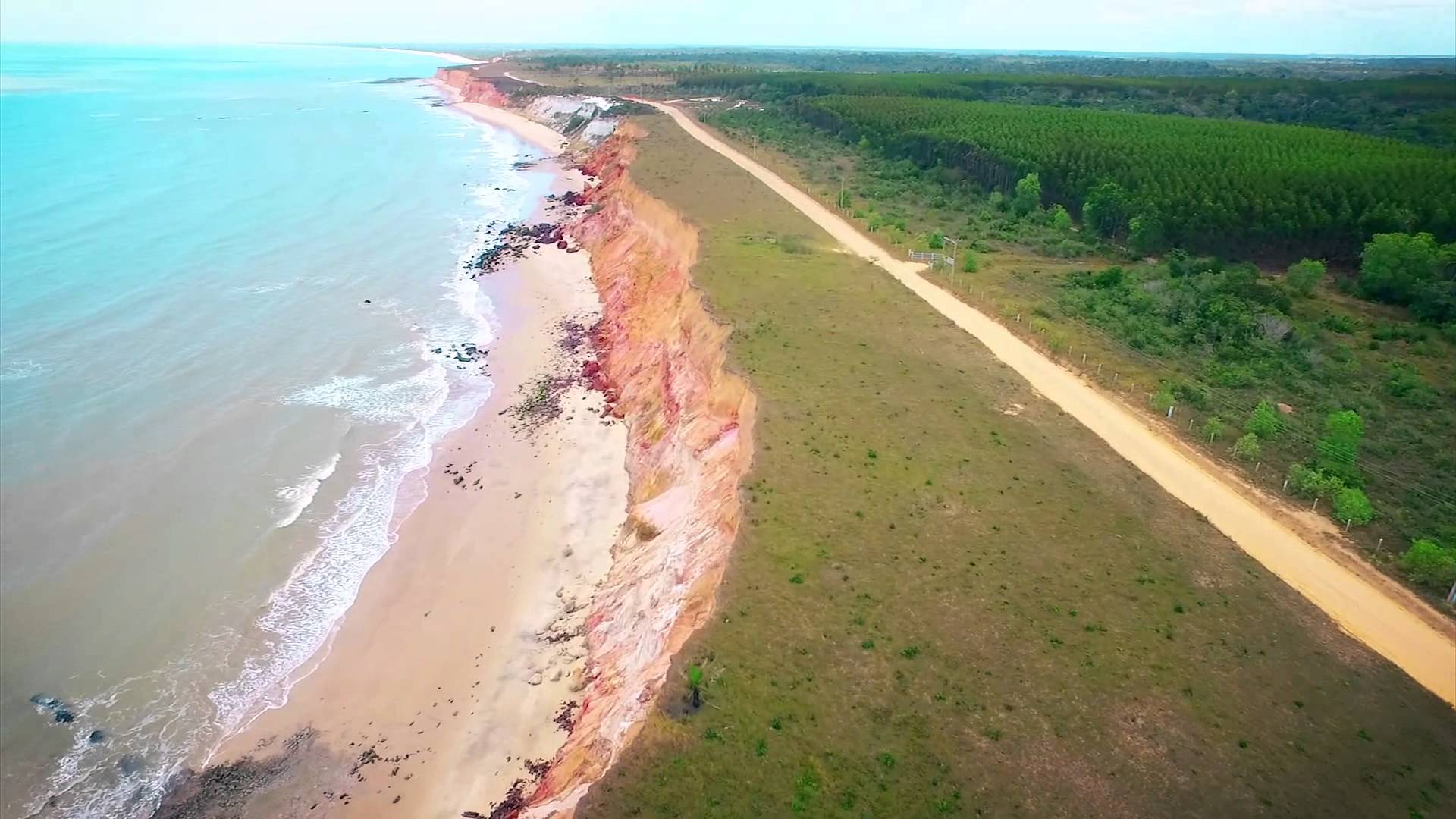
Prado e Praias - Drone02:10
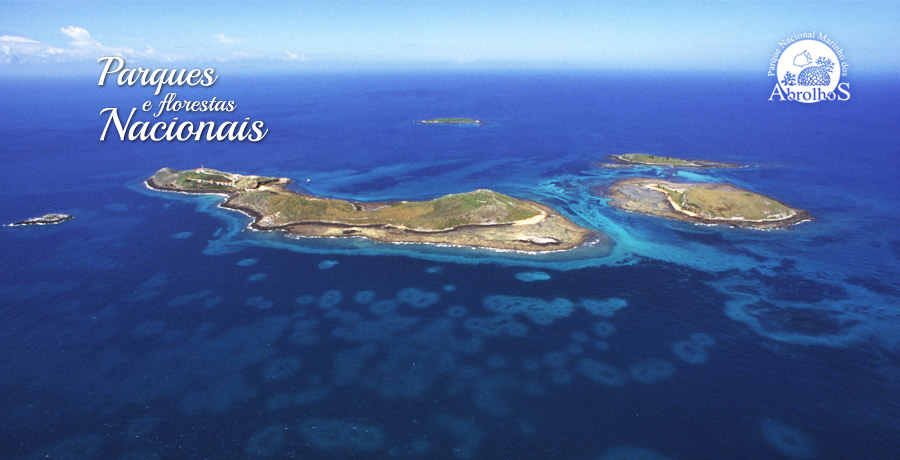
Guia Turístico de Prado e Abrolhos14:52
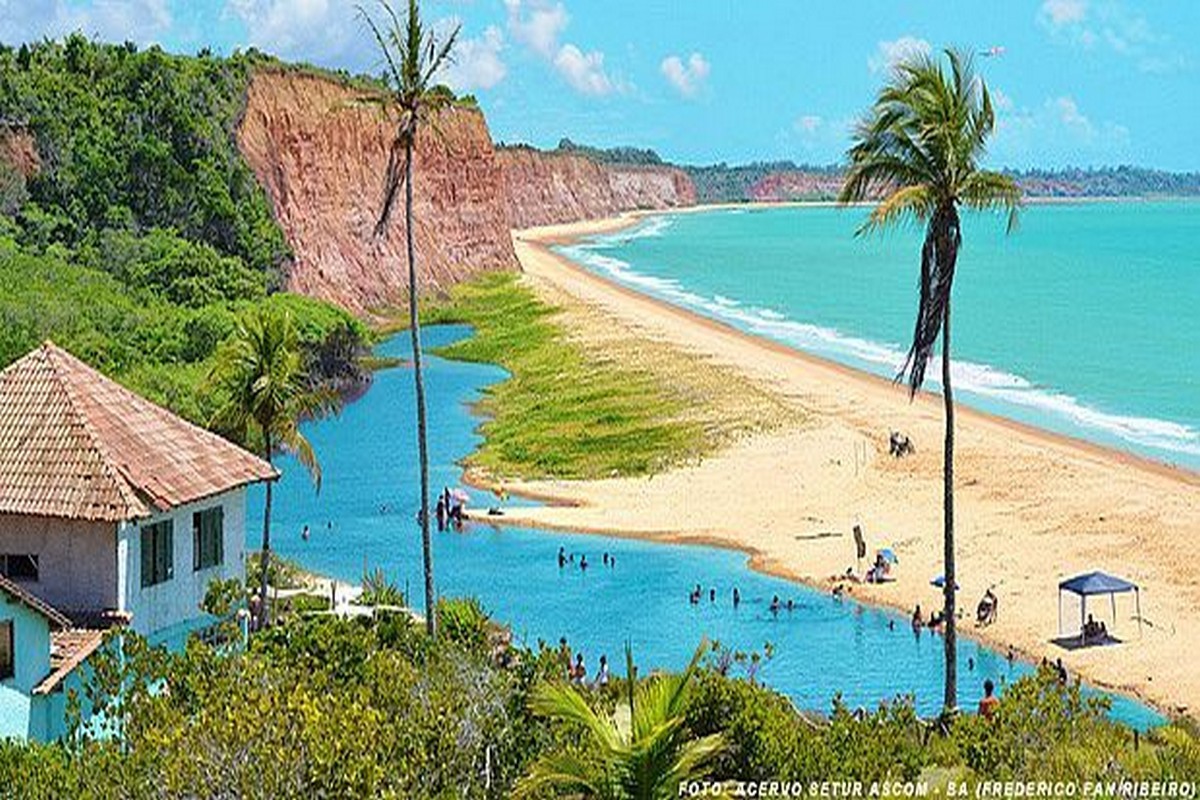
Praias de Prado - Praia das Falésias a Corumbau10:18
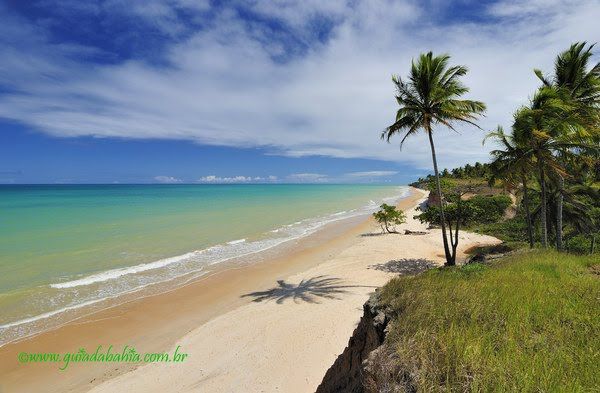
Praia de Guaratiba, Cumuruxatiba, Barra do Cahy e Corumbau17:26
Tourist Attractions in the Municipality of Prado
1. Beaches (from north to south)
- Corumbau Beach
- Tauá Beach
- Barra do Cahy Beach
- Calambrião Beach
- Imbassuaba Beach
- Moreira Beach
- Rio do Peixe Pequeno and Grande Beaches
- Cumuruxatiba Beach
- Dois Irmãos Beach
- Areia Preta Beach
- Japara Pequena Beach
- Ostras Beach
- Tororão Beach
- Paixão Beach
- Viçosa Beach (or Amendoeira)
- Farol Beach
- Lagoa Pequena and Lagoa Grande Beaches
- Prado Beach
- Barra Beach
- Quati Beach
- Guaratiba Beach
Prado is about two hours’ drive from Porto Seguro and has approximately 84 km of coastline. The beaches range from urban stretches with facilities to secluded stretches, ideal for those seeking peace and quiet.

1. Corumbau Beach

Corumbau is notable for the reef spit (≈1.5 km) that emerges at low tide. The village has a lighthouse, mangroves and a large number of coconut palms.
Activities: diving at Recife dos Itacolomis, fishing, boat trips and marine life spotting.
2. Tauá Beach
Fine white sand, cliffs and plenty of coconut palms. A great spot for photography and relaxation.
3. Barra do Cahy Beach

A bay with cliffs and stronger waves. The sand is dark (monazite) and the spot is very popular for fishing, especially for sea bass.
It is also a site of historical significance linked to the first contact between the Portuguese and the indigenous peoples on the southern coast of Bahia.
4. Calambrião Beach

A stretch similar to the previous one; accessed via a farm, with less infrastructure and plenty of peace and quiet.
5. Imbassuaba Beach

A cove with gentle waves, cliffs, coconut groves and almond trees. Ideal for kayaking, angling and windsurfing on days with moderate winds.
6. Moreira Beach

Similar to Imbassuaba in terms of its characteristics and access (farm tracks).
7. Rio do Peixe Beach (Small and Large)
A beach next to the mouth of a stream with clear water, gentle waves and white sand. Ideal for swimming and recreational fishing.
8. Cumuruxatiba Beach

A fishing village with a beach of compacted sand, shallow waters and nearby reefs. It is the starting point for schooner trips to the reefs and for whale-watching during the season.
Facilities: guesthouses, campsites, bars and a long jetty (650 m).
9. Dois Irmãos Beach

A cove about 700 m long, with gentle waves. Ideal for windsurfing and kayaking; notable for its monazite sands and cliffs.
10. Areia Preta Beach

A cove with gentle waves, a stream of the same name and a large concentration of monazite sands. Cliffs up to 30 metres high make up the landscape.
11. Japara Pequena Beach

Calm waters surrounded by cliffs and mangroves; a good spot for diving and fishing when the tide allows.
12. Praia das Ostras

Open sea, a wide stretch of white sand and streams cutting across the shoreline. Great for windsurfing and local fishing.
13. Tororão Beach

A cove with green waters and fine sand. A waterfall cascades down from the cliffs directly onto the beach, creating a beautiful and photogenic spot.
14. Paixão Beach

A cove with shallow, calm waters, featuring nearby reefs and cliffs. There are snack stalls and guesthouses in the vicinity. It is also a popular spot for paragliding on suitable days.
15. Viçosa Beach (Amendoeira)
A beach characterised by a solitary almond tree; white sands and surrounding cliffs. A popular spot for fishermen.
16. Farol Beach

A long beach with greyish sand and a stream to the north. It features a lighthouse, as well as sections with cliffs and reefs. It is the starting point for a trek to Santa Cruz Cabrália.
17. Lagoa Pequena and Lagoa Grande Beaches

Straight beaches with stronger waves and white sand. These areas have been undergoing urbanisation and feature beach huts along the shore and a range of accommodation options.
18. Prado Beach
Soft, golden sand stretching for 2 km. The sea has large waves and is rougher in certain months due to the winds.
The region has guesthouses, restaurants and camping options; to the north lies the Novo Prado neighbourhood, which has good infrastructure.
19. Barra Beach
A white-sand beach, accessible by crossing the River Jucuruçu. Strong waves and unspoilt nature.
20. Quati Beach
A peaceful cove with shallow waters, sandbank vegetation and coconut groves. The sea is teeming with octopuses and lobsters; there is no infrastructure — ideal for those seeking peace and quiet.
21. Guaratiba Beach
A long cove stretching for around 3 km, with soft sand and backwash waves. Usually deserted, with just a few fishermen’s huts; ideal for walks and nature watching.

2. Other tourist attractions in the municipality of Prado
As well as its beaches, Prado offers nature, history and cultural activities that complement any itinerary.
1. Barra do Cahy

A historic site set amidst lush natural surroundings. Hiking, horse riding and boat trips upriver are the most popular activities.
Observation of mangroves, birds and riverside landscapes; close to farms offering dining options.
2. Corumbau

A charming village that comes alive in the summer. It boasts coral reefs, natural pools and excellent opportunities for diving and kayaking.
Access via a dirt track from the BR-489; I recommend a 4×4 or a transfer with a local guide.
3. Humpback whales

The Whale Coast is a breeding ground for humpback whales; the season usually runs from June to October.
You can go birdwatching from the shore or on boat trips — always with authorised operators and in accordance with conservation rules.
4. Monte Pascoal

Monte Pascoal National Park has walking trails and a hike up the mountain (around 2 hours). It’s excellent for ecotourism and experiencing the culture of the Pataxó indigenous people.
5. Abrolhos Archipelago

The Abrolhos Archipelago is the region’s leading destination for diving and marine wildlife watching. Boat trips depart from nearby towns; book through accredited tour operators.
6. Boat trip in Corumbau
Trips to the Itacolomi and Pataxó reefs, natural pools and snorkelling spots. Check the tide and safety conditions before setting off.
7. Reefs in Guaratiba

Excellent spots for snorkelling and shallow-water diving, with an abundance of marine life. Trips usually last half a day.
Things to do in the evening

Beco das Garrafas is home to a cluster of bars, restaurants and live music on specific dates. It’s a great place to sample seafood and enjoy the nightlife.
Best time to visit
Whale watching: June to October.
Peak season: December, January and Carnival — expect busier times and higher prices.
More stable weather and good visibility at sea: May to October.
How to get there
- By car: the BR-101 and regional roads; some access roads are unpaved.
- By plane: the nearest airports are in Porto Seguro and Teixeira de Freitas; transfer by road.
- Local transport: taxis, minibuses and buses; for remote areas, opt for a 4×4 or a pre-booked transfer.
FAQ — Frequently Asked Questions
When is whale-watching season?
Usually from June to October.
Which beach is best for families?
Cumuruxatiba and Praia da Paixão, due to their shallower waters and local facilities.
Do I need a 4×4 to get to Corumbau?
Recommended for sections of unpaved road; transfer services and local agencies offer safe transport.
How do I choose a mobile network provider for Abrolhos?
Check for ICMBio authorisation, safety equipment and customer reviews.

Publicações Relacionadas
Chapada Diamantina: A Complete Guide to Attractions and Itineraries
Discovering Brazil - Porto Seguro is the beginning of Brazil
Iguaí: A Guide to Waterfalls and Relaxation
Belmonte's Rich History and Cultural Heritage
Parks and Squares in Salvador for Leisure Activities
Churches of Salvador: Architectural and Historical Treasures
Places to visit on the south coast of Bahia
Camaçari: Industry, History and Natural Beauty
Ponta de Humaitá — Lighthouse, church and the best sunset in Salvador
10 Interesting Facts About Rio de Contas That You Didn’t Know
Municipality of Una: A Beach Paradise Awaits
39 Museums in Salvador: Discover the history and culture of Bahia
Tourist Information about Chapada Diamantina
Cumuruxatiba (Prado, BA) — Guide to beaches, excursions and whale watching
Lauro de Freitas — A comprehensive guide to beaches, culture and leisure
São Jorge Parish Church in Ilhéus — history, architecture and religious art
Costa do Sauípe, Bahia: Resorts and Tourist Guide
Ponta de Corumbau — an unspoilt paradise on the southern coast of Bahia
History of São Marcelo Fort — Salvador, Bahia
Dive Sites of Chapada Diamantina: A Guide
Discover the São Francisco River Valley Region - Tourist Guide
Monte Pascoal National Park: Pataxó culture and Brazilian history
The Municipality of Conde, Bahia: Beaches and a Comprehensive History
Kitesurfing in Trancoso: A Guide for Adventurers
Abseiling Sites in Bahia: Top Locations to Explore
Coast of Discovery: Bahia's Historical Treasures
Ventura Village: A Rich History of Diamonds
Towns and the Abrolhos Archipelago — The southernmost tip of Bahia
Churches in Salvador (BA) — a guide: history, architecture and itinerary
Birds Found in Chapada Diamantina: A Guide
Chocolate Road and trails of the Cocoa Coast - video
Rafting in Taboquinhas: The Ultimate Adventure Guide
Cairu Archipelago: A Guide to Its Enchantment
Porto Seguro (BA) — History, Beaches, Tours and Practical Tips
Paragliding at Pitinga Beach in Arraial d'Ajuda
Tourist Areas in Bahia - Tourist Guide
This post is also on:
 Português
  English
  Deutsch
  Español
  Français