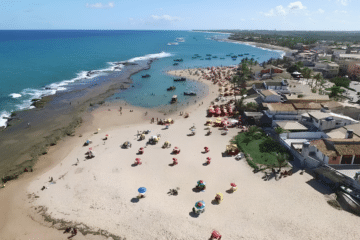
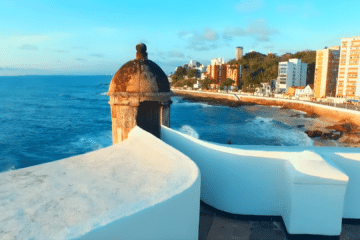
In this guide, you’ll find out what to do at Ponta dos Mangues Beach, in Pacatuba, on the north coast of Sergipe — perfect for those seeking peace and quiet and a lovely swim in the sea away from the crowds.
Ponta dos Mangues Beach
The beach is situated in the vicinity of the Santa Isabel Biological Reserve, a federal conservation area established in 1988 to protect the local ecosystem, particularly the sea turtle nesting sites.
The beach is deserted and virtually untouched, ideal for relaxing in a peaceful, natural setting. Its name comes from the abundance of mangroves in the area. The sand forms natural pools that vary in depth depending on the tide.


Historical Context
The Santa Isabel Biological Reserve was established in 1988 by federal decree, covering an area of approximately 5,547 hectares — a milestone in environmental conservation in Sergipe. The initiative arose in response to the degradation of the region’s coastal ecosystems, which were under threat from urban sprawl and the overexploitation of natural resources. Since then, the reserve has played a central role in the protection of endangered species — particularly sea turtles — and is a benchmark for coastal conservation in the North-East.
Things to Do at Ponta dos Mangues Beach
- Natural Beauty and Tranquillity The beach offers a virtually unspoilt landscape, with white sands and calm waters — ideal for those seeking direct contact with nature, far from the hustle and bustle of busier beaches.
- Mangroves The surrounding mangroves are home to a wide variety of marine life and birds. As they form part of a strictly protected area, the best way to explore them up close is through environmental education activities organised by the Tamar Project, rather than on your own.
- Sea Turtles The region is one of Brazil’s main sea turtle nesting sites. Any turtle-watching activities, when available, are always guided by the Tamar Project team, whilst respecting the nesting season and ensuring the protection of the nests.
- Small-scale fishing In the areas surrounding the reserve, small-scale fishing remains a traditional activity for the local community and forms an important part of the region’s culture.
Video – Ponta dos Mangues Beach and the Santa Isabel Biological Reserve

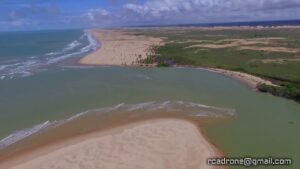
Ponta dos Mangues - Pacatuba - Sergipe

Praia Ponta dos Mangues02:29
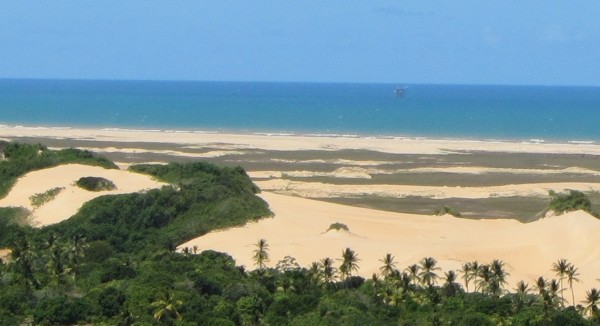
Reserva Biológica de Santa Isabel em Sergipe
Santa Isabel Biological Reserve: what you need to know before you go
The Santa Isabel Biological Reserve is a federal conservation area on the coast of Sergipe, managed by ICMBio. It is one of the main bases for the Tamar Project in the country, responsible for releasing millions of turtles into the sea over the last few decades.
The main endangered species protected there is the hawksbill turtle (Eretmochelys imbricata), and the reserve is also one of the most important nesting sites for the olive ridley turtle (Lepidochelys olivacea) in Brazil. As it is a Biological Reserve — the most restrictive category of full protection within the Brazilian system of conservation units (SNUC) — the area is not open to the general public.
Access to the interior of the reserve is restricted to scientific research and environmental education, and is usually organised by the Tamar Project team. The beach is open to the public, but as part of it lies within or in the immediate vicinity of the reserve’s boundaries, it is always advisable to check locally which sections are open before venturing beyond the shoreline.
Ponta dos Mangues Beach and the Santa Isabel Biological Reserve together form one of the best-preserved landscapes on the Sergipe coast — a destination for those who appreciate unspoilt nature and responsible tourism.

How to get there
The beach is an estimated distance of between 70 and 90 km from Aracaju, depending on the route chosen, within the municipality of Pacatuba. Access is by road, and it is recommended to go by car or hire a tourist transport service — the final stretch is usually poorly signposted, so it is worth checking the route in advance.
Practical Information and Useful Links
- Tamar Project: find out more about sea turtle conservation work in Brazil.
- Species of sea turtles: find out about the species found along the Brazilian coast.
- Pacatuba: be sure to check out the Sergipe Pantanal as well, another attraction in the same municipality.
- Pirambu: see the Pirambu guide, another nature destination on the north coast of Sergipe.
- Official reserve profile: Please consult the National Register of Conservation Areas for up-to-date information on the Santa Isabel Biological Reserve.
Frequently Asked Questions
Is it possible to visit the Santa Isabel Biological Reserve freely?
No. As it is a Biological Reserve — the most restrictive protection category within the Brazilian system of conservation areas — access to the interior of the area is not unrestricted: it is restricted to scientific research and environmental education, generally organised by the Tamar Project.
Is it still possible to visit Ponta dos Mangues Beach?
Yes, the beach is open to the public, but as it is situated near the nature reserve, it is worth checking locally which sections are accessible before venturing beyond the shoreline, particularly near mangrove areas and turtle nesting sites.
When was the Santa Isabel Biological Reserve established?
The reserve was established in 1988 by federal decree, with the aim of protecting the region’s coastal ecosystems and the main sea turtle nesting sites along the coast of Sergipe.
Which species of sea turtle are protected in the reserve?
The main protected endangered species is the hawksbill turtle (Eretmochelys imbricata), and the reserve is also one of the most important nesting sites for the olive ridley turtle (Lepidochelys olivacea) in Brazil.
How do you get to Ponta dos Mangues Beach from Aracaju?
The distance is approximately 70 to 90 km, depending on the route, and passes through the municipality of Pacatuba. Access is by road, either by car or via a chartered tourist coach, as road signs on the final stretch are usually limited.
Do you need to hire a guide to explore the region?
It is not compulsory to do so when walking along the beach, but for activities relating to the mangroves or sea turtles within the protected area, it is best to take part in activities organised by the Tamar Project, rather than exploring the reserve on your own.

Publicações Relacionadas
Discover Santa Luzia Island: A Comprehensive Travel Guide to Sergipe
Sergipe: A Comprehensive Travel Guide to Brazil’s Smallest State
Discover Pirambu: A Comprehensive Travel Guide to the North Coast of Sergipe
7-day itinerary around Sergipe: Aracaju, Xingó and the beaches
Discover Canindé de São Francisco: A Comprehensive Travel Guide to a Paradise of Culture and Nature
Parque dos Falcões and the Itabaiana Mountains, Sergipe: Tourist Guide
Praia do Saco (Estância, SE) — Guide: how to get there, what to do and tip
Pacatuba SE and the Sergipe Pantanal: Tourist Guide
Xingó Canyon — Tours, How to Get There and Accommodation
Croa do Goré Island, Aracaju (SE): A Comprehensive Travel Guide
The South Coast of Sergipe: A Travel Guide and Things to Do
Discover Aracaju: The Complete Travel Guide to the Capital of Sergipe
Discover São Cristóvão: A Complete Tourist Guide to a Historical Treasure in Sergipe
Laranjeiras: A Guide to Tourism and Cultural Heritage in the Heart of Sergipe
This post is also on:
 Português
  English
  Deutsch
  Español
  Français