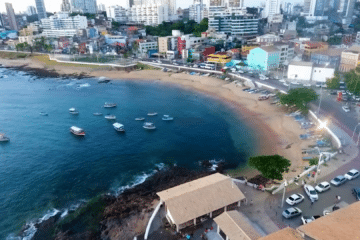
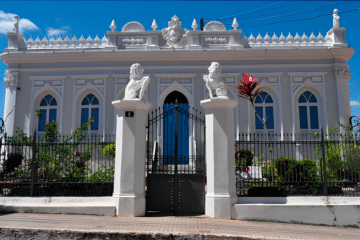
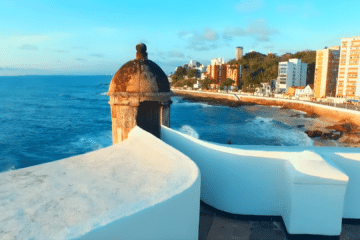
Laranjeiras, situated about 20 kilometres from Aracaju, is a historic town in Sergipe known for its rich cultural heritage and architectural heritage.
First settled around 1590 on the banks of the River Cotinguiba and granted city status in 1848, Laranjeiras has a well-preserved historic centre — listed by IPHAN since 1996 — which attracts tourists keen to explore its churches, museums and cultural traditions. In this travel guide, you can find out about the main places to visit in the city.

In 1701, the Jesuits built, on the site where the town was founded, the Chapel of Saint Anthony and the order’s first residence, known as Retiro. Listed by IPHAN, the complex is situated about 1 kilometre from the centre and, although on private property, is open to visitors, provided an appointment is made 48 hours in advance (Fazenda Brandão, s/n, rural area).
Likewise listed as a historic monument, the Church of Nossa Senhora da Conceição da Comandaroba, built in 1734, is one of the monuments of greatest cultural value in the state. It may have been the last building constructed by the Jesuits in Sergipe, as in 1759 the Society of Jesus was expelled from the colony.
Note the intricate carving on the stone of the entrance portal (Rua da Comandaroba, no specific number, in the countryside, about 1 km from the centre). To visit the site, you should contact the Department of Culture and Tourism, which arranges guided tours.

Videos – History and Tourist Attractions in Laranjeiras, SE

Laranjeiras Turismo Rural05:41
Cidade de Laranjeiras03:46

Laranjeiras em Sergipe - Drone04:44

São Cristóvao e Laranjeiras - cidades históricas SE
Tourist Attractions in Laranjeiras, SE
- Historic centre
- Sacred Heart of Jesus Parish Church
- Church of Bom Jesus dos Navegantes
- Church of Our Lady of the Immaculate Conception of Comandaroba
- Afro-Brazilian Museum
- Laranjeiras Museum of Sacred Art
- Retiro Sugar Mill
- Ti Herculano’s House
- Regional Festivals
1. Historic Centre
The historic centre of Laranjeiras is one of the best-preserved in Brazil, with cobbled streets, colonial houses and a number of historic buildings dating from the 18th and 19th centuries. Walking through the centre is like stepping back in time.
2. Sacred Heart of Jesus Parish Church

The Laranjeiras Public Archives contain documents dating from 1790, including a formal request from the residents of Laranjeiras in the parish of Cotinguaba, Sergipe d’el Rey, addressed to Queen D. Maria, seeking permission to build a chapel dedicated to the Sacred Heart of Jesus.
Among the paintings, there is one depicting the Holy Family, and they are attributed to José Teófilo de Jesus. In the sacristy, there is a chest with padded panels. The door to the Chapel of the Blessed Sacrament is made of carved wood, with sealed panels and a glass panel at the top.
3. Church of Bom Jesus dos Navegantes

The Church of Bom Jesus dos Navegantes, perched on top of a hill, was opened to the faithful in 1905 and attracts visitors wishing to enjoy a panoramic view of the city and the Cotinguiba riverbed.
As the area is rather remote, it is advisable to contact the Department of Culture and Tourism, which will arrange a time and assign a guide to accompany you on your visit (Rod. Walter Franco, s/n, at the entrance to the town).
4. Church of Our Lady of the Immaculate Conception of Comandaroba

Located in the district of Comandaroba, in the municipality of Laranjeiras, and listed in 1943. Built in 1734, according to the inscription on one of its doorways.
It is believed that, in 1731, after having been run by the Capuchins for some time, the congregation came under the care of the Jesuits.
The church was restored in the early 1950s. The collection includes statues of Our Lady of Mount Carmel, Our Lady of the Rosary, Saint Efigénia, Saint Benedict, Saint Gonçalo and Christ on the Cross.
5. Afro-Brazilian Museum

The Afro-Brazilian Museum is one of the best attractions in Laranjeiras. It is housed in an imposing two-storey townhouse, with rooms dedicated to specific themes. The first room, for example, focuses on the sugar cane economy, whilst another displays instruments used to torture and punish slaves.
On the second floor, there is a room dedicated to religion. Guided tours are available (Rua José do Prado Franco, 70).
6. Laranjeiras Museum of Sacred Art

A 19th-century German harmonium is one of the highlights of the Laranjeiras Museum of Sacred Art. Gilded, the instrument still produces a few sounds. A rare and welcome feature: the museum has some facilities to accommodate visitors with physical disabilities (Praça Dr. Heráclito Diniz Gonçalves, 39).
7. Retiro Sugar Mill

House and Chapel of Saint Anthony – The house at the Retiro Sugar Mill was the residence of the Jesuits, who settled there during the 18th century. It was built in 1701, and the chapel underwent renovations in the early 19th century. It has two storeys and a veranda supported by wooden columns. Inside, the high altar stands out, featuring Greco-Roman-style columns and floral motifs, amongst other decorative elements.
8. Ti Herculano’s House
In the 19th century, Laranjeiras experienced its golden age: sugar mills dotted the Cotinguiba River Valley, alongside a significant Black and enslaved population. Many of the Black people, however, lived in the town, working in the warehouses, in trade or in urban trades, and several of them obtained their manumission before the abolition of slavery.
The Casa de Ti Herculano dates back to the second half of the 19th century and was the second venue where collective African-based religious services were held in Laranjeiras, following the Casa de Ti Henrique, which no longer exists. Its owner, Herculano Barbosa, was a freed African who led the Nagô religious community in Laranjeiras until his death in 1907.
The house appears in his inventory as a property, adjacent to the former Comandaroba sugar mill, with a garden that stretched as far as the River Cotinguiba – a section of which still remains.
When the house was inherited by the widow Bernarda Barbosa, the saints of Ti Herculano came under the care of her descendants. The role of leader of the group was passed on to Umbelina Araújo, who, in the early 20th century, began to hold some of the festivities at her home – the Terreiro de Santa Bárbara Virgem, on Rua da Cacimba.
The Casa de Ti Herculano remains the headquarters and a key centre for the Nagô tradition in Laranjeiras.
9. Regional Festivals
Laranjeiras, in Sergipe, is famous for its celebration of folk traditions. For more than five decades, it has hosted the Cultural Festival — which will reach its 51st edition in 2026 — the most important event of its kind in the state and a benchmark for folk art in the North-East. During the festival, held every January, the town of Laranjeiras showcases its unique folklore to the public.
Among the various festivities, it is worth mentioning the ‘taieira’, which takes place in January on Twelfth Night in honour of Our Lady of the Rosary and Saint Benedict – a remarkable example of syncretism between the Catholic faith and African religions.
Another significant folk tradition is the Lambe-Sujo and Caboclinho festivities, which recall the era of the quilombos. The groups take to the streets on the second Sunday in October, to the percussive sounds of the timbau, cuíca, caceteira and tabaque.
Tips for Visitors
- Best time to visit: The town can be visited all year round, but the Cultural Festival (January) and the Lambe-Sujo and Caboclinhos Festival (the second Sunday in October) offer an enriching cultural experience.
- How to get there: Laranjeiras is about 20 km from Aracaju and is easily accessible by car or bus from the capital.
- Guided tours: to visit the listed monuments (Engenho Retiro, Comandaroba Church, Bom Jesus dos Navegantes Church), it is advisable to book in advance through the local Department of Culture and Tourism.
- Combine with other towns: Laranjeiras is just a few minutes’ drive from São Cristóvão, another historic town in Sergipe, so you can visit both on the same day.
Frequently Asked Questions
How long does it take to visit Laranjeiras?
Half a day is enough to explore the historic centre, the Matriz Church and the Afro-Brazilian Museum. A full day allows you to also visit the Retiro Sugar Mill and the Comandaroba Church, which are a little further from the centre.
How do I get to Laranjeiras from Aracaju?
The town is about 20 km from the capital and is easily accessible by car via the SE-226 or by intercity bus, with the journey taking around 30 to 40 minutes.
When is the best time to visit Laranjeiras?
January is special because of the Cultural Festival, one of the biggest events celebrating popular culture in the North-East. October is also well worth a visit, thanks to the Lambe-Sujo and Caboclinhos Festival, held on the second Sunday of the month.
Do you need to book in advance to visit the churches and the Engenho Retiro?
Yes, for several of them. The Church of Bom Jesus dos Navegantes, the Church of Comandaroba and the Retiro Sugar Mill have restricted access and require a booking in advance with the Laranjeiras Department of Culture and Tourism.
Is Laranjeiras considered a historic site?
Yes. The historic district of Laranjeiras has been listed by IPHAN since 1996, and specific monuments, such as the Engenho Retiro and the Comandaroba Church, are also listed in their own right.
Is it possible to visit Laranjeiras and São Cristóvão on the same day?
Yes, and it’s a very popular combination amongst visitors. The two historic towns are close to one another and to Aracaju, which means you can visit both on a single day trip.
Tourist Guide to Laranjeiras in Sergipe

Publicações Relacionadas
Ponta dos Mangues Beach and the Santa Isabel Biological Reserve: Tourist Guide
Sergipe: A Comprehensive Travel Guide to Brazil’s Smallest State
Croa do Goré Island, Aracaju (SE): A Comprehensive Travel Guide
The South Coast of Sergipe: A Travel Guide and Things to Do
Pacatuba SE and the Sergipe Pantanal: Tourist Guide
Discover Pirambu: A Comprehensive Travel Guide to the North Coast of Sergipe
Discover São Cristóvão: A Complete Tourist Guide to a Historical Treasure in Sergipe
Discover Aracaju: The Complete Travel Guide to the Capital of Sergipe
Xingó Canyon — Tours, How to Get There and Accommodation
Parque dos Falcões and the Itabaiana Mountains, Sergipe: Tourist Guide
Praia do Saco (Estância, SE) — Guide: how to get there, what to do and tip
Discover Canindé de São Francisco: A Comprehensive Travel Guide to a Paradise of Culture and Nature
Discover Santa Luzia Island: A Comprehensive Travel Guide to Sergipe
7-day itinerary around Sergipe: Aracaju, Xingó and the beaches
This post is also on:
 Português
  English
  Deutsch
  Español
  Français