The agate has been prized since ancient times and is known for its coloured bands, which form unique patterns in each piece. In this guide, you’ll find out about the meaning of agate, its properties and characteristics, the main varieties, dyeing, its use in jewellery, care instructions and production in Brazil. At the end, there’s an FAQ section covering the most common questions.
Traditionally, various beliefs attribute to agate the power to energise and promote healing. These meanings stem from popular belief rather than scientific evidence. In jewellery, agate lends itself to versatile applications in a wide range of designs.
What is agate?
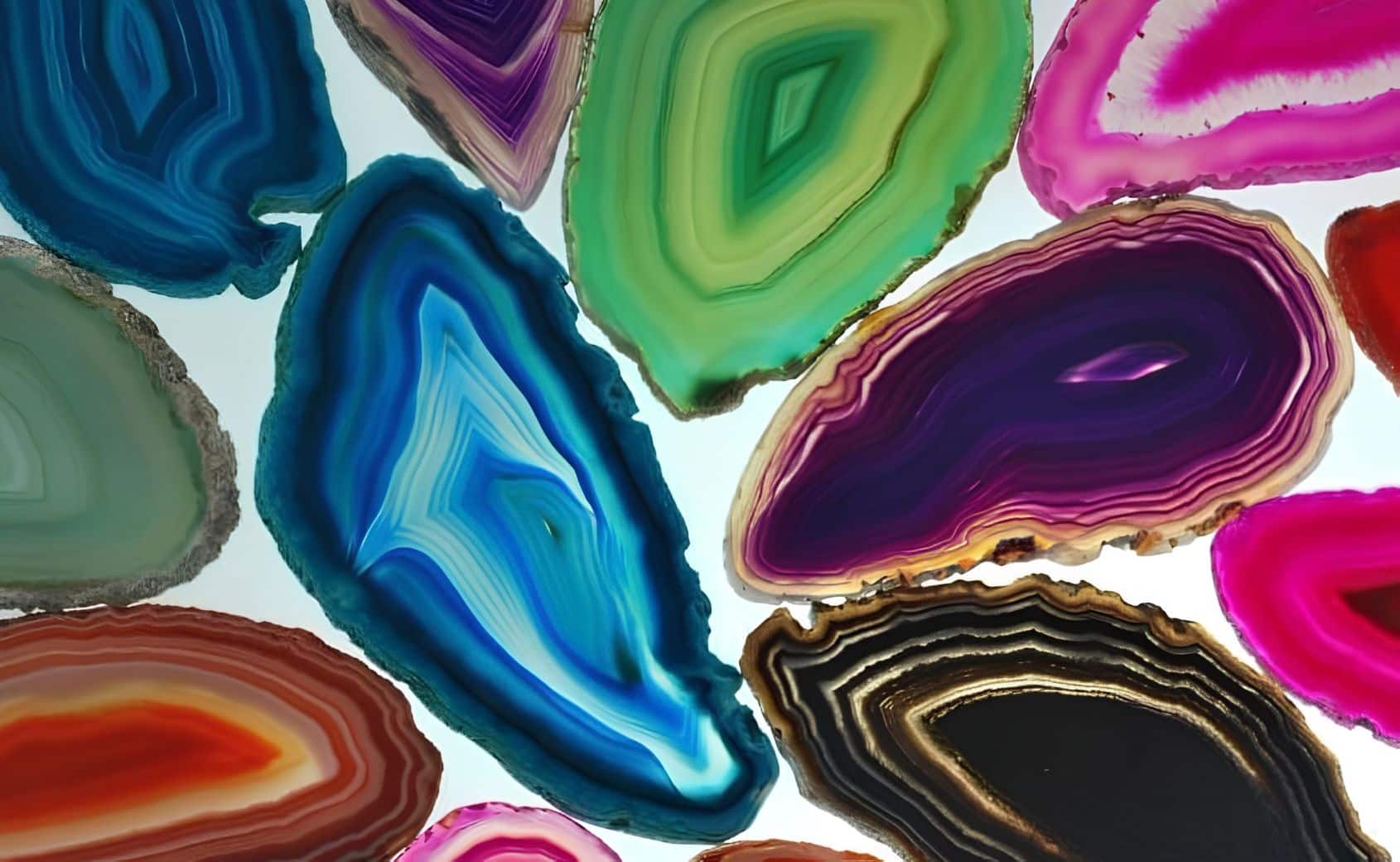
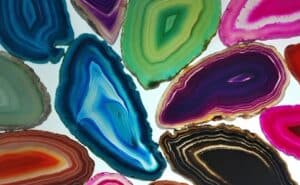
Agate is a banded chalcedony, that is, a variety of quartz formed from microscopic crystals (microcrystalline) of silicon dioxide (SiO2). When cut, it reveals parallel, curved or concentric bands in different colours and shades. These patterns make each agate a unique stone.
Origin of the name and history
It is believed that the name derives from achates, the River Achates, now known as the Dirillo, in Sicily (Italy). This connection is a traditional one and was recorded by Theophrastus around 315 BC, but some scholars question this origin.
Agate has been used for millennia. Pierced agate beads have been found in the Indus Valley (around 2600 to 1900 BC), and in Mesopotamia it was used in cylinder seals in the third millennium BC. Between the 15th and 19th centuries, the German town of Idar-Oberstein became a major centre for agate cutting, and agate pieces found their way into the collections of European princes.
The local deposits became unviable in the 19th century, and the town began to source agate from other countries. From the 1820s and 1830s onwards, German emigrants shipped agate from Rio Grande do Sul, and the Brazilian rough stone was sent to Idar-Oberstein for cutting, dyeing and polishing.
Today, the city remains a major centre for high-quality gemstone cutting and sculpture, but large-scale cutting has shifted to other centres, such as India and China.
For a long time, agate has been used in decorative items, ornaments and everyday objects. In Brazil, industrially produced agates are used to make slabs, bookends, clocks, pyramids, spheres, eggs and obelisks.
Video about agate
The meaning of agate
The meanings attributed to agate stem from tradition and belief, rather than scientific evidence. In ancient times, peoples such as the Sumerians valued it, and to this day agate is associated with protection, stability and the energy of the wearer, as well as being used in alternative healing practices. Like all gemstones, it is said to possess various mystical properties, but none of these have been proven.
In the gemstone calendar, sardonyx (a variety of agate with white or grey bands alternating with reddish-brown sard) is one of the birthstones for August, alongside peridot.
Properties and gemmological characteristics of agate
- Mineral class: quartz (chalcedony);
- Crystal system: trigonal, in microcrystalline aggregates;
- Chemical formula: SiO2;
- Hardness: 6.5 to 7 on the Mohs scale;
- Density: approximately 2.58 to 2.65;
- Index of refraction: approximately 1.53 to 1.55;
- Transparency: from translucent to opaque;
- Colour: variable, in bands or layers, in shades of grey, white, red, brown and others. Iron produces reds, oranges and browns, whilst manganese produces black and grey;
- Lustre: from waxy to vitreous;
- Fluorescence: varies depending on the nature of each layer;
- Fracture: conchoidal, without cleavage.
How agate is formed
The exact mechanism is still being studied, but the most widely accepted explanation is that silica-rich fluids gradually fill cavities in volcanic rocks (gas bubbles in lava) or fractures.
The layers grow from the wall of the cavity towards the centre, and each band reflects changes in conditions such as silica concentration, temperature and impurities. At Salto do Jacuí (RS), oxygen isotope analyses indicate that the agates formed at temperatures between 23 °C and 65 °C, within basalts of the Serra Geral Formation, which are around 130 million years old.
Where agate is found
Brazil is one of the world’s largest producers of agate, mainly in Rio Grande do Sul, and there are also deposits in northern Uruguay. Agate is also found in India, Botswana, Madagascar, China, Russia, Mexico and the United States, amongst others.
Stocks are generally large, which keeps the price affordable. Pieces with fine, well-defined bands and a strong natural colour are harder to find and are worth more.
Varieties of agate
Each variety of agate is given a name, either after its place of origin or its pattern and colour, such as fire agate and eye agate. Some chalcedonies, such as dendritic agate and moss agate, are called agates but do not have bands; therefore, technically, they are chalcedonies.
Even so, they are traditionally referred to as agates by traders and collectors. A single specimen may have two or more trade names. Here are some types of agate.
Main types of agate
1. Banded agate
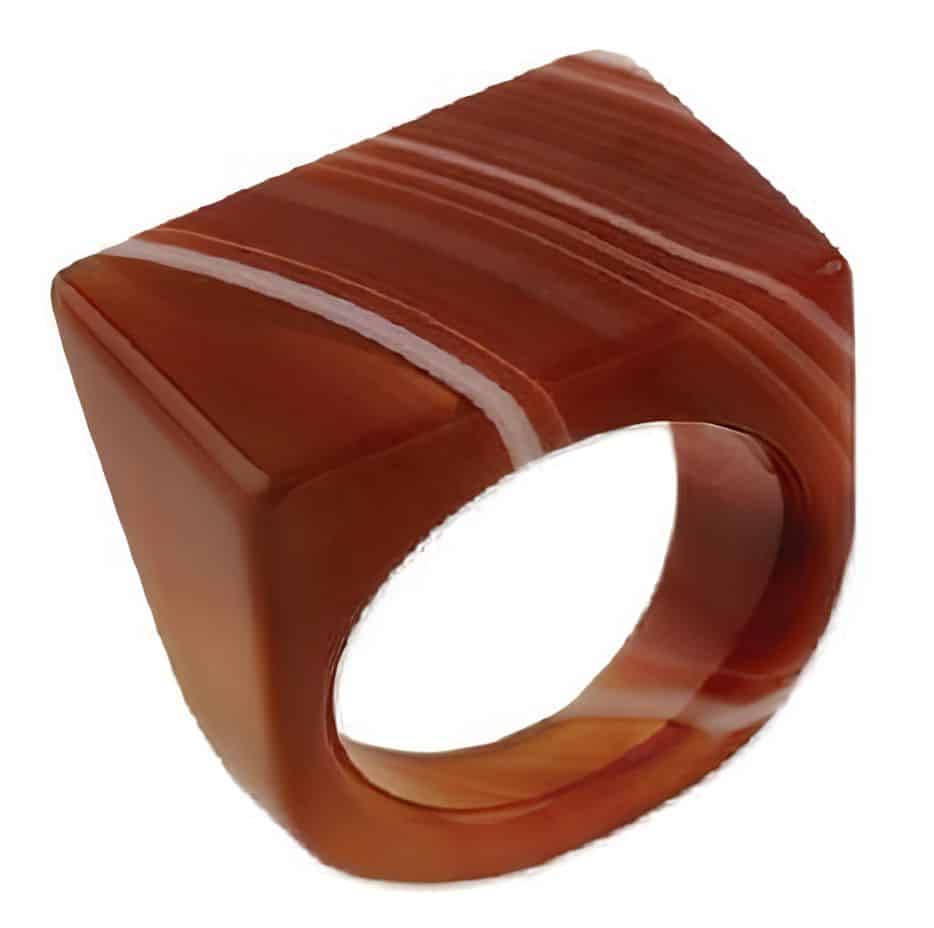
Banded or striped agate: it has bands of different colours and rounded layers of varying thicknesses. It often contains white quartz crystals.
2. Dendritic agate
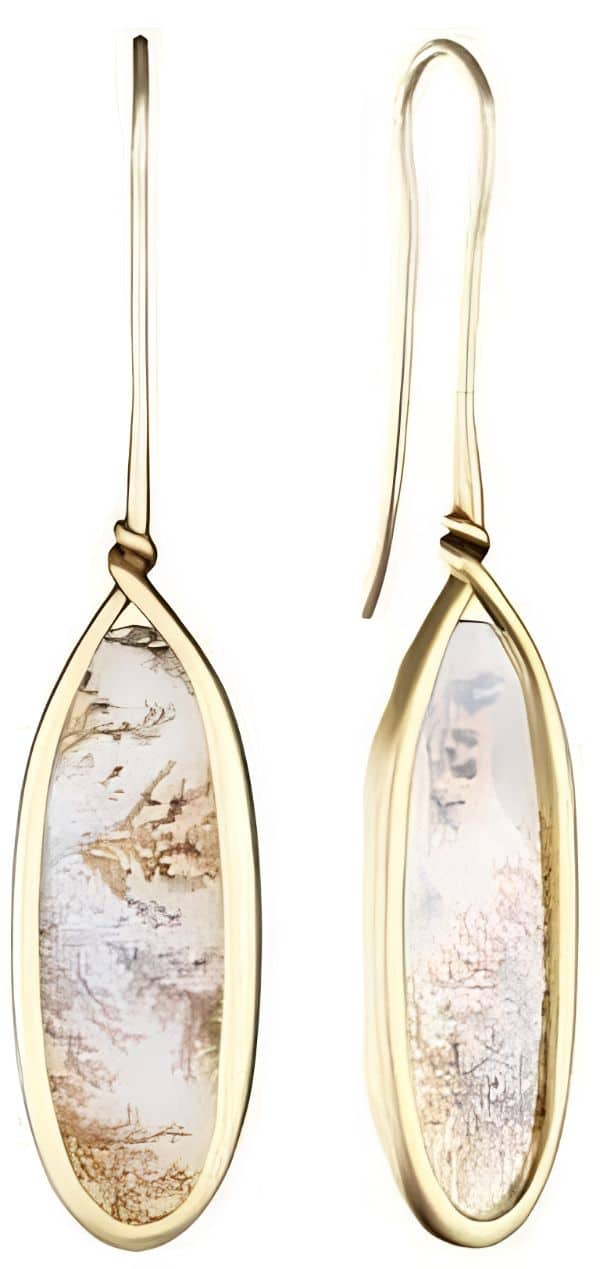
Dendritic agate: a translucent chalcedony, colourless or whitish-grey, with tree- and root-like patterns formed by mineral inclusions of iron and manganese oxides. These are not fossilised plants.
3. Umbu agate
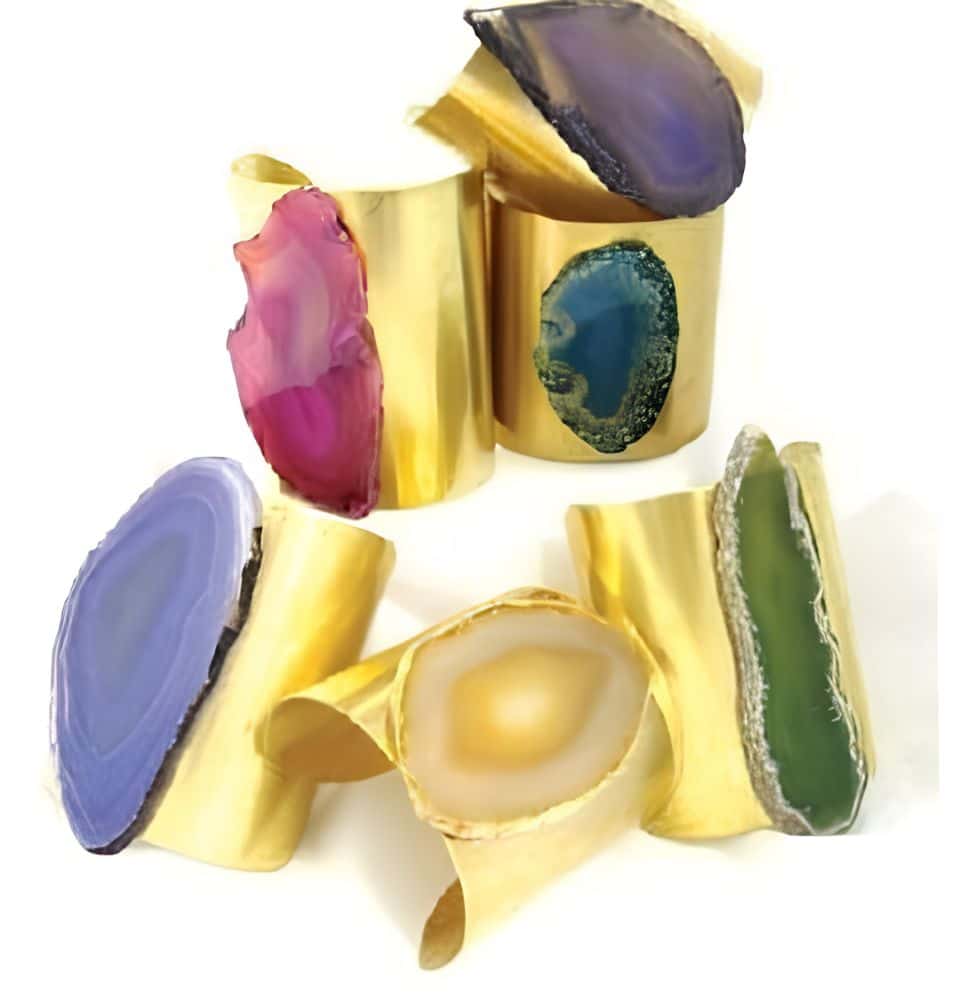
Umbu agate (also known as mass agate): it is homogeneous, dark bluish-grey in colour and very porous, and therefore takes dye well and produces uniform colours. It is highly sought after in the Salto do Jacuí region (RS), the state’s largest agate-producing area.
4. Carnelian agate
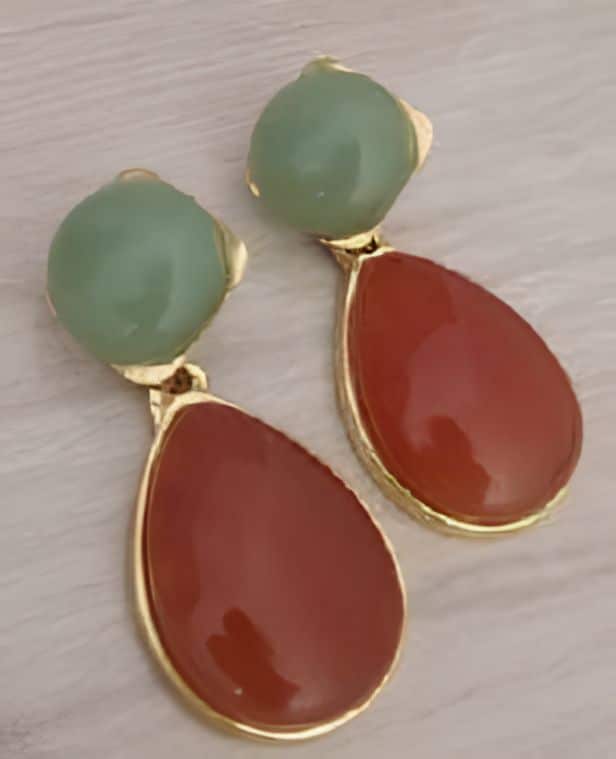
Carnelian: a translucent chalcedony ranging in colour from orange to brownish-red, whose colour is derived from iron. The colour can be enhanced by heating or by the use of iron salts, a technique employed in Idar-Oberstein to produce shades of red and yellow.
5. Eye agate
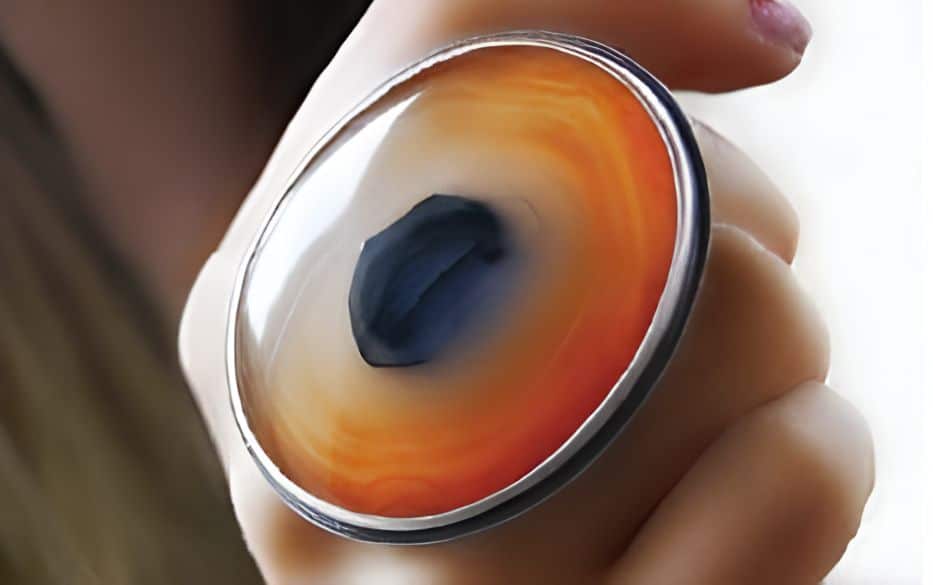
Eye agate: it has an annular pattern with a dot in the centre.
6. Moss agate
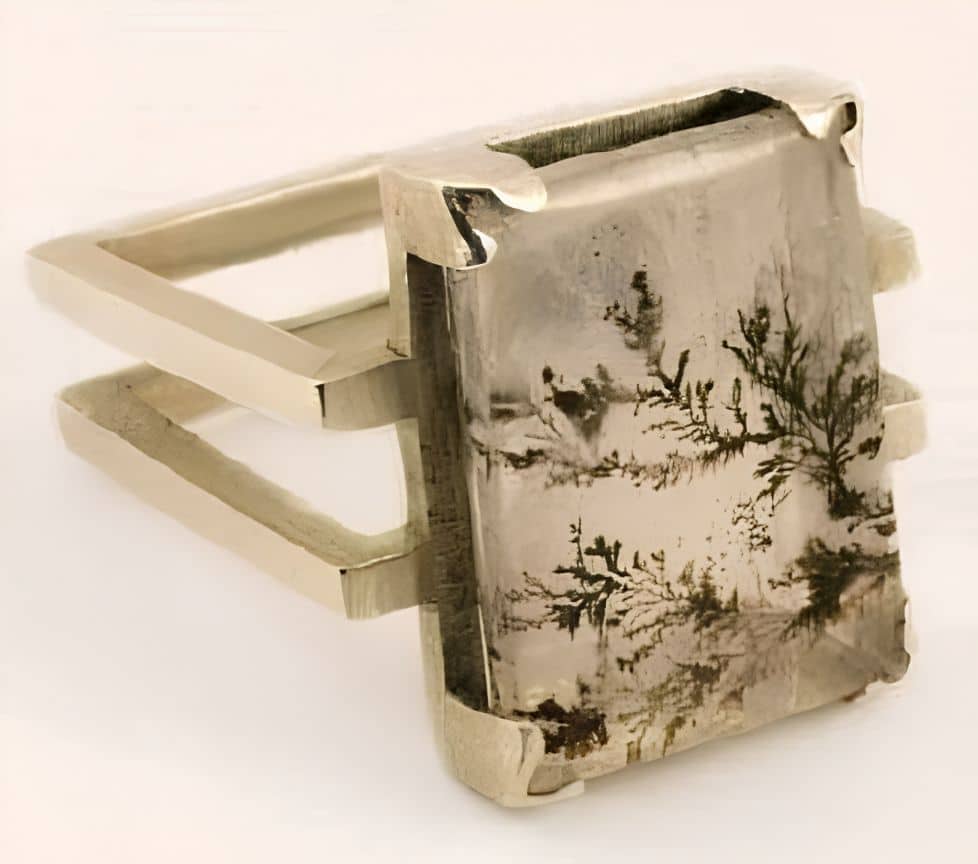
Moss agate: a translucent, colourless chalcedony with moss-like patterns, green or brown in colour, formed by mineral inclusions.
7. Blue bow agate
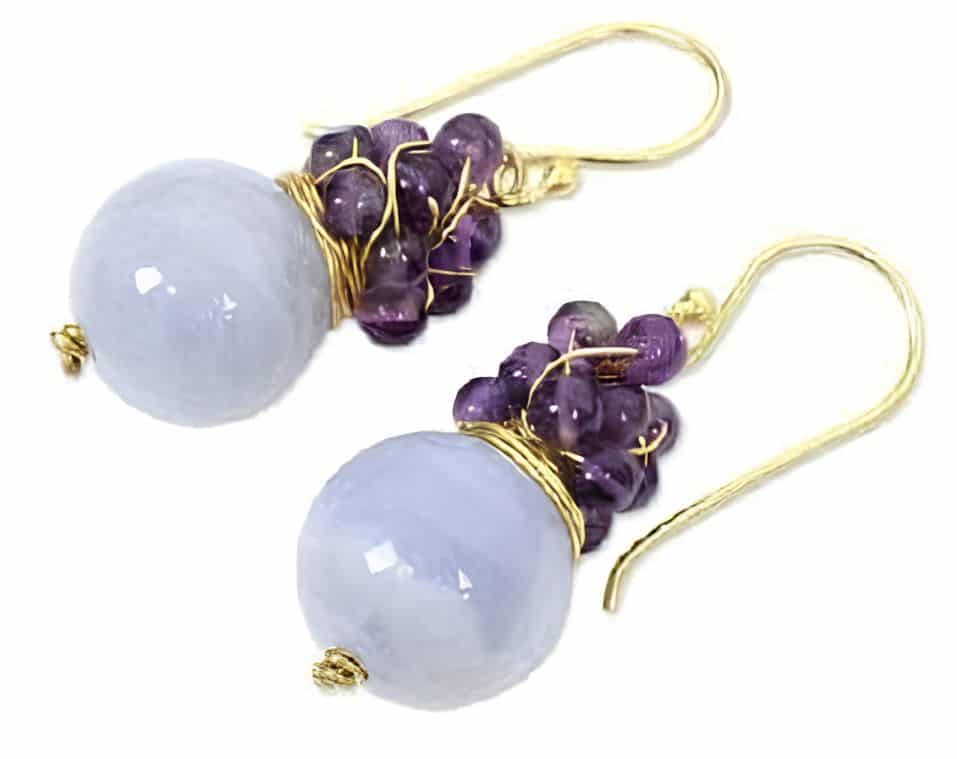
Blue bow agate: blue bands of light in a wavy, bow-shaped pattern.
8. Landscape agate
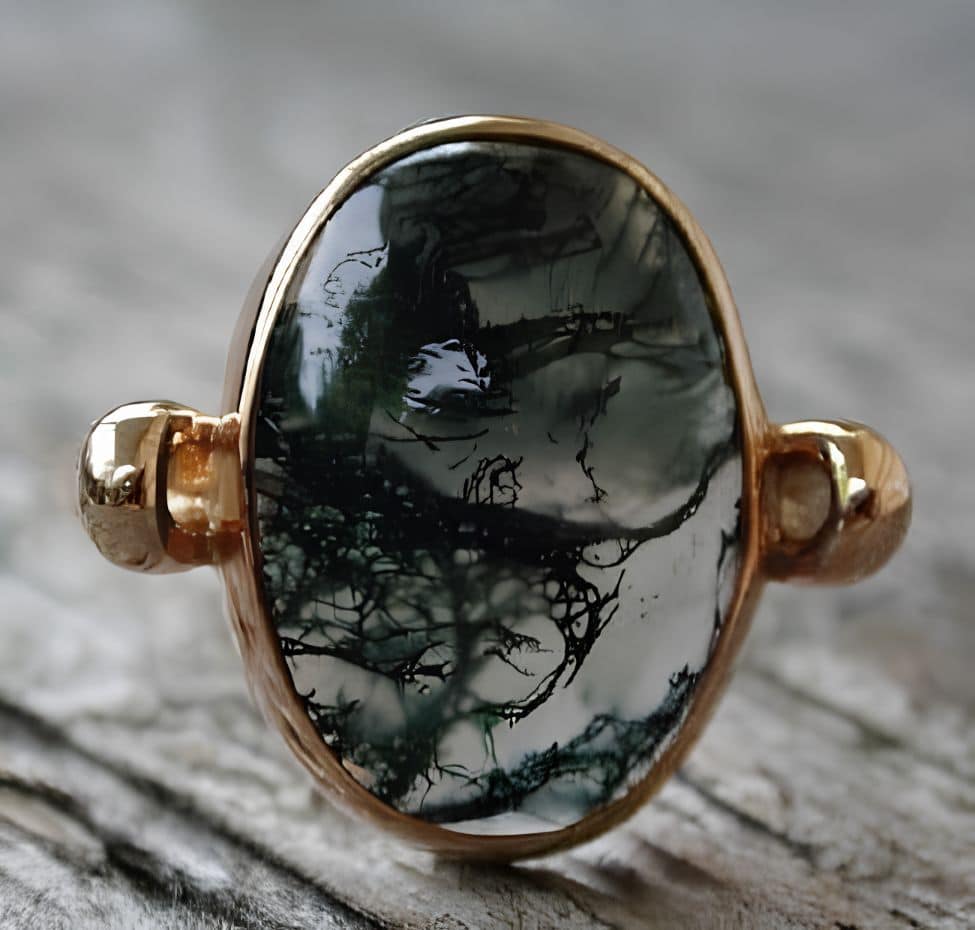
Landscape agate: this is a dendritic agate whose dendrites resemble a landscape. Pieces with clearly defined patterns are highly sought after by collectors.
9. Geode agate
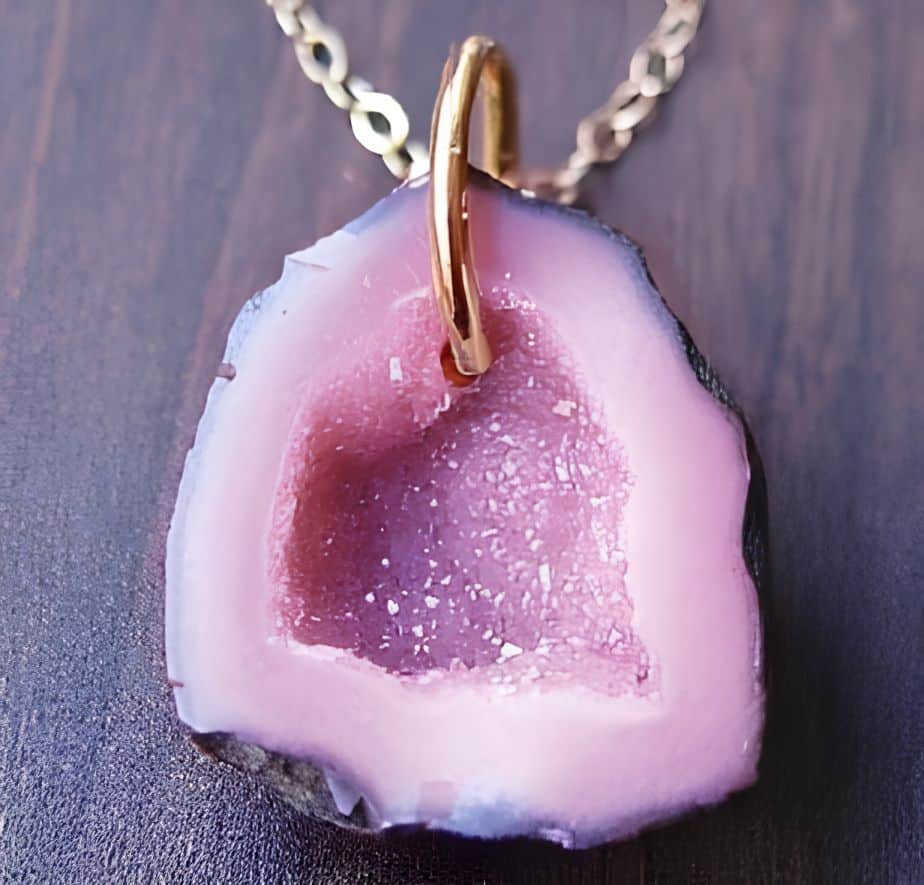
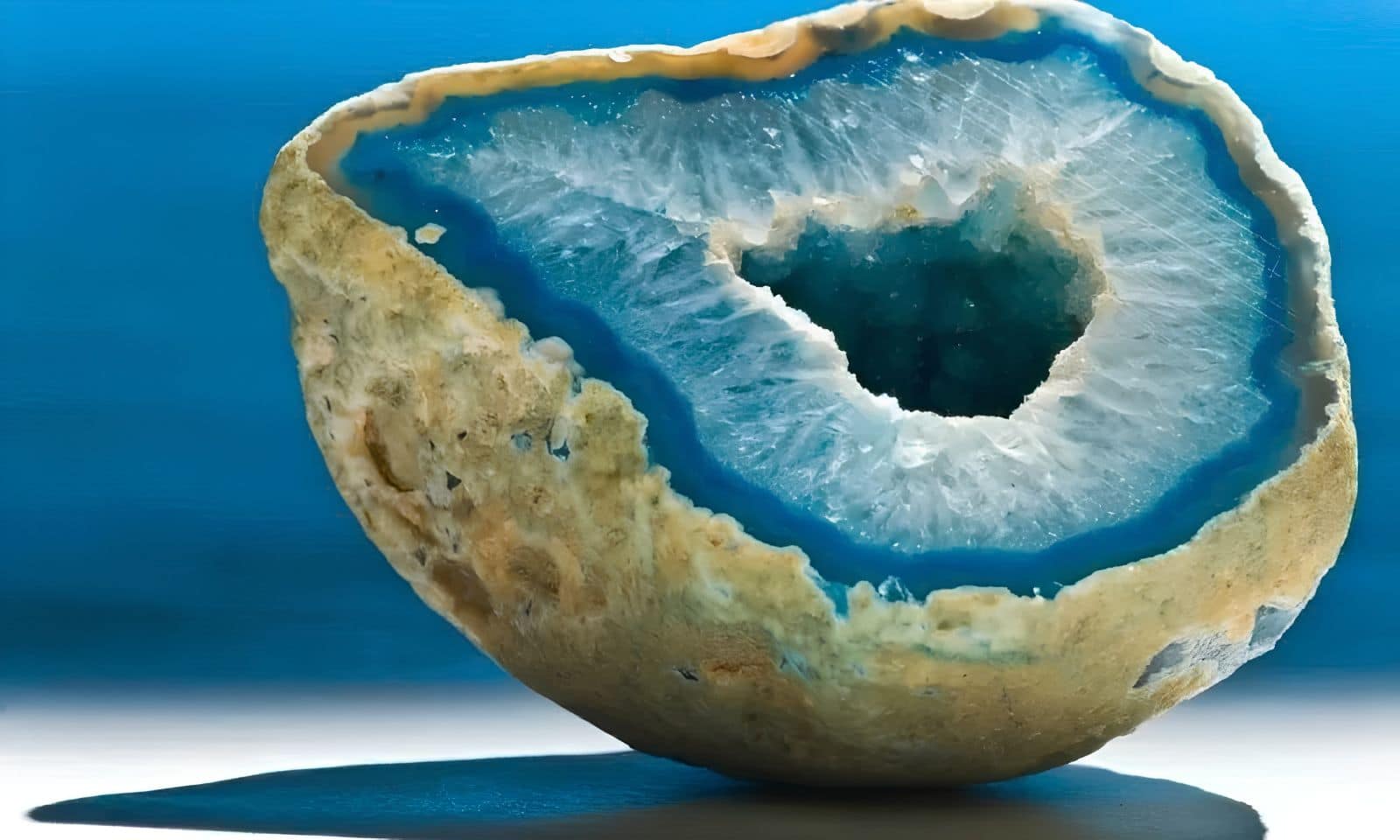
Geode agate: it has a layer of agate surrounding a cavity, often lined with small quartz or amethyst crystals.
10. Fire agate
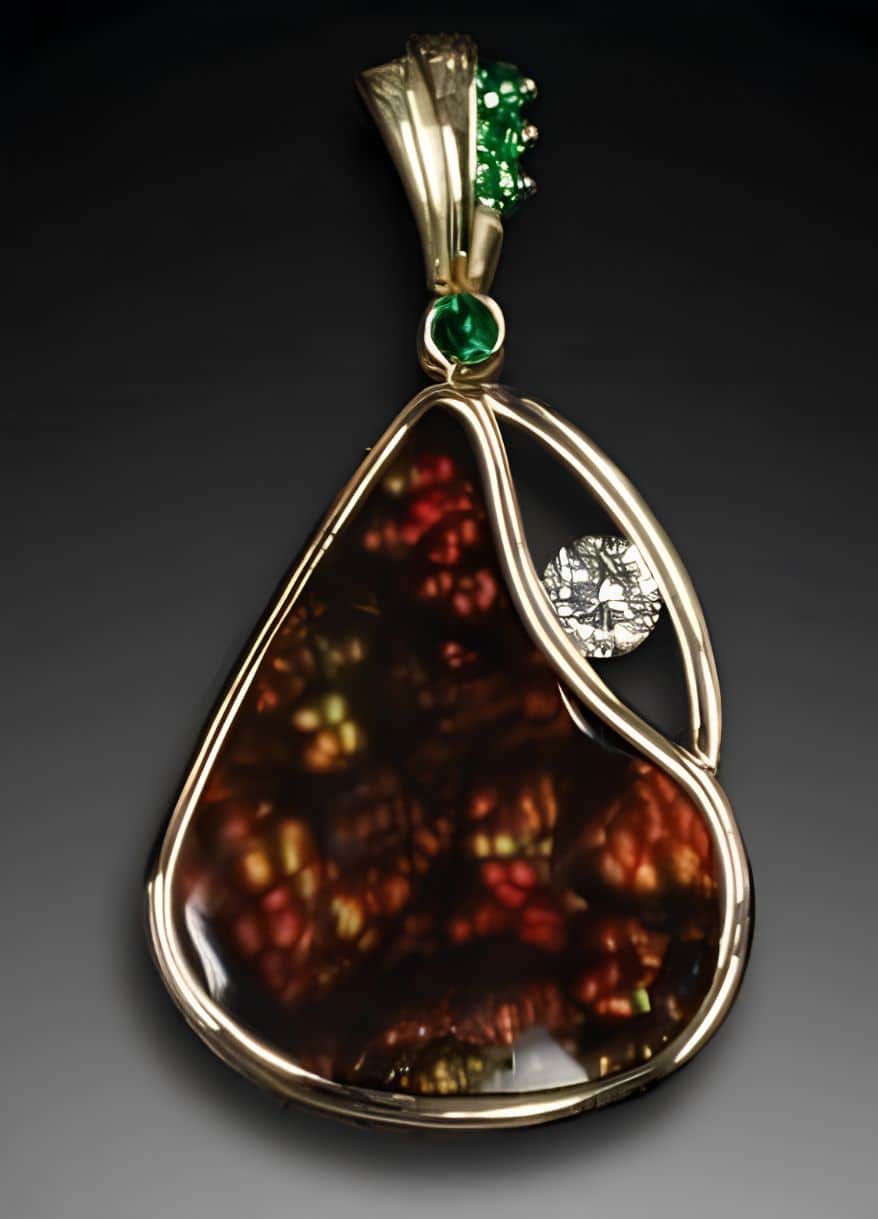
Fire agate: an iridescent chalcedony that displays a ‘fiery’ play of colours. The effect is caused by the interference of light between thin layers of chalcedony and iron oxide, and is reminiscent of opal, though it is not opal. It is found in the Sonoran Desert region of the United States and Mexico.
11. Lagoon agate
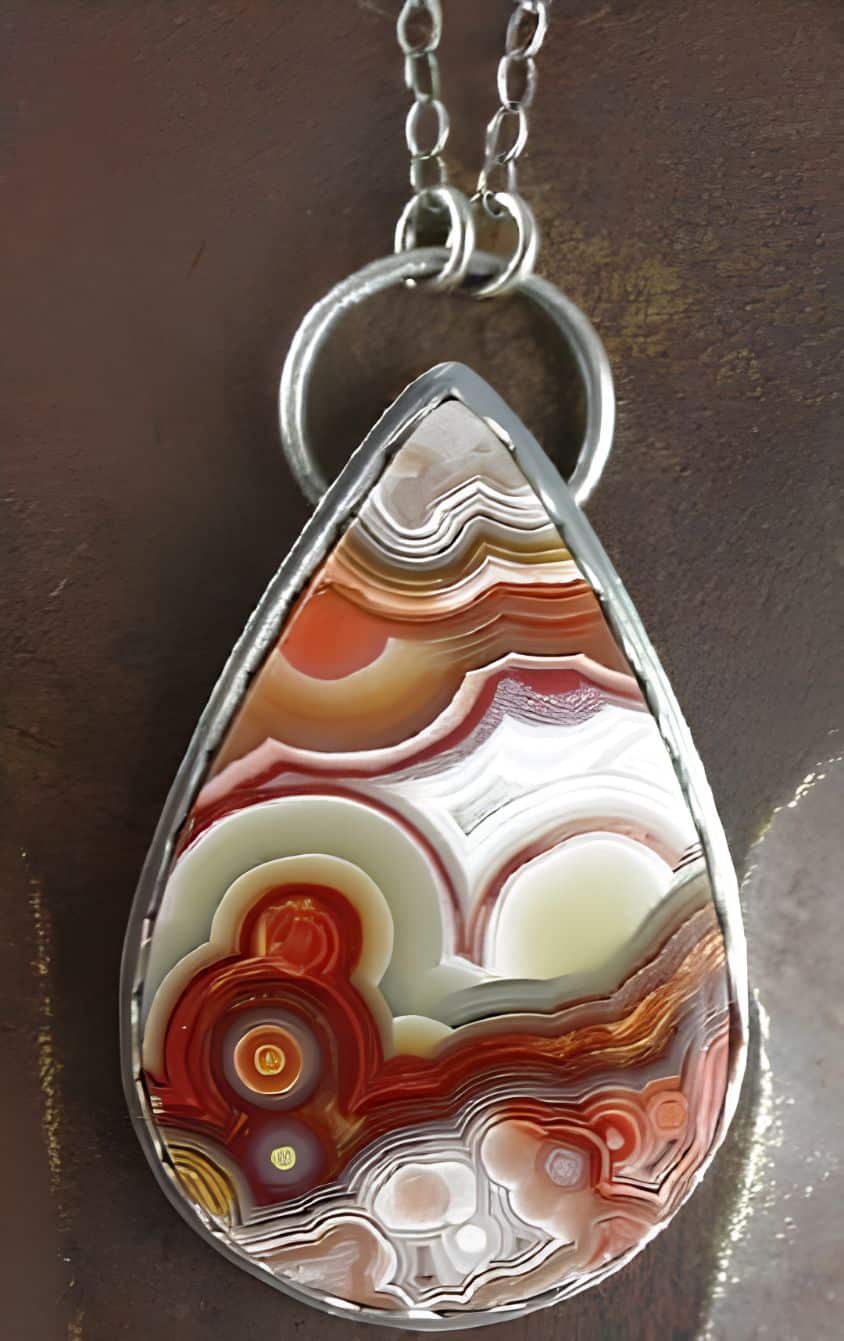
Mexican lagoon agate: it features bands of very intense colours and several ‘eyes’.
12. Mountain agate
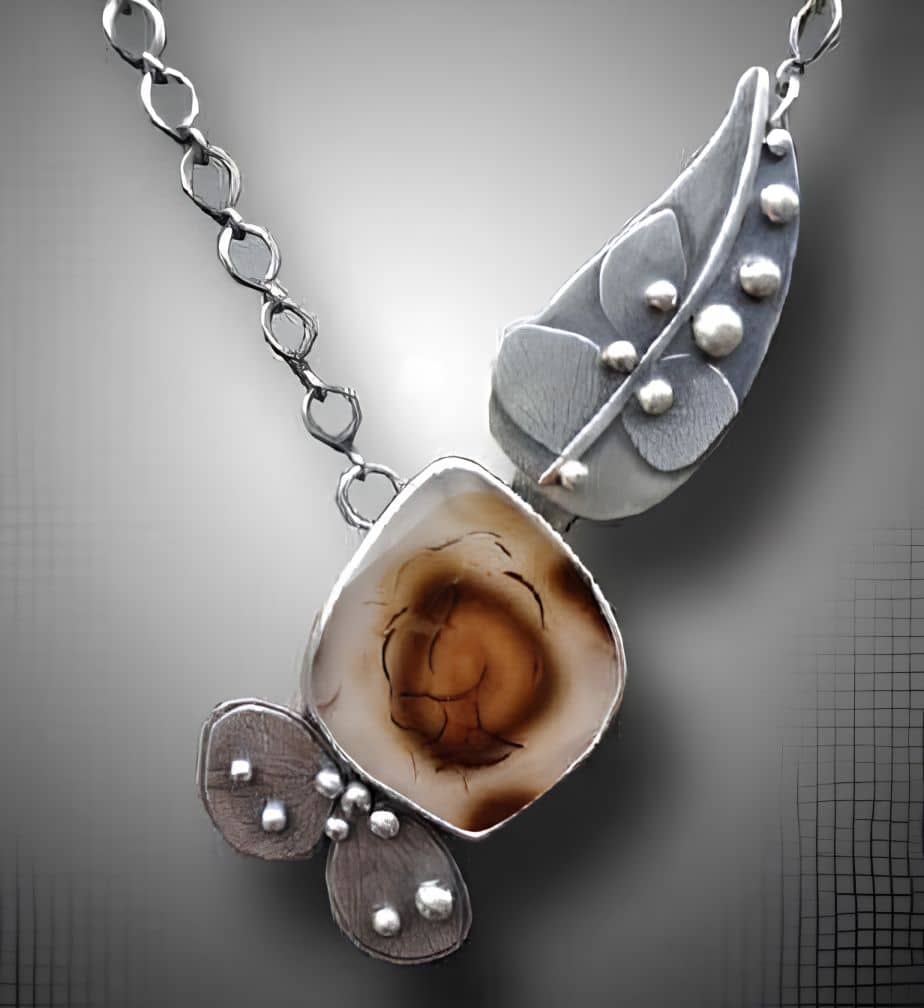
Montana agate: this is a moss agate from the US state of Montana, featuring patterns reminiscent of moss or landscapes.
13. Wall agate
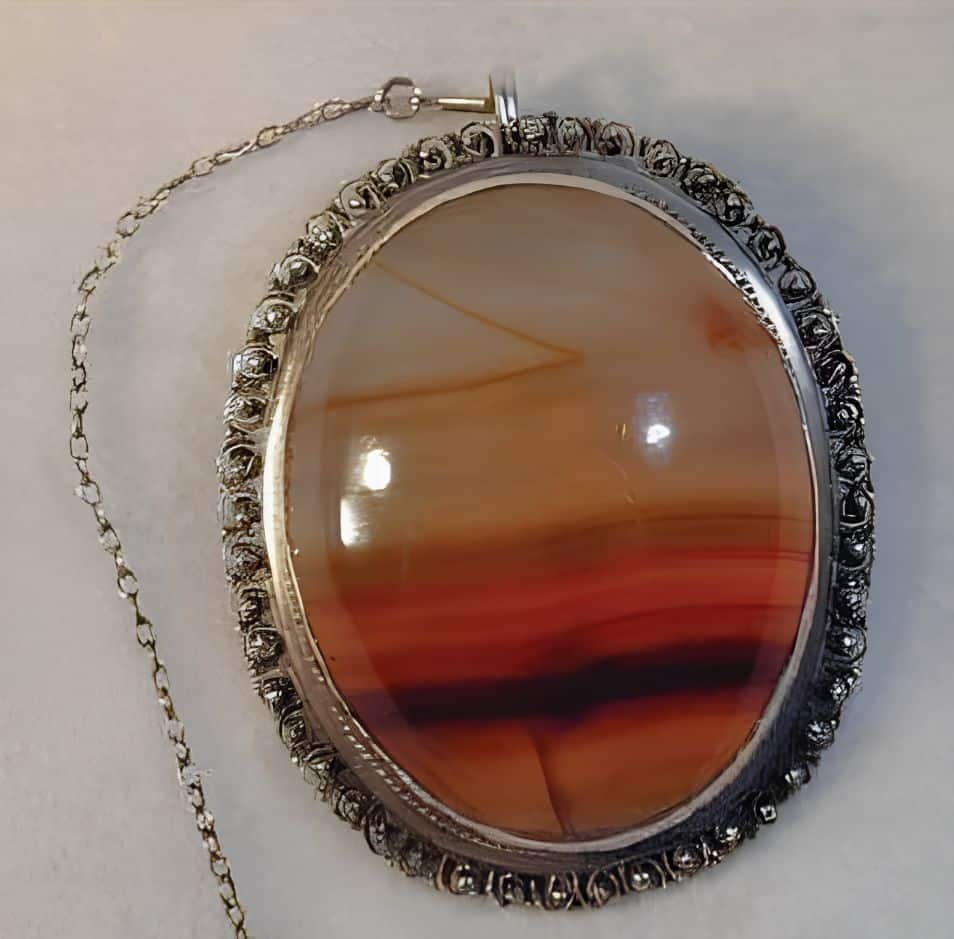
Fortified agate (or rampart agate): it has angular bands that form patterns resembling ramparts, similar to the layout of a fort.
Agatised organic materials
In these cases, the original material (shell, coral or wood) has been replaced by silica, in the form of chalcedony, whilst retaining the shape of the original material.
1. Agata turritella
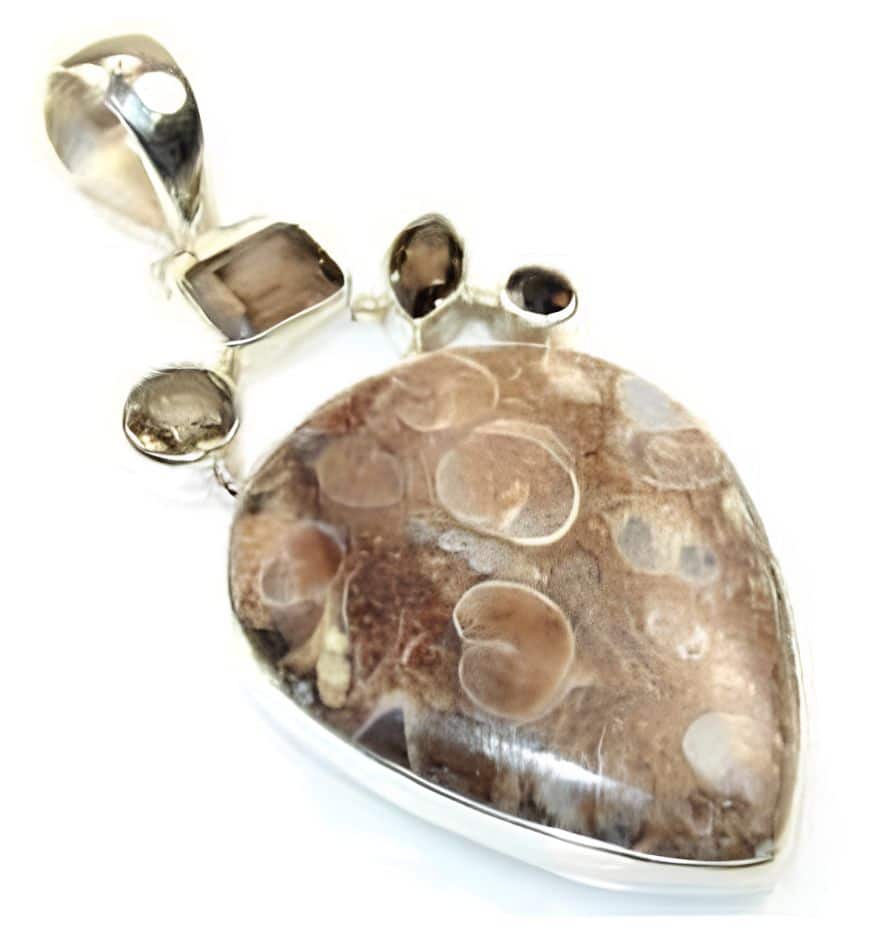
Turritella agate: this is formed from the silicified fossils of Turritella shells (a marine gastropod) set in a chalcedony matrix.
2. Agatised coral
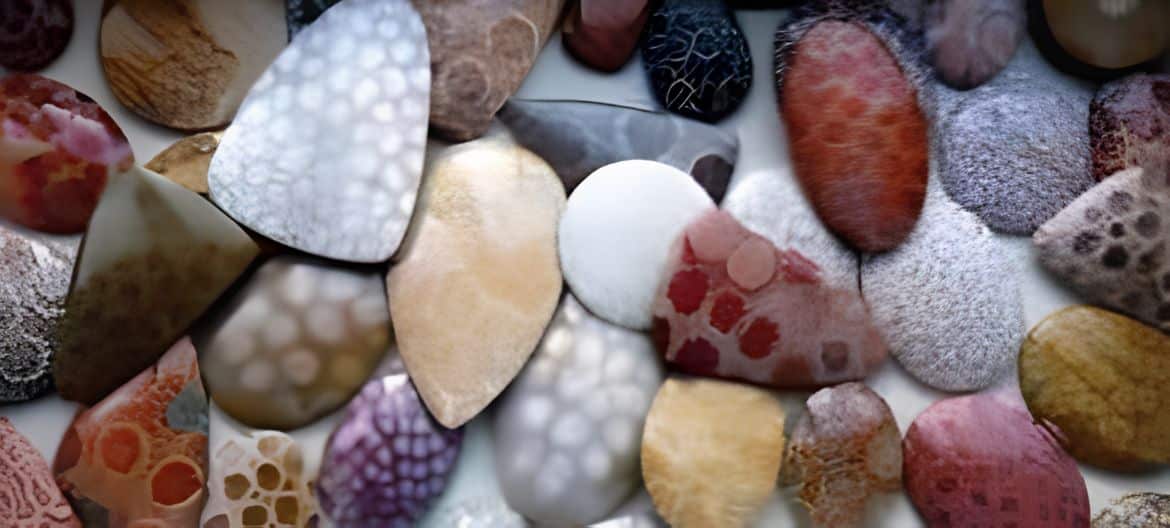
Agatised coral: this is formed from ancient coral, in the same way as agatised wood, and can display a variety of colours. To find out more about the corals used in jewellery, see the post on jewellery made from different species of coral.
3. Agatised wood
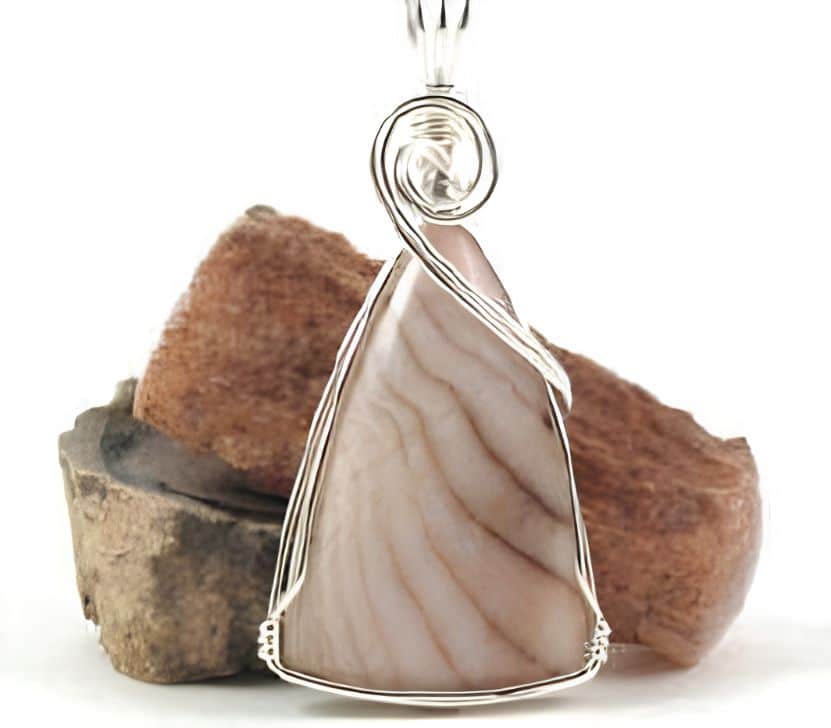
Agatised wood: this occurs when pieces of wood that have been buried for millions of years undergo a process of petrification in which the organic matter in the wood is replaced by silica, whilst the wood’s structure may remain visible.
Agate in jewellery: cutting and use
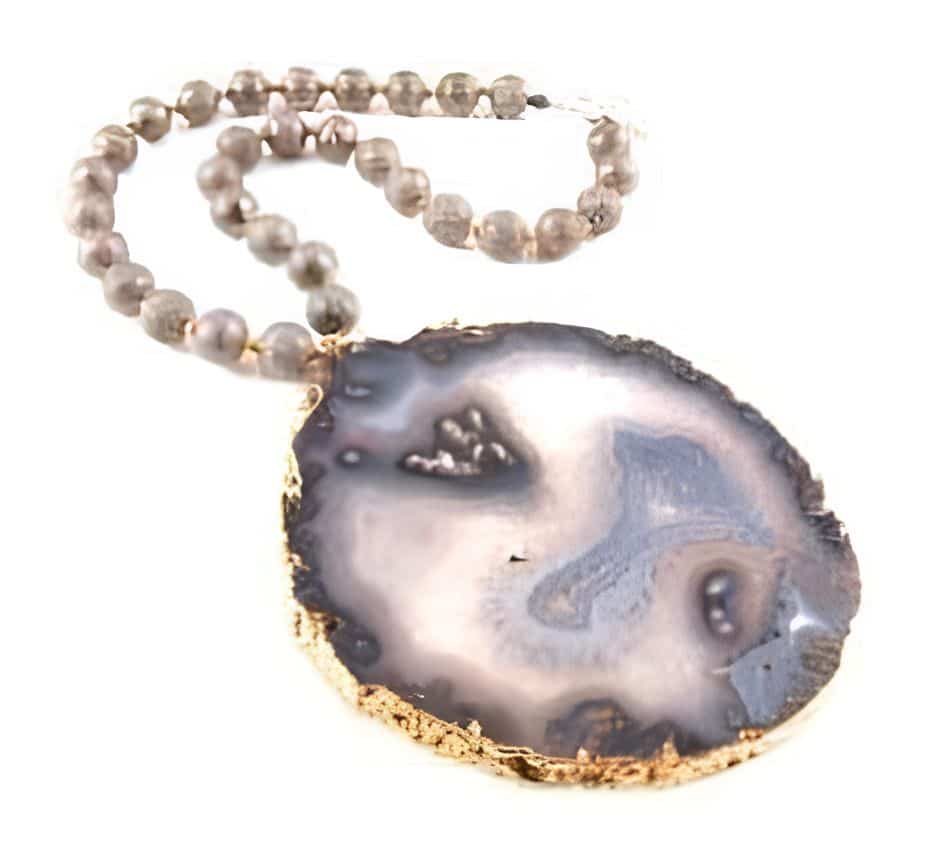
Agates can be found in large sizes and in a wide variety of shapes. In jewellery, agate is mainly used as a cabochon, which highlights the banded pattern, and in simply cut slabs, used in ornamental pieces and sculptures, such as cameos. Agate is also carved into pendants, figurines and vases, and has a long history of use in cameos, carvings and seals.
Agate can be used in any type of jewellery: earrings, rings, necklaces, pendants and bracelets. It is therefore considered a versatile gemstone, and dyeing allows for a variety of colours and shades. With a hardness of 6.5 to 7, it is quite scratch-resistant, but delicate pieces with hollows or holes may break, even though they are hard.
The colour and dyeing of agate
German agates were known and prized for their colours, which ranged from a delicate, rosy red to brown, separated by intermediate layers of luminous grey.
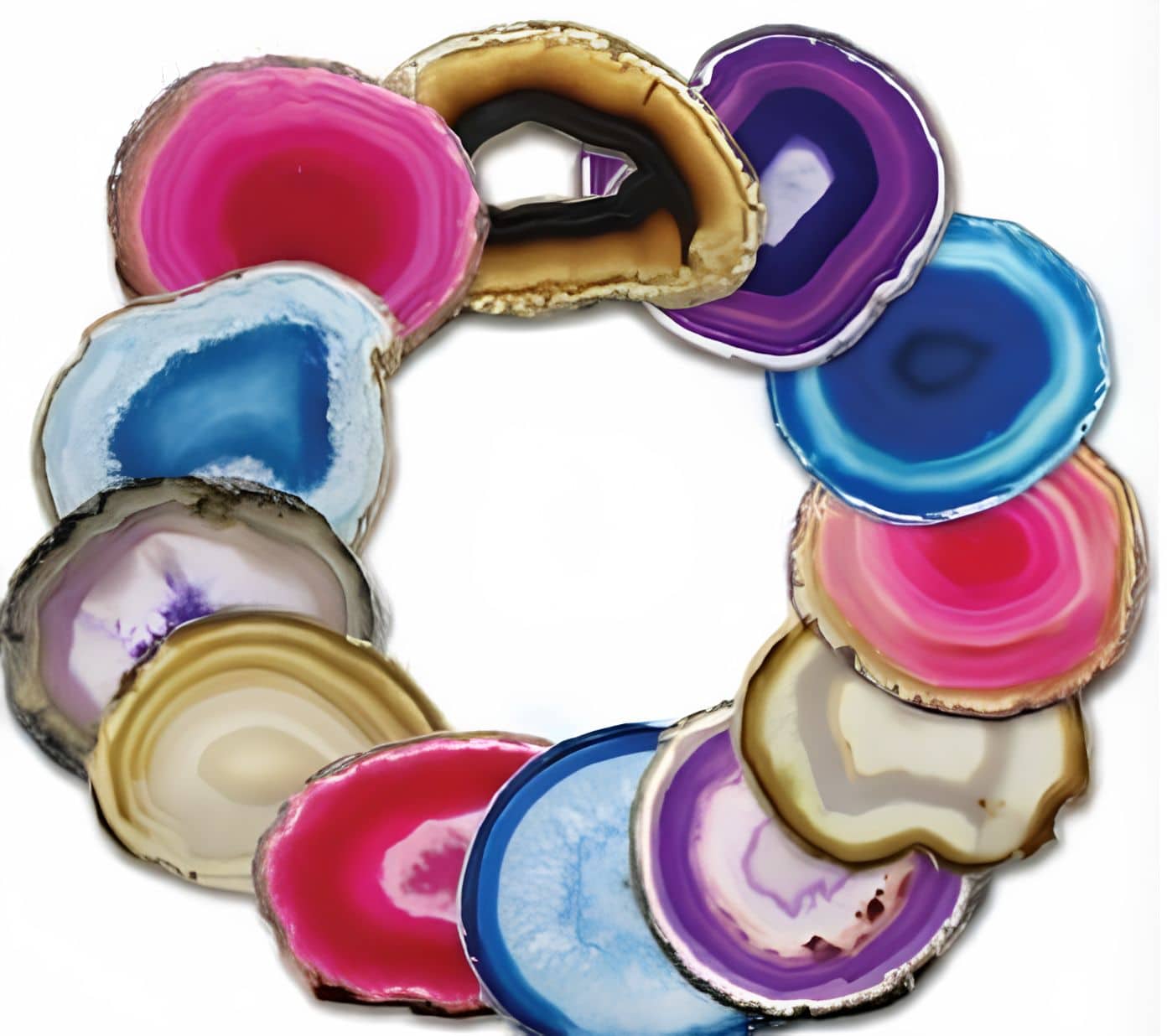
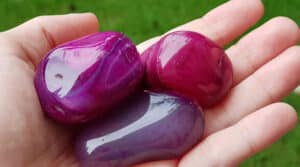
Today, agates from other deposits display shades ranging from grey to bluish-grey, and some – particularly those from Brazil – come in shades of white, black, brown, red, yellow and others. Agate is porous, takes dye well, and each band absorbs colour differently. For this reason, the majority of coloured agates (vivid pink, purple, green and blue) sold worldwide are dyed, and buyers should be informed of this.
The two types of dye produce different results:
- Traditional (inorganic) methods: developed by Germans in the 19th century and used in Rio Grande do Sul since the early 20th century. The stone is immersed in a solution containing metal ions or sugar and then undergoes a chemical reaction that forms a coloured, insoluble compound, such as Prussian blue and chromium greens. Black is usually produced using sugar and sulphuric acid, followed by heating. In a study involving 30 weeks of exposure, these colours remained stable;
- Organic dyes (anilines): produce colours such as pink, purple, green and red, but, according to the same study, they faded both indoors and outdoors, sometimes almost completely.
Dyeing does not alter the type of stone, but the colour of organic dyes may fade over time, and so very colourful pieces should be protected from light.
How to look after agate jewellery
- Cleaning: use warm water, mild soap and a soft brush. Avoid strong chemicals and acids. For dyed items, avoid ultrasonic cleaning and steam;
- Heat: avoid prolonged exposure to extreme heat;
- Light: avoid leaving agate exposed to light for too long, as the colour may fade depending on the dye;
- Storage: store jewellery in boxes lined with fabric, such as velvet, away from harder stones (diamonds, sapphires, rubies), to prevent scratches or breakages;
- Impact: avoid knocks, particularly to thin parts or those with recesses.
See also
- Quartz: meaning, characteristics and jewellery
- Amethyst: characteristics, trade and valuation
- Tiger’s eye: characteristics and cutting
- Opals: meaning, properties and characteristics
- Jade: meaning, properties and characteristics
- How to identify a precious stone or gemstone
- Malachite stone
- Topaz: history and characteristics
- Tourmaline
- Emerald: characteristics, varieties and quality
- Ruby: characteristics, colours and cutting
- Sapphire: characteristics and properties
- The 4 basic diamond grades
- Aquamarine stone
- Jewellery made from different species of coral
Sources consulted
- Skyjems: agate, dyed agate, Idar-Oberstein and Salto do Jacuí
- Gems.jewelry: ágata
- Gem Society: information about agate
- UFRGS, Geosciences Research: agate deposits in the Cretaceous magmatism of the Paraná Basin
- Escola de Minas Journal (2007): colour loss in dyed agates
- A study on the dyeing of agates from Rio Grande do Sul
Frequently Asked Questions
What is agate?
Agate is a banded chalcedony, a variety of microcrystalline quartz (SiO₂). When cut, it reveals bands of different colours in unique patterns.
What is the significance of agate?
Traditionally, agate is associated with protection, stability and the energy of the wearer. These meanings stem from popular belief, rather than scientific evidence.
What are the properties of agate?
Hardness of 6.5 to 7 on the Mohs scale, density of around 2.6, refractive index of approximately 1.53 to 1.55, a waxy to vitreous lustre, and a conchoidal fracture. Its transparency ranges from translucent to opaque.
What is the difference between agate, chalcedony and onyx?
Chalcedony is a group of microcrystalline quartz. Agate is a type of chalcedony with curved or concentric bands, whilst onyx has straight, parallel bands, usually black and white.
What are the different types of agate?
Among the best known are banded agate, dendritic agate, moss agate, umbu agate, eye agate, blue loop agate, landscape agate, geode agate, fire agate and wall agate, as well as agatised materials such as wood, coral and turritella.
Is coloured agate natural?
Often, no. Agate is porous and takes dye well, and most brightly coloured agates – such as pink, purple, blue and green – are dyed. Very vivid and uniform colours are a sign of dyeing.
Does the colour of agate fade?
It depends on the dye. In a study involving 30 weeks of exposure, the traditional inorganic dyes retained their colour, whilst the organic dyes lost their colour, in some cases almost entirely.
Where does Brazilian agate come from?
Most of it comes from Rio Grande do Sul, mainly from the Salto do Jacuí mining district, in the basalts of the Serra Geral Formation. There are also deposits in northern Uruguay.
Is agate suitable for jewellery?
Yes. With a hardness of 6.5 to 7, it is highly scratch-resistant and is used in cabochons, earrings, rings, necklaces, pendants and bracelets. Delicate pieces with hollows or holes may break.
How do you clean and look after agate jewellery?
Clean with warm water, mild soap and a soft brush, and avoid chemicals, extreme heat and prolonged exposure to light, which can cause coloured pieces to fade. Store your jewellery separately from harder gemstones.

Publicações Relacionadas
Emerald: Characteristics, Meaning and Jewellery
Diamonds: Characteristics, Meaning, Jewellery and the 4 Cs
Tourmaline: Learn about its characteristics and varieties
Identifying a Precious Stone or Gemstone: A Comprehensive Guide
Pindobaçu (BA), known as the capital of emeralds
Tiger Eye Stone - Characteristics and Cutting
Quartz: Meaning, Characteristics and Jewellery
Aquamarine: Symbolism, Characteristics and Jewellery
Ruby: Characteristics, Meaning and Jewellery
Topaz: Gemstone, Properties, Meaning and Characteristics
Opal: Meaning, Properties and Characteristics
Characteristics of the Paraíba Tourmaline, a rare gemstone
Amethyst stone - characteristics, marketing and valuation
The malachite stone is a distinctive gemstone - Features
Jewellery made from different types of coral - Features
Sapphire is the purity of nature and a symbol of honesty
Jade: Meaning, Properties and Characteristics
This post is also on:
 Português
  English
  Deutsch
  Español
  Français