The Lajedo de Pai Mateus
The Lajedo de Pai Mateus is a remarkable geological and tourist attraction located in the state of Paraíba, Brazil. This impressive rock formation is characterised by large blocks of stone spread over a vast flat surface of granite.

With its unique beauty, the Lajedo has become a popular destination for tourists wishing to explore its geological features and appreciate the region’s rich cultural heritage. Located in the Cariri region, near the municipality of Cabaceiras, Lajedo is about 200 kilometres from the state capital, João Pessoa.
Video about the Lajedo de Pai Mateus in Paraíba

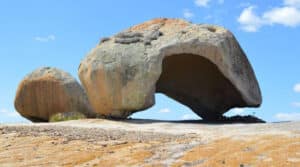
Lajedo de Pai Mateus na Paraíba - Guia de Turismo03:28
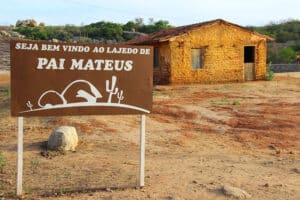
Lajedo de Pai Mateus na Paraíba - Reportagem13:21
1. location
The site is located in the Cariri region, near the municipality of Cabaceiras, approximately 200 kilometres from the state capital of João Pessoa.
2. Geological features
Lajedo de Pai Mateus is an archaeological site with a 1.5 km² rocky outcrop and numerous other boulders. It is noted for its beauty and attracts tourists from all over the country. In the northeast of Brazil, where there is an outcropping crystalline basement, saprolitic landforms are common.
3. Rock genesis and alteration
These features result from the formation of a mantle of chemical alteration in the subsurface, which is removed by subsequent erosion, leaving blocks that are not completely altered. These forms are associated with the past occurrence of wetter tropical climates, or more precisely, the alternation between wetter and drier climates.

4. Climatic cycles
Wet climates allow chemical alteration of the rock underground, while drier climates result in the removal of altered material, leaving large blocks of rock protruding into the landscape.
5. Granite morphology
Saprolitic reliefs are formed by the removal of friable debris as a result of alternating cycles of erosion. A good example of the evolution of this type of geoform is the Lajedo de Pai Mateus, a granite relief.
6. Diversity of forms
Lajedo is about 1.5 square kilometres and consists of about a hundred large rounded rock blocks. Internally it has a wide variety of shapes, such as lajedos, matacões, granite balls and tors (rock outcrops that rise abruptly in the middle of a flatter surface).


7. Special features
Another type of feature present in the Lajedo are the basal cavities, called tafones, which widen upwards. In addition, the canneluras are shallow vertical grooves created by chemical erosion.

When they occur in abundance, they are called karrens and are characterised by well-marked channels arranged parallel from the top to the bottom of the granite block.
8. Formation and development
The development of the saprolitic granite morphology takes place in two stages: chemical alteration at the base of the soil and gradual exposure of the saprolites by erosion.
9. Archaeological importance
In some blocks of the Lajedo de Pai Mateus, rock paintings have been found, attributed to the Cariris Indians, who inhabited the region from the beginning of the Holocene.
10. Toponymy and legends
The local toponymy is attributed to a legend about a hermit healer called Pai Mateus, who lived in the region in the 18th century.
11. Access and Layout
Lajedo de Pai Mateus is located on private land and can be reached by a dirt road from the centre of Cabaceiras.
12 Tourism and Visitors
The geosite represents a series of spectacular granite geoforms and is increasingly visited. After the visit, it is customary to celebrate the geomorphodiversity of the site.
13. Main points and details of the Lajedo de Pai Mateus
13.1 Geological importance
The rock formations are mainly granite, formed over millions of years by natural erosion.
13.2 Historical and Cultural Aspects
The site is known for its cave paintings and the legend of the hermit Pai Mateus.
13.3 Tourism and Activities
Lajedo attracts tourists for photography, hiking and ecotourism.
13.4 Biodiversity
The region is home to unique flora and fauna adapted to arid conditions.
13.5 Access and Infrastructure
Cabaceiras has basic tourist facilities and is accessible by road.
14. Curiosities
The Lajedo was used as a “ceremonial centre or sacred place” by prehistoric indigenous peoples. Its “positive energy” attracts visitors sensitive to mystical experiences.
15. How to get there
The tourist attraction is located 25 km from the centre of Cabaceiras, known as “Roliúde Nordestina”.

Publicações Relacionadas
Best Beaches in Paraíba: A Guide for Tourists
Lucena: Explore Beaches and Natural Beauty
Carapibus Beach: Nature and Tranquillity in Conde PB
Conde Coast: A paradise on the coast of Paraíba
Accommodation Options in João Pessoa: A Complete Guide
Beaches in Paraíba: A Guide to Coastal Delights
Paraíba's Rich History and Attractions
João Pessoa (PB): beaches, history and the historic center
Macuxí Territory in Paraíba: Discover Indigenous Culture
Araruna: A Hidden Gem in Paraíba, Brazil
History of the foundation of Paraíba and João Pessoa PB
Naturism at Tambaba Beach: A Paradise for Naturists
Boat and diving trips off the coast of João Pessoa
Mataraca: What to Do and Visit in the City
Interior of Paraíba: Discover Unique Attractions
7-Day Itinerary in Paraíba: Beaches and Culture
The Interior of Paraíba: Culture, History and Must-See Attractions
São Francisco Cultural Centre: A Baroque Marvel
Barra de Camaratuba: Explore Untouched Beaches
Baía da Traição: Beaches and History Await You
Areia: The Historical Town of Paraíba
Beaches and Tourist Attractions on the Paraíba Coast
Serra do Vital in Paraíba: Must-See Attractions
Coqueirinho Beach (PB): how to get there and what to do
Pitimbu: The paradise of Paraíba's beaches and natural pools
This post is also on:
 Português
  English
  Deutsch
  Español
  Français