Discover the Tourist Attractions and Historic Centre of João Pessoa, Paraíba
Tourists who come to João Pessoa in Paraíba will find, in addition to sunshine and beach, a serenity that contrasts with the hustle and bustle of the big cities of the South and the capitals of the Northeast.

History and nomenclature
There have been several names given to the piece of land that stretches between the Sanhauá River and the Atlantic Ocean.
In 1585, the year the city was founded, it was called Nossa Senhora das Neves; in 1588 it became known as Filipéia, in honour of the then King of Portugal and Spain, Filipe I.
With the Dutch invasion in 1634, it was renamed Frederica, in honour of Prince Frederick of Orange.
When the invaders were driven out in 1654, it was renamed Paraíba – which means “arm of the sea” in Tupi.
Finally, in 1930, the city was named after its governor, João Pessoa Cavalcanti de Albuquerque, whose assassination that year caused great popular uproar and national repercussions. The decision to rename the city in his honour reflected his political importance and the impact his death had on the history of the state.

An irresistible tourist destination
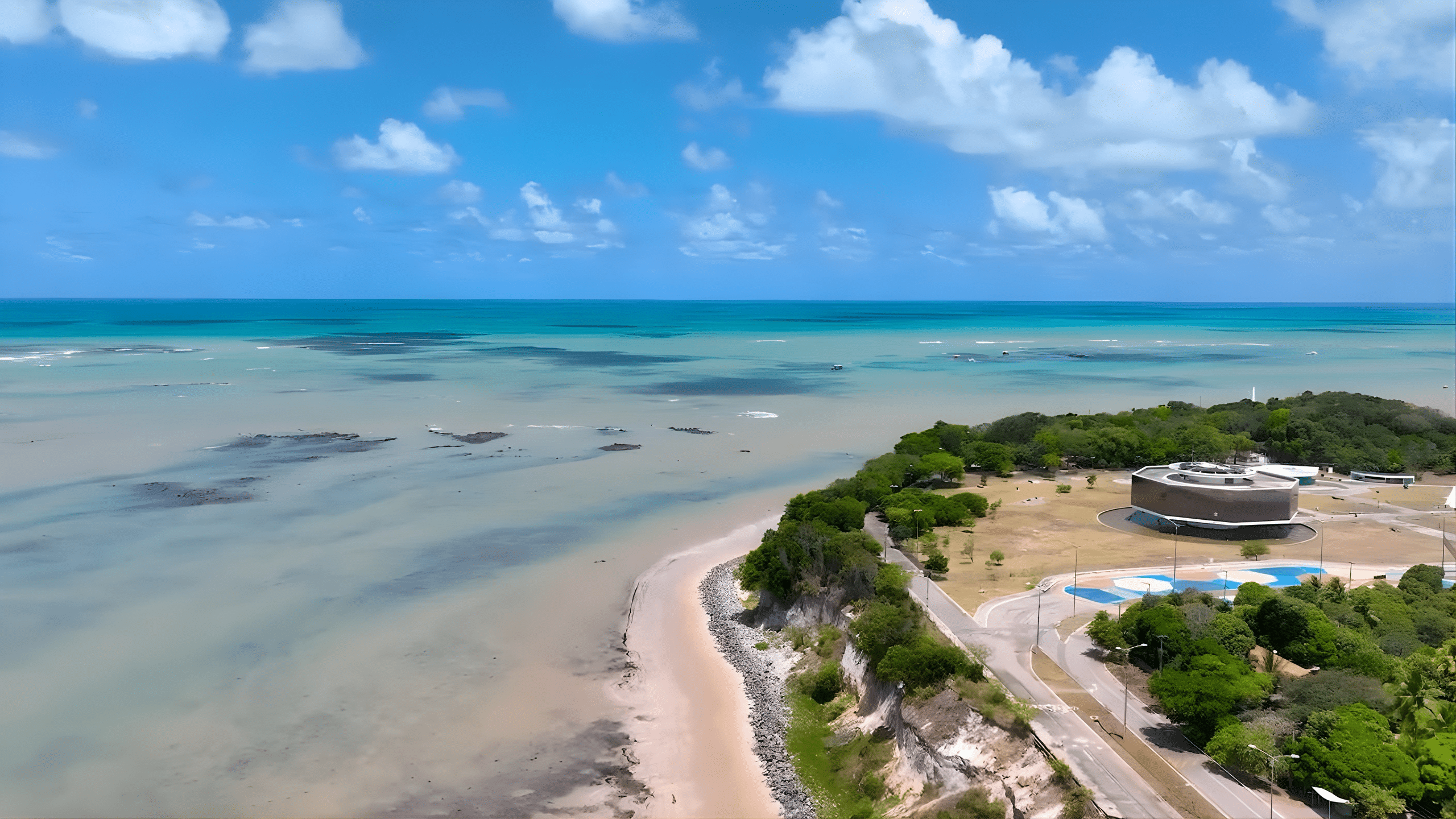
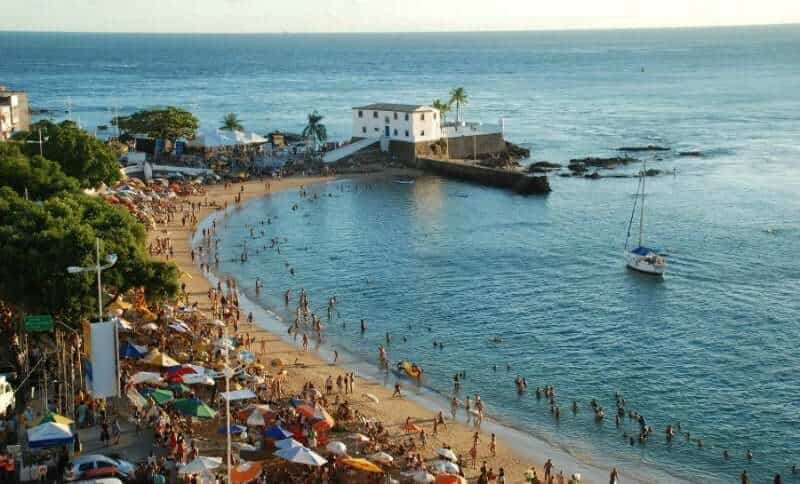
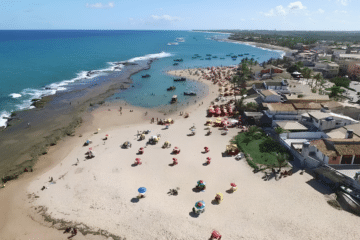
The generous presence of the sun and the sea softened by the reefs make this capital of so many names an irresistible tourist destination.
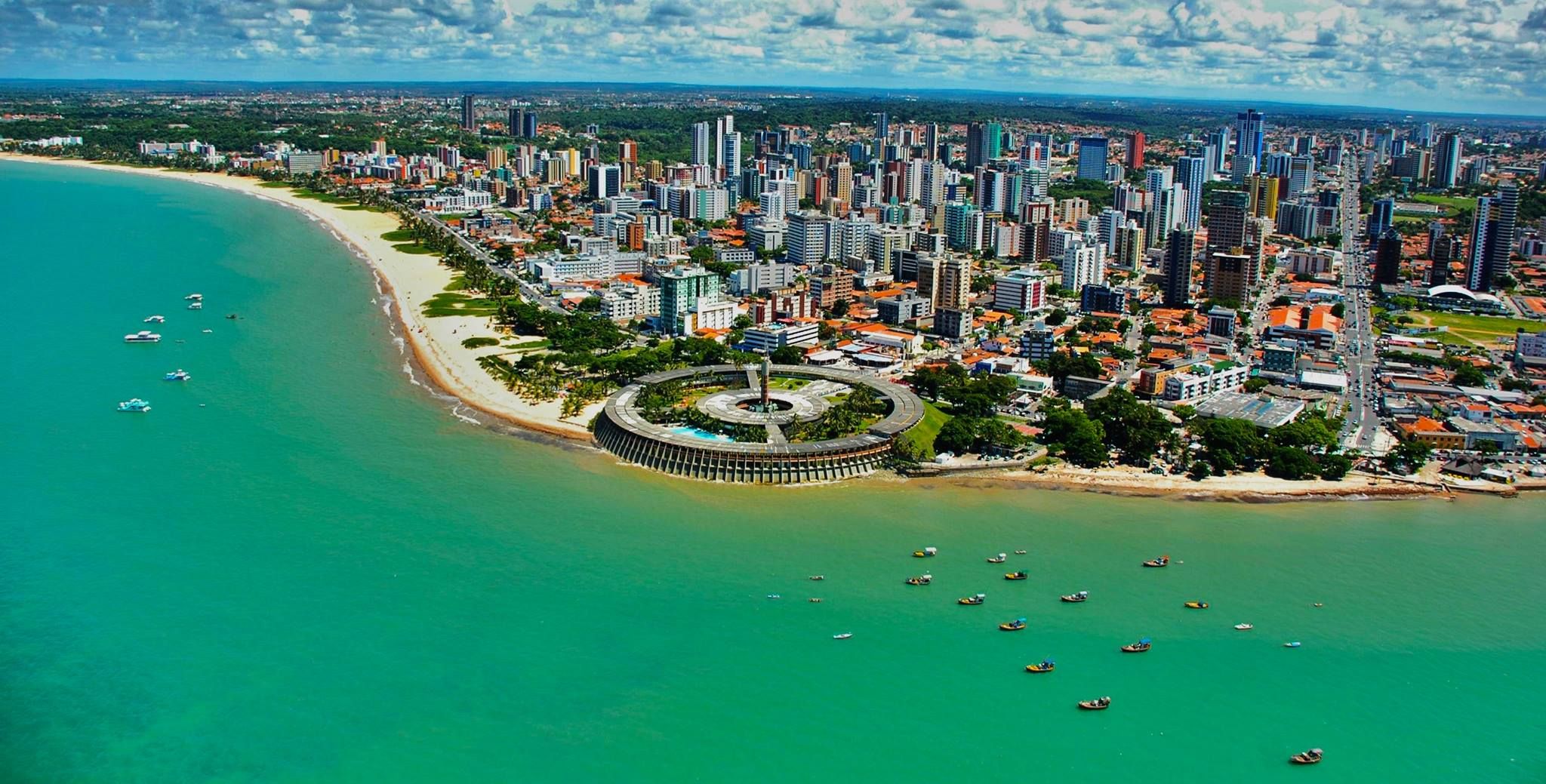
The beaches invite the whole family for a walk or a quiet swim at sunrise or in the late afternoon. The seafront is protected by a law that prohibits the construction of buildings higher than four storeys – a wise measure that guarantees sunlight on the beaches throughout the day.
Culture and handicrafts
In addition to its natural beauty, the capital of Paraíba has a charming collection of baroque buildings and good places to buy regional handicrafts.
Getting there
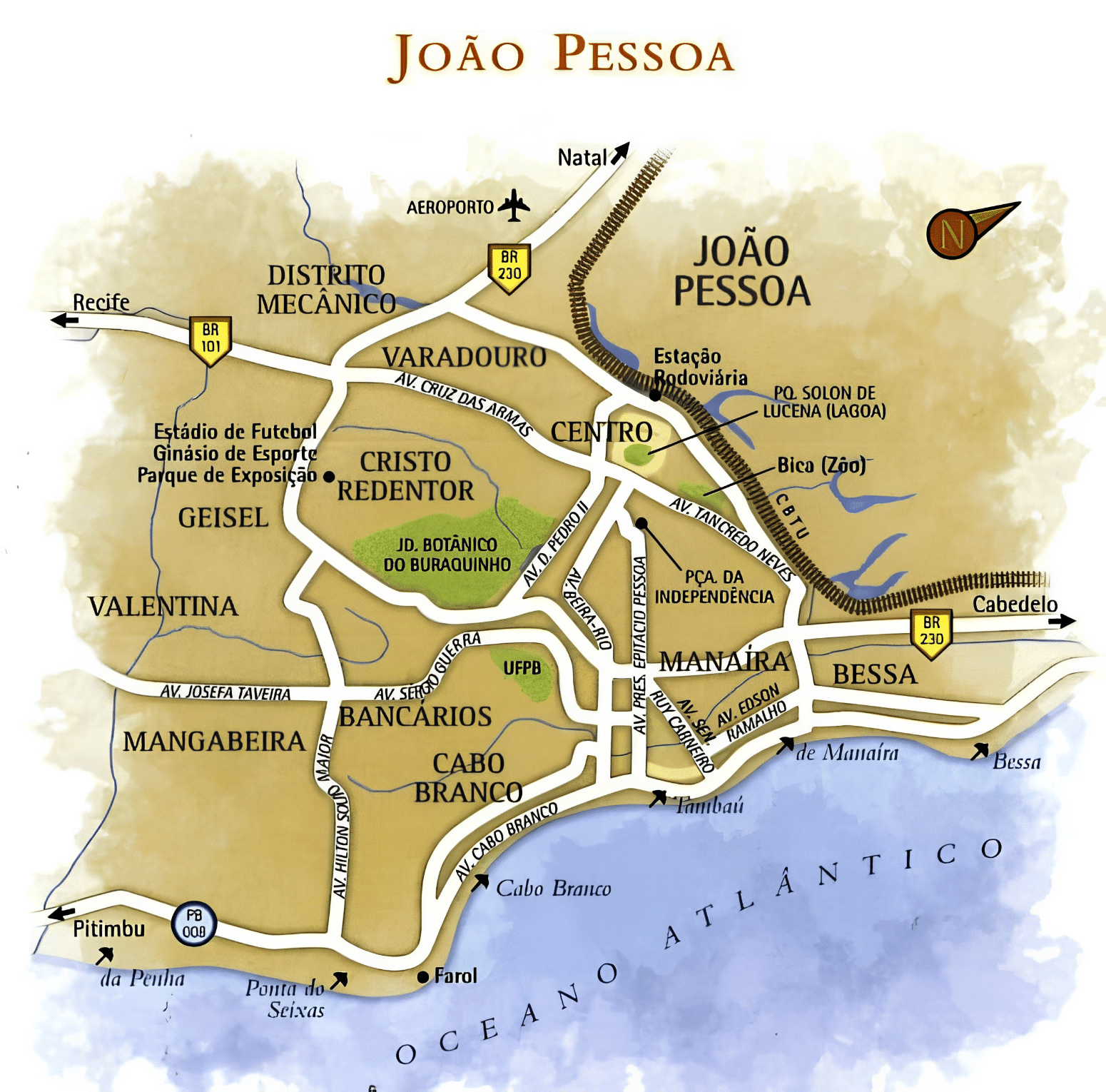
João Pessoa, located 120 kilometres from Recife and 180 kilometres from Natal, can be reached by the BR-101 road.
Videos – Sights and Historic Centre of João Pessoa PB

Os 8 Melhores Passeios em João Pessoa na Paraíba01:29:48
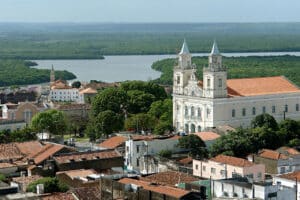
Centro histórico de João Pessoa PB06:35

Praias de João Pessoa PB02:53

Praia do Sol em João Pessoa04:18

João Pessoa PB - Reportagem07:01
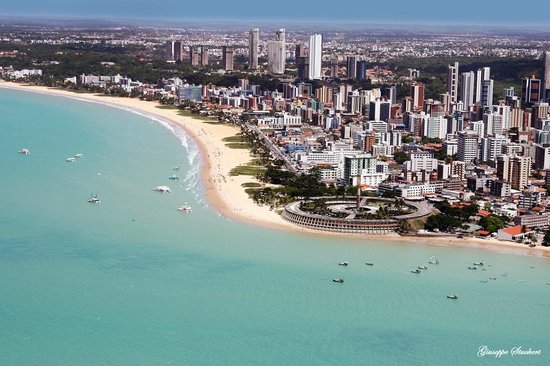
João Pessoa - Cidade que Encanta05:47
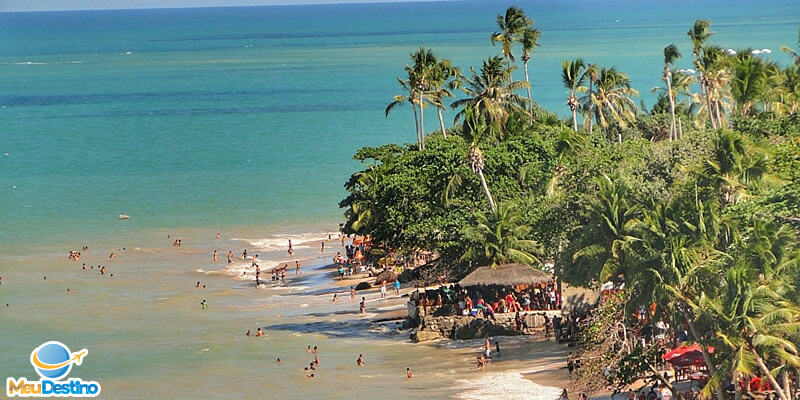
João Pessoa - Melhor Época do Ano10:37
O QUE CONHECER NO CENTRO HISTÓRICO DE JOÃO PESSOA10:53
Roteiro completo em João Pessoa10:26
Centro Cultural São Francisco em João Pessoa05:56
IGREJA NOSSA SENHORA DO CARMO EM JOÃO PESSOA06:13
BASÍLICA NOSSA SENHORA DAS NEVES EM JOÃO PESSOA06:46
Centro Cultural de São Francisco Centro Cultural em João Pessoa PB01:29
Centro Cultural São Francisco - Reportagem05:56
Igreja de São Francisco em João Pessoa09:29
João Pessoa PB Attractions
1. João Pessoa PB’s Urban Beaches
There are 30 kilometres of a privileged combination of infrastructure and lively urban beaches.
João Pessoa, the capital of Paraíba, is known for its beautiful and accessible urban beaches.

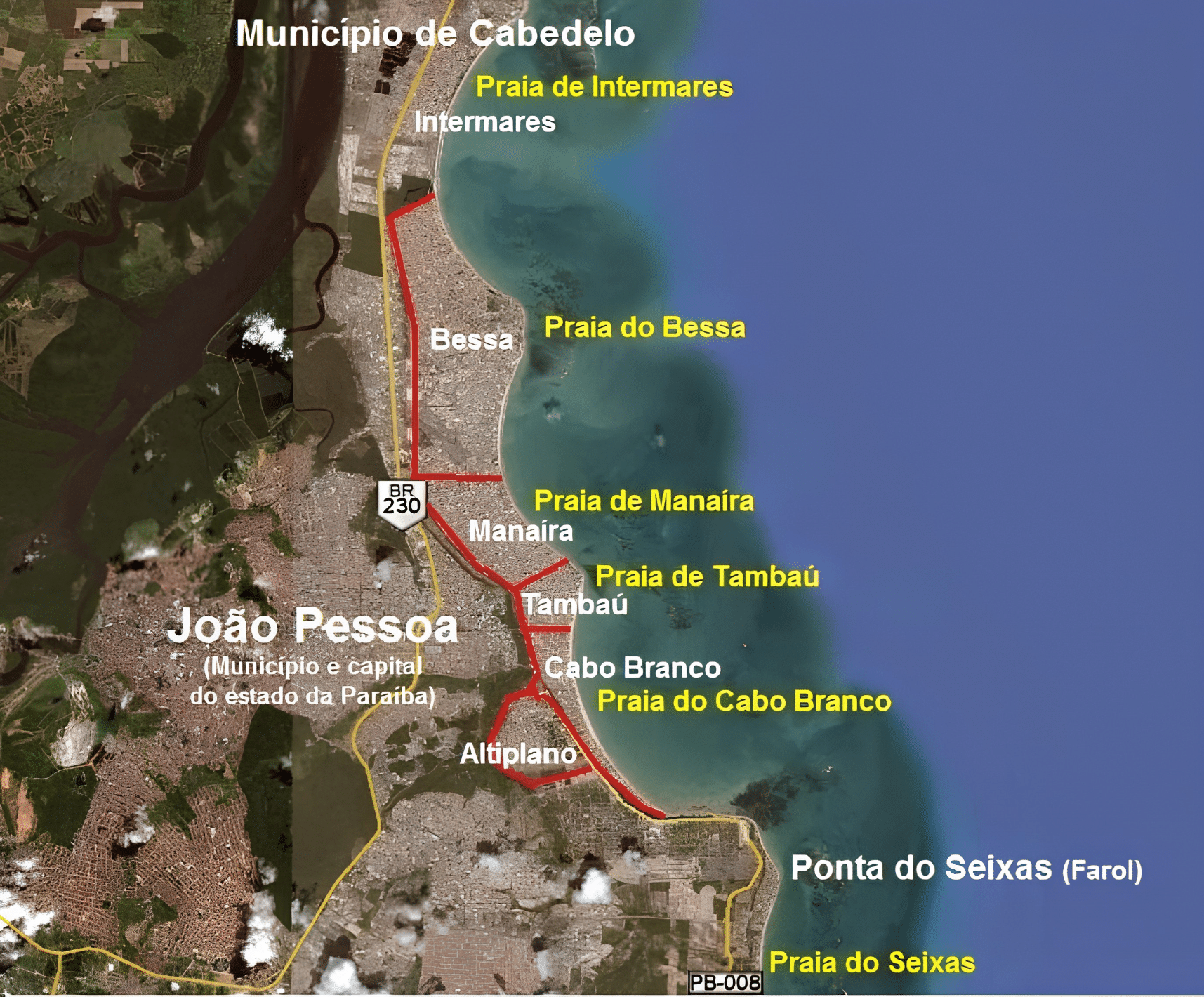
João Pessoa has 30 kilometres of beautiful urban beaches:
João Pessoa’s beaches
1. Tambaú Beach

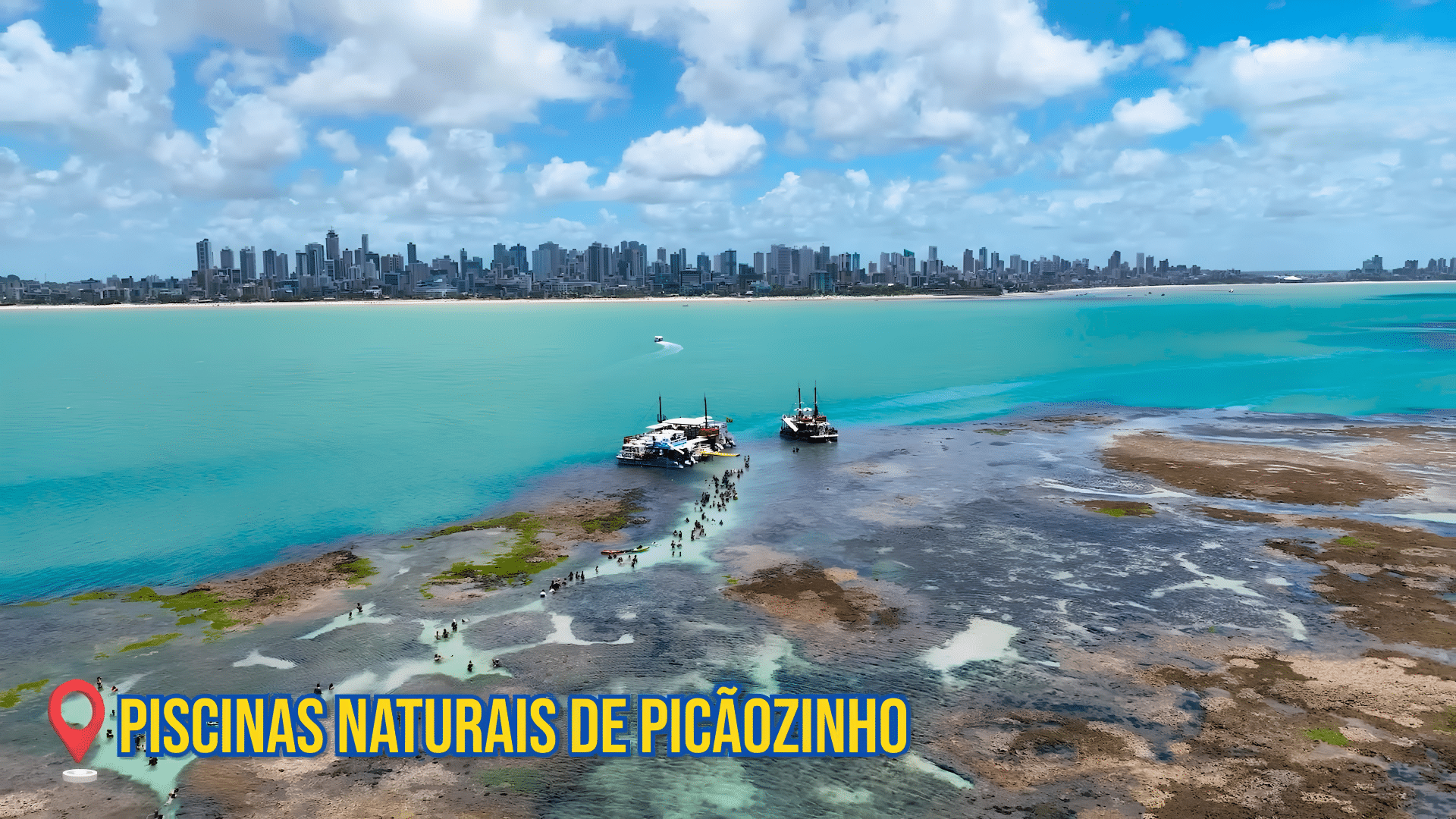
One of the city’s most popular beaches, known for its lively atmosphere, craft markets and boat trips to the natural pools of Picãozinho, a true paradise for visitors.
2. Cabo Branco Beach

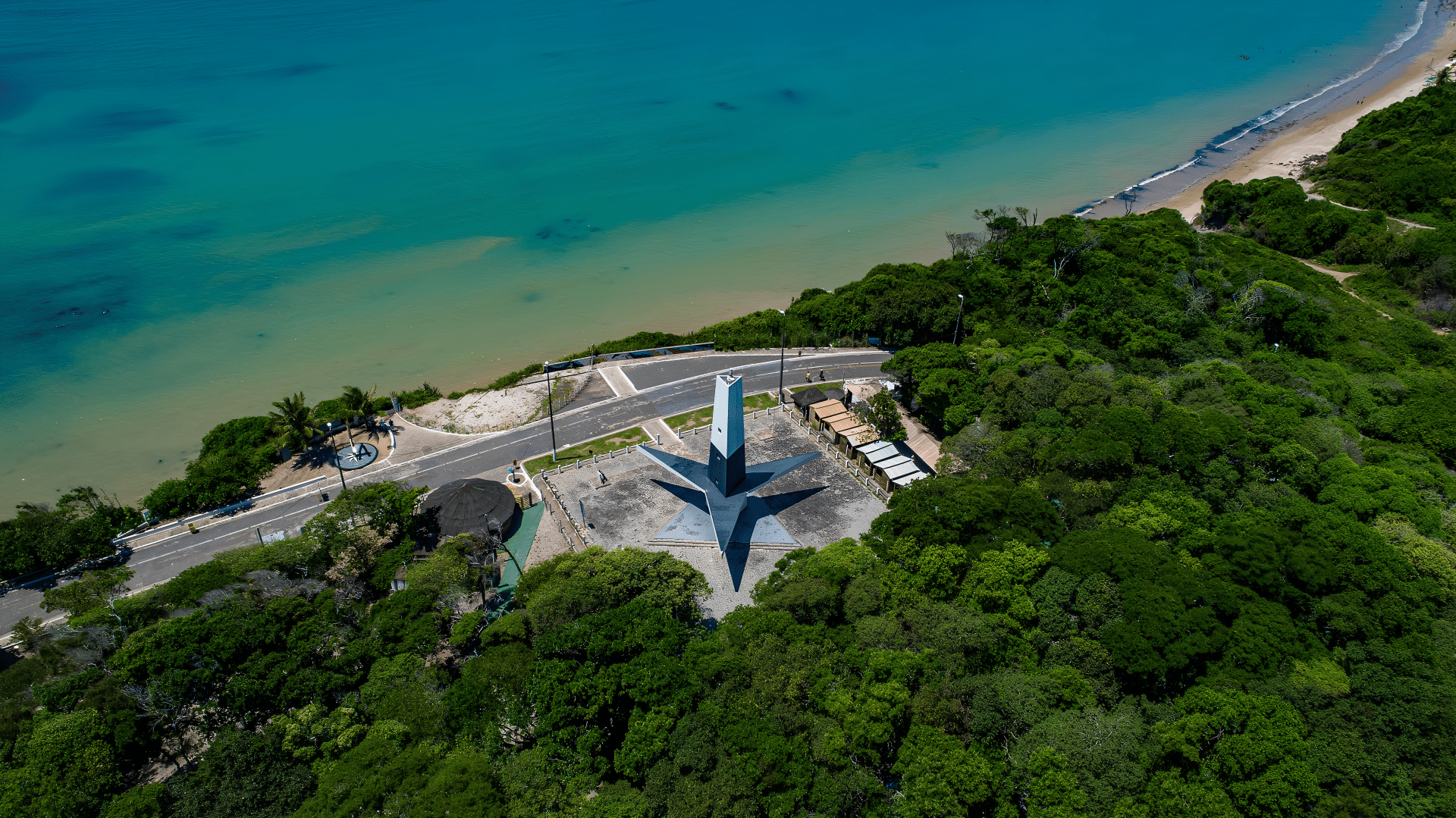
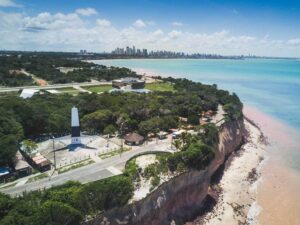
Famous for the iconic Cabo Branco lighthouse, the highest point in the city, and for its promenade, ideal for walking and cycling, with breathtaking views of the coastline.
4. Manaíra Beach

Although less popular for swimming due to rocks that make it difficult to access the water in some areas, Manaíra offers beautiful views, a variety of restaurants and is close to Manaíra Shopping, an important shopping centre.
5. Bessa Beach

With calm, warm waters, it’s perfect for families. It’s a popular spot for stand-up paddling, has several kiosks and restaurants, and is a popular venue for events and festivals.
6. Seixas Beach

Considered the most easterly point in the Americas, it is ideal for watching the sunrise. Its clear waters and coral reefs make it ideal for snorkelling, attracting lovers of marine life.
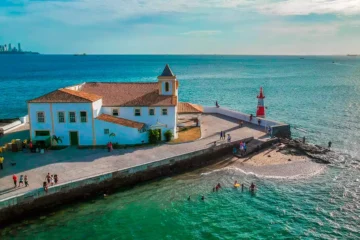
7. Penha Beach

Secluded and tranquil, it is home to the historic Church of Penha, an important tourist attraction and place of historical interest, offering visitors a serene and cultural atmosphere.
Cabo Branco Lighthouse
The Cabo Branco lighthouse is located in a coastal area near the Cabo Branco beach in João Pessoa, Paraíba, Brazil. It’s a very famous tourist spot and here’s some information about it:
- Location: The Cabo Branco Lighthouse is located at the easternmost point of the Americas, marking the spot where the sun rises first.
- History: Inaugurated in 1972, the lighthouse features modern, minimalist architecture designed by Pedro Abraão Dieb and was built to aid navigation.
- Attractions: In addition to visiting the lighthouse, which offers an incredible panoramic view of the Atlantic Ocean and the coast of Paraiba, the site has a contemplation area, trails and a beautiful natural landscape all around, ideal for hiking.
- Visiting: It is possible to visit the lighthouse every day, with specific opening hours that may vary throughout the year. Admission is generally free, but restrictions may apply on public holidays or during special events.
- Cultural Interest: As well as being an important geographical landmark, the Cabo Branco lighthouse has become a cultural and tourist symbol of the city of João Pessoa. It is a popular place to visit and watch the sunrise and sunset, attracting many photographers and nature lovers.

For those who love history, architecture and beautiful natural views, a visit to the Cabo Branco Lighthouse is highly recommended when exploring the region’s beauties.
See the map of Paraíba’s beaches
2. Historic Centre of João Pessoa
The João Pessoa Historic Centre is located in the city of João Pessoa, capital of the Brazilian state of Paraíba. It was declared a Brazilian National Heritage Site on 6 December 2007, after being inscribed in the Historical, Archaeological, Ethnographic and Landscape Tombo Books of the National Institute of Historical and Artistic Heritage(Iphan).

Area and buildings
There are 37 hectares of listed land and an estimated 700 buildings, as well as streets, squares and historic parks, that make up this ensemble, which includes most of the Varadouro and Downtown neighbourhoods.
Architecture and styles
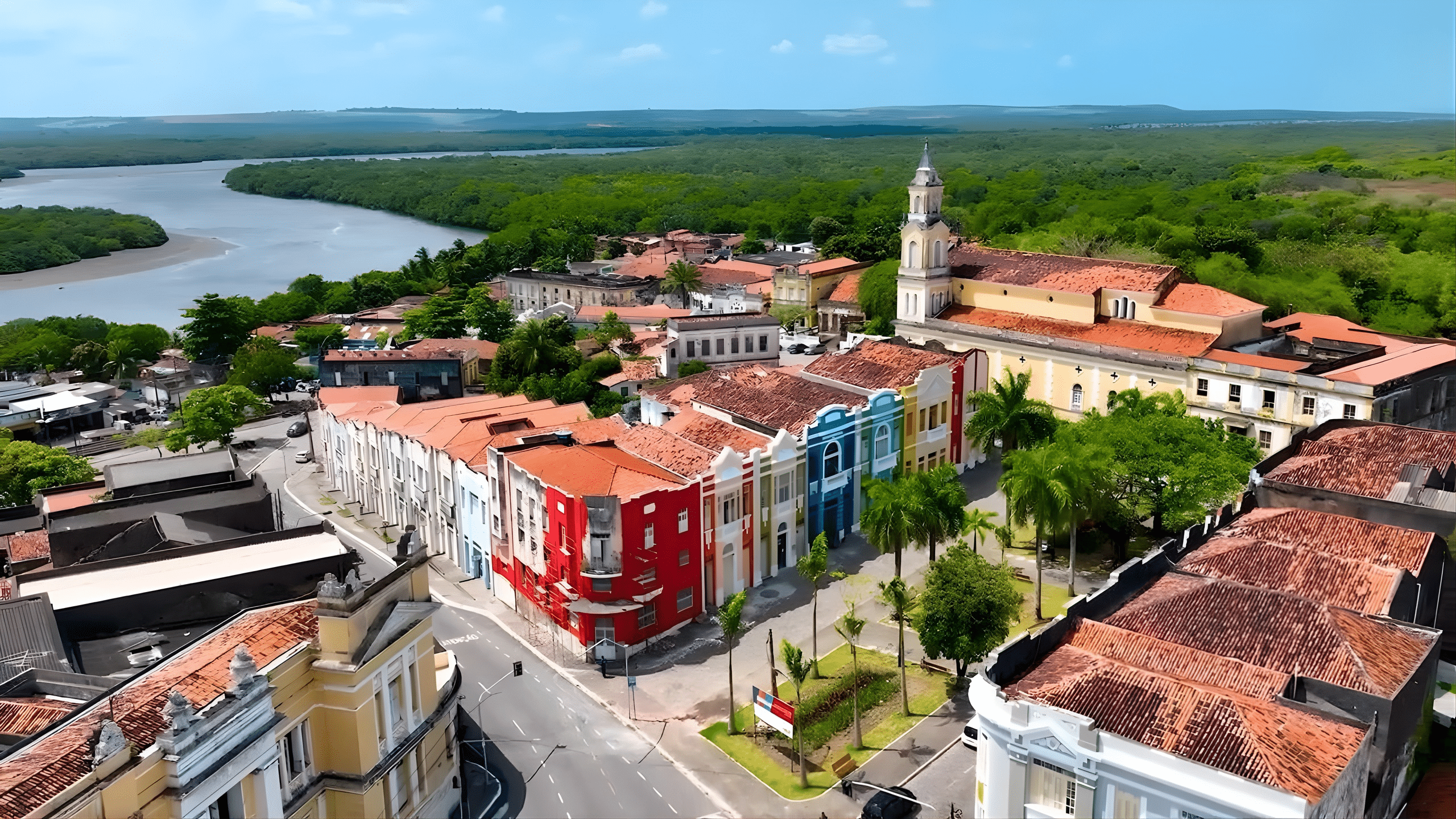
Its buildings form a scenario of different styles and era, full of sobrados, squares, colonial houses and secular churches, considered the main architectural collection of Paraíba, documenting the different phases of the local history, and one of the largest and most important historical sites in Brazil.

Historical periods
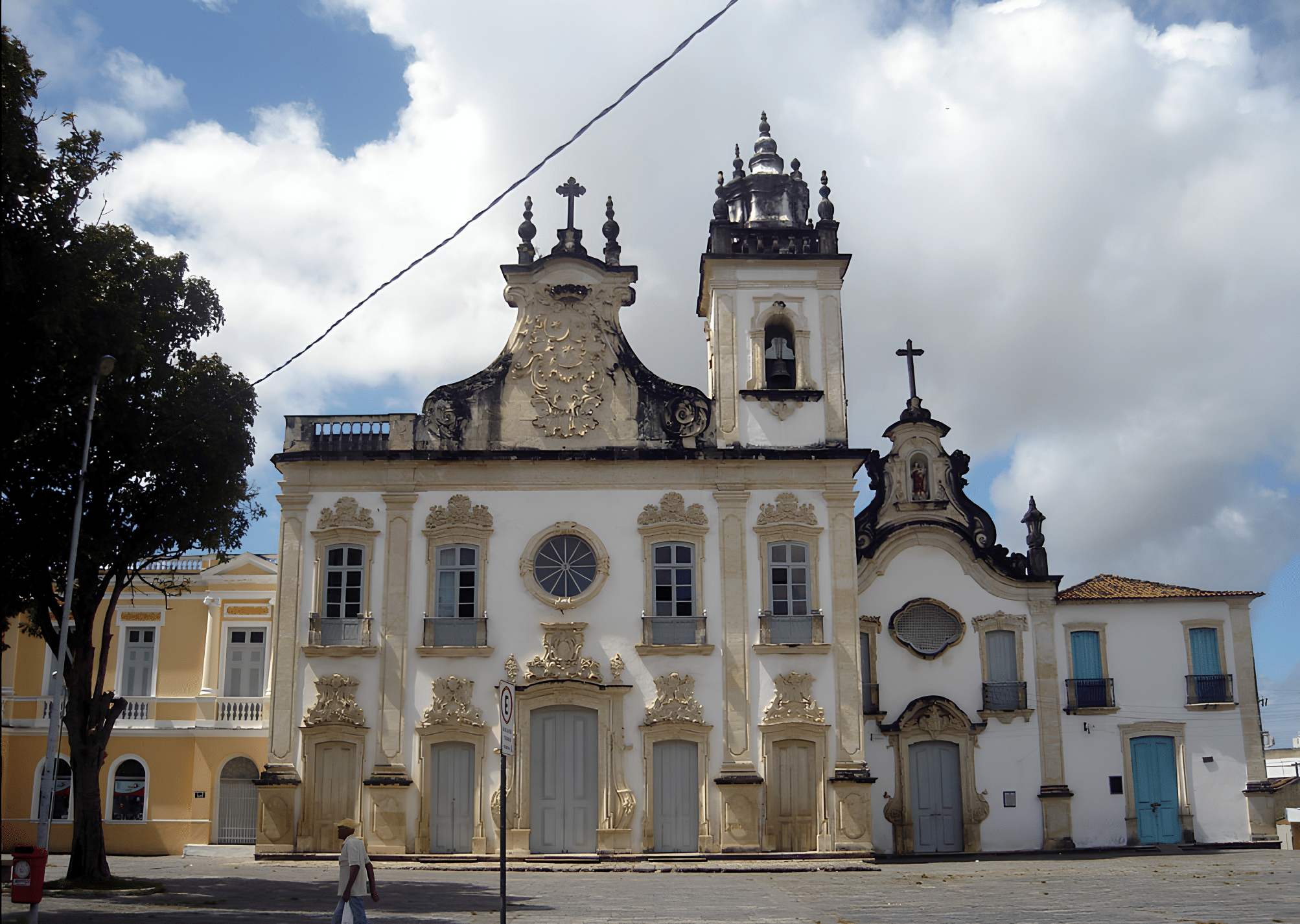
Within the demarcated area, there are properties that represent different periods in the history of João Pessoa, such as the Baroque Church of the Third Order of São Francisco; the Rococo Church of Nossa Senhora do Carmo; the Mannerist style of the Church of the Misericórdia, all from the 17th century; the colonial and eclectic architecture of the civil houses, and the art nouveau and art deco architecture of the 1920s and 1930s, which dominates Praça Antenor Navarro and the former Hotel Globo, the city’s first, now converted into a cultural centre.
Architectural highlights
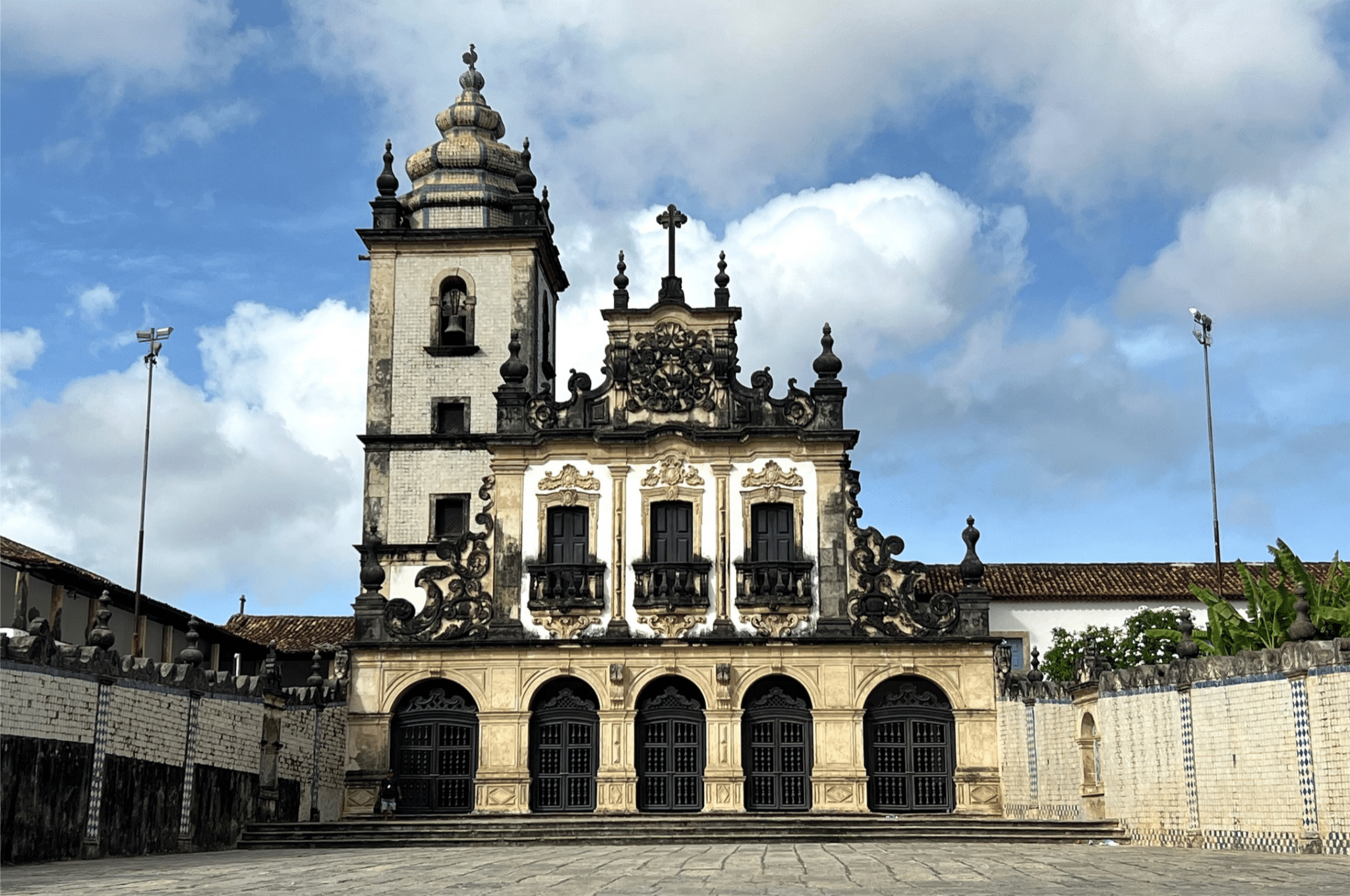
Amidst colonial mansions and buildings with Baroque features, the architectural ensemble of the Church of São Francisco and the Convent of Santo Antônio stand out.
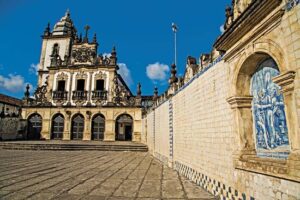
The church of São Francisco, once run by Franciscan friars, has a cemetery with Portuguese tiles depicting the stations of the Passion of Christ.
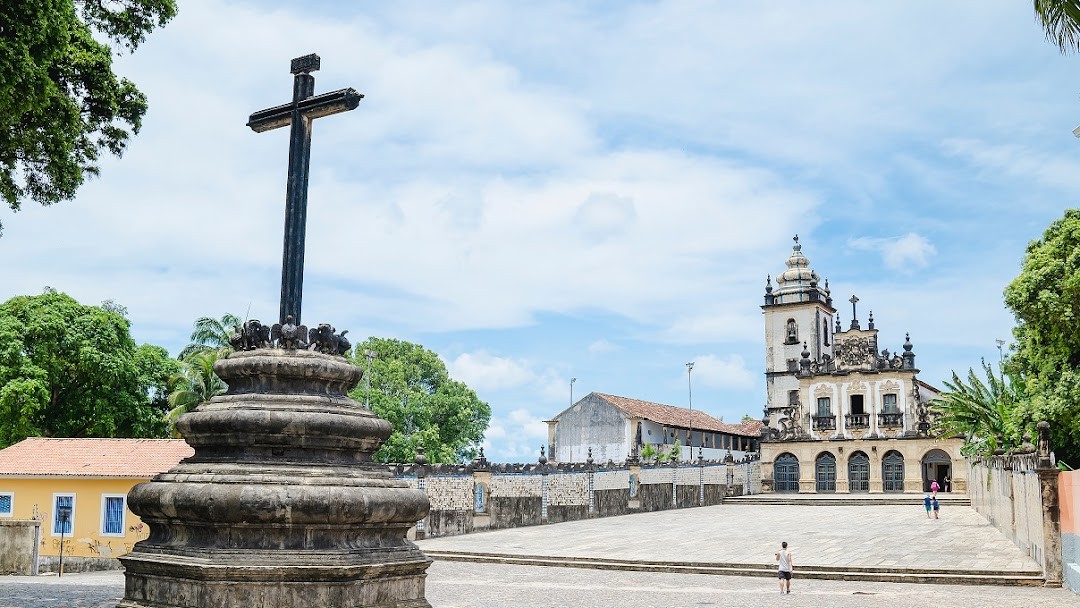
To the left of the church is the Golden Chapel, with an image of St Anthony and carvings covered in gold. In the courtyard outside is a huge limestone Cross, considered the largest baroque monument in Latin America.
João Pessoa Square
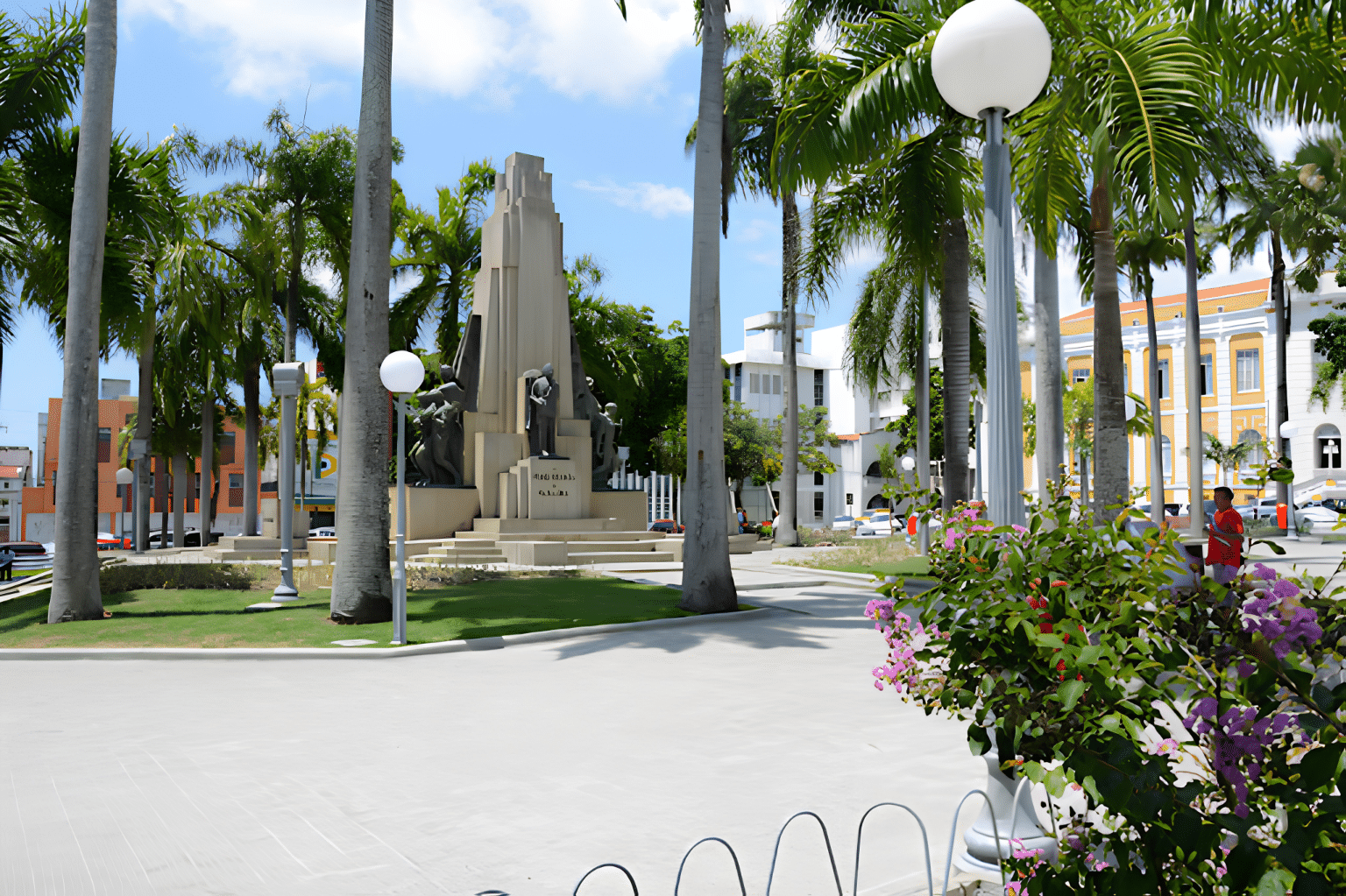
João Pessoa Square is home to the Legislative Assembly building, whose modern architecture contrasts with the antiquity of the Palácio da Redenção (seat of the State Government) and the Court of Justice.
The square is also the site of the Faculty of Law, the first in Paraíba, where many historical and political events have taken place, and which stands out for its beautiful architecture.
Santa Roza Theatre
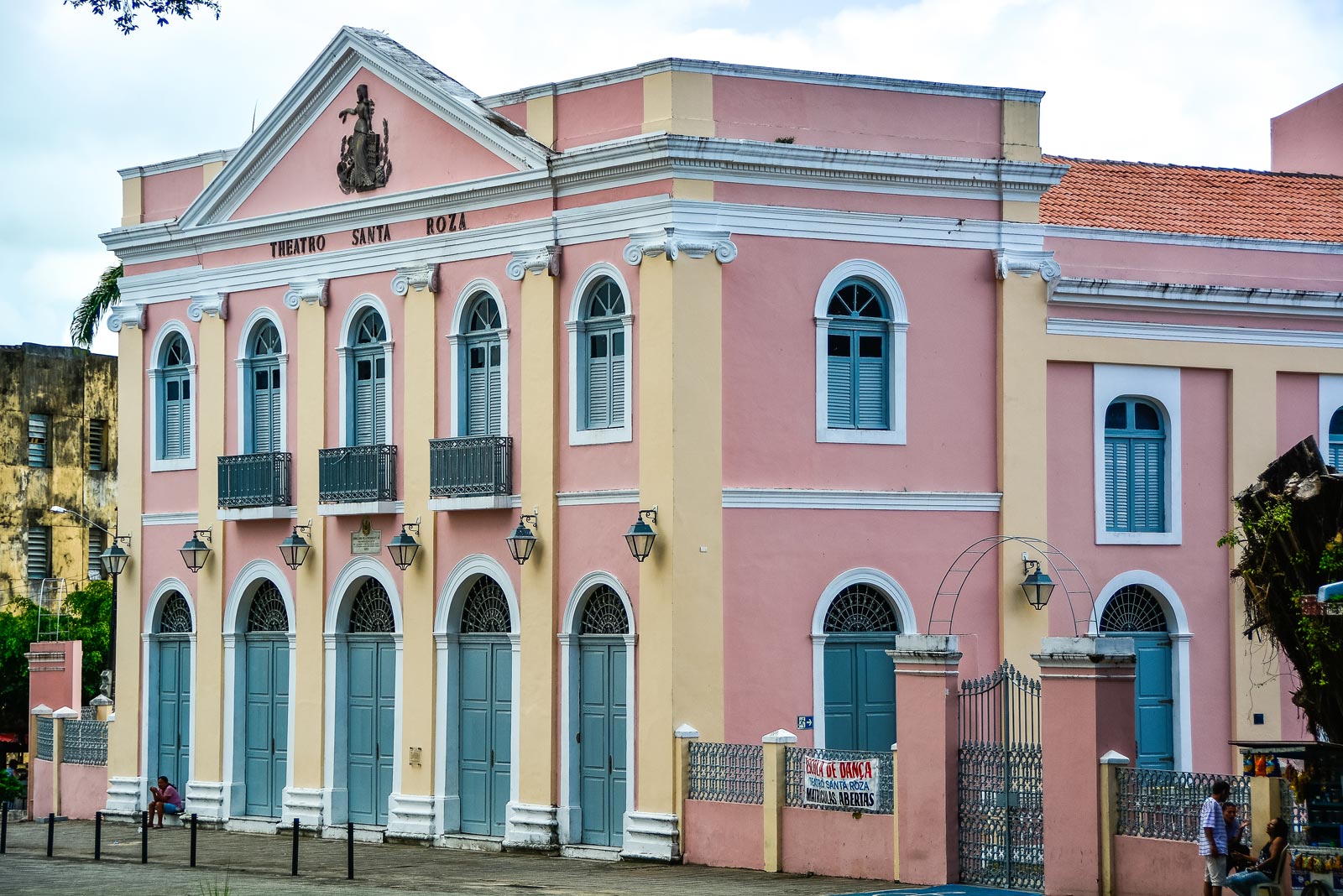
In Praça Pedro Américo you’ll find the Santa Roza Theatre, inaugurated in 1889, which is one of the oldest theatres in Brazil, with a baroque style and Greco-Roman façade.

3. Tourist Attractions in the Historic Centre of João Pessoa
- CHURCH OF OUR LADY OF CARMEL
- BASILICA OF OUR LADY OF THE SNOWS
- MONASTERY OF SAINT BENEDICT
- ANTENOR NAVARRO SQUARE
- JOÃO PESSOA SQUARE
- SÃO FREIPEDRO GONÇALVES CHURCH AND SQUARE
- SÃO FRANCISCO CULTURAL CENTRE
- RELIGIOUS ARCHITECTURE
- GUNPOWDER HOUSE
- SANTA ROSA THEATRE
- TITO SILVA & CIA WINE FACTORY
- LITERARY MUSEUMS
1. CHURCH OF OUR LADY OF MOUNT CARMEL
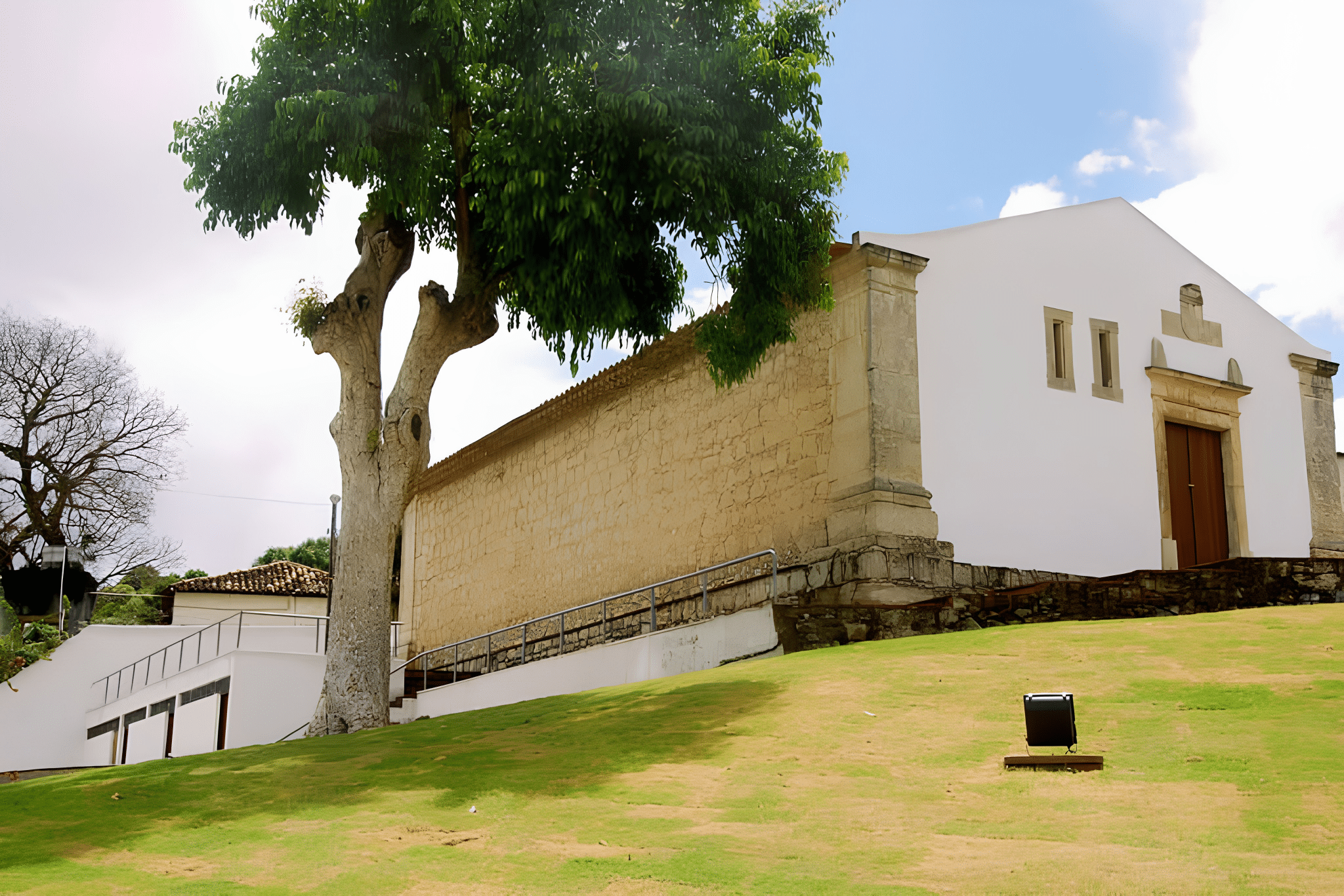
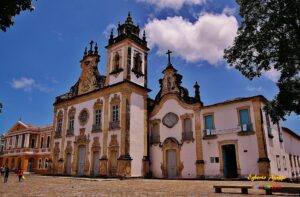
The Church of Our Lady of Mount Car, located in the historic centre of the city in Dom Adauto Square, is part of an architectural complex built by the Carmelites, which includes the Church of Our Lady of Mount Car, the Episcopal Palace (formerly a Carmelite convent and now the seat of the Archdiocese of Paraíba), and the Church of Our Lady of Mount Car, both built in the 16th century and listed by the State Institute of Historical and Artistic Heritage of Paraíba (Iphaep), and the Church of Santa Teresa de Jesus of the Third Order of Carmo, built in the 18th century and listed by the National Institute of Historical and Artistic Heritage (Iphan).

The Carmelites probably arrived in Paraíba in 1591, along with the Benedictines, Franciscans and Jesuits, with the aim of evangelising and catechising the Indians.
At the end of the 16th century, the Carmelites began building their own house in Paraíba. The work took a long time to complete and included the Carmo Convent, the Church of Our Lady of Carmo, the Chapel of St Teresa and the house of exercises for the Third Brothers.
The Carmelite complex was not completed until the 18th century, when, according to historical records, Brother Manuel de Santa Teresa completed the work with his own funds.
Address: Praça Dom Adauto, s/n – Centre
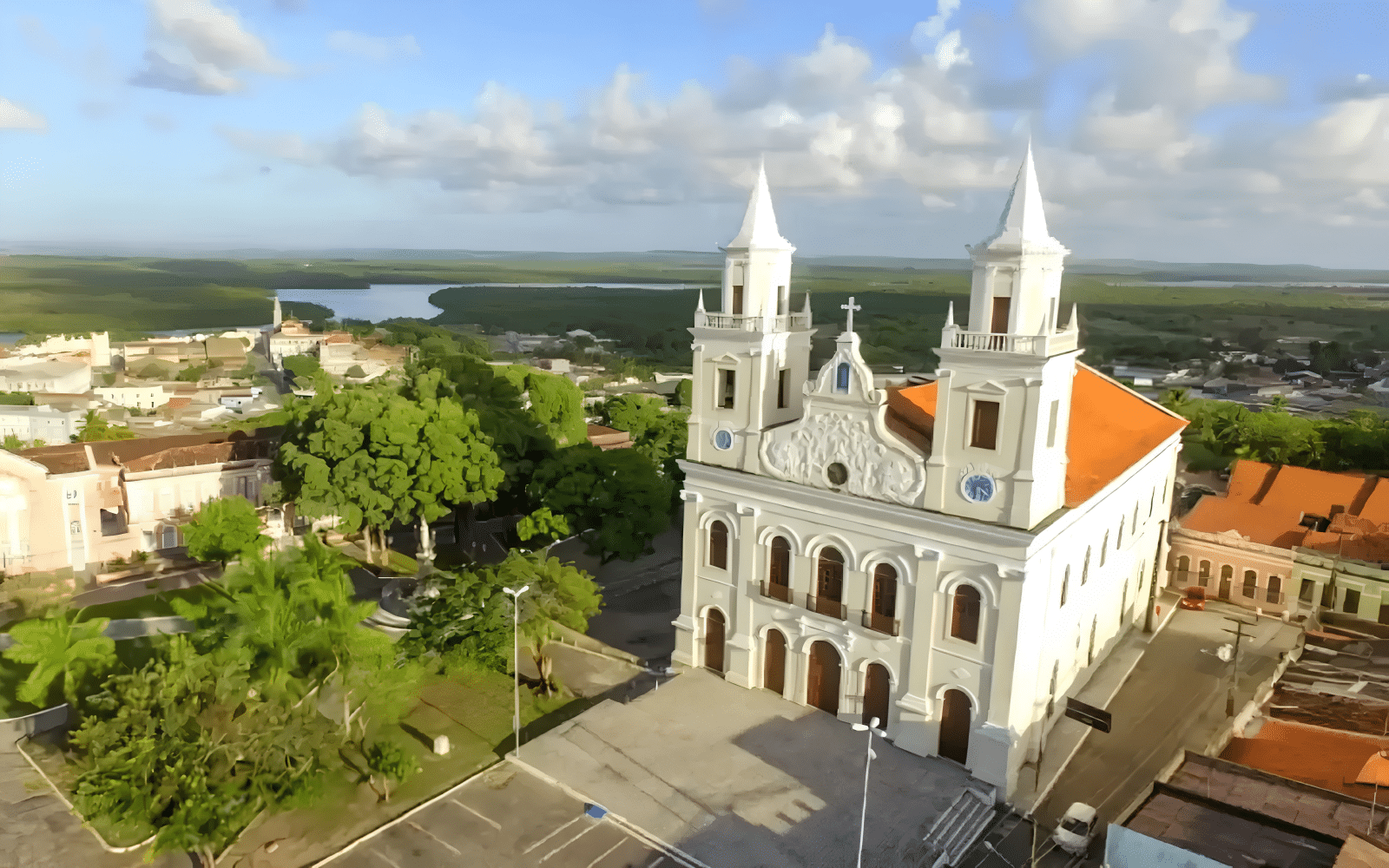
2. Basilica of Our Lady of the Snows
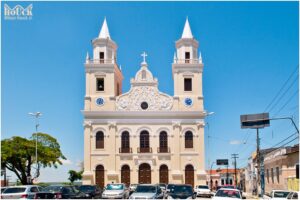
The Basilica of Our Lady of the Snows was built in 1586 by the first settlers of Paraíba in honour of Our Lady of the Snows.
It was a simple rammed earth building that was rebuilt at the beginning of the 17th century. Work and renovations continued throughout the 17th and 18th centuries.

In 1881, the church began to be rebuilt, taking on the eclectic style it has today. The consecration took place on 1 August 1894, already with the title of Cathedral, since the Diocese of Paraíba had been created on 4 March, with its seat in the church of Nossa Senhora das Neves.
In 1914 the diocese was elevated to Archdiocese and Metropolitan See. During the episcopate of Bishop Marcelo Pinto Carvalheira (1995-2004), the cathedral underwent a major renovation. In November 1997 it was given the title of Basilica.
Address: Praça Dom Ulrico, s/n – Centre
3. São Bento Monastery.
The Convent of São Bento, located in the historic centre of João Pessoa, is a Baroque complex built by Benedictine monks, consisting of a monastery and a church, considered one of the most important in Brazil.
The monastery dates from the 17th century and the church from the 18th century. The church was declared a National Historical and Artistic Heritage by the National Institute of Historical and Artistic Heritage (IPHAN) on 10 January 1957.

The complex was restored in 1995 and now hosts musical concerts and sung masses.
The complex, made up of the church and monastery, was built under the invocation of Our Lady of Mount Serrat. The work began with the arrival of the Benedictines in João Pessoa, when the state was the Royal Captaincy of Paraíba, around 1590.
Once built, it became one of the first and most important places of worship in João Pessoa. According to IPHAN, this complex is one of the most important monuments in the country for its style and period.
Address: Av. Gen. Osório – Centre
4 Antenor Navarro Square
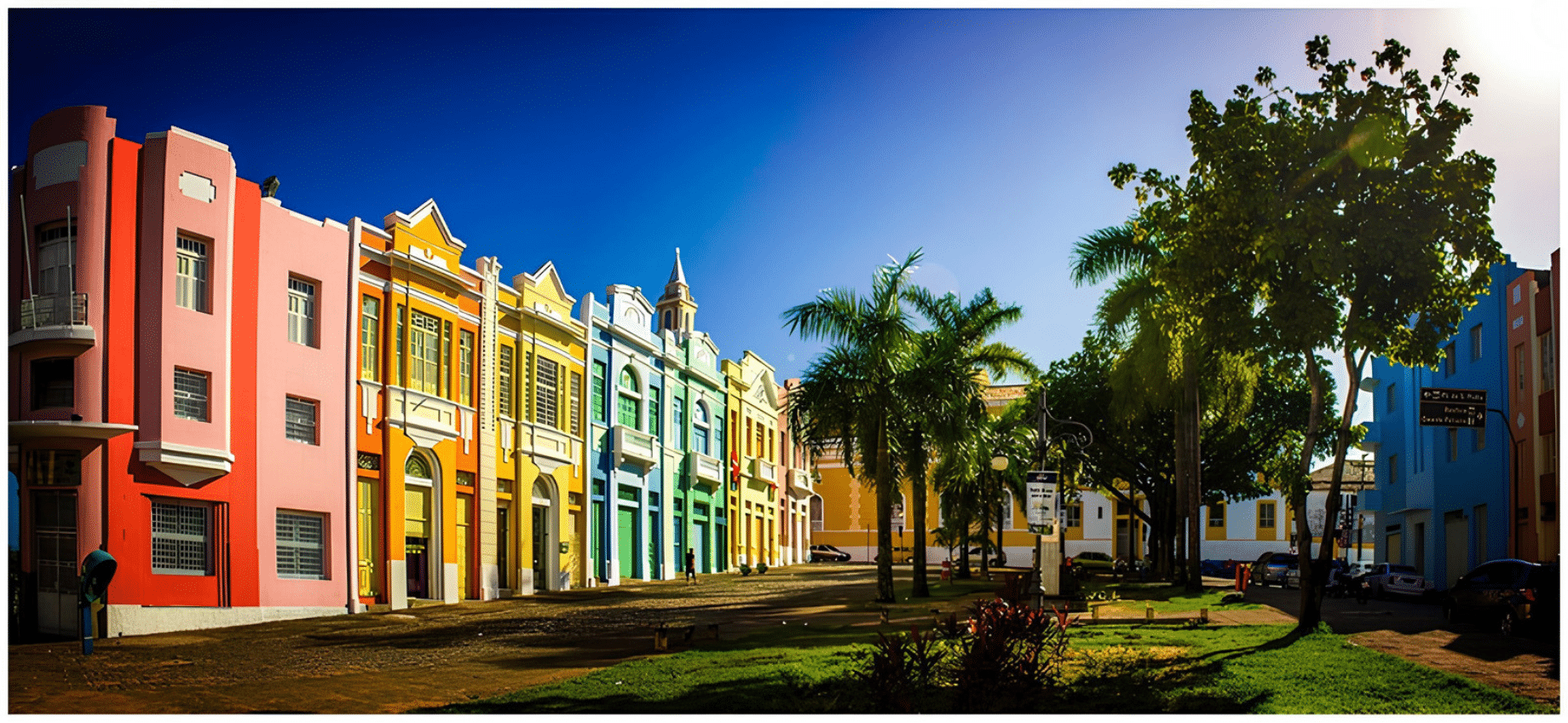
This is where Rua Maciel Pinheiro begins. It is the result of the urbanisation that took place in the area at the end of the 1920s and beginning of the 1930s, when a group of two- and three-storey townhouses, which housed a pharmacy, a boarding house and other commercial and residential establishments, were demolished to make way for an open space, designed as a square with jambeiros, benches and short walks, intended for meetings and interaction between the inhabitants of the local residences, and handed over to the population in 1933.

The houses on the sides of the square date from the same period. These houses housed commercial premises on the ground floor and the offices of top professionals on the upper floors. The buildings have eclectic architecture, with some examples of artistic decoration.
Today it houses the João Pessoa Cultural Foundation (FUNJOPE) and other cultural centres. It was revitalised in 1998. Nearby is the triangular block known as “Ferro-de-Engomar”. For those who like nightlife, Praça Antenor Navarro in João Pessoa has become a good option.
The revitalisation of the area has brought several bars, cafes, galleries and leisure centres to the city. It is also a popular place for photography, with its colourful early 20th century townhouses making it a historic and tourist centre.
Location: Historic Centre of João Pessoa – PB
Year built: Late 1920s
5. João Pessoa Square
This square is surrounded by state buildings.
The highlight is the Palácio da Redenção, the seat of government.
Built by the Jesuits in 1586, the building that houses the ashes of former president João Pessoa has undergone a series of interventions over the years, the most recent of which was the removal of the mosaic floor decorated with swastikas in 1995.

Next to it is the Law School of Paraíba, housed in the old Liceu Paraíbano building, inaugurated in 1745.
On the opposite side of the square is the Court of Justice, whose 1919 building, listed by the State Historical Heritage Institute, houses the crypt of former President Epitácio Pessoa in the basement. It is open to the public in the morning.
6 São Frei Pedro Gonçalves Church and Square
The original chapel of São Frei Pedro Gonçalves was built in the 17th century and demolished in 1843; the church that replaced it on the site was modified in 1916, giving it its current features.

In 2002, restoration work uncovered the first foundations, which are now open to visitors (Largo Frei Pedro Gonçalves, s/n, Varadouro).
On the left of the church square is another of João Pessoa’s landmarks, the Hotel Globo, built in 1929. The building, which now houses the Spanish consulate, has neoclassical and Art Deco influences.
The best time to visit the square is at dusk, when the sun casts an orange glow over the church and surrounding houses, turning everything into pastel shades. After 6pm the square becomes deserted and unsafe.
7. São Francisco Cultural Centre
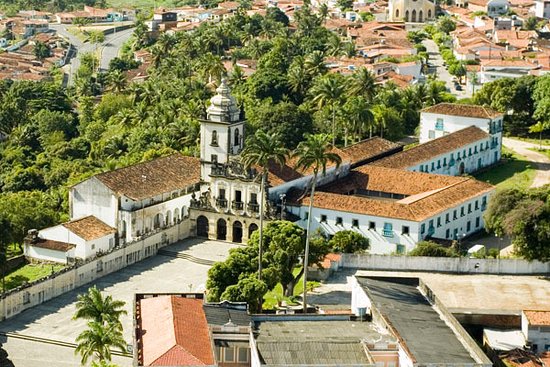
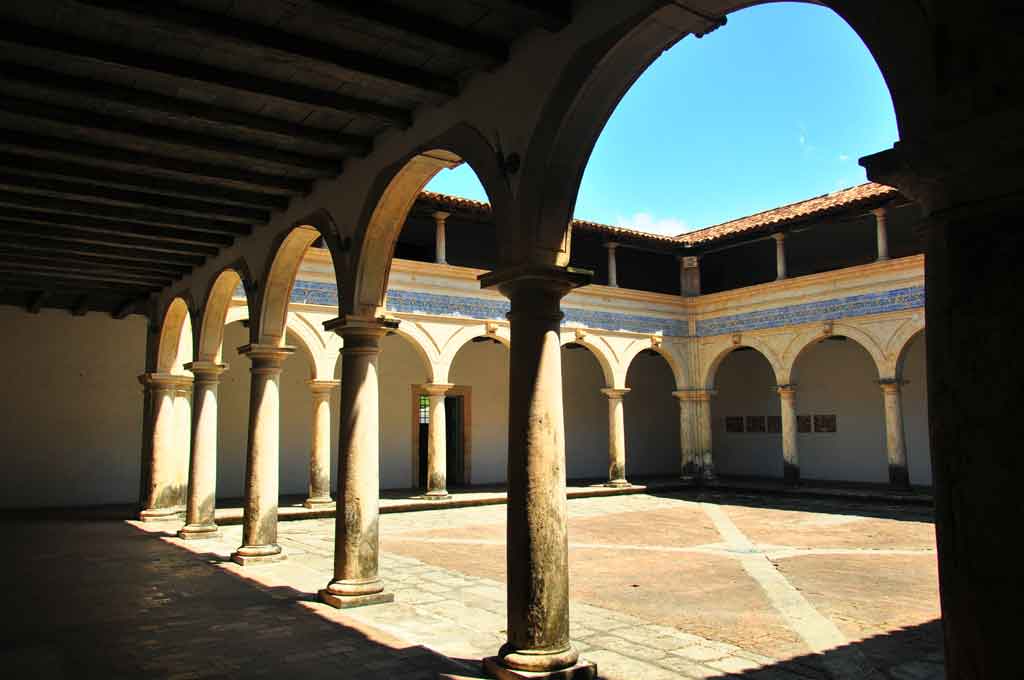
It is housed in an architectural complex that includes the Church and Convent of Santo Antônio, the Chapel of the Third Order of São Francisco, the Chapel of São Benedito, the House of Prayer of the Third Order (called the Golden Chapel), the Cloister of the Third Order, a fountain and a large cemetery with a cross, constituting one of the most remarkable testimonies of Baroque in Brazil.

Due to its importance, it has been listed by IPHAN. At the time of its foundation, the church was dedicated to Saint Anthony, and apparently its name was changed at the beginning of the 20th century due to popular custom, but it is still known by its old name.
The history of this architectural complex – one of the most important of the Brazilian Baroque – begins in 1589, when the Franciscans built an adobe monastery.
In 1602, they began building the Church of São Francisco, with its Baroque architecture in limestone.
The date engraved on the frontispiece is 1779, the tower 1783 and the cemetery 1788.
Tourists may forget the dates, but they will not forget the interior of this ancient building: the nave, surrounded by a tiled panel depicting the story of Joseph in Egypt, contains a pulpit with beautiful carvings.
The ceiling painting depicts Saint Elias. On the left is the Golden Chapel, with the image of St Anthony and carvings covered in gold.
In the choir are beautiful 18th-century rosewood chairs and eight panels from the same period.

The convent, which has been a cultural centre since 1990, houses a museum of sacred art, another of popular art and the Stone Gallery, which displays fragments of stone from different periods found during restoration work. Praça de São Francisco, s/n, Centre.
See also History of the São Francisco Cultural Centre in João Pessoa, Paraíba.
8. Religious architecture
In addition to the São Francisco architectural complex and the São Frei Pedro Gonçalves church, there are other religious buildings in the capital of Paraíba.
The Church of São Bento, from the early 18th century, listed by IPHAN, preserves its Baroque façade, although the interior has been deconsecrated (Rua Gal. Osório, 36, Centro).
The church of Nossa Senhora do Carmo, also Baroque, is attached to the chapel of Santa Teresa d’Ávila, which is being restored, and has a façade of carved stone and a rich carving inside (Praça D. Adauto, s/n, Centro).
The parish church of Nossa Senhora das Neves was built in the 19th century on the site where the first chapel in the city was built in 1585. Its eclectic façade dates from a renovation carried out between 1881 and 1884 (Praça D. Ulrico, s/n, Centre).
The Church of the Misericórdia is modest and unadorned, built in the 16th century; the arch of the choir still bears the emblem of the Portuguese Crown (Rua Duque de Caxias, s/n, Varadouro).
9. Gunpowder House
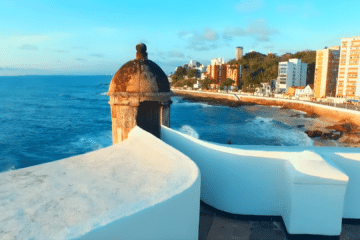
This small fortress, built in 1710, is located on a strategic high point and was used as an ammunition depot.

Built of stone, it now houses the Walfredo Rodrigues Photographic Museum, which has a small collection of old images of the city.
The main attraction, however, is the view of the Sanhauá River. Lado São Francisco, s/n, Varadouro.
10. Santa Rosa Theatre
Thirty-six years passed between the start of construction (1853) and the inauguration (1889), during which time the theatre was used as a military infirmary.
When the neoclassical building finally opened its doors, we saw imposing and exquisite installations made of stone pine.

Renovated in 1989, the Santa Rosa Theatre has a capacity of 418. Praça Pedro Américo, s/n, Centre.
11. Tito Silva & CIA Wine Factory
Inspired by French visitors to Paraíba, businessman Tito Henrique da Silva founded a cashew wine factory in 1892. Production, which won international awards at the beginning of the 20th century, continued until the 1980s.
In debt, the factory closed its doors, but all its assets – the building, machinery and equipment – were listed by IPHAN. Today, the three blocks of the old factory house presses, barrels and other items.
It is also home to the Oficina Escola de Revitalização do Patrimônio Cultural de João Pessoa (João Pessoa Cultural Heritage Revitalisation School Workshop), a civil society organisation that offers restoration courses to young people who, after training, work to preserve the city’s heritage. Rua da Areia, 33, Varadouro.
12. Literary Museums
Two of the greatest exponents of Brazilian regionalist literature, José Américo de Almeida (1887-1980) and José Lins do Rego (1901-1957), came from Paraíba. The former was born in Areia, the latter in Pilar.
It’s understandable, then, that both are honoured in the state capital with cultural spaces that bear their names.
The Casa de José Américo de Almeida Foundation is located in the house where the writer and politician (he was governor of Paraíba in 1950) lived from 1953 until his death. In addition to his personal belongings, it houses his library – small but rich in bibliography on the Northeast.
Located in Cabo Branco, the house overlooking the sea was a landmark at the beginning of the urbanisation process of this part of the coast.
As well as looking after the collection of the novelist of A Bagaceira, published in 1928, the Foundation is responsible for projects aimed at preserving the State’s intangible heritage (Av. Cabo Branco, 3336, Praia do Cabo Branco).
The José Lins do Rego Cultural Centre houses a museum dedicated to the author of Menino de Engenho (1932).
Manuscripts, books and even the writer’s typewriter are on display. José Lins do Rego spent part of his life in Recife and died in Rio de Janeiro (Rua Abdias Gomes de Almeida, 800, Tambauzinho).
See also History of the foundation of Paraíba and João Pessoa.
João Pessoa in Paraíba – Sights and Historic Centre – Travel and Tourism Guide
This post is also on:
Português
English Deutsch
Español
Français