Morro de São Paulo: A Car-Free Paradise with Stunning Beaches and a Rich History
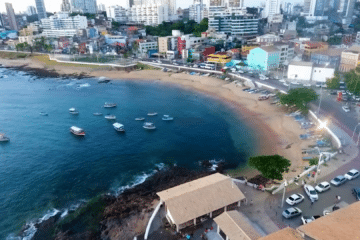
Morro de São Paulo is a car-free village, an island with no banks, with a lively nightlife and paradisiacal beaches.
Located at the northern tip of Tinharé Island, it is the most popular destination and the one best equipped to welcome tourists. It forms part of the municipality of Cairu, in the Lower South of Bahia.
As it is an island, there are no tourist cars on the roads; only 4×4s, motorbikes from rental agencies, quad bikes and handcarts are permitted.

The Tinharé archipelago consists of three large islands – Tinharé, Boipeba and Cairu – as well as 23 islets.
Boipeba Island
On Boipeba Island, four true gems of the Brazilian coastline await visitors: Cueira, Moreré, Bainema and Ponta de Castelhanos. Known for its unspoilt beaches and rich ecosystems, Boipeba is a must-visit destination for lovers of nature and ecotourism, and is just a 50-minute boat ride from Morro de São Paulo.

See the map of the Costa do Dendê
Videos about Morro de São Paulo

Morro de São Paulo na Bahia04:39

Morro de São Paulo - Dicas06:59

Morro de São Paulo e Tinharé09:41
Morro de São Paulo a noite02:37
Morro de São Paulo - Reportagem Completa33:46
Noite em Morro de São Paulo o que fazer?12:31
O que não te contaram sobre Morro de São Paulo08:08
See also the Cairu Archipelago, which offers stunning scenery and a wealth of culture.
Morro de São Paulo in Bahia

Top Beaches
In Morro de São Paulo, the main beaches are numbered in order of their proximity to the centre and are situated in the south of the island:
- Primeira Praia – Ideal for surfing.
- Segunda Praia – Famous for its bustling atmosphere and nightlife.
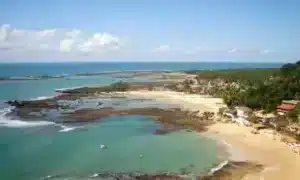
- Terceira Beach – A destination famous for its natural pools and a starting point for excursions.
- Quarta Praia – Places of peace and tranquillity, with kilometres of virtually deserted sandy beach.
- Quinta Praia (Praia do Encanto) – The best-preserved beach, an extension to the south of Quarta Praia.
With their warm, crystal-clear waters, these beaches offer a truly refreshing dip in the sea and a unique connection with nature.
To the north of the village, there are also beaches that are less frequented by tourists:
- Porto de Cima Beach
- Ponta da Pedra Beach
- Gamboa Beach
1. Primeira Praia
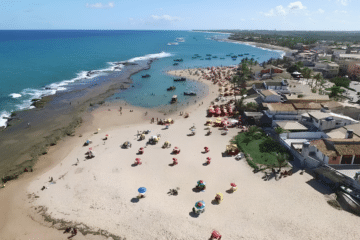
Primeira Praia is the beach for surfers. With bigger and stronger waves, it is a favourite with surfing enthusiasts. It is also the closest to the village and the first to have holiday homes built on it; it is very popular with locals and features beach huts serving traditional Bahian cuisine.

Located just 300 metres from the centre, it is home to a number of stalls serving food and drink, as well as guesthouses and holiday rentals.
As well as surfing, there are opportunities for diving at Laje do Forte, banana boat rides, water skiing and the longest zip line in Brazil, offering panoramic views of the beach.
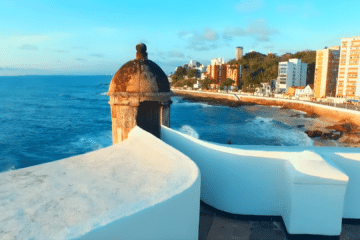
To round off the day, the best place to watch the sunset is at the Fort, which is very close by.
2. Segunda Praia
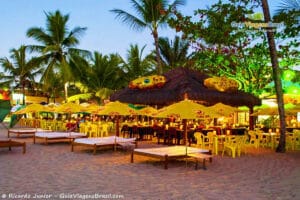
Segunda Praia is where all the action is. There, tourists will find Morro de São Paulo’s trendiest bars, kiosks and parties, with a high concentration of bars and restaurants.

The beach is a 10-minute walk from the centre and attracts visitors with its stunning views, lively music and sports such as volleyball and frescobol.
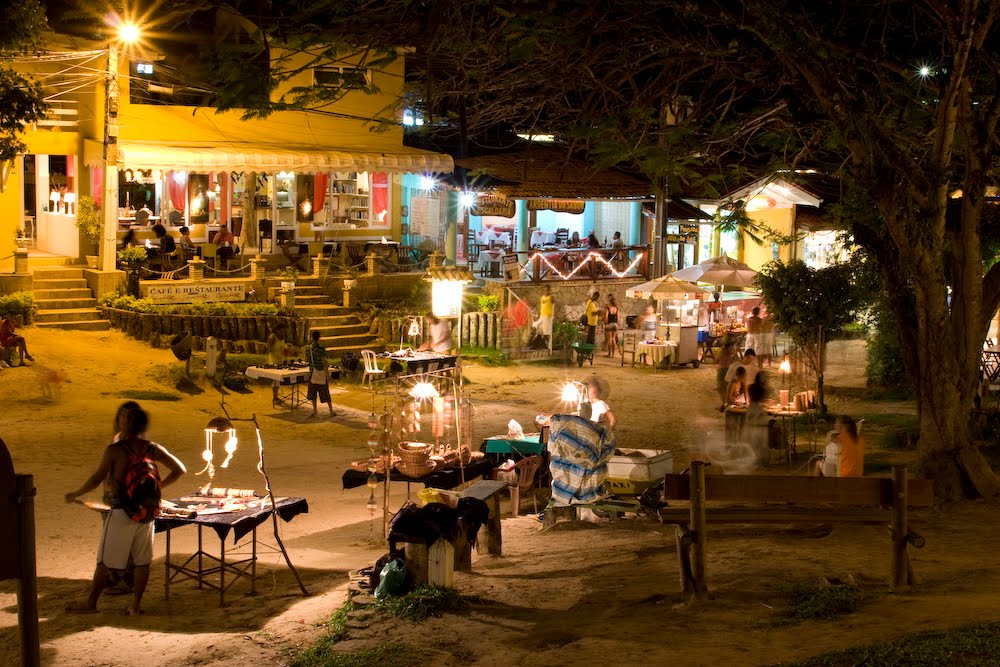
In the evenings, there are parties and luaus, with electronic music and drinks served at the stalls, as well as stalls selling handicrafts and the famous caipifrutas. The facilities are the best on the island, making it the most popular spot with tourists.
3. Terceira Beach
Terceira Praia is known for its tranquillity. Quieter than the previous beaches, it has guesthouses and rustic restaurants to suit all budgets, and it is from here that boat trips set off to explore the region.

It is almost 1 km long and its main attraction is Caitá Island, teeming with coral reefs and colourful fish, making it one of the best diving spots in the region.
You can hire kayaks to paddle out onto the calm sea and explore the surrounding area. The sandy strip narrows at high tide, but the facilities make up for it.
4. Quarta Praia
Quarta Praia is a natural beach. Known for its calm, crystal-clear waters, lined with coconut palms, stretching for over four kilometres of pure tranquillity and beauty — the largest and most secluded of the main beaches.

At low tide, natural pools form, protected by coral reefs, making them perfect for a relaxing swim. The landscape features coconut palms and an almost transparent sea, ideal for long walks along the seashore and getting up close to nature.
5. Quinta Praia (Praia do Encanto)
Situated six kilometres from the village, it is the best-preserved beach on the island. It boasts fine white sand, warm waters and mangroves, as well as a coral reef that forms incredible natural pools for snorkelling.
6. Praia da Gamboa
Located in the north of the island, on the way to Praia do Porto de Cima and Praia da Ponta da Pedra.

The village of Gamboa is home to fishermen and is still largely off the tourist trail, with beaches with calm waters and natural pools. It is an excellent retreat for those seeking peace and quiet, with beachside stalls serving traditional Bahian cuisine prepared by the fishermen’s families.

Other Historic Landmarks in Morro de São Paulo
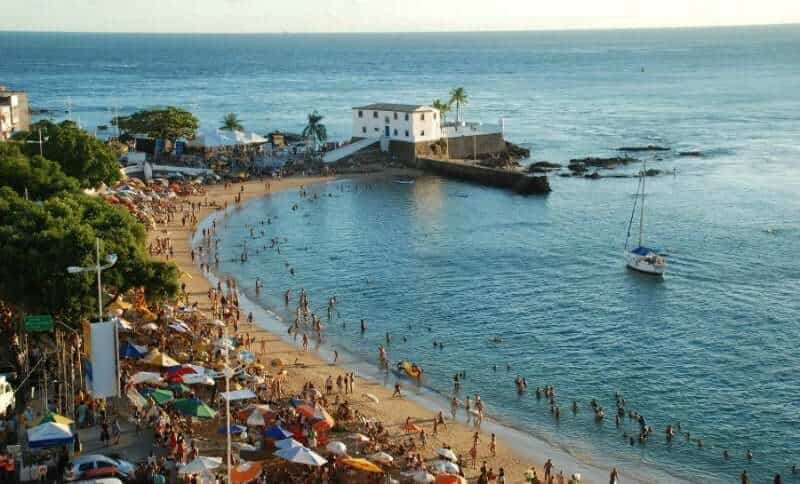
Tapirandu Fortress (Morro de São Paulo Fort)
Built in 1630, the Fort of Morro de São Paulo played a key role in the defence of the Bahia coastline.

Strategically situated, it protected the Tinharé Canal, through which the region’s agricultural produce was transported. Today, its ruins are listed by IPHAN.
On the surrounding beaches, natural pools form. It is a very popular spot for watching the sunset and, with a bit of luck, spotting dolphins.
Morro de São Paulo Lighthouse
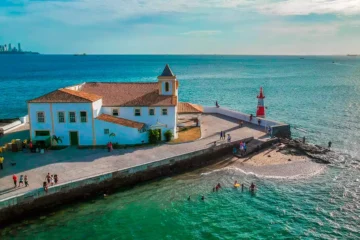
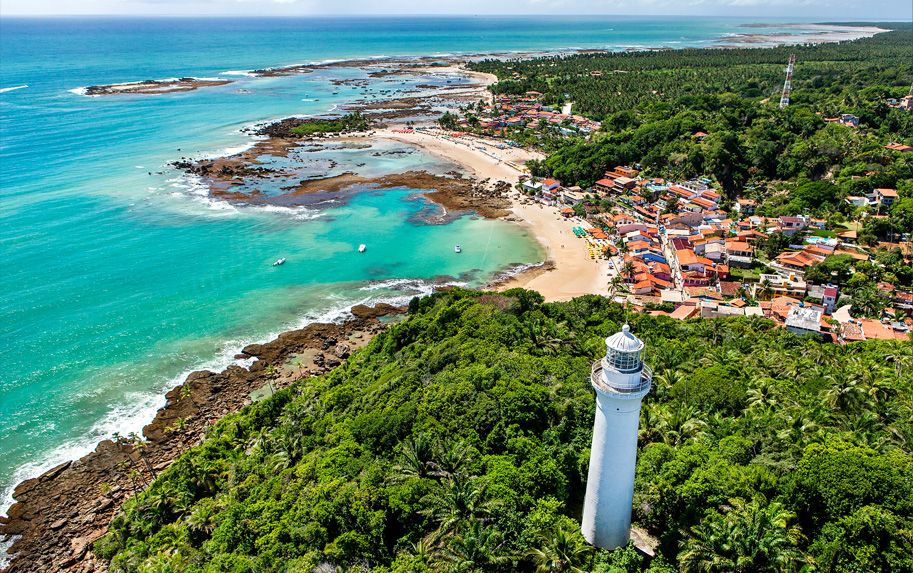
The Morro de São Paulo Lighthouse, built in 1855, features a viewing platform offering a panoramic view of all the surrounding beaches.

There is a zip line on site, where the bravest can launch themselves straight into the sea.
Fonte Grande (The Emperor’s Fountain)
Built in 1746, the Fonte Grande was used to supply water to the town and the troops. It is said that King Pedro II visited it whilst passing through the region.

Church of Our Lady of Light
The Church of Nossa Senhora da Luz houses Baroque altars and religious images from the 17th and 18th centuries.

According to tradition, the patron saint saved the island from the Dutch, who are said to have spotted large numbers of troops and abandoned their invasion.
The main religious festival takes place on 8 September, in honour of the patron saint.
How to Drive
Only tractors, garden vehicles and vehicles belonging to guesthouses and travel agencies are permitted.
The journey from the pier to Terceira Praia is on foot. From Quarta Praia, you can hire horse-drawn carriages.
On arrival, porters can carry your luggage on hand trolleys — the price varies depending on weight and size, so agree on the price beforehand.
When to Go
The weather is stable all year round, making it ideal for a beach holiday at any time of year. For a livelier atmosphere, choose summer (December to February), when there are frequent parties and the sea is perfect for swimming — but this is also when the island gets its busiest, so book your accommodation in advance.
How to Get There

1. Semi-terrestrial route
Take the ferry from Salvador to Bom Despacho (Itaparica Island).
From there, continue by car, bus or transfer to Valença.
In Valença, park and take a boat or speedboat to Morro de São Paulo.
The crossing from Valença takes about 30 minutes.
2. Overland route to Valença
Take the BR-101 from Salvador to Santo Antônio de Jesus.
Continue along the BA-046 to Nazaré das Farinhas and along the BA-001 to Valença.
Journey by road: approximately 3 hours 30 minutes (270 km).
3. Catamaran
Direct service from the Salvador Maritime Terminal to Morro.
Journey time: approximately 2 hours.
May cause seasickness due to rough seas.
4. Air Taxi
Direct flight to Morro de São Paulo.
Landing at Cairu Regional Airport, on Tinharé Island.
The quickest and most exclusive option, but also the most expensive.
Those arriving by plane can also use the transfer services offered by local travel agencies, which take passengers to Terceira and Quarta Praia.
The History of Morro de São Paulo
Morro de São Paulo is not a place known solely for its natural beauty and rich culture.
This island is also steeped in history. It was discovered in 1531, a feat attributed to the Portuguese navigator Martim Afonso de Sousa.
It played a major role during the colonial period and, throughout its history, was the target of piracy and smuggling of goods.
He even witnessed the Second World War when the Nazis torpedoed and sank the ships Arará and Itagiba off Primeira Praia in Morro de São Paulo in August 1942. The uproar caused by this and other torpedo attacks off the north-eastern coast was one of the factors that led Brazil to declare war on Nazi Germany and Fascist Italy that same month.
Before the Portuguese arrived in Morro de São Paulo, these lands were inhabited by the Aimorés and Gueréns indigenous peoples.
Settlement only began when, in 1534, the then King of Portugal, D. João III divided the coast of Bahia into three captaincies, one of which was the Captaincy of Ilhéus, which includes the Tinharé archipelago, where Morro de São Paulo is situated.
The settlement of Morro de São Paulo began in 1535, with the arrival of Francisco Romero’s fleet on the feast day of São Paulo (29 July), when the lieutenant chose the site to be the seat of the captaincy.
The headquarters did not last long and was moved to a new location. However, colonisation continued and never stopped, and its role as a strategic location also remained.
In 1624, the Dutch landed there before attacking Salvador. After the invaders were driven out, Morro de São Paulo became a defensive outpost for the capital.
In the year 1630, construction began on Tapirandú Fortress to defend the capital against Dutch attacks and the theft of goods. Construction of the Church of Nossa Senhora da Luz – named after its patron saint – began in 1628 and was not completed until 1845.
The number of houses and the population continued to grow, and in 1746 work began on the Fonte Grande to ensure a supply of water for the population and the troops.
Long-time residents say that, until recently, people used to take communal baths due to the lack of running water.
In 1848, construction began on the Morro de São Paulo Lighthouse, with the aim of facilitating access to the town of Valença.
The island played an important role in various episodes of Brazilian history, right up to independence. In 1992, the entire Tinharé archipelago was designated an Environmental Protection Area.
Today, Morro de São Paulo is one of the most popular tropical destinations for tourists from all over the world. From the 1970s onwards, the village underwent a transformation, driven by the arrival of the first holidaymakers, backpackers and hippies, who spread the word about the place.
Chronology
Morro de São Paulo protected the so-called ‘false bar of Baía de Todos os Santos’, a strategic entrance to the Itaparica Channel leading to Fort Santo Antônio (now the Barra Lighthouse); and the Tinharé Channel was essential for transporting goods from the main production centres to supply the capital, Salvador.
The geographical importance of the island during the colonial period explains the abundance of historical monuments, which are now protected by the National Historical Heritage.
1531
Martim Afonso de Sousa lands on the island of Tinharé, which is to become part of the Captaincy of São Jorge dos Ilhéus. King João III grants the lands to Jorge de Figueiredo Correa, who begins the process of colonising the estate.
1535
Francisco Romero and the local population founded the village of Morro de São Paulo, situated at the northernmost tip of the island.
1624
Commander Johan Van Dortt and his fleet land on the island whilst en route to Salvador.
1628
The Dutch admiral Pieter Pieterzoon Hiyn led the attack on and sacking of the village.
1630
Governor-General Diogo Luiz de Oliveira begins construction of the Morro de São Paulo Fortress, known as ‘O Forte’.
1728
Completion of the construction of Ponta Fort and the defensive walls around the island.
1746
Construction of the Fonte Grande, the largest water supply system in colonial Bahia.
1845
Completion of the building works on the Church and Convent of St Anthony, and the Chapel of Our Lady of Light.
1855
Engineer Carson completes work on the lighthouse.
1859
Visit by the Royal Family and King Pedro II.
1992
The entire Tinharé archipelago has been designated an Environmental Protection Area.
Important Tips
- In the summer, Morro de São Paulo gets very busy; book your accommodation in advance.
- Pack light, as there are no cars on the island.
- As the slopes are steep, it might be worth hiring porters at the port to carry your luggage to the guesthouses.
- In the shopping centre, there is everything from craft shops to designer boutiques and good restaurants. When the full moon rises over the sea, the luaus take place.
Frequently Asked Questions about Morro de São Paulo
How do you get to Morro de São Paulo from Salvador?
The main options are: ferry to Bom Despacho + road to Valença + boat (partly overland route); direct road to Valença + boat; direct catamaran from Salvador Maritime Terminal (around 2 hours); or direct air taxi to Cairu Regional Airport.
How many days do you need to explore Morro de São Paulo?
A minimum of 3 days is enough to visit the five main beaches and the village. If you want to include a trip to Boipeba or explore the quieter beaches (Quarta and Quinta) at a more leisurely pace, 4 to 5 days is ideal.
Do you need a car in Morro de São Paulo?
You cannot bring your own car — it is an island where ordinary vehicles are not allowed. You can get around on foot, by tractor, open-top bus, horse-drawn carriage (from Quarta Praia) or in vehicles provided by guesthouses and travel agencies.
When is the best time to visit Morro de São Paulo?
The weather is stable all year round, so any time of year is good for a beach holiday. For those looking for more excitement, parties and nightlife, summer (December to February) is the liveliest time of year — but it’s also the busiest and most expensive.
Can you visit Boipeba as part of the same itinerary?
Yes. Boipeba is about a 50-minute boat ride from Morro de São Paulo and is a much quieter and unspoilt destination — many visitors combine the two destinations in the same itinerary.
Where is the best place to go diving in Morro de São Paulo?
Terceira Beach, near Caitá Island, is one of the best spots, with coral reefs and colourful fish. Primeira Beach also has a well-known diving spot, Laje do Forte, and Quarta Beach forms natural pools protected by coral at low tide.
Tourist Guide to Morro de São Paulo in Bahia

Publicações Relacionadas
The highest and most beautiful waterfalls in Chapada Diamantina
The Secret History of Salvador, Bahia: Caramuru and the City’s Early Day
Discover the São Francisco River Valley Region - Tourist Guide
Church and Convent of Santa Clara do Desterro and its History in Salvador
Igatu: Explore the 19th-Century Stone Houses
Ventura Village: A Rich History of Diamonds
Mining in the Chapada Diamantina History Explained
Serra Grande: Your Guide to Bahia's Paradise
Lacerda Elevator — history, construction and visits
History of the Founding of Salvador, Bahia - History of Brazil
Garcez Beach: Discover Paradise in Jaguaripe
The best places to visit on the Cocoa Coast in Bahia
Caravelas (BA) — Complete Guide: Beaches, History and Abrolhos
Paragliding at Pitinga Beach in Arraial d'Ajuda
A History of the Forts and Lighthouses of Salvador (Bahia)
Towns and the Abrolhos Archipelago — The southernmost tip of Bahia
Churches of Salvador: Architectural and Historical Treasures
Palaces in Salvador to visit and learn about Brazil's history
Santo Antônio da Barra Fort — history, Barra Lighthouse and the Nautical Museu
Rio Vermelho is Salvador’s trendiest and most bohemian neighbourhood
Tourist Guide to the Pantanal in Bahia — Jaguaripe (BA) | Mangroves, Fishing and Excursions
How to get to Fumaça Waterfall in Chapada Diamantina
4 Must-See Museums in Salvador: Art, History and Culture
Taipu de Fora: Discovering Natural Pools
Humpback whales in Brazil — characteristics, migration and sanctuaries (Abrolhos)
Bahia Art Museum (MAB): Learn about its history and collection
Mangue Seco: The Last Beach on the North Coast of Bahia
7-day itinerary in Salvador and the surrounding area: Pelourinho, the islands and Praia do Forte
Porto Seguro's nightlife: Where to have fun
Ecological tourism in Morro do Chapéu
The War of Canudos: Rescuing historical memory
39 Museums in Salvador: Discover the history and culture of Bahia
Abseiling Sites in Bahia: Top Locations to Explore
Tourist Regions of Bahia: Discover the diversity of the state
História da Arte - Caracteristicas, Aspectos e Periodos
Municipality of Entre Rios has first official naturist beach
This post is also on:
 Português
  English
  Deutsch
  Español
  Français