Carlos Julião, a military engineer and a draughtsman of Italian origin in the service of the Portuguese Crown, never actually lived or settled in Brazil. He lived in Portugal, where he worked in the colonial administration, but produced a vast body of work on the Portuguese colonies, including Brazil. His drawings and watercolours document the social life, cultural life and ethnic life of the colonies and were based on accounts, documents and possibly on occasional visits. Consequently, there are no records of Julião’s arrival in or departure from Brazil specifically, but his work remains one of the most important iconographic representations of the Portuguese colonial period.
Quick Summary: Who was Carlos Julião?
Carlos Julião (Turin, 1740 — Lisbon, 18 November 1811) was a military engineer and draughtsman of Italian origin who served the Portuguese Crown for almost five decades. He joined the Portuguese army in 1763, spent around six years in India in the service of the colonial administration and, on his return journey to Portugal, he stopped off in Brazil — without ever having lived in the country. It was from this experience, combined with third-party accounts and documents, that Julião produced his best-known work, the album of watercolours ‘Illuminated Sketches of Figures, Both White and Black, Depicting the Customs of Rio de Janeiro and Serro do Frio’, today one of the most studied iconographic sources on daily life, slave labour and social types in colonial Brazil. He ended his career as a brigadier in the army, retiring in 1811 under Prince Regent Dom João, who was then in Rio de Janeiro — but he died in Lisbon, where he commanded the city’s defensive artillery under Field Marshal Beresford. His works are now preserved in institutions such as the Office for Archaeological Studies in Military Engineering (GEAEM) and the National Library of Portugal, in Lisbon, and the Ricardo Brennand Institute and the National Library, in Brazil.
In this article
- Works by Carlos Julião on Brazil
- 1. The Representation of Colonial Space
- 2. Stickers of Whites and Blacks: an album of Brazilian types
- 3. Stickers in Painting
- Biography and Military Career of Carlos Julião
- 1. Background and Education
- 2. Early Career in the Army
- 3. Departure for the East Indies
- 4. Return to Portugal and the quest for recognition
- 5. Royal Army Arsenal
- Frequently Asked Questions about Carlos Julião
Works by Carlos Julião on Brazil
- The Representation of Colonial Space
- Black-and-White Stickers: an album of Brazilian characters
- Stickers in Painting
1. The Representation of Colonial Space

The Elevation and façade is a work comprising three parts or segments, which are distributed across the four horizontal segments into which the backing paper is divided:
1. First segment
The first of these, the top one, features a perspective view of Salvador, of a rather conventional style, in which the city is depicted in profile as seen from the sea. The drawing highlights the way in which the urban centre rests upon the natural terrain of the site. In this plan, the main buildings and public spaces of the former capital of Brazil, each corresponding to an item in the explanatory key which runs along the entire lower edge of the plate, flanking the extensive title. Both Ferrez (1963:38) and Reis (2000:316) consider that this brochure of Salvador is a copy of thecity profile drawn up by José Antonio Caldas (1725–1782)3 in 1756, under the guidance of military engineer Manuel Cardoso de Saldanha.
2. Second Segment
The second section, in turn, depicts the defence system of the city, with its eight forts and two batteries drawn simultaneously in plan and elevation, with the two batteries depicted superimposed and occupying the central niche of the section. The drawings are accompanied by an explanatory caption, which details the geographical location of each fort, as well as the respective calibre of its artillery, as per the captions below:
- São Bartholomeu da Passagem Fort, situated on the River Pirajá, one league from Bahia. Its artillery consists of eight iron guns, namely: one 12-calibre, one 8-calibre and six 6-calibre guns.
- Santo Antônio da Barra Fort in the city of Bahia. This fort defends the Porta da Barra, which provides access to the bay. Its artillery consists of 16 guns, 8 of which are bronze, namely: two 26-calibre guns, four 16-calibre guns and two 19-calibre guns. The remaining 8 guns are iron, 36-calibre.
- Santa Maria Fort. This small fort, situated to the north of Santo António da Barra Fort, within cannon range, defends a strategic point in Barra, suitable for a landing. Its artillery consists of 24- and 18-calibre iron guns.
- São Diogo Fort. Situated to the north of the Santa Maria Fort, within a musket’s shot. Between these two forts lies Porto Irajá da Barra. Its artillery consists of five iron guns, namely: three 10-calibre guns and two 8-calibre guns.
- Paulo’s Battery and the Ribeira Battery. These batteries exchange fire with the Fortaleza do Mar and constitute Bahia’s strongest defences. VI. Its artillery consists of 19 iron guns of 24-calibre. V. Its artillery consists of 2 bronze guns, one of 14-calibre and the other of 12-calibre. In addition, it has a further 30 iron guns, of which 18 are 26-calibre, 10 are 18-calibre and 2 are 8-calibre.
- Fortaleza do Mar. This fortress is built out at sea, two musket shots from the shore. Its armament consists of bronze cannons of 24, 18, 16 and 8 calibre, and iron cannons of 40, 36, 26 and 18 calibre.
- Francisco’s Fort. Situated in the centre of the village of Marinha in the City of Bahia, it is in a state of disrepair and offers no defence due to the buildings encroaching on either side. Its artillery consists of seven iron guns, namely: two 12-calibre guns, two 10-calibre guns and three 6-calibre guns.
- Alberto’s Fort. Situated next to the novitiate house that once belonged to the Jesuits, this fort is in a state of disrepair, having been taken over by the Navy. Reinforcements are required here. Its artillery consists of seven iron guns, namely: two 72-calibre guns, three 10-calibre guns and two 8-calibre guns.
- Monserate Fort. Situated at the northern tip, [above?] the Peninsula, to the north and south of the Fort of Santa Maria, which lies at the southern tip, the city of Bahia and its suburbs lie along the […] that forms this line. Its artillery consists of iron guns, 18-calibre and 12-calibre.
Taken together, therefore, the two parts that make up the upper half of Julião’s panel constitute a type of representation that is quite consistent with the world of visual records of a military nature, which are abundant in the output of visual records of a military nature, which are abundant in the iconographic output of the eighteenth century relating to Brazil. The drawing serves here to demonstrate control over the territory: the outline of the city highlights the occupation of the site, indicating the presence of specific civil and religious civil institutions and religious institutions, an indicator of the level of development of the urban centre; the record of forts, on the other hand, reveals the resources available for the maintenance of this domain. We are faced with what Belluzzo calls a finalist, instrumental drawing, which “does not allow the imagination to flow (…) and serves to construct real life” (Belluzzo 1994:3,49).
3. Third Segment
The third of the horizontal segments that make up the façade of the Elevação and façade, however, sets Julião’s work apart within the field of iconographic production of a military nature. The five sections into which this part of the work is divided contain depictions of human figures, prototypes of the urban types that would later be widely disseminated through the costumbrista artists travelling artists of the 19th century.
The figures depicted on Julião’stwo white ladies, two figures of slaves (one being a black man with a clay jug on his head and a black woman carrying a fruit tray), as well as a central group, in which two slaves are carrying a white lady in a small chair4, accompanied by a gentleman who is showing them the way5. The figures are identified with the following captions:
- The way mulatto women dress in the city of Bahia
- Black man who sells milk in Bahia
- A carriage or pram in which the ladies travel around the city of Salvador da Bahia de Todos os Santos
- Mossa dancing the landú from her bottom to her waist
- The ‘pretas’ costume women from Bahia who sell fruit and vegetables

Its overall layout is very similar to the previous one, and is also divided into four horizontal segments, although, in this case, the city views occupy a much smaller area, limited to just the two upper bands. There, views taken from the sea of four cities in Portuguese possession in Asia, America and Africa, as indicated by the following captions:
- Layout of the Barra de Goa Inlet. Number 1: Agodá Fort, Number 2: Forte dos Reis and Number 3: Nossa Senhora da Piedade.
- BC: A prospectus showing Dio Square as seen from the sea, at a distance of half a mile from Dio Fortress (No. 4) and the entrance to the bar (No. 5).
- Map showing the Rio de Janeiro inlet at a distance of half a league from the sea. No. 6: Copacabana Beach; No. 7: Sugarloaf Mountain; No. 8: Fortaleza de Santa Cruz.
- A map showing the Island of Mozambique as seen from its harbour. This island is 850 braças long and 120 braças at its widest point. No. 9: the fortress on the right is armed with 40 bronze cannons and 20 iron cannons.
Julião once again makes use of the technique of profile drawing of cities, highlighting in the drawing the forts that form part of their defence systems. The only exception is the profile of Rio de Janeiro, where we do not actually see the city as such, but the entrance to Guanabara Bay, where, in addition to the forts of Copacabana and Santa Cruz, the Sugar Loaf Rock stands out, acting as a landmark on the landscape. It is essential to note the way in which Julião arranges the combined views as if they were a representation of the same territory, even though we know they are cities that are geographically very distant. The side view, moreover, is linked to the practice of navigation, emphasising the nature of the territory observed from afar, and the risk taken on the high seas. It is associated with the perspective of the person concerned with what Murilo Marx calls the “duality of defending oneself and landing” (Marx 1996), which guides the logic of Portuguese occupation in the Americas. These two upper panels are followed by another two in which we are presented with nineteen human figures, some standing alone, others in groups. These figures are identified by the following captions:
- A hermit begging for alms
- A black woman with a tray of sweets and a water jug
- As the Rosary beads are ready
- A network used to transport Americans to their smallholdings or farms
- A black woman carrying dinner in a coya
- A young woman dancing the landu, with her bottom right up to her waistband
- A mixed-race woman receiving a letter addressed to her
- Costumes for the female lifeguards
- Traditional costume of the Nhonhas of Macao
- Goan Gentio in everyday dress
- A Gentio from Goa in formal dress
- Bayé from Goa in Brahmin dress
- Goa Bay from the Chardos variety
- Farás de Mancilla showing the Indian sun
- Tapuyas that have already been domesticated
- Mistissa serving chicken soup
- I brought back two Chinese women from Macao
- Baye with two water bottles
- Canarim, go and give the coconut tree a good thrashing
What immediately distinguishes this plate from the one analysed previously is that there is no division into compartments in which the figures are contained. Here they are presented in a row, as in a parade, which allows us to draw a parallel with the city skylines, drawn as a continuum. Taken together, these images evoke the extent of Portuguese rule over a diversity of territories and peoples across the world, in that they bring together two sites of Portuguese colonisation in Asia (Goa and Diu), one in Africa (Mozambique) and one in the Americas (Rio de Janeiro), combining them with types of people from these and other unrepresented regions. Naturally, a certain process of levelling is implied – if indeed the term is appropriate in this context – given that, in their diversity, expressed in their clothing and ornaments, the characters are equivalent, as they live under the same rules of Portuguese government. All these territories and all these peoples are united. And all this is Portugal. In this list of types of people, Ferrez (2000) identifies as originating from Rio de Janeiro the figures from numbers one to eight, which comprise the entire upper section of the “parade”, as well as the wild Indian who opens the lower section. Meanwhile, Tenreiro (2007) considers it significant that all types in the upper section are Brazilian, though not necessarily from the same region, and that the other Brazilians represented in the lower section are only indigenous people: a savage and a ‘domesticated’ Tapuia couple9.

Similarly, the motif of a woman being carried in a hammock had already been part of the repertoire of images of Brazil since at least the Dutch presence in the north-east of the country in the 17th century. This can be seen, for example, in drawing no. 104 from Thierbuch10 by Zacharias Wagener (1614–1668) (Figure 4). Furthermore, in the context of the Dutch Brazil, the same theme appears reworked in the decorative style of the Gobelins Manufactory in the tapestry.


It is quite evident that both the Elevation and façade and the Layout of the entrance to the Goa Bar are organised, from a compositional point of view, on the basis of the same operation: the superimposition of cut-out human figures onto topographical views. The main effect of this operation is to foster a direct identification between the figures and that ‘place’. As regards the characters themselves, these drawings reinforce the idea of a ‘type’, a figure composed of a combination of certain attributes that make a particular social group. Viewed strictly in terms of these means of representation, there is little innovation in the works of Julião. Both the construction of the type and the association between the type and the place draw on visual traditions that have been quite widespread in European art, notably in cartography and travel literature, since at least the 16th century. For now, we would like to suggest a connection between Julião’s works and the well-known Map of Brazil under Dutch rule (Figure 6), by the geographer, astronomer and botanist Georg Marcgraf (1610–1644).

Like the Thierbuch, the Marcgraf map forms part of the exceptional iconographic series relating to the brief reign of Maurício de Nassau (1604–1679), who was based in Pernambuco between 1637 and 1644. As Beatriz Bueno11 points out, the cartographic representation by Georg Marcgraf is the result of observations and surveys carried out by the geographer himself during his stay in Brazil, and brings together detailed information on the river network and road network that facilitated migration into the interior, the vegetation and the topography of the region, the urban network and the rural properties, the fortresses for coastal defence, as well as the indigenous tribes who were allies or enemies of the Dutch.
2. Black and White Stickers: an album of Brazilian characters
It is also important to bear in mind that the act of cutting out and rearranging these stickers in different formats suggests the existence of a repertoire of types established a priori by the artist. In this regard, the collection of watercolour drawings that make up the ‘Riscos Iluminados’, known as figurines of Blacks and Whites from Rio de Janeiro and Serro do Frio’, held in the collection of the National Library Foundation (FBN), Rio de Janeiro. Consisting of 43 plates of illustrations unaccompanied by text, this manuscript bears no indication of authorship, but is traditionally attributed to Julião due to the similarity and even direct correspondence between many of his illustrations and those comprising the plates mentioned above. Originally, the collection of drawings attributed to Julião formed part of a volume bringing together three works, namely: Noticia summaria do Gentilismo da Ásia& nbsp;containing ten illustrated sketches purportedly depicting figures of White and Black people in the customs of Rio de Janeiro, and Serro do Frio: Supposedly Depicting Peruvian Vases and Textiles14.


Whatever the date of the original manuscript may be, it is a fact that the copies of the Summary Report… held in Portuguese collections all originate from Goa and date from the second half of the 18th century. Aware of the presence of Carlos Julião in that region between 1774 and 1779 – as we shall have the opportunity to examine in Chapter 2 of this work – it would be natural to assume that the copy of the FBN was copied by him during his period of service in India. However, as has already been noted, there is nothing in terms of style that links the illustrations in this manuscript to the drawings attributed to Julião in Ditos de figurinhos de brancos e negros… , so one must therefore accept that the hypothesis of considering him the author of the copy of Summary report… is solely due to the presence of both manuscripts in the same binding. Now, the collection of different documents in the same volume is not a reliable indicator of authorship, since this process is, in most cases, governed by criteria established for the convenience of the owner. The question of authorship must be approached with care in this case, as it is by no means obvious to accept that the copy of the Indian codex in the collection of the FBN was produced by Julião. The section on Peruvian Vessels and Textiles consists of 33 plates of illustrations in sepia-toned watercolours, without any accompanying text. In these images, it is interesting to note the attention paid by the artist to the patterns that adorn vases and textiles, as well as certain tools such as looms, for making fabrics and lace. Beneath the title that opens the album, there is a note in graffiti which states: “the designs on these vases were taken from the originals found on the Spanish galleon that ran aground off the coast of Peniche and which was laden with silver during the reign of Queen Maria I”. The most famous shipwreck to have occurred off the coast of Peniche during the Marian era was that of the Spanish warship San Pedro de Alcántara, in February 178616.

Figures 10 to 12 – Carlos Julião (attributed to). Plates 1 to 3 from Sayings of white and black characters…, undated (18th century). Watercolour on paper. National Library Foundation, Rio de Janeiro.


Figures 13 to 16 – Carlos Julião (attributed to). Plates 4 to 7 from Sayings of white and black characters…, undated (18th century). Watercolour on paper. National Library Foundation, Rio de Janeiro.


There is no doubt that the international situation worked in Bandeira’s favour on this occasion, given that in the tumultuous year of 1789, the differences that would eventually pit Portugal and Spain—allies of England and France respectively—on opposite sides of the European conflict, a situation that would certainly have had repercussions in the American territories. For the Portuguese Crown, therefore, it was essential to be able to draw on the experience of war against the Spanish that Pinto Bandeira already possessed. The fact is that, as early as August 1790, he was dispatching documents in his capacity as Commander-General of the Captaincy of São Pedro (Silva 1999:137). There is only one image of Pinto Bandeira reproduced in the dissertation by Augusto da Silva (1999) dedicated to him. The illustration bears no indication of authorship, date or source, but it is this image that enables us to confirm that it depicts the same figure brandishing a sword on horseback as on the title page of the FBN manuscript [Figure 9]. This therefore confirms the hypothesis put forward by Cunha that this allegorical scene celebrates the victories of Pinto Bandeira against the Spanish in the south. The military theme continues in prints two to seven of the Ditos de figurinhos de brancos e negros… , which depict various types of officers’ uniforms [Figures 11 to 16] and a scene of a more anecdotal nature, in which a young woman tearfully bids farewell to an officer. They were identified by José Washt Rodrigues (1891–1957) in 1949, as attested by a typewritten document signed by this artist and historian, which was attached to the opening page of the album and is entitled: “Clarification regarding certain military uniforms featured in the book of original colour prints from the last quarter of the 18th century, acquired in the USA by the Brazilian government, and currently held at the National Library, Rio de Janeiro”. The name given by Rodrigues formed the basis for the titles used by Ferrez (2000: vol. 1, 115) uses to identify the prints in his Iconography of Rio de Janeiro, as well as to the captions cited by Cunha in the facsimile edition of the album (1960). Even the description of print number seven as a “romantic scene” is repeated by both authors. The theme of military uniforms is undoubtedly one of the most recurring motifs with regard to the depiction of the human figure in eighteenth-century Portugal, as evidenced by its presence in virtually all the archives consulted, notably the ANTT [Figure 17], the AHU [Figure 18] and the FBN [Figures 19 and 20]. These drawings circulated in various formats, usually as attachments to documents sent from the colonies to the Kingdom. Thus, during our research, we came across military uniforms from São Tomé and Príncipe, Mozambique and Macao, as well as Brazil. The drawings frequently accompanied the “Truppenverzeichnisse”, tables in which all the officers and soldiers comprising each regiment of the regular and auxiliary troops in a given region were listed and quantified. They should certainly be understood as part of the reorganisation of the Portuguese army led by the Count of Lippe (1724–1777) in the decade of 1760, which we shall discuss in the next chapter. It was Lippe who, for the first time, provided the Portuguese army with a plan for uniforms in 1764, which covered all troops of the Kingdom and Conquests, and it is not surprising that drawings of military uniforms began to multiply from this date onwards. It is important to note that the manufacture of the various elements that made up the uniforms of officers and soldiers serving in Portugal and overseas – such as buttons, footwear, braids, hats, weapons, etc. – as well as the procurement of fabrics and the actual manufacture of the uniforms, were centralised at the Royal Army Arsenal in Lisbon. It seems logical to conclude that the military uniform designs, accompanied by the troop rosters, also served to enable the Arsenal to quantify the essential materials required to clothe the military forces in each region. It is worth remembering that the Portuguese army comprising troops serving in Europe, Asia, Africa and America and the visualisation of the uniforms made possible by the drawings certainly facilitated the logistics of outfitting all the contingents in accordance with the recent instructions from the Count of Lippe. With regard to the depiction of figures, in no other ‘genre’ – if one can indeed consider these illustrations a ‘genre’ – is the issue of drawing based on models more evident. The various series are very similar, differing only in terms of linework, or more precisely the artist’s personal style, depending on their greater or lesser skill in depicting the human figure and their greater or lesser proficiency in the use of watercolour. In fact, it is often the same figure dressed differently: there are almost no variations in the positioning of the hands – which may be resting on a staff, holding a weapon or resting on the chest – nor in the figure’s posture.

Watercolour and ink on paper – Illustration by Map of the uniforms drawn up in Porto under the supervision of Lieutenant-General José de Almada. Torre do Tombo National Archive, Lisbon (Ministry of the Realm, Collection of maps and other iconographic documents, doc. 72)

Figures 19 and 20 – José Corrêa Rangel. Illustration of the Rio de Janeiro garrison in their uniforms, with maps showing the numbers of paid regiments and auxiliary units. By José Corrêa Rangel. Infantry adjutant serving as an engineer, 1786 – Watercolour and ink on paper – National Library Foundation, Rio de Janeiro.


Figure 21 – Artist unknown. General uniforms of the Spanish troops, 1778. Etching and watercolour on paper. Office for Archaeological Studies in Military Engineering, Lisbon (Ref. 4309_I-4-55-64-1)

And Julião’s military costumes form part of this world of ‘toy soldiers’. The origins of these drawings can be found in engravings, particularly in the prints depicting troop formations, as can be seen in Figure 21. The military uniforms are followed by a group of four illustrations in which the figures are indigenous couples [Figures 22 to 25]. Figures 22 to 25 – Carlos Julião (attributed to). Prints 8 to 11 from Sayings of white and black figures…, undated (18th century). Watercolour on paper. National Library Foundation, Rio de Janeiro


In plate eight, a scene in which the figures are moving appears for the first time; in this case, it consists of a river, mountains and trees. The couple appear to be still wild, as both are carrying bows and arrows and have just killed a jaguar which is bleeding in the foreground. Once again, we draw attention to the archetypal representation of the Brazilian indigenous person: the figure of the indigenous woman with a single breast evokes the ancient myths of the Amazonian warrior women, whilst the indigenous man, although adorned with a headdress and feather skirt, is depicted with a beard like a European. The other couples appear far more peaceful, with the one in print eleven being exactly the same as the tamed Tapuias depicted in Configuration of the bar’s entrance…. Print ten is somewhat more intriguing in terms of composition, as it features the same mirrored figure, a technique also used in Figure 15. The presence of plant elements and some suggestion of relief, which is common to all four illustrations, contributes to the creation of meaning in the image, reinforcing the assumption that the habitat of the indigenous people is the natural environment, as yet unaltered by civilisation. In a sense, these attributes serve as allegories for the figures depicted, constituting distant echoes of the ethnographic paintings by Albert Eckhout (1610–1666). Following the indigenous couples are three further illustrations of women being carried [Figures 26 to 28], the first in a hammock, and the others by black slaves carrying the famous small chairs on their shoulders. plate twelve [Figure 26] is similar to the central figure on the plate Configuration of the entrance… , although in that illustration the porters are Black. In illustration thirteen [Figure 27], however, the central figure in the group of three women following the small chair, whom Lygia Cunha (1960) identifies as slaves, is also identical to the mulatto woman in Elevation and Façade. The group in plate fourteen [Figure 28] is repeated in the same work relating to the prospectus of Salvador. It is important to note that the theme of small chairs has resonated strongly in the collective imagination regarding Portuguese society in the East since the 16th century. Both Chaudhuri and Russell-Wood21 remind us that the desire for enrichment and social distinction was the main driving force behind the Portuguese who set out for the Indian States, and that public ostentation was common practice amongst Portuguese society in the colonies. In this context, the means of transport served to distinguish the nobles and gentry, who had themselves carried in palanquins, followed by retinues of slaves.


Figures 30 to 33 – Carlos Julião (attributed to). Plates 15 to 18 from Sayings of white and black figures…, undated (18th century). Watercolour on paper. National Library Foundation, Rio de Janeiro.


Figures 34 to 37 – Carlos Julião (attributed to). Plates 19 to 22 from Sayings of white and black figures…, undated (18th century). Watercolour on paper. National Library Foundation, Rio de Janeiro.


In illustrations eighteen and nineteen, scenes are depicted featuring characters interacting [Figures 33 and 34]. The first, apparently a scene set in the street, shows us a Black man serving milk to a lady, both of whom are being watched by a man (resembling the figure in plate fifteen). The other is described by Cunha (1960) as a scene of duck hunting and does not appear to bear much relation to the others. The clothing of white women reappears in the prints from twenty to 22 [Figures 35 to 37], also characterised by the repetition of the same character who has only the costume, with the ornaments and the positioning of the hands altered. In plate 23 [Figure 38], we see another scene classified by Cunha as a “romantic scene”, in which a man with a walking stick, “dressed in 18th-century style” (Cunha 1960), hands a young woman a letter which reads: “To Mrs Joanna Rosa”. Another white couple appears in plate 24 [Figure 39], the male figure similar to those illustrating plates sixteen and seventeen. Plate 25 [Figure 40] shows us two female figures which could well be compared once again to the mulatto woman from Elevation and façade. From plate 26 onwards, all the others refer to Black figures. The first five, from 26 to 30 [Figures 41 to 45], are devoted exclusively to costumes, whilst the following four, from 31 to 34 [Figures 46 to 49], depict scenes featuring Black street vendors. Here we see the fruit seller again, in a version identical to that in Elevation and façade, as well as the milk vendor from the same prospekt of Salvador, and the sweet seller from the Composition of the entrance to the Goa bar… in slightly altered versions. It is interesting to note that the street vendors are depicted in such a way as to incorporate various suggestions of movement, unlike the other characters seen so far. Plates 35 to 39 [Figures 50 to 54] are perhaps the illustrations most frequently reproduced from this collection, invariably used to illustrate texts about festivals during the colonial era in Brazil. In fact, they refer to the festivals staging the coronation of the kings and queens of the Congo, linked to the Brotherhoods of Our Lady of the Rosary of the Blacks. These are also the illustrations that differ most, in terms of style, from the other illustrations in the manuscript, as they feature various characters in an entourage with varied body movements and props. Figures 38 to 41 – Carlos Julião (attributed to). Prints 23 to 26 from Sayings of White and Black Figures…, undated (18th century). Watercolour on paper. National Library Foundation, Rio de Janeiro.


Figures 42 to 45 – Carlos Julião (attributed to). Prints 27 to 30 from Sayings of white and black figures…, undated (18th century). Watercolour on paper. National Library Foundation, Rio de Janeiro.


Figures 46 to 49 – Carlos Julião (attributed to). Plates 31 to 34 from Sayings of white and black figures…, undated (18th century). Watercolour on paper. National Library Foundation, Rio de Janeiro.


Much of the charm of the drawings in this series lies precisely in the miniaturisation of these characters, each depicted with their colourful clothes, their musical instruments, headdresses and dance moves. In illustrations 36 and 39, it is interesting to note how, when faced with a larger number of figures, the artist composes them individually, ensuring that the structure of the ‘scene’ results from the sum of these elements. The figures are not subject to any spatial arrangement; on the contrary, it is their positioning on the page that shapes the space. It is also worth noting that this sort of parasol under which the king and the queen walk in the procession is a well-known attribute of African kings; it suffices to mention here two examples in which it features: the tapestry The Black King Carried in Triumph, from the Nouvelles Indes series (Gobelins Manufactory) and the Allegory of Africa& nbsp;[Fig. 59], engraved from a drawing by Charles Le Brun (1619–1690). The final illustrations in the album refer to the work involved in extraction at the “mines” of diamonds, possibly from Serro do Frio (Diamantina), as stated in the volume’s title. We can therefore see, in plate 40 [Figure 55], the Black stone-breakers, who reappear on the left-hand side of plate 41 [Figure 56], a more comprehensive view that encompasses further stages of the extraction process. The washing of the gravel is depicted in plate 42 [Figure 57], characterised by the presence of a structural form drawn in an extremely exaggerated perspective which visually takes the form of a strange parallelepiped set against a landscape of hills and forms rendered with greater grace. A similar illustration appears in the early nineteenth century in the book Travels in the interior of Brazil (1812) by the British mineralogist John Mawe (1764–1829) [Figure 60], the first foreigner to be granted permission to visit the gold-mining district of Minas Gerais. Finally, illustration 43 [Figure 58], which concludes the Ditos de figurinhos de brancos e negros… , shows us a slave stripped naked to be inspected by the overseers. Of the 43 illustrations discussed, seventeen (around 40 per cent) refer exclusively to the ways of dressing of different social groups within the population of Brazil, including military uniforms. Other themes involve indigenous peoples (from the most savage to the most civilised), illustrations relating to social practices (including means of transport, street vendors, African festivals), as well as an important (and lucrative) extractive industry. We have already had the opportunity to note the importance that Julião attaches to all the constituent elements of the costume and to the possible presence of identity markers as defining features of the characters depicted. Generally speaking, the figure does not require a setting, which is only used in cases where the presence of other narrative elements contributes to the creation of meaning in the image. Figures 50 to 54 – Carlos Julião (attributed to). Prints 35 to 39 from Sayings of white and black figures…, undated (18th century). Watercolour on paper. National Library Foundation, Rio de Janeiro.


Figures 55 to 58 – Carlos Julião (attributed to). Plates 40 to 43 from Sayings of white and black figures…, undated (18th century). Watercolour on paper. National Library Foundation, Rio de Janeiro


We have so far been examining the works of Julião in order to assess to what extent we might be dealing with a body of work based on representational codes and which traditions might be implicated therein. It remains to be asked what motivation Carlos Julião had in compiling this collection of illustrations, organised as Carlos Julião in compiling this collection of illustrations, organised in the form of an album. It is worth bearing in mind that the very notion of an album implies that the motifs were drawn from the world and rearranged in a different order. That being the case, is it possible to consider that the FBN album was compiled with a intended audience in mind? In this regard, Lygia Cunha comments:
The iconographic collection was compiled by Carlos Julião whilst he was travelling to distant lands, gathering whatever he found that was most distinctive items he came across, with the aim of compiling an album of curiosities, perhaps to present it to a superior in the hierarchy – a plausible hypothesis given the subject matter illustrated on plate no. 1.
Indeed, the allegorical composition that opens the volume suggests a possible dedication, whose recipient might well have been Brigadier Rafael Pinto Bandeira himself. We have already seen that Bandeira remained in Lisbon for almost the whole of the year 1789. As he was a soldier, just like Julião22, at that time captain of one of the companies of the Court Artillery Regiment, it is quite reasonable to assume that the two met during this period.
3. Stickers in Painting
Further support for this hypothesis is provided by the existence of two paintings that currently belong to the collection of the Ricardo Brennand Institute in Recife [Figures 61 and 62]. The canvases were acquired at Sotheby’s in New York and constituted lot 400 of the auction held on 28 January 1999 (Sotheby’s 1999) 23. In the catalogue, they were simply titled Peoples of Lisbon and Portugal, Rio de Janeiro, Brazil, and Angola.


Indeed, it is impossible not to link the paintings in question to Julião’s work, as they present us with a cast of human figures, amongst whom we can recognise some characters whom we have already encountered in the works analysed previously. Furthermore, the figures are arranged in the same ‘parade’-like structure that we had the opportunity to observe in the Goa Bar Configuration, now surprisingly including characters from the Kingdom and not just from the Conquests, as was the case in the other works. It is worth noting, however, some significant differences regarding certain formal solutions adopted, such as, for example, that of the support on which the figures rest, which differs considerably from the works seen previously, as well as the fact that some of the figures display far greater expressiveness in terms of gesture and a suggestion of bodily movement.
Each screen is divided into three horizontal bands
Each of the canvases is divided into three horizontal bands in which the figures are depicted with captions in Portuguese and Italian. In the top band of painting 61, occupying a central position within the composition, one sees the symbol of the city of Lisbon – the caravel with two ravens24 – surrounded by a gilded ornament in the rocaille style, surmounted by a royal crown. Beneath this coat of arms, we read the following inscription: “A painting depicting the Arms of the City of Lisbon and the various styles of dress in Portugal, particularly at Court. A painting depicting the coat of arms of the City of Lisbon and the various styles of dress in Portugal, particularly in Lisbon, 1779”. This inscription therefore allows us to date the canvases to the year 1779, which indicates that they are contemporary with the plate depicting the elevation and façade.
- Sargento Mor das Minas / Senior Sergeant of the Brazilian Mines
- Assistant Sergeant Major / Sergeant Major of the Urban Militia
- Assistant Captain Major / Captain Major of the Urban Militia
- Dezembargador / A Court Minister
- Doorman at the Caza / Doorman at the Palace
- Soldado de Malta / Soldier of Malta
- Assistant Sergeant / Sergeant of the Urban Militia
- Auxiliary Soldier / Urban Militia Soldier
- A woman in a hunting coat with her / A woman in a coat with her
- Slave / Schiava
- Woman from Porto / Woman of Porto
- A Midwife / Mammana
- Huma Fidalga on foot during Holy Week / A lady dressed in Holy Week attire, walking and visiting the churches on Holy Thursday.
- A woman in a cloak with her / A woman in a cloak and her
- Maid / Servant
- Huma Regateira / A Regatta Sailor
- Huma Frialeira / A fishmonger’s, selling fish for the town
- A member of the Confraternity, who asks for alms / A Brother of the Congregation who asks for alms
- Huma Saloia dressed for summer / A Saloia dressed for summer
- The town bailiff with his assistants on a day out with the band, on their way to some festival / An official of the town, namely the town crier, with his two assistants
- Saloia on horseback, dressed for winter / Saloia on horseback, dressed for winter
- Huma Colareja / A Fruit Seller
- Huma Galinheira / A Chicken Seller
- Hum Mariola de Alfandega / A Customs Porter
The first panel (Figure 61), therefore, features six military figures, similar to those we saw in the manuscript of the FBN. Flanking the coat of arms of Lisbon, we see two figures associated with the judiciary: the Appellate Judge and the Doorman. Among the military personnel, note the presence of a Black officer in the uniform of the Minas Gerais regiment, as well as a soldier referred to as ‘of Malta’, certainly linked to the Military Order of the Knights of Malta. The other officers are the captain, sergeant-major, sergeant and auxiliary soldier, responsible for maintaining order in the city. Taken together, the figures seem to evoke a sense of authority. In the next section of Figure 61, all the figures are women, with the noblewoman dressed for Holy Week occupies the central position, beneath the city’s coat of arms. The section comprises three other ladies, one from Porto, another accompanied by her maid and another with her slave. It is surprising that reference is made to an urban slave in this context, given that slavery had been abolished in the Kingdom and in India in 1761. In addition to the midwife, standing next to the noblewoman, the last two figures on the right-hand side of the canvas already introduce the theme of street vendors, which is also addressed in the following section.& In the lower section, we again see, in a central position, a figure who conveys authority: the Meirinho, a local administrator and enforcer of judgements. He is accompanied by “his Black men on a day of public assembly”, that is to say, men dressed and attired for the public proclamation of a decree or of a penalty imposed on a offender. The other male figures are the customs porter and the monk begging for alms for the Confraternity. Four female figures complete the painting: the “country girl”, or peasant woman, in summer and winter attire, as well as two street vendors. In the painting as a whole, we therefore count six soldiers, three male figures representing authority, four street vendors, eight female figures (a noblewoman, ladies, the maidservant, the slave, the midwife and the peasant woman), as well as the beggar brother and the customs porter. The second painting (Figure 62) is also divided into three horizontal bands, but its 22 figures are arranged in a less symmetrical and orderly manner. The resemblance to drawings by Julião is more clearly evident here than in the image seen previously. The captions identifying the figures are: The first panel of Figure 62, therefore, is occupied by six military figures, similar to those we saw in the manuscript of the FBN. Flanking the coat of arms of Lisbon, we see two figures associated with the judiciary: the Appellate Judge and the Doorman25.
The captions that identify the characters are:
- o do Rio de Jan.o / Zerbinetto del Rio di Jan.o
- A woman from Rio de Janeiro / A lady from Rio de Janeiro
- The way in which a Black man from the forest comes to present himself at the Angola Customs House in order to be sold / The way in which a Black man from the forest […] comes to the Angola Customs House to sell himself
- Mocamba da Baya / Servant of the City of Baya
- Mocamba, which is ground, is treated with care / Serva, known as Mulatta, is treated with care
- Mocamba of the River of O / Serva of the River of Jan.o
- Mocamba of the River of O / Serva of the River of Januário
- Pirate of the River of O / Servant of the River of Jano
- Just as the ladies of Rio de Janeiro walk in the Cadeyrinhas, those who follow behind are the Mocambas who always accompany them / Just as the ladies of Rio de Janeiro walk in the Segette, those who follow behind are the maids who always accompany them
- Mocamba […] / A maid who goes […] at night to […]
- Mocamba in disguise / A transvestite servant
- Pirate of the River of O / Servant of the River of Januário
- How women usually are in their homes in Rio de Janeiro / How women are in their homes in Rio de Janeiro
- Pretta Mocamba do Rio de Janeiro / Serva of Rio de Janeiro
- A priest sells water in Rio de Janeiro / A black man selling water in Rio de Janeiro
- Mocamba of Angola / Serva of Angola
- Preta q. sells lemonade in Rio de Janeiro / A Black woman selling lemonade in Rio de Janeiro
- The Way Black People Are Treated in Rio de Janeiro / La Maniera di […] li Negri nel Rio di Janeiro
- How Black people walk in Angola / The way Black people walk in Angola
- Preta sells sweets in Rio de Janeiro / A Black woman selling sweets in Rio de Janeiro
- Preta sells eggs in Rio de Janeiro / A Black woman selling eggs in Rio de Janeiro
- Black Mocamba from Baya / Serva Negra della Baya
Unlike the previous painting (Figure 61), the central part of each segment of this work is occupied by groups of figures:
- In the top panel, we see a scene from a slave market in Angola;
- in the central lane, a child’s seat being carried by two slaves and followed by maids (which corresponds to plate thirteen in the FBN album, see Figure 27);
- in the lower section, a group of Black people carrying a barrel.
Just three characters occupy the top panel: a knight and a lady, both from Rio de Janeiro, and a maid from Bahia. In the second section, we have seven “mocambas” – a term not found in Bluteau, but which may be synonymous with “mucama”, or domestic servant – all white, four of whom are from Rio de Janeiro. The final character in this segment is a woman wearing the clothes she wears inside the house. The bottom row is occupied exclusively by Black characters. Among them, we see three ‘mocambas’ again, one from Rio de Janeiro, one from Bahia and one from Angola, plus four street vendors (water, lemonade, sweets and eggs), as well as a character wearing the traditional dress worn by the locals in Angola. In view of this, it is worth devoting a little more attention to the question of the authorship of the paintings. In this regard, there are two possibilities to consider: whether or not to accept the attribution to Carlos Julião. If we consider that the works were in fact executed by him, the first factor to consider is the dating. Even though only one of them is dated, it can be assumed that both canvases date from 1779, which leads us to conclude that they must have been painted whilst Julião was in the service of the Portuguese Crown in the overseas possessions. During this period, incidentally, he was probably in Brazil, as the date coincides with that of the panel depicting the Elevation and façade. It follows from this that the entire collection of figures from the Kingdom was already organised by the time Julião left Portugal in 1774, which implies that the habit of drawing with a view to compiling ‘an album of curiosities’ predates the journeys ‘to distant lands’, as Cunha (1960) would have it. This leads us to another important conclusion: Julião’s interest in recording human types was not sparked by what was later termed the “exoticism” of the peoples of Portuguese overseas territories. On the contrary, it would seem that this interest predates the voyage to the Conquests, and may have been informed by international visual traditions, such as costume books, illustrated travel literature and cartography. It would be worth investigating how Julião engages with these traditions. Furthermore, in view of the agreement regarding the attribution of the paintings to Julião, there are two other aspects that need to be addressed.& The first of these concerns the supposed ability of a military man to practise the craft of oil painting. Now, as we know – and we shall have the opportunity to return to this subject later – the practice of drawing formed part of military training in 18th-century Portuguese military training in the 18th century, as was instruction in the use of watercolour, both of which were extremely useful tools for these professionals, particularly those directly involved in construction. Drawing and watercolour painting were easy to use in the field – that is, outside the controlled conditions of an office environment – whilst at the same time proving highly effective in “demonstrating” and “making visible” what needed to be communicated to superiors. It is no coincidence that there are treatises setting out standards for military drawing in 18th-century Portugal26.


However, as both are typical works of the 18th century, it is inevitable that both the castas paintings and the works of Carlos Julião are, in some way, imbued with an Enlightenment mindset, which seeks to classify and organise the world. This underlying intention brings to light social organisations that are, in themselves, hierarchical. In Carlos Julião, there is no intention to draw up a complete picture of all the possibilities of social types in the Portuguese kingdom and overseas and, in this way, to reveal a social structure. But it is indeed possible to glimpse this structure, which is hinted at in the more or less sophisticated ways of dressing, in the fact that all Black people carry something on their shoulders or on their heads, whilst none of the white people carry anything, or in the white people who supervise the work of the Black people in the mines, or the fact that the indigenous people are close to the natural resources. In castas paintings, by contrast, there is a compositional scheme to be followed – the sixteen possible combinations of intermarriage between the three races, represented by couples and a child – which ultimately reveals just how the more or less prosperous living conditions in New Spain of the eighteenth century were directly proportional to the amount of white blood brought by the individual representing that particular social class. On the other hand, as the castes constitute a specifically pictorial genre, it is natural that they should be depicted according to the conventions of high art28.
Biography and Military Career of Carlos Julião
Carlos Julião is yet another of the countless officials whom the Portuguese Crown has put “on the move” – to use the expression coined by Russel-Wood (1998) – travelling throughout the colonial sphere spanning four continents. He is therefore certainly not a figure mentioned in dictionaries or compilations of biographies of famous men. The biographical details that can be corroborated by documentation concerning him are still scarce and, to reconstruct a chronological account of his life, it is necessary to draw on rather scattered sources. The pioneering work aimed at sketching out a biography of Julião was published by Lygia Cunha in 1960, as an introduction to the facsimile edition of the album Riscos iluminados de figurinhos de brancos e negros… , held by the FBN, Rio de Janeiro (Cunha 1960). Silvia Hunold Lara (2002 and 2007) largely built upon the biography already outlined by Cunha, adding a number of hypotheses, such as those relating to the artist’s place of death. A crucial step towards a deeper understanding of the issue was taken by Maria Manuela Tenreiro (2007 and 2008), who, having examined documents in the Portuguese archives, brought to light the manuscript held at the National Library of Portugal (which we shall discuss later), as well as various other significant pieces of information. Another source worth highlighting in this regard is the short text by Carlo Burdet (1986), the first to point out the close relationship between Julião and Colonel Carlo Antonio Napione (1756–1814) from 1801 onwards, when the metallurgist and mineralogist from Turin began serving in the Portuguese army as inspector of the Royal Army Arsenal. Both Cunha, Lara and Tenreiro consider that Julião& performed the duties of an engineer within the ranks of the Portuguese army, as can be inferred from the statements: “the data that has come into our possession does not specify the date on which he was appointed as an engineer” (Cunha 1960), or “an engineer by training”29 (Lara 2002) or even “Julião, who served in the Portuguese colonial army as an engineer” (Tenreiro 2007). Consequently, in order to properly understand the origins of the iconographic work of Carlos Julião, it is essential to assess his role within the context of the military engineers in eighteenth-century Portugal.
1. Origin and Formation
As stated in several of the documents consulted, Julião was born in the city of Turin, then the capital of the Kingdom of Sardinia31, in 1740.
2. Early Career in the Army
Nor should we overlook the fact that Julião moved to Portugal at a time of profound restructuring of the Portuguese army, a fact that warrants some consideration. The second half of the 18th century corresponds to a period of modernisation and reorganisation& of the army as an institution in Portugal, whilst also revealing the emergence of the military as a social class in that country. It is Boxer who reminds us of the utter unpopularity and lack of prestige that military service had enjoyed until then amongst the Portuguese, notoriously due to the fact that the Crownwas a ‘bad employer’, paying ‘poorly, late, or never’ (2002:310–325). Another factor contributing to the poor reputation of military service was the system of conscription carried out by the “recruitment parties”, which travelled through the interior of the country, practically dragging young men fit for service into the army by force. According to Marques (1981), even up to the Pombaline period, practices still persisted within the army that meant its organisation mirrored a stratification characteristic of Portuguese society. Broadly speaking, the high nobility, by tradition and hereditary succession, held the command posts, whilst the rest of the officer corps came from a small provincial aristocracy, which could count on the favour of some ‘great man’. The ranks were made up of adventurers and outcasts who offered their services as volunteers, or soldiers who had managed to climb a little higher in the hierarchy by capitalising on the success of a particular campaign. The ineffectiveness of the army& nbsp;had already been felt to some extent at the time of the earthquake that devastated Lisbon in November 1755 (Marques 1981:30), when the officers were unable to contain the chaos that rapidly spread throughout the city. But the process that triggered the necessary professionalisation of the military forces in Portugal was the War of the Family Pact, or Fantastic War, as the part of the Seven Years’ War (1756–1763) that took place on Portuguese territory between& May and November 1762. The conflict arose from the refusal of King José I to accede to the Family Pact of the Bourbons of France, Spain, Naples and Parma against England and Prussia. Once the ultimatum had been disregarded, requiring Portugal close its ports to English ships, the country was invaded by Franco-Spanish troops across the Trás-os-Montes border, on 5 May 1762. By that time, the Portuguese army had for some time been reduced to half its strength, “all poorly armed and less disciplined” (Cordeiro 1895:191). In 1761, the troops had not been paid for a year and a half, and the soldiers frequently resorted to begging and violence (Marques 1981:31). Faced with the alarming number of desertions, a number of emergency measures were successfully implemented by the administration of the then Count of Oeiras with a view to increasing troop numbers, such as, for example, the payment of overdue pay. By September 1762, the army would swell from eighteen to sixty thousand men. However, as had often been the case in past, in the face of the conflict, it was still necessary to resort to foreign aid to bolster the military ranks and arm them adequately for the confrontation with the invaders. King King George III of England sent to Portugal a force of eight thousand men, accompanied by several senior officers, who were to be assigned to command posts within the Portuguese army. Also recommended by the British, the figure who would go on to play a leading role in the process of modernisation of the military forces in Portugal, the Count of Schaumburg-Lippe (1724–1777) 38, whom King José I would appoint Field Marshal and commander-in-chief of the Portuguese–British army on 10 July 1762.
3. Departure for the Indian states
Still with regard to the “landings” mentioned in your Individual File, it is stated that Julião is also said to have travelled to “Brazil, India and China”, although the dates of these journeys are not mentioned in this document. Once again, we turn to the documentation contained in other archives, in order to clarify the nature of the missions undertaken by Julião to Portuguese overseas territories. Let us begin by highlighting a letter from Colonel Weinholtz addressed to the Count of Lippe and dated Faro, 21 May 1777. In it, the colonel of the Lagos Artillery Regiment reports that Mon ancien Régiment was divided in the year 1774 into large detachments, the first of which embarked on the King’s ships, whilst the last, comprising five companies, proceeded, by order of His Majesty, to this country, where, together with other similar detachments drawn from other artillery regiments, formed, under the command of Mr Ferrier, a new Artillery Regiment was formed. 55

We know that Julião would not return to Lisbon until July 1780. Given that the Elevation and façade, analysed in the previous chapter, bears the date May 1779, it seems quite reasonable to assume that the ship Nossa Senhora da Madre de Deus, on which the officer served, must have anchored in Salvador on its return from Asia. Indeed, it is worth remembering, as pointed out by Boxer (2002: 234), that the Portuguese Crown always sought to prevent, and even prohibit, ships on the India Route from calling at Brazil. Contributing to this ban were the large number of desertions caused by these stopovers, as well as the establishment of a thriving illegal trade in Eastern goods in exchange for gold and Brazilian tobacco. However, by the mid- 18th century, under various pretexts – ranging from the need for repairs or a lack of provisions to adverse weather conditions – stopping off in Brazil, and most frequently in Salvador, became standard practice and was even ratified by the Portuguese government. If we consider that the journey from Salvador to Lisbon took around two and a half to three months, and given that Julião arrived in Portugal in July 1780, it is easy to assume that the ship left Brazil around April of that year. As for the date of arrival in the country, however, we can only speculate for the time being. Given that the voyage took between six and eight months, ships leaving Goa for Lisbon sought to set sail at the end of December, in an attempt to avoid reaching the latitude of the Cape of Good Hope at the height of winter, when navigation is severely hampered by storms in the region. If this rule was indeed followed in the case of the ship Madre de Deus, the travellers must have landed in Brazil in March or April 1779. This confirms that Julião remained in the country for at least about a year. Similarly, we can only speculate as to the places he may have visited whilst in Brazilian territory. It is possible to deduce from his body of work that he stayed in Salvador (Elevation and façade), as well as in Rio de Janeiro and the Diamantino district of Serro do Frio, in Minas Gerais (Stickers of white and black people, from the FBN). Furthermore, in correspondence exchanged between the Governor of Pernambuco, D. Tomás José de Melo, and the Secretary Martinho de Melo e Castro, dated 19 December 1788, we find a reference to the name Julião. In the letter, the governor emphasises the need to reorganise the regiments of Olinda and Recife, whilst also complaining about the decline of the artillery corps. According to him, the solution would be to bring to Pernambuco an officer with the rank of captain, “for which post I recall a very capable man, namely Carlos Julião, Captain of one of the senior companies of the Court Artillery Regiment”. This reference might suggest that Julião had also been in Pernambuco, where he would have met the governor. However, we know that D. Tomás José de Melo took office as governor of the captaincy in December 1787, remaining in the post for eleven years. By this time, our officer was already back in Lisbon, where it is most likely that the two met. Significant events took place in Portugal whilst Julião was serving in India, some of which would have an impact on the course of his career in the army. In 1776, for example, an order was issued for the incorporation of all members of the former Lagos Artillery Regiment (of which Julião was a member) into the Court Artillery Regiment was ordered. Furthermore, the death of King José I in February 1777 would bring “the pious” Queen Maria I to the throne, leading to the removal of the hitherto all-powerful minister, the Marquess of Pombal, and marking the beginning of the period known as the “Viradeira”. As regards the army, the Viradeira represented a certain setback in relation to the process of military professionalisation that had been set in motion during the Pombaline period. The army would see the return to command posts of the former aristocrats, whilst a certain atmosphere of animosity towards foreigners who served as officers.
4. The return to Portugal and the quest for recognition
It is clear that a long period of service in the overseas territories entitled those involved to claim benefits in the form of favours and promotions from the Crown, and there is no reason not to believe that Julião relied on this practice, which dated back to the time of the Discoveries, in the hope of receiving the rewards he felt he deserved. Indeed, since his return to Lisbon, he had been Discoveries, in the hope of receiving the rewards he believed he deserved. Indeed, since his return to Lisbon in 1780, our officer began a series of correspondence in which he requests favours as payment for services rendered. Firstly, he claims the rank of captain that had been promised to him and which, according to him, had not been granted solely because he was absent from Court. As is quite clear from the following passage, Julião felt he had been passed over, for, were it not for the voyage for which he had been appointed on the Nossa Senhora da Madre de Deus, the Deputy would have been Chief Fire Officer in the promotion that took place in his regiment in the year 1776, in which, as he was on distant duty, he was passed over. It is certain that the same General McLean62 gave his word of honour to Colonel Dalemcour63 that, as soon as the Superintendent returned from India, he would appoint him Fire Chief, as evidenced by the statement from Dalemcour himself.
5. Arsenal Real do Exército
In the year 1795, Julião received his first commission as a senior officer, that of sergeant-major, now posted to the Royal Army Arsenal. It was here that the remainder of his military career would unfold. When Julião was transferred to the Army Arsenal, it was one of the largest manufacturing facilities in Portugal, employing more than a thousand employees spread across 25 different workshops. It was here that the entire process of manufacturing military equipment (weapons and ammunition) to supply the army and the navy, as well as the logistics of their storage and distribution to the military forces of the Kingdom and overseas. Its workshops also produced all the components of the uniforms worn by officers serving at court and in the colonies, as well as other items, such as surgical instruments. The Arsenal also housed an important centre for artistic training, the School of Drawing, Engraving and Metalwork, and two of the most representative works of Portuguese art from the end of the Old Regime were crafted in its workshops: the equestrian statue of King José I and the silver service presented by Regent King João to the Duke of Wellington in 1814. In the last quarter of the 18th century, the Arsenal comprised a complex of three buildings: the so-called Fundições de Baixo, de Cima and de Santa Clara. The Lower Foundry operated in the building now occupied by the Lisbon Military Museum, which replaced the former artillery depots destroyed by the 1755 earthquake. The Upper Foundry had been established in buildings adjacent to the church of Santa Engrácia, now the National Pantheon, which were adapted in the early 1760s to house the manufacture of cannons. In the 1770s, the complex was expanded to include the Santa Clara Foundry, built on the ruins of the former convent of the Poor Clares dating from the 13th century, one of Lisbon’s most important convent buildings, which had been completely destroyed by the earthquake. This is where the arms factories were concentrated, as well as housing for officers. The organisation of the Arsenal, as well as the substantial increase in its activity during this period, must be understood in the context of the reforms carried out in the Portuguese armed forces by the Count of Lippe, who was responsible for renaming the former Tenência to Royal Army Arsenal. Bartolomeu da Costa (1731–1801) also played a key role in the leadership of the institution, a position he held from 1762 until his death. A career military officer and engineer, Costa distinguished himself as the most notable artillery founder in Portugal, being responsible for standardising the calibres of the guns and constructing specialised furnaces for the manufacturing process. In 1774, he was promoted to brigadier and appointed General Intendant of Foundries in recognition of his services in the casting of the& equestrian statue of King José I. To understand Julião’s activities at the Arsenal, it is necessary to consult his Personal File. A report signed by Bartolomeu da Costa, dated 31 March 1800, is addressed to the Minister of War and highlights Julião’s duties. The document states that Julião was appointed by His Royal Highness to assist the Regiment of French Emigrant Artillery, requisitioning from the Arsenal the necessary supplies& nbsp;for the repair of this regiment’s train of vehicles and the armaments of the British Auxiliary Fleet. The report commends the officer for his dedication and diligence in all his duties. In 1800, at the age of 60, Julião began the process of apply for a further promotion to the rank of lieutenant-colonel. His appointment, justified by length of service and the work carried out on the Inventory of the Royal Arsenal, was granted on 14 November 1802, although the letter patent was not issued until November 1804. At the time of this application, Julião drafted a document, currently attached to his Personal File, preserved at the AHM (Military Historical Archive). In this text, he lists his main achievements in the Portuguese army, albeit without specific dates. This document has been used as a basis by authors such as Cunha (1960), Lara (2002 and 2007) and Tenreiro (2007 and 2008) to compile biographies of Julião. In the year 1801, Carlos Julião appears as translator of a work published by Tipografia do Arco do Cego, entitled Experiments and observations on bronze alloys, intended for use in the casting of artillery pieces, by Carlos Antonio Napion, lieutenant -colonel in the Court Artillery. The translation, carried out by Julião, is credited as: “Carlos Julião, sergeant-major serving at the Royal Arsenal. Lisbon: Typographia Chalcographica, Typoplastica et Litteraria do Arco do Cego. Anno MDCCCI.” By Higher Order. Its author, the officer Carlo Antonio Galeani Napione, was also a native of Turin and had arrived in Portugal the previous year, at the invitation of the Secretary of the Navy and Overseas Territories, D. Rodrigo de Sousa Coutinho (1755–1812)80.
- Acajaiba / Acajaiba / Acajaiba Tree native to Brazil, a species of cashew known as St Dominic’s cedar. The trunk is so thick that it is used to make canoes measuring 40 feet in length, with 6 feet in width. The wood is reddish, and there are also specimens with yellow and white markings; it takes a good polish and is slow to rot; it is used to make furniture which imparts its gentle scent to clothes. The bark is brown and thick, the leaves small and dark green, the fruit is heart-shaped, evergreen, and usually contains 4 very bitter nuts covered in thick skin.
- Baonilha / Vanille / Vanilla Shrub that climbs up trees like ivy; its leaves are light green and pleasing to the eye, long, narrow and pointed. After seven years, it produces some pods containing tiny seeds, mixed with a sort of dark, balsamic pulp that is very fragrant, which is the main ingredient of chocolate, to which it imparts remarkable properties. There are three varieties that differ in their trunk, or in their varying degree of ripeness. The first, known as Pompona or Bova, has a very strong scent; the second, which is longer, has a delicious scent, and this variety is known as true vanilla; the third has little smell, the best comes from Mexico or Peru, whilst that from Hindustan is of a monstrous thickness and has the smell of plums. In the past, this ingredient was used to flavour tobacco, but smells are, like most things, subject to fashion.
The Diccionario de Julião warrants a few comments. The very choice of the dictionary format to organise the information echoes the structure of the Encyclopédie by Diderot and d’Alembert, the great paradigm of the Enlightenment in the systematisation of knowledge. The fact that it is a “work of summa instructio”, as stated in the title, also aligns with the expectations and the guiding principles of the Enlightenment in Portugal, as well as in the rest of Europe, regarding the dissemination of “useful knowledge”. In the Prologue that introduces his work, Julião argues that “this description is not of any botanical system, nor of the medicinal virtues of plants”, a task that falls to the great scientists& nbsp;and not to a man such as himself, of “limited intellect”. Thus, the author sheds, to a certain extent, the responsibility of, not being a scientist, venturing into the creation of a work that verges on scientific study. More importantly, in doing so, Julião emphasises the importance of practical knowledge, of experience which teaches one to recognise the usefulness& nbsp;and the appropriate use of the natural resources at one’s disposal. Of the species included in the Diccionario, the trees are those to which the authordevotes the most attention to, stating that “Knowledge, and the combination of the strength and consistency of timbers for any construction, is certainly the most interesting point, and the main subject to which this treatise is directed”. Certainly, the determination of data on the strength of timbers could only be achieved through experiments, and, in fact, the author& refers in the Prologue to experiments of this kind carried out at the Arsenal. These may well be the same experiments to which Napione devoted himself, as referred to by Burdet (1991). Carlos Julião goes on to reaffirm the importance of timber in a wide variety of fields: in Navy shipyards, for the construction of “masts, yards, spars, keels, rudders and side planking. Monstrous structures take shape upon the waters, resembling floating villas more than ships”; in the Army’s shipyards, for the construction of “machinery, contraptions, artillery repairs, various field wagons, gun stocks, and many items of equipment belonging to the artillery train and other instruments of war”; and in civil construction, for the manufacture of “crossbeams, beams, planks, and boards”. He concludes by stating that “everything made of wood is put to good use: for when it is not suitable for building work, it serves as fuel, or for making charcoal, and even the ashes themselves in the barrels are put to good use”. It should not go unnoticed that the study of timber at that historical moment was consistent, as Pataca (2006:396) points out, with the new concerns expressed by D. Rodrigo de Sousa Coutinho upon taking up the post of Secretary of Maritime and Overseas Affairs in 1796. However, these concerns were not really all that new. Ever since the tenure of Melo e Castro, his predecessor, the issue of rationalising timber exploitation had been under discussion. There was an awareness that the resources were finite, given that timber production in the Kingdom was already in short supply. Coutinho’s efforts were therefore stepped up to combat arson and indiscriminate felling, to regulate it and to promote the rational use of resources, indiscriminate felling, to regulate it and to promote the rational use of resources, with a view to making the best use of them. To this end, it issued guidelines to the entire ‘information network’ comprising naturalists, governors and the intellectual elite of the colonies so that the properties of local timbers could be scientifically described, and plans drawn up for optimising their use. In addition to encouraging the study of timber, which is essential for shipbuilding and for weapons manufacturing,& Coutinho also devoted himself to promoting research into saltpetre, the raw material for the manufacture of gunpowder. It is worth noting that the context in which Coutinho took over the Secretariat was quite different from that which existed during the tenure of Melo e Castro. The likelihood of Portugal, or even Brazil, being invaded by Spain or by France were becoming more tangible by the day, which certainly contributed to the emphasis placed by the Secretary on the study of these materials. Julião’s efforts in compiling the Diccionario must therefore be understood within this context. Nor should we overlook the fact that, having already translated the work of Napione for Tipografia do Arco do Cego, the officer may well have hoped to see his own work published by the same publishing house. Let us recall the significance of the initiative to establish the Casa Literária do Arco do Cego for the dissemination of scientific research in 18th-century Portugal. Although its existence was short-lived – it operated only between 1799 and 1801 –, the Arco do Cego established a system of unprecedented publication in the history of the printed book in Portugal, as noted by Faria, serving as a centre for the dissemination of useful knowledge aimed at improving agricultural techniques, the modernisation of methods for exploiting natural resources, studies on Brazilian flora, the translation of scientific works into Portuguese, amongst many others. It formed part of a wider project of an Enlightenment nature, spearheaded by Sousa Coutinho, which aimed to implement reforms and rationalise the functioning of the State. In the editorial line promoted under the guidance of the botanist Friar José Mariano da Conceição Veloso (1742–1811), agricultural economics and natural history played a predominant role. In view of this, Julião may well have seen in this an opportunity to achieve “the glory of making myself worthy of recommendation to the most learned members of the Academy”, as he states in the Prologue to the Dictionary, and to have his scientific aptitude recognised. After all, the publication of his study on woods would take several years to materialise and would be only partial. Napione would have an article published posthumously in the newspaper O Patriota, in Rio de Janeiro, an article by Carlos Julião, which appeared in the November–December 1814 issue& nbsp;under the title “Observations made by Colonel Carlos Julião on certain types of timber in Brazil”. The article follows the format of the Diccionario, presenting the characteristics of 25 types of Brazilian timber. In July 1802, the name of Carlos Julião appears on a list of six officers consulted on the appropriateness of adopting new calibres for the artillery of the Portuguese army to be used in the field. The other names involved in this consultation are: Field Marshal Quief de Ville, the Major Jean-Philippe de Tardy, the Marshal Count of Vioménil, Lieutenant General Leonardo Aleixo, Knight of Chalupe, as well as Napione, referred to in the document as Charles Napion. The opinion that Julião presents on this occasion seems quite sensible. The officer advocated retaining the calibres already in use, arguing that the fact that they were smaller, rather than representing a disadvantage, actually made them easier to handle, which was advantageous given the rugged topography of Portuguese territory. He also points out that the gauge used by the Portuguese was the same as that of most other nations, including England – “our ally”, he writes – which would always be a facilitating factor in the event of an urgent request for assistance. Changing the calibre would, on the contrary, mean the scrapping of all existing military equipment, which would undoubtedly entail immense expense for the Portuguese state coffers. It is worth attempting to identify the other contributors, all of French origin. Jean-Philippe Tardy de la Brossy (1751–?) and Léonard-Alexis, Count of Chalup de Fareyron (1738–?) were both officers in the Royal French Army who served in the American War of Independence. Likewise, the Count of Vioménil, Charles-Joseph-Hyacinthe du Houx (1734–1827), had fought in the United States and distinguished himself so greatly in the campaign that he was appointed Governor of Martinique in 1789. With the onset of the Reign of Terror, he went on to serve in the army organised by Prince Louis V Joseph de Bourbon-Condé (1736–1818), one of several armies of French royalist émigrés, which joined forces with Great Britain, Russia and Austria against Revolutionary France. As an émigré soldier, he was summoned to Portugal in 1801 by the future Count of Linhares to become one of the& commanders of the Portuguese army. Inviting a foreign officer to command the Portuguese military forces was not exactly a novelty. However, the measure taken by D. Rodrigo de Sousa Coutinho, as well as the concern regarding field artillery expressed in the request for opinions from various officers suggest that Portugal was already living in a climate of war. In fact, since 1796 there had been fears of invasion of the country. In that year, the Treaty of Santo Ildefonso had sealed an offensive and defensive alliance between France and Spain, which suited Bonaparte’s expansionist and anti-British policy of Bonaparte, which was further intensified after 18 Brumaire. The declaration of war issued by Spain against England definitively polarised the Iberian Peninsula and forced the Portuguese to abandon their position of neutrality, which they had maintained with great zeal until then. Faced with this threat, Portugal, once again, turned to England for military aid. From 1797, George III sent auxiliary forces to Lisbon, which included not only English and Irish officers, but also three regiments of French émigrés in the service of Great Britain (Cordeiro 1895). It is precisely the arrangements concerning the necessary equipment for the repair of weapons and artillery of this foreign contingent that Julião was engaged in at the Royal Arsenal, as mentioned in his Individual File cited above. Portugal would indeed be drawn into the conflict in February 1801. In just eighteen days, the Spanish military forces& nbsp;captured all the main towns in the Upper Alentejo, leading to the downfall of the octogenarian Duke of Lafões and forced the crown to consider new candidates for the command of the Portuguese army. The war, after all, was to be short-lived, as the peace treaty was to be signed in Madrid in September 1801. However, it would serve as a prelude to the Peninsular War, which broke out following the French invasion of Portugal in 1807. It is unnecessary, and indeed excessive, to revisit here the implications of the events that unfolded from that point onwards; it suffices to recall the event that would have the greatest consequences& nbsp;on the history of Portugal and its colonies, as well as on the career of Carlos Julião: the relocation of the royal family and its court to Brazil. Having embarked from the quay at Belém on that& 27 November 1807 was Brigadier Carlo Napione, who, as we have seen, was to play an important role in Rio de Janeiro. The brigadier therefore vacated the post of Inspector of the Royal Army Arsenal and of the Barcarena Gunpowder Works and the Alcântara Saltpetre Refinery. By administrative order dated the same day, issued from the Junqueira Barracks, Julião was informed that “General Marques de Vagos orders that Your Honour should continue to act as Acting Inspector of the Royal Army Arsenal until further orders from the same gentleman”. It is worth noting that in April 1805, the officer had been awarded the rank of colonel of artillery. However, Colonel Julião did not entirely agree with the procedure adopted for his appointment as the replacement for Napione. Just a few days later, on 1 December, the officer wrote a letter to D. Miguel Pereira Forjaz (1769–1827) requesting an official appointment to the post of Inspector of the Arsenal, on the grounds that “His Excellency the General and Marquis of Vagos ordered that the aforementioned Colonel Julião should take over the commissions of the Brigadier. It is stated in the said Arsenal there is an authorised committee comprising Augusto Nome de S.A., (…) and this committee has merely been informed of the aforementioned vacancy, and has made the appointment of the said Colonel. Both of these appointments although they authorise him to carry out his duties at the Arsenal, nevertheless, as these appointments are a favour granted by His Royal Highness A.R. which were here conferred by Decree, and since the said &n A.R. which was here conferred by Decree, and should the said appointment& not having been made by this Supreme Government, as His Royal Highness is exclusively authorised to confer such honours, could give rise to some inconvenience in the promptness of the Service, therefore the undersigned Carlos Julião humbly and respectfully requests of this Supreme Government the appointment to the Post of Inspector of the Foundries, Workshops and Laboratory of the Arsenal, and Director of the Royal Factory of Barcarena and the Refinery of Alcántara.” The official appointment requested, however, would never materialise. It must be borne in mind that this was, above all, a period of near disintegration for the Portuguese army. The express instructions from Bonaparte following the entry of Junot (1771–1813) into Lisbon were that the army be immediately disarmed and the soldiers reorganised into columns which would march to France and would be incorporated into the Imperial Army under the name of the Portuguese Legion. The situation only began to change following the armistice and the signing of the Convention of Sintra in August 1808. The re-establishment of the Regency Council in September made it possible to begin taking steps towards the re-establishment of the army along the lines on which it had existed prior to the invasion. This is certainly why Julião’s correspondence whilst he was Inspector of the Arsenal – at least as far as we have been able to ascertain – refers only to the months from July to September 1808. In a series of documents, he seeks guidance from his superiors on how to manage the Arsenal’s activities in order to “restore it to its former state”, as well as reporting on its organisation in tables such as: “List of Salaries paid to the Officers currently employed at the Army Arsenal and the monthly wages owed to them”, “List of Master Officers, and other personnel employed in the Workshops of the Royal Army Arsenal, and the total value of the same Workshops”, “List of Artillery Officers employed at the Royal Army Arsenal”, “Summary of Foremen, Assistant Foremen and Labourers, employed in the Workshops of the three Divisions, or Departments of the Royal Army Arsenal” and “List of Master Craftsmen, Assistant Master Craftsmen and Workmen, employed in the Workshops of the three Departments of the Royal Army Arsenal, together with the summary of the works they have carried out, and which are currently in progress following the departure of the French”. Right at the end of the month of September, the tone of the correspondence changes. In two letters addressed to Pereira Forjaz, Julião, signing only “Colonel” and no longer “Inspector Colonel”, expressly requests release from the “unworkable duties of an inspector”. The reasons given in the first letter& are the issuance of an administrative order to the foreman of an Arsenal workshop which contravened an his express order, as well as the appointment of craftsmen to the workshops without him having been consulted, which would inevitably lead to “ absolute independence and insubordination” amongst his subordinates.& nbsp;In the second letter, the issue of the official appointment previously requested resurfaces. Julião feels insulted, since “there are those who say publicly that I am no longer an Inspector because the six months during which I could only serve by appointment of the Royal Finance Board have come to an end”.& He justifies himself, arguing that the decree appointing him contained no specification regarding the validity of the post, and that if, in fact, the term had expired, it was the duty of the Board to reappoint him, or to appoint another officer to replace him. It even makes accusations against the Deputy Mayor, stating that “out of a spirit of monopolisation, he intends to combine his post with that of Inspector, which he has succeeded in doing perfectly”. He concludes by reaffirming his proper conduct, since “I do not consider myself (…) appointed by the Royal Board, but rather by the His Excellency the General of the Army (who, by virtue of the authority of his post could directly receive Order from His Royal Highness at the time of his departure) I therefore consider myself to be an Inspector until such time as the Supreme Court of the Regency sees fit to relieve me of my post, which I have been imploring for, and I beseech with such fervour.” The dismissal was granted to him, and Julião began to carry out his duties& as a colonel at the Santa Clara Headquarters. In the few documents found relating to this period, the officer reports, on one occasion, the sinking of a boat laden with military equipment opposite the Convent of Madre de Deus. Shortly afterwards, he requested that an order be issued to the Arsenal for the manufacture of beds for the wounded who had been transferred from São Julião da Barra to the Santa Clara barracks. The fact that he is approaching 70 years of age, however, seems to make things more difficult for our officer. He requests, for example, the the appointment of an assistant to handle the “various additional duties of the Quartermaster-General which I must carry out; I need someone to help me as I have no one”, something which “I am sorely lacking at the present time”. He also complains about the delay in payment of his remuneration, which hinders him in carrying out the duties as artillery commander of one of the Lisbon defence brigades, a role to which he had been appointed by Field Marshal Beresford (1768–1854) and which “Obligation& nbsp;the Superintendent to attend the drills of the various Batteries of education, and repeatedly to the House of the Provincial General, and to the Brigadier in charge of defence, being unable to go on foot due to his advanced& age, and lacking the means to travel by any other means.” On 26 May 1811, Julião was retired from the rank of army brigadier. The letter patent, signed by Prince Regent Dom João in Rio de Janeiro, was not confirmed until 19 January 1813. For Julião, however, this would be somewhat late. Just over a year earlier, Manuel Ribeiro de Araújo, former director of the Porto Arsenal and his successor as Inspector of the Royal Arsenal, had sent a communiqué to Pereira Forjaz, dated Lisbon, 19 November 1811. “In this document, Araújo reported the death the previous night of the artillery colonel Carlos Julião, an officer who had “always devoted his talents as is well known; combining this quality with that of being an honourable and loyal vassal of His Majesty A.R. for these reasons his loss is felt deeply H.R.; for these reasons, his loss is keenly felt.”
Frequently Asked Questions about Carlos Julião
Who was Carlos Julião?
Carlos Julião was a military engineer and draughtsman of Italian origin, born in Turin around 1740, who served the Portuguese Crown from 1763 onwards. He is regarded as one of the most important visual chroniclers of the Portuguese Empire in the 18th century, having produced dozens of drawings and watercolours depicting Brazil, India, Goa and other Portuguese colonies.
Did Carlos Julião live in Brazil?
No. Although his work is now one of the main iconographic sources on colonial Brazil, Julião never actually lived or settled in the country. His time in Brazil was mainly during his return journey from India to Portugal, as well as during occasional assignments on behalf of the Portuguese military administration.
What is Carlos Julião’s best-known work on Brazil?
It is the album of watercolours known as ‘Illuminated Sketches of Black and White Figures Depicting the Customs of Rio de Janeiro and Serro do Frio’, containing around 43 images depicting social classes, clothing, slave labour and scenes of everyday life in Rio de Janeiro and the mining region of Serro do Frio.
Where are Carlos Julião’s works kept?
Part of the collection is held in Portugal, at the Office for Archaeological Studies in Military Engineering (GEAEM) and at the National Library of Portugal, in Lisbon. In Brazil, works attributed to Julião form part of collections such as that of the Ricardo Brennand Institute in Recife and the National Library in Rio de Janeiro, which published a facsimile edition of the album in 1960.
Where and when did Carlos Julião die?
According to the contemporary documentation cited in this article, Carlos Julião died in Lisbon on the night of 18 November 1811, whilst commanding one of the artillery brigades defending the city under Field Marshal Beresford — a few months after having been retired from the rank of brigadier by the Prince Regent Dom João, who was then in Rio de Janeiro. Some more general reference sources indicate Rio de Janeiro as the place of his death; here we have opted for the version supported by the contemporary document cited in the text.
Was Carlos Julião a professional artist?
Not in the modern sense of the term. Julião was an officer in the Portuguese Army, with technical training in military engineering; drawing was one of the skills required of engineers and cartographers of the time. His artistic output stemmed, to a large extent, from this technical training applied to the depiction of landscapes, fortifications and people in the colonies.
Why is Carlos Julião’s work important to the history of Brazil?
Because it provides one of the few direct visual records of 18th-century Brazilian colonial society — including scenes of slavery, trade, clothing and urban life in Rio de Janeiro and Salvador — at a time when such detailed iconographic documentation was scarce.
Find out more: Sources and Collections on Carlos Julião
- Illuminated Sketches of Black and White Figures from the Customs of Rio de Janeiro and Serro do Frio — 1960 edition with a historical introduction and descriptive catalogue by Lygia da Fonseca Fernandes da Cunha, available in the Chamber of Deputies’ Digital Library.
- The Ricardo Brennand Institute, in Recife, which houses part of the collection of paintings attributed to Carlos Julião in Brazil.
- Património Cultural, I.P., the Portuguese body responsible for the protection of the archaeological and historical heritage referred to in this article.

Publicações Relacionadas
Jews in Colonial Brazil: A Hidden History

Independence of Brazil - breaking of colonial ties in Brazil
Portuguese Empire in Brazil - Portuguese Royal Family in Brazil
Transfer of the Portuguese court to colonial Brazil
Foundation of the city of São Paulo and the Bandeirantes
Transition between colonial and imperial Brazil
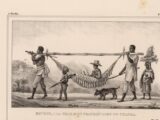
Sugar Society in Colonial Brazil: Life on the Sugar Mill
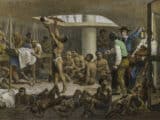
Monoculture, Slave Labour and Latifundia in Colonial Brazil
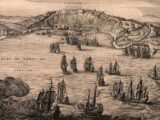
Installation of the General Government in Brazil and foundation of Salvador

Portuguese maritime expansion and the conquest of Brazil

The occupation of the African coast and Vasco da Gama's expedition

Pedro Álvares Cabral's expedition and the conquest of Brazil
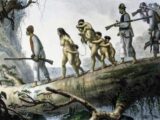
Pre-colonial Brazil - The forgotten years

Establishment of the Portuguese colony in Brazil
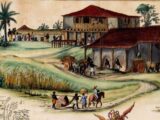
Learn about the periods of Brazil's colonial history

Engenhos de Pernambuco: História do Início ao Fim

Shipwreck of the Galeão Sacramento in Salvador: Learn the story
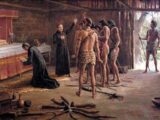
History of the Captaincy of Todos os Santos Bay between 1500 and 1697

History of the Fortresses and Defences of Salvador de Bahia
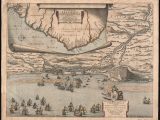
Dutch Invasion of Salvador in 1624: Overview
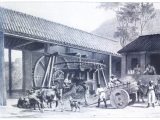
The history of sugar cane in the colonisation of Brazil
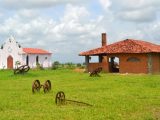
Sugar Mill in Colonial Brazil: History and Structure
History of the Discovery Coast in Bahia - History of Brazil
This post is also on:
 Português
 English
 Deutsch
 Español
 Français