Navigation before the discoveries was a crucial period in maritime history, marked by innovations and adaptations that paved the way for the great explorations of the 15th century.
During this time, Portuguese navigators began to improve their navigation techniques, developing more agile and resistant vessels, such as caravels, which became symbols of the age of discovery.
The influence of the Portuguese kings, together with growing maritime traffic and trade with other European nations, contributed to a significant evolution in the navy.
This context not only facilitated the exploration of new trade routes, but also laid the foundations for future expeditions that would change the course of history.
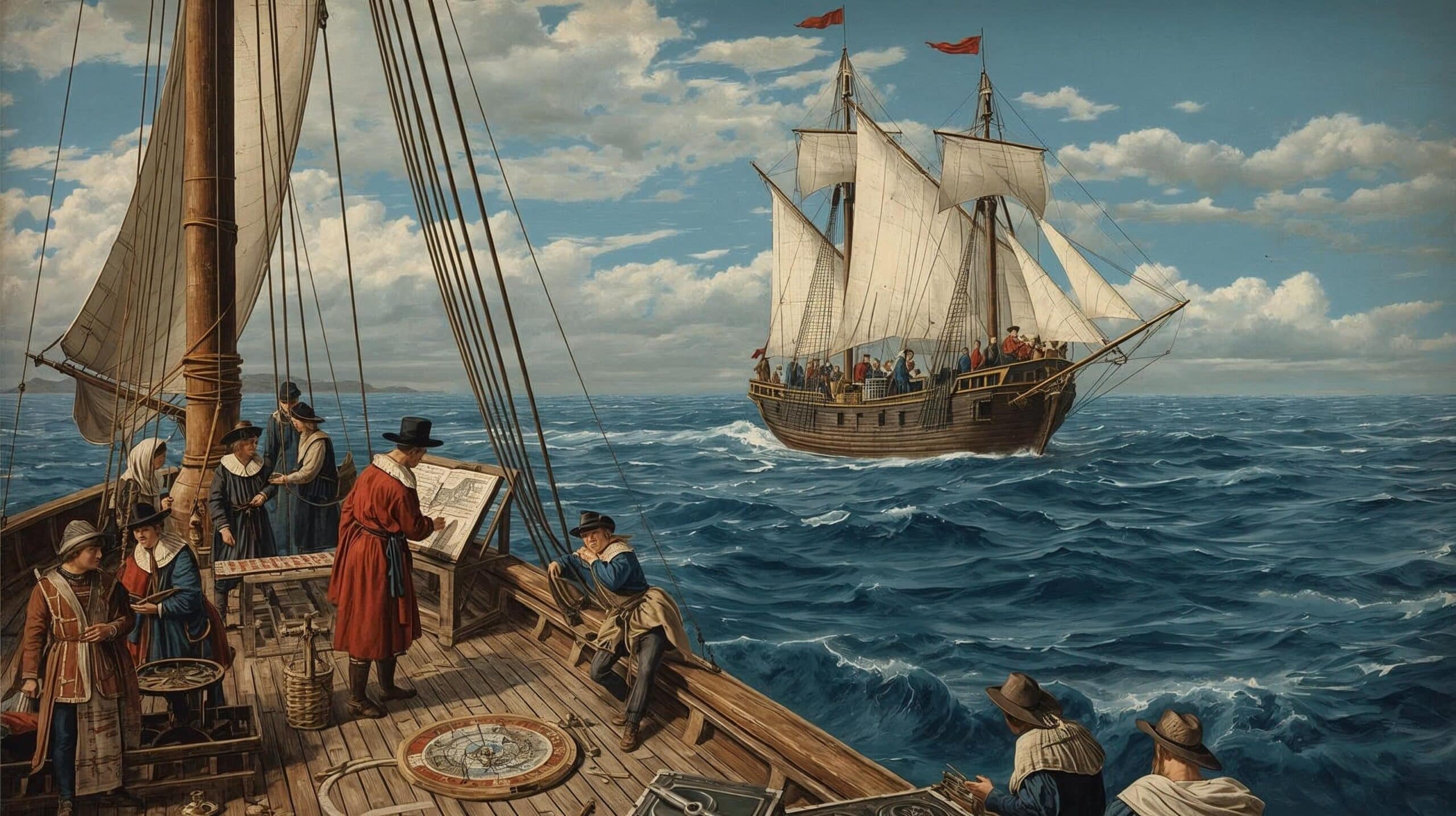
Portugal's Maritime Expansion - Navigation before the Discoveries
The Influence of Portuguese Kings on the Evolution of Navigation
1. The Influence of Portuguese Kings
Under the leadership of Henry the Navigator, John II, and Manuel I, the Portuguese navy underwent significant improvements, preparing for the discoveries that would write important pages in world history.
2. Developments in the 12th Century
In the 12th century, King Sancho I ordered the construction of ‘shelter structures’ on beaches to ground ships.
3. The Reign of King Dinis
During the reign of King Dinis, when maritime traffic with other European countries was already relatively intense, the Port of Paredes was built and the Leiria pine forest was planted, which provided wood for shipbuilding.
At that time, the first Portuguese admiral, Nuno Fernandes Cogominho, was appointed, and the Genoese Pezagno was hired to fill this position.
The arrival of the Portuguese in the Canary Islands also dates from this period, according to the later statement by Afonso IV to the Pope.
4. Protection of the Merchant Navy
The merchant navy received even more official protection during the reign of King Fernando I.
As documented in Fernão Lopes’ Chronicle, shipbuilding was widely encouraged through tax exemptions and the granting of advantages and guarantees to shipowners.
This resulted in the development of maritime trade, with Portugal exporting agricultural products and importing textiles and manufactured goods.
Revenues from the Lisbon Customs House increased significantly, making it a free port frequented by numerous foreigners.
5. The Evolution of Navigation
Thus, by the beginning of the 15th century and the period of discovery, Portuguese navigation had already evolved beyond the old types of single-masted galleys, which had 16 rows of oarsmen, whether fishermen or prisoners.
Even the two-masted galleys, with 25 to 30 rowing benches, including captives, had castles at the bow and stern, from which darts, spears, arrows and incendiary materials were launched in the naval campaigns of the time.
Barges, boats and, finally, caravels began to be used, which played a crucial role in the new cycle initiated by Prince Henry, as we shall see.

Publicações Relacionadas
Expansão Marítima de Portugal - Os Portugueses na América do Norte
Expansão Marítima de Portugal - Pesca como Origem
Expansión marítima de Portugal - Infante Dom Henrique, el «Navegante»
Expansion maritime du Portugal - Découverte des îles de l'Atlantique
Expansión marítima de Portugal: primeras operaciones navales
Expansão Marítima de Portugal - O descobrimento do caminho marítimo para a Índia
Portugal's Maritime Expansion - Fishing as the Origin
Expansão Marítima de Portugal - Infante Dom Henrique, o “Navegador”
Die maritime Expansion Portugals – Die Fischerei als Ursprung
Portugal's Maritime Expansion - The discovery of the sea route to India
Expansión marítima de Portugal: el descubrimiento de la ruta marítima hacia la India
Die maritime Expansion Portugals – Erste Seefahrtsoperationen
Expansion maritime du Portugal - Exploration de la côte occidentale de l'Afrique
Expansão Marítima de Portugal - A navegação nos séculos XV e XVI
Portugal's Maritime Expansion - Discovery of the Atlantic Islands
Die maritime Expansion Portugals – Infante Dom Henrique, der „Seefahrer“
Expansión marítima de Portugal: la navegación antes de los descubrimientos
Expansion maritime du Portugal - La navigation avant les découvertes
Navios utilizados pelos navegadores portugueses nos Séculos XV e XVI
Expansión marítima de Portugal: la pesca como origen
Expansão Marítima de Portugal - Exploração da costa ocidental da África
Expansion maritime du Portugal - La pêche comme origine
Expansão Marítima de Portugal - Descobrimento das Ilhas do Atlântico
Portugal's Maritime Expansion - Exploration of the West Coast of Africa
Die maritime Expansion Portugals – Entdeckung der Atlantikinseln
Expansión marítima de Portugal: descubrimiento de las islas del Atlántico
Portugal's Maritime Expansion - Prince Henry the Navigator
Expansão Marítima de Portugal - Navegação antes dos Descobrimentos
Expansion Maritime du Portugal - Premières Opérations Navales
Die maritime Expansion Portugals – Erkundung der Westküste Afrikas
Die maritime Expansion Portugals – Die Entdeckung des Seewegs nach Indien
Expansion maritime du Portugal - Infante Dom Henrique, le Navigateur
Expansão Marítima de Portugal - Primeiras Operações Navais
Portugal's Maritime Expansion - First Naval Operations
Expansion maritime du Portugal - La découverte de la route maritime vers l'Inde
Die maritime Expansion Portugals – Seefahrt vor den Entdeckungen
This post is also on:
 Português
  English
  Deutsch
  Español
  Français