Travel guides for Bahia, Alagoas, Ceará and the whole of the North-East of Brazil: beaches, ready-made itineraries, culture and accommodation tips. Get inspired and plan your trip.
Portugal’s Maritime Expansion – Discovery of the Atlantic Islands
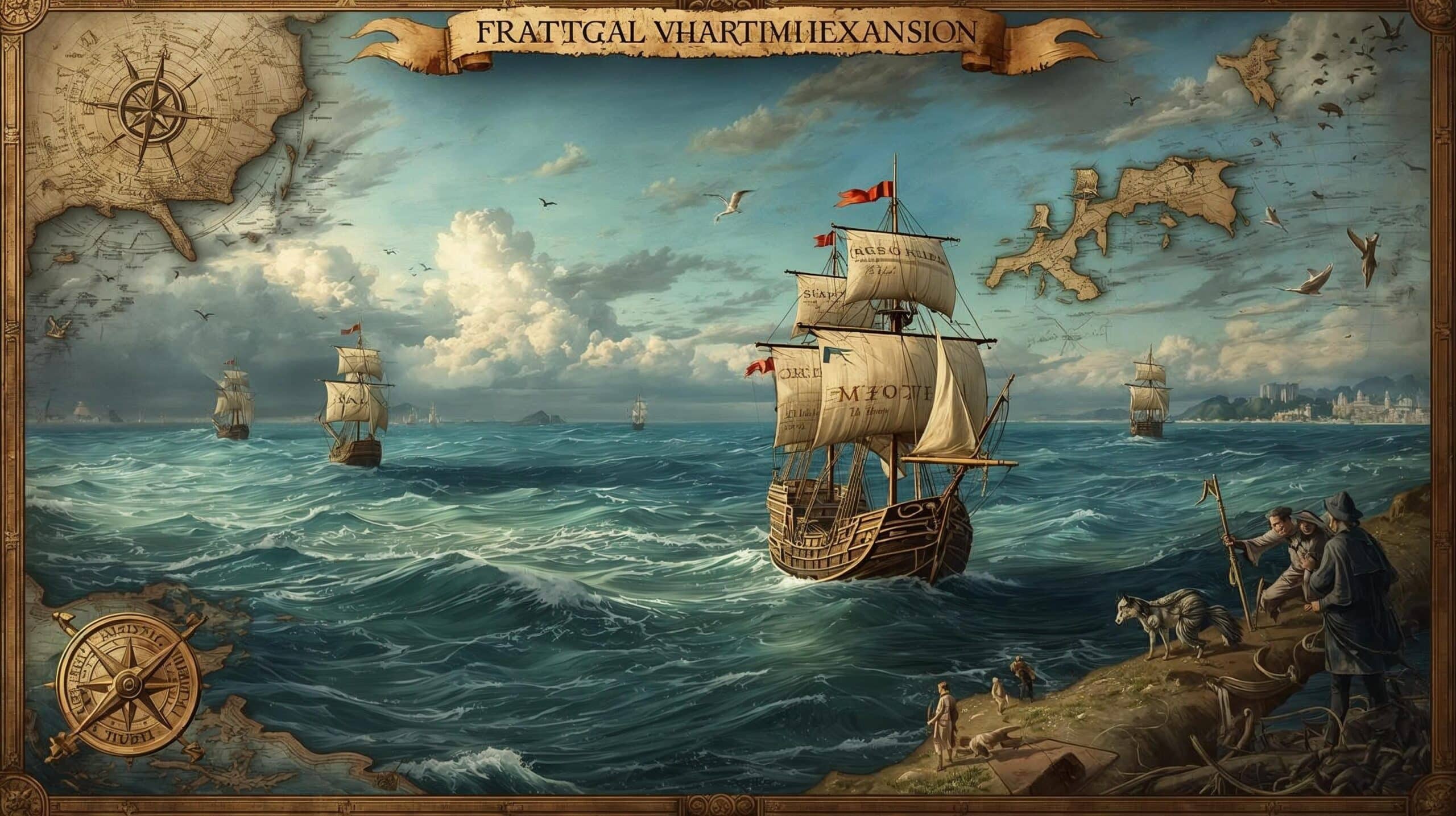
The Atlantic islands — Madeira, Porto Santo, the Azores and Cape Verde — played a central role in the early days of Portuguese maritime expansion.
This text presents their discovery, the model of exploration adopted, the economic activities implemented and the demographic consequences that led to emigration to the mainland and Brazil.
Portugal's Maritime Expansion - Discovery of the Atlantic Islands
The Atlantic Islands: the beginnings of Portuguese expansion
1. Discovery and colonisation
While Dom Henrique was still alive, under his impetus and that of the Order of Christ, the islands of Madeira, Porto Santo and the Azores archipelago were discovered and colonised.
2. System of exploitation — hereditary captaincies
The system of hereditary captaincies was adopted for exploitation by private individuals and was later also applied in Brazil.
What is the system of hereditary captaincies?
The hereditary captaincy system was a regime of colonisation and territorial administration used by Portugal (mainly in Brazil) from the 16th century onwards. The Crown divided the territory into strips and granted them to private individuals called captain-donees.
How it worked
Organisation: Territory divided into captaincies handed over to donees, transmitted by inheritance.
Rights of grantees: Receive land, distribute sesmarias (land grants), exploit resources, collect local taxes, appoint officials, and exercise administrative and judicial authority on behalf of the Crown.
Obligations: Populate and defend the captaincy, promote agriculture and development, and report to the Crown.
Objective: To decentralise costs and responsibilities, attract private investment and accelerate the occupation of the territory.
Problems and results: Many captaincies failed due to lack of resources, conflicts with indigenous peoples and isolation, which led to the creation of the General Government in Brazil (1549). Some, however, prospered (e.g. Pernambuco).
Observations
The system also had variants on Atlantic islands (Madeira, Azores) in the form of donatarias.
3. Settlement and economic activities
As they were originally uninhabited, the islands needed to be populated. Sugarcane cultivation and cattle breeding were introduced there. These economic and population elements were also brought from the Madeira archipelago and the Cape Verde islands to Brazil; the Cape Verde islands were explored in the same year as the death of the Infante.
4. Overpopulation and emigration
When the Azores became overpopulated and suffered from volcanic eruptions and prolonged droughts, many inhabitants emigrated to Portugal.
Map of the Azores from 1584 – Map of the Azores based on the cartography of Luis Teixeira. The islands are shown in good detail and the map is richly embellished with three large ornate cartouches, a title banner, sailing ships and a sea monster. “Acores Insulae”, Ortelius, Abraham. Publication: Theatrum OrbisMap of the Cape Verde Islands, 1697 – A large copper engraved sea chart of the Cape Verde Islands. A beautiful decorative title cartouche with a sea shell surrounds the title that rests above a scene of Poseidon, mermaids and horses. The chart is further adorned with two sailing ships and a distance scale at bottom right featuring sea-boys and fish. Publication: De Nieuwe Groote Lichtende Zee-Fakkel “Nieuwe Paskaart van de Zoute Eylanden…”, Keulen, Johannes vanMap of West Africa and the Cape Verde Islands, 1699 – Map of the important Cape Verde Islands and the opposite African coast from Cap Blanc to Sierra Leone. There is a lot of detail along the African coastline, with numerous cities, capes, rivers, and more identified. A fancy decorative title cartouche adorns the bottom of the map. Sanson’s small maps from his L’Afrique en Plusieurs Cartes…, first published in 1656 and engraved by A. Peyrounin, were copied several times by various map publishers. Johann David Zunners made copies of Sanson’s maps for his German translation of Die Gantze Erd-Kugel in 1679. Johannes Ribbius and Simon de Vries published copies in 1682 and 1683, with new maps engraved by Antoine d’Winter. The plates were later sold to Francois Halma, who used them in 1699 and then again in 1705 with the titles re-engraved in Dutch. The titles on the d’Winter plates were re-engraved back into French, and then used by Nicholas Chemereau in 1715 and by Henri du Sauzet in 1738. “Isles du Cap Verd Coste, et Pays des Negres aux Environs du Cap Verd…”, Sanson, NicolasMap of Madeira and the Canary Islands, c. 1692 – Map details the Canary Island group on the left side of the map. The map is filled with rhumblines, fleur-de-lis and many notations and includes a portion of the African coastline. With two large inset charts filling the right half resting on a tasseled drapery background. The upper inset is a detailed chart of the island of Madeira, a volcanic archipelago in the North Atlantic north of the Canary Islands. The town of Madera (Fanchal) is shown below in a birds eye view that includes several ships in the harbor with the fortified town at the shore. The map is very decorative and beautifully engraved in Coronelli’s characteristic style. Dedicated to Alvise da Mosto, “Procr di S. M. Sauio Grande.” Blank verso. Vincenzo Coronelli was a Franciscan priest and renowned mathematician and cartographer. He was appointed official Cosmographer to the Venetian Republic in 1685 and founded the world’s earliest geographic society, L’Accademia Cosmografica degli Argonauti. “Isole Canarie Possedutte da S.M. Cattolica…”, Coronelli, Vincenzo Maria. – Publication: Atlante Veneto
Written by Willy Sievert
Editor of Bahia.ws since its founding in 2009. Based in Salvador, he travels frequently across the Northeast and all of Brazil to keep the guides up to date. Learn more about Willy Sievert →


 Português
  English
  Deutsch
  Español
  Français