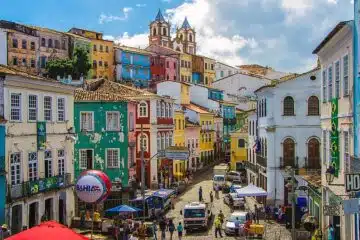
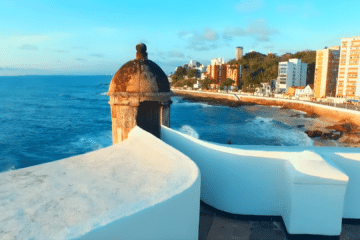
Of the towns listed in the Northeast, 11 are in Bahia and represent the process of occupation of the Bahian territory until the end of the 19th century. The listed towns of Cachoeira, Itaparica, Porto Seguro and Santa Cruz de Cabrália represent this period, when sugar cane, and later tobacco, […]
Tag: Rio de Contas
Chapada Diamantina’s architectural style and influences
The architectural style of the Chapada Diamantina reflects the rich history of the region, strongly influenced by the diamond mining cycle of the 18th and 19th centuries and the presence of European elements, mainly Portuguese. The historic towns of the Chapada, such as Lençóis, Mucugê and Rio de Contas, are […]
Historic Towns in the Northeast: Explore the Past
Discover the 12 most important historic cities in the Northeast of Brazil, built during the colonial period and still preserving a large part of their houses. The history of Brazil The history of Brazil is rich, extensive and full of contradictions. Developing a narrative that covers the details of the […]
Tourist Attractions on the Rio de Contas in Itacaré, Bahia
On the Rio de Contas, in Itacaré, Bahia, there are small sandy beaches, riverbanks and islands that allow you to enjoy a rich mangrove forest. The Rio de Contas is a separate chapter in the life of Itacaré. It rises at an altitude of 1,500 metres in the majestic Serra […]
10 Interesting Facts About Rio de Contas That You Didn’t Know
When we hear about the Chapada Diamantina, the town that immediately springs to mind is Lençóis in Bahia, which, for this reason alone, becomes the top choice for a trip to the Chapada, leading the whole stream of tourists to opt for it, as it has facilities tailored to their needs. […]
Rio de Contas: Learn about the history of how the city was founded
Rio de Contas, one of the oldest cities in the Chapada Diamantina region, is notable for its 17th-century Baroque architecture, which has been preserved to the present day. In 1745, at the height of the gold rush, it was planned as Brazil’s first planned city, reflecting the prosperity of the […]