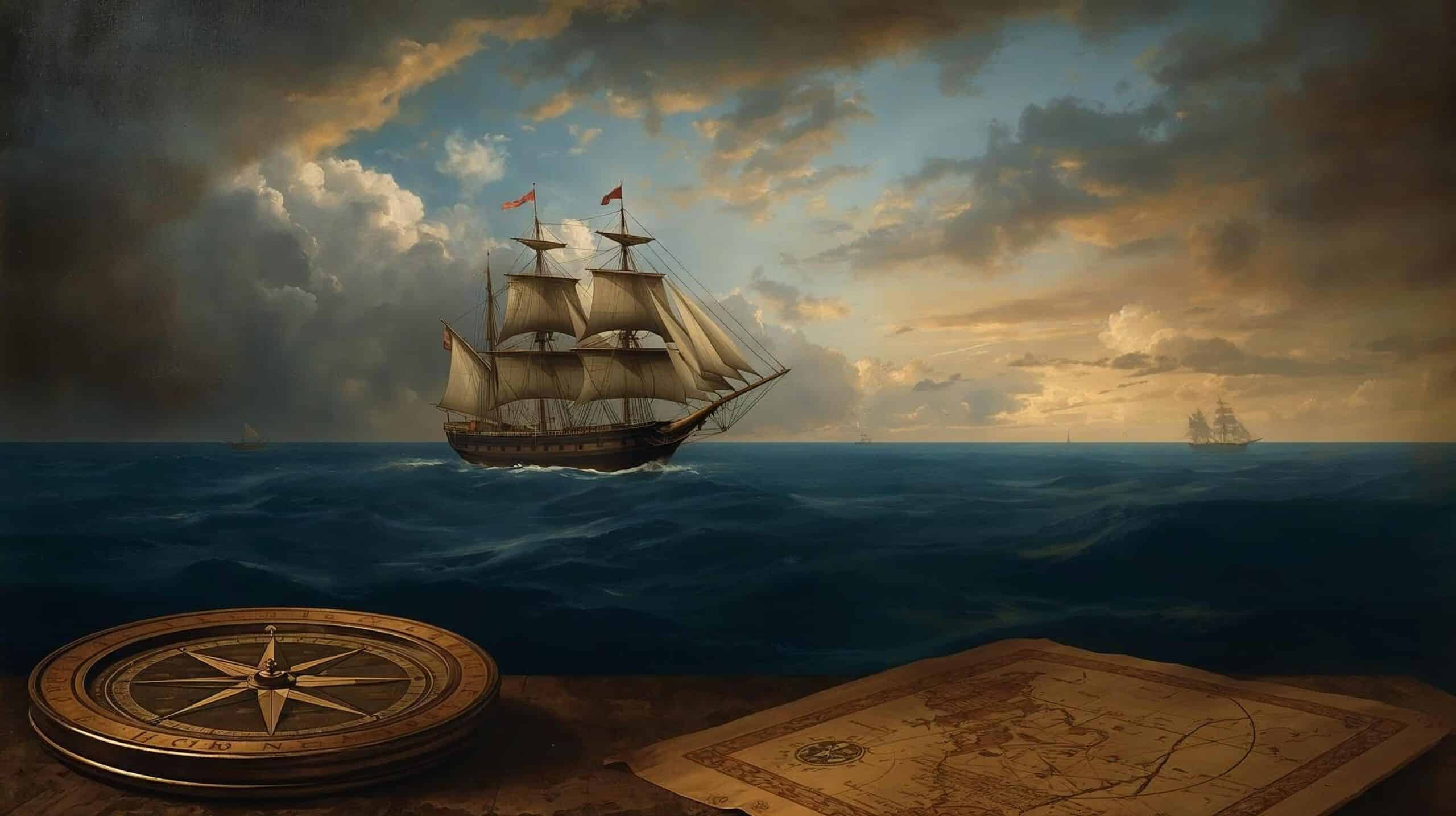
The discovery of the sea route to India was a decisive milestone in the age of great navigation. At the end of the 15th century, the search for direct trade routes to the rich eastern lands became a priority for European powers, especially Portugal.
Driven by the growing demand for spices and exotic products, Portuguese navigators, encouraged by monarchs such as King John II, devoted themselves to mapping sea routes that would break the commercial monopoly held by the Italians and Muslims.
Vasco da Gama’s expedition, which arrived in Calicut in 1498, was one of the high points of this effort: in addition to creating a new route between Europe and Asia, it inaugurated the Portuguese presence in the Indian Ocean.
The conquest of strategic points on the African coast and in Asia allowed for the direct transfer of valuable goods to Portugal, transforming it into a maritime power and profoundly altering the global commercial and cultural landscape.
Portugal's Maritime Expansion - The discovery of the sea route to India03:18
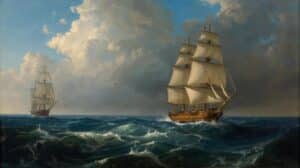
Discovery of the Sea Route to India | The route04:32
The discovery of the sea route to India
1. Context of the explorations
King John II sent emissaries — such as Pêro da Covilhã and Afonso de Paiva — to Africa and Asia to obtain information about ocean access to the eastern regions, which at that time could only be reached by mixed routes (land and sea) controlled by Italians and Muslims.
2. Investigations and preparations
With the information obtained and the explorations of the African coast, Portugal gathered the necessary elements to follow a direct sea route.
The arrival of Christopher Columbus in Europe and the subsequent confirmation that he had found a new continent (and not a shortcut to the Indies) led to negotiations between Portugal and Spain and reinforced Portugal’s policy of secrecy and discreet expeditions, which are poorly documented today.
3. The discovered route and its consequences
In 1497–1498, already under the reign of Dom Manuel I, Vasco da Gama’s small fleet rounded the Cape of Good Hope and reached Calicut.
This enabled the valuable trade in spices and other oriental products to flow directly to Portugal and marked the beginning of the Portuguese occupation of strategic points in India and the Strait of Hormuz.
4. Developments and occupations
Throughout the century, the Portuguese established trading posts and fortresses along the African coast and in Asia — including São Jorge da Mina, Ormuz and other strategic positions — consolidating a stable sea route between Europe and the East.
5. Advances on the African coast
During the reigns of Afonso V and, especially, João II, exploration of the west coast of Africa advanced.
Captains such as Diogo Cão and Bartolomeu Dias sailed beyond the Congo and, in 1488, rounded the Cape of Storms — renamed the Cape of Good Hope — opening up the concrete prospect of a wholly maritime route to India.


This post is also on:
 Português
  English
  Deutsch
  Español
  Français