How to grow and care for orchids
Growing and caring for orchids is not complicated, but it is impossible to lay down a single, uniform rule for more than 750 genera of orchids. These attractive and exotic plants have become famous and are considered indicators of sophistication and exclusivity.
Orchids belong to the Orchidaceae family, which is divided into more than 1,800 genera, with a total of about 35,000 species.
They vary in shape and size, from plants that reach four metres in height to very small ones the size of a pinhead.

In addition to the commercial cultivation of orchids, which is quite intensive in Brazil, many enthusiasts collect and devote themselves to these delicate plants in their gardens, becoming orchidophiles.
Classified by habitat, orchids are divided into epiphytes (which use tree trunks to grow, but don’t suck their nutrients), terrestrials, rupicolous (which live on rocks, attached to lichens in crevices) and saprophytes (which grow on decaying organic material).
In a typical orchid, there are always three sepals: one dorsal and two lateral, which surround and protect the flower in bud. They also have three petals, one of which is almost always larger and more conspicuous, called the labellum, which produces the scent that attracts pollinators. The centre of the flower contains the reproductive organ.

Growing orchids is generally not complicated, but it is impossible to lay down a single rule. As they can grow and flower anywhere in the world and at different temperatures, each variety has its own specific needs.
When designing your garden, it is interesting to have a variety of species as their flowering cycles tend to be different, increasing the chances of having a flowering specimen at all times.
Growing orchids successfully


- Basic Orchid Care
- How to care for orchids
- Choosing orchids
- Watering
- Fertilising
- Planting
- Pruning and maintenance
- Ventilation
- Orchid varieties for indoor use
1. Basic Orchid Cultivation
Most orchids can be planted in clay or plastic pots, but clay pots are recommended as they allow the roots to breathe and excess water to drain more efficiently.
To assemble a pot, place a layer of stone at the bottom (about two to three centimetres) to allow residual water to drain quickly.
Then fill with previously washed coconut fibre (or similar material). Avoid dusty substrates as the roots need aeration.
Some orchids grow horizontally (rhizomes) and send out successive shoots; others are monopodial, i.e. they grow vertically and should be planted in the centre of the pot or in baskets without substrate.
Some orchids don’t adapt well to pots; in these cases it’s best to grow them on tree trunks or peroba bark, protecting the roots with plastic until they adapt.
Always choose plants that are well adapted to the area in which they will be growing, as they will be better able to adapt to the temperature, ventilation and light in the room.
In general, orchids need sunlight to develop properly, so place your plants where they can be bathed in the morning or evening sun. If the plant doesn’t get sun, it won’t flower.
Make sure the room is well ventilated but not too windy. Watering depends on the substrate, but don’t soak your orchid; too much water is more likely to kill it than too little.
In simple terms, if an orchid is planted in a dusty substrate, it can be watered weekly, but if the substrate is made of chipboard or wood bark, it should be watered daily.
As far as fertilising is concerned, foliar (liquid) fertilisers can be used, which should be added (a few drops) to the water used for spraying with small sprayers.
It is important to wet the underside of the leaves, where the stomata are located, which absorb water and nutrients. Pests and diseases only occur in poor growing conditions and can be controlled with natural syrups or by hand picking.
2. How to care for orchids
Orchids have long been a symbol of love and beauty. Planted by aficionados for their elegance and allure, they are also used in wedding bouquets and bracelets for graduation or special occasions. On many occasions, from weddings to conferences, orchids add grace to tables.
With over 750 species of orchids and more than 30,000 hybrids, there is a huge variety to choose from.
In fact, orchids can be grown on every continent except Antarctica, allowing you to choose between native and international varieties, depending on availability.
While a true orchid enthusiast can (and should) spend considerable time studying the growth and care of these plants, the beginner has to start somewhere.
In this guide you’ll learn the basics of caring for orchids, which are generally hardy and easy to grow. Once you’ve mastered the basics and are still passionate about orchids, you can explore more challenging varieties, depending on your level of confidence.
3. Choosing orchids
- Finding the right orchid for your home: Proper orchid care begins with choosing plants that are suitable for your environment. The orchids discussed in this article should be grown indoors because of their adaptability to most conditions, their ease of planting and their beautiful flowers. If you want to explore more challenging varieties, research the specific needs of more delicate varieties.
- Buy flowering plants: Plants that already have flowers are great buys, as it can take up to 5 years for a seed to produce a flower. Unless you’re extremely patient, you probably don’t want to wait that long.
- Consider your growing conditions: Choose an orchid based on the growing conditions in your home. Each type of orchid has different requirements depending on where it comes from. Always read the label with the instructions to make sure the plant is suitable for your home conditions.

Here are some common types of orchids:
- Phalaenopsis: Known as the moth orchid, it is elegant for indoor use. Its colourful flowers last for months, blooming in winter or early spring, and require less light than other varieties.
- Cattleya: Known for their use in bouquets, they bloom once a year in spring or autumn and need more light than moth orchids.
- Dendrobium: These produce long, graceful flowers, typically white or lavender, in autumn and winter and are easy to care for.
- Paphiopedilum: Known as the little shoe, it has a modified petal that forms a pouch to attract pollinators. It needs bright light but not direct sunlight.


4. Watering

The Orchidaceae are one of the largest families of flowering plants, so they have many subfamilies or variations, and they have different needs when it comes to watering.
What dries out one species may drown another. In general, water your orchids every five to twelve days, depending on the species, temperature and time of year – more in summer and less in winter.
Orchids have different watering needs. In general, they should be watered every five to twelve days, depending on the species, temperature and time of year.
Your florist can give you specific information, but here is a general guide to help you determine the best way to water your orchids:
A. Keep these varieties moist (not wet) at all times.
- Paphiopedilum
- Miltonia
- Cymbidium
- Dontoglossum

B. Keep these varieties evenly moist during active growth, but allow them to dry out between waterings when they are not moist.
- Cattleya
- Oncidium
- Brassia
- Dendrobium

C. Keep these varieties almost dry between waterings.
- Phalaenopsis
- Vanda
- Ascocenda
D. Avoid getting the leaves wet when watering your orchids. If they do get wet, dry them with a tissue.
5. Fertilising
- Fertilising the orchid: It is recommended to only feed the orchid once a month. Use fertilisers containing nitrogen, phosphorus and potassium as well as trace elements such as iron.
6. Planting
- Understand the needs of terrestrial and epiphytic orchids : Many orchids are epiphytes (growing on trees or branches) and need a different environment to grow than terrestrial orchids; in fact, orchids often die if planted in the ground as they are not soil orchids. Epiphytes have thick roots that attach to plants or tree bark and absorb water and nutrients; others have aerial roots that grow loosely.
- Provide a suitable growing environment for your orchids: Common growing media include pine bark, coconut shells, peat moss, fern fibres, perlite or a mixture of these. However, the growing medium will depend on the type of orchid – terrestrial orchids should have a medium consisting mainly of clay with equal parts of substances such as peat moss, damp peat or acidic sand.
- Repot when necessary: You will need to repot the orchid occasionally, both to refresh the environment and to encourage growth. Spring is a good time to repot orchids.
7. Pruning and maintenance
- Prolonging flowering: Peak flowering begins in the second half of winter, mainly in February and March in the northern hemisphere. Flowers usually last for four to twelve weeks. When the flowers begin to fade, cut the stem back to within 12mm of where it emerges from the foliage. Also cut away dead leaves and tissue, including old flower stems, old leaves, anything that is rotting, dead roots, etc.
- Don’t prune an orchid like a bush: If you cut off part of an orchid leaf, the rest of the leaf may die, and pruning like a pseudobulb will seriously damage your orchid.
- Use sterilised instruments: This will help prevent the spread of disease from plant to plant. It is recommended that you soak the instruments in bleach before use or use a disposable blade.
8. Ventilation
- Maintain the right temperature: 18 – 30 degrees Celsius is the best temperature. They can tolerate temperatures of 13-37 degrees for short periods, but they don’t like sudden changes in temperature. Cold temperatures will turn the leaves yellow and they may eventually fall off.
- Provide good air circulation: Good air circulation can make all the difference to the health of your orchid. It helps them to heal if you have a fungal infestation or a pest that needs to be treated. Air circulation is also an important part of preventing these types of infestations by keeping the leaves and flowers dry.

9. Orchids for confined spaces
The following list shows orchids that can generally be grown indoors, albeit with careful positioning, additional lighting and temperature control:
- Brassolaeliocattleya “Norman’s Bay
- Cattleya bowringiana
- Coelogyne cristata
- Cymbidium devonianum
- Cymbidium “Touchstone
- Dendrobium nobile
- Epidendrum cochliatum (also known as Encyclia cochleata)
- Laelia enceps
- Maxillaria tenufolia
- Miltonia clowesii
- Paphiopedilum callosum
- Paphiopedilum “Honey Gorse
- Pleione formosana
- Vanda cristata
See some other orchid species


Final thoughts
Growing orchids can be a rewarding and enjoyable experience. With a little attention and care, you can enjoy the beauty of these fascinating plants in your home or garden. Don’t forget that each type of orchid can have its own peculiarities, so be prepared to learn and adapt your methods as necessary.
What’s more, the orchid growing community is large and there are many resources available, such as online groups, forums and local clubs, where you can exchange experiences and pick up valuable tips. By sharing your experiences, you will not only improve your skills as a grower, but also help other enthusiasts fall in love with these wonderful plants.
Finally, remember that every orchid has its own beauty and charm. If you give them the right care and learn to respect the needs of each species, your orchids will not only thrive, they will bring joy and elegance to your home.

Publicações Relacionadas

São Jorge Parish Church in Ilhéus — history, architecture and religious art

Marechal Newton Cavalcanti Educational Centre Overview

Boqueirão da Onça: A Unique Brazilian Eco-Treasure

Candombá in the Chapada Diamantina, Bahia: the Flower of Fire

Sea turtle species found in Brazil

Environmental Wealth of Maranhão: A Tropical Paradise

Tropical flowers are grown on a large scale in northeastern Brazil
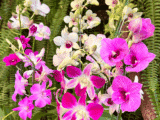
Denphal Orchids: A Beginner's Guide to Care
This post is also on:
 Português
  English
  Deutsch
  Español
  Français