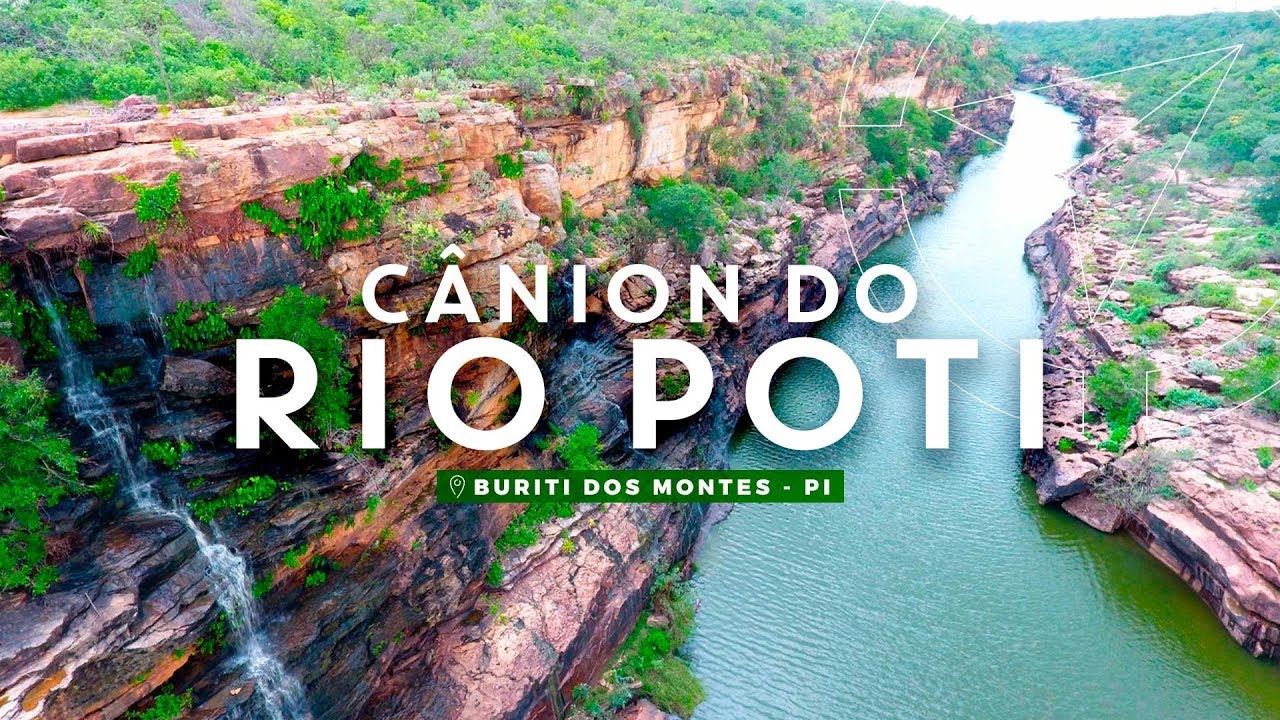
The Poti River Canyon, located on the border between the states of Piauí and Ceará, is one of the most impressive landscapes in northeastern Brazil. This little-explored tourist destination offers visitors a combination of natural beauty, adventure and history, making it an ideal location for ecotourism and outdoor activities.
Natural features
The Poti River Gorge is one of the most remarkable natural features in the State of Piauí, located mainly in the municipalities of Buriti dos Montes, Castelo do Piauí and Juazeiro do Piauí. There are two routes to the canyon: one from Juazeiro do Piauí and the other from Castelo do Piauí.
Activities and Experiences
In addition to its scenic beauty, the region is rich in biodiversity and offers opportunities for activities such as hiking, bird watching and river navigation. Visitors can also enjoy boat trips and adventure activities such as abseiling, making it a perfect place for nature and adventure lovers.
Cultural and ecological importance
A visit to the Poti River Canyon is a unique experience, combining the exploration of breathtaking landscapes with an immersion in the local culture. The region is home to communities that preserve traditions and lifestyles, adding to the experience. It is essential that visitors respect nature and contribute to the environmental conservation of the area.
When to visit
The best time to visit the canyon is during the dry season, when the trails are more accessible and the weather conditions are favourable for outdoor activities.

Videos – Documentary and Tourist Attractions in the Poti River Canyon
Main Tourist Attractions of the Poti Canyon
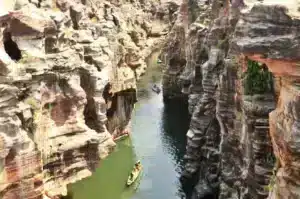
- The Canyon: The Poti River Canyon stretches for about 180 kilometres, carved by the Poti River over millions of years. The rock walls reach up to 60 metres in some places, creating a dramatic and breathtaking landscape. The region is characterised by impressive rock formations and cave paintings dating back to prehistoric times.

Tourist map of Piauí .
- Kayak tours: One of the best ways to explore the canyon is by kayaking down the Poti River. These tours allow visitors to glide between the canyon walls and enjoy the scenery and tranquillity of the surroundings. Along the way it is possible to stop for a swim in the river and observe the local fauna and flora.
- Trails and Walks: There are several trails that take visitors to strategic points with panoramic views of the canyon. The trails vary in difficulty from easy walks to more challenging routes with steep climbs and descents. Some of the walks also pass through areas of rock art and archaeological sites.
- Rock paintings: On the walls of the canyon you can find several rock paintings dating back thousands of years. These paintings bear witness to the presence of prehistoric peoples in the region and are an important part of Piauí’s cultural heritage.
- Mirante do Gritador: Located in the city of Pedro II, the Mirante do Gritador offers spectacular views of the canyon and surrounding mountains. It’s a great place to enjoy the sunset and take some incredible pictures of the landscape.
- Waterfalls: At certain times of the year, especially during the rainy season, the Poti River forms waterfalls along its course. One of the best known is the Boi Morto waterfall, which is easily accessible and a great place for swimming and contemplation.

Visiting Tips
- Best time to visit: The best time to visit the Poti River Canyon is during the dry season, from July to December, when the river level is lower and the trails are more accessible. During the rainy season, from January to June, the river fills up, making some areas difficult to access, but also revealing temporary waterfalls.
- Access: The canyon is located in a remote area and access is generally from the towns of Buriti dos Montes, in Piauí, or Castelo do Piauí. The final stretch to the canyon may require a 4×4 vehicle, especially during the rainy season.
- Local Guides: It is highly recommended to hire local guides to explore the canyon, both for safety and to get the most out of the visit with information on the geology, fauna, flora and cave paintings.
- Accommodation: The nearby towns of Pedro II and Castelo do Piauí offer basic accommodation, such as inns and small farms that welcome tourists. It is also possible to camp in some areas of the canyon, for those who want to get closer to nature.
Adventure activities
In addition to kayaking and hiking, the Poti River Canyon is a destination for adventure sports such as abseiling, climbing and cycling. The combination of these activities with the canyon’s unique landscape provides an unforgettable experience for nature and adrenaline lovers.
The Poti River Canyon is a destination that still retains the air of an unexplored place, perfect for those seeking an authentic experience amidst the wild and unspoilt nature of the Brazilian Northeast.

The Poti River basin, due to its geographical position and its canyon, served as a migratory corridor between the plains of Piauí and Maranhão and the semi-arid regions of Ceará, Pernambuco and Bahia.
Thousands of rock carvings, made in low relief by piercing, and many more rock paintings in rock shelters, prove that this region was once a migratory route for the first inhabitants of the Americas.

Natural history of the Poti Canyon

About a hundred million years ago, South America and Africa, which were part of the megacontinent Pangea, split apart.
Brazil’s Northeast was the last part of this area to break off, and it almost became a continent in its own right. This didn’t happen, but the land was greatly stressed, deformed, faulted and fractured.
The great feature of this episode of continental separation in northeastern Brazil was the uplift of the land in the interior of the continent: crystalline and sedimentary land was thrown up, to an altitude perhaps not much higher than the top of the highest reliefs today (about a thousand metres).
Since then, the relief, the natural landscapes, have been formed by the erosion of this uplifted surface, guided by arid climates – that is, erosion is not very intense because there is not enough water to “destroy” the rocks.
In the western part of the State of Ceará, in the area that today corresponds to the border with the State of Piauí, this uplift has created sedimentary terrain (the sandstones of the Parnaíba Sedimentary Basin, which are very old, about 430 million years) and crystalline terrain that is also old (2.2 billion years old, formed by gneisses and other metamorphic rocks) coexist (Figure 1).

As soon as this happened, the rivers, the greatest sculptors of the earth’s surface, began to carve their valleys, taking advantage of the topographical irregularities of the uplifted surface. Among these rivers was the ancient Poti River, which rises in the Serra dos Cariris Novos, in the municipality of Quiterianópolis, south of Crateús (CE).
It drains from south to north to Crateús, where it flows east-west to join the Parnaíba at Teresina (PI). It is about 570 kilometres long.
The Poti River began to carve the sedimentary and crystalline terrain about 90, 80 million years ago. Flowing from south to north, it hit a geological fault (an area where rocks break) in this terrain, joined the fault and then began to flow from east to west.
The great surprise that nature gave the Poti River was this: it quickly “realised” that sedimentary rocks were more resistant to the digging process than crystalline rocks. As a result, the river opened up the valley more easily in the crystalline terrain, while in the resistant sedimentary terrain, the valley that opened up was of the gorge type (Figure 2).

Over millions of years, the digging of the ancient Poti River followed this logic: it dug deeper into the crystalline than into the sedimentary.
As it dug in the crystalline, the river deepened the valley in the sedimentary, so that the riverbed was always at the same topographical level. Several tributaries formed on the crystalline side, helping to widen the valley.
The result of this long evolutionary history was to create a depressed area on the crystalline side, while the sedimentary side became more prominent (Figure 3).

As these erosive processes evolved over time, the result was the formation of the Poti Canyon, the emergence of the Serra da Ibiapaba (which represents the uneven contact between crystalline and sedimentary rocks) and the formation of a large area at the foot of the Ibiapaba, corresponding to what we call the sertão.
The logic behind the existence of the Poti Canyon, the Serra da Ibiapaba and the sertão (today’s surface) is therefore one and the same, the so-called “differential erosion”: the more resistant materials were little eroded, in the form of a gorge (canyon) or a elevation (Serra da Ibiapaba), and the more fragile material was lowered and depressed (the sertão) (Figure 4).

This is the end of our story. From now on, the tendency is for this evolutionary process to continue, with the Serra da Ibiapaba retreating to the west and the canyon walls finally collapsing in the future (millions of years). That is, if society doesn’t change the course of evolution.
We must hope that they will never think of damming the river downstream of the canyon, as has happened in similar situations in other parts of the world and in our own country. Let’s work for the survival of our canyon.
The small map made from topographic data shows the current situation (Figure 5).

Poti River Canyon Tourist Guide

Publicações Relacionadas

Main Tourist Attractions in Piauí You Must Visit
Explore the Archaeological Marvels of São Raimundo Nonato

Discover Pedro II: the enchanted Switzerland of Piauí
Piauí: A Guide to Its Stunning Attractions
Serra das Confusões National Park Travel Guide
Luís Correia: Explore the Best Beaches in Piauí

Kitesurfing in Barra Grande: The Ultimate Guide

Canary Islands: Ecotourism in the Parnaíba Delta

Parnaíba Delta: Biodiversity and Ecotourism Hub
Serra da Capivara National Park: A Historical Journey

Oeiras: Discover the Rich Historical Heritage
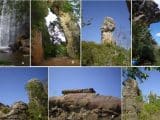
Sete Cidades National Park's Stunning Rock Formations
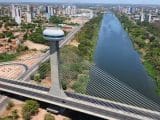
Teresina: Explore Its Unique Geographic Location
Piauí: Discover Unique Tourism Experiences
This post is also on:
 Português
  English
  Deutsch
  Español
  Français